
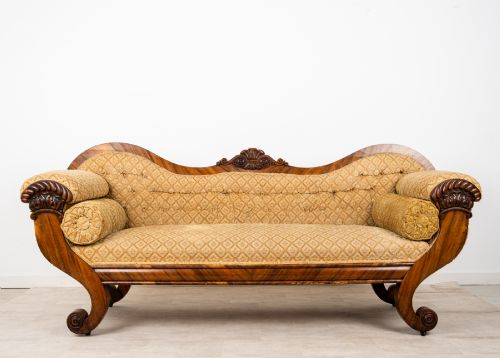


Yellow Upholstered Settee
A yellow upholstered settee brings warmth and period character to a room, offering comfortable seating through designs spanning the eighteenth century to the twentieth.
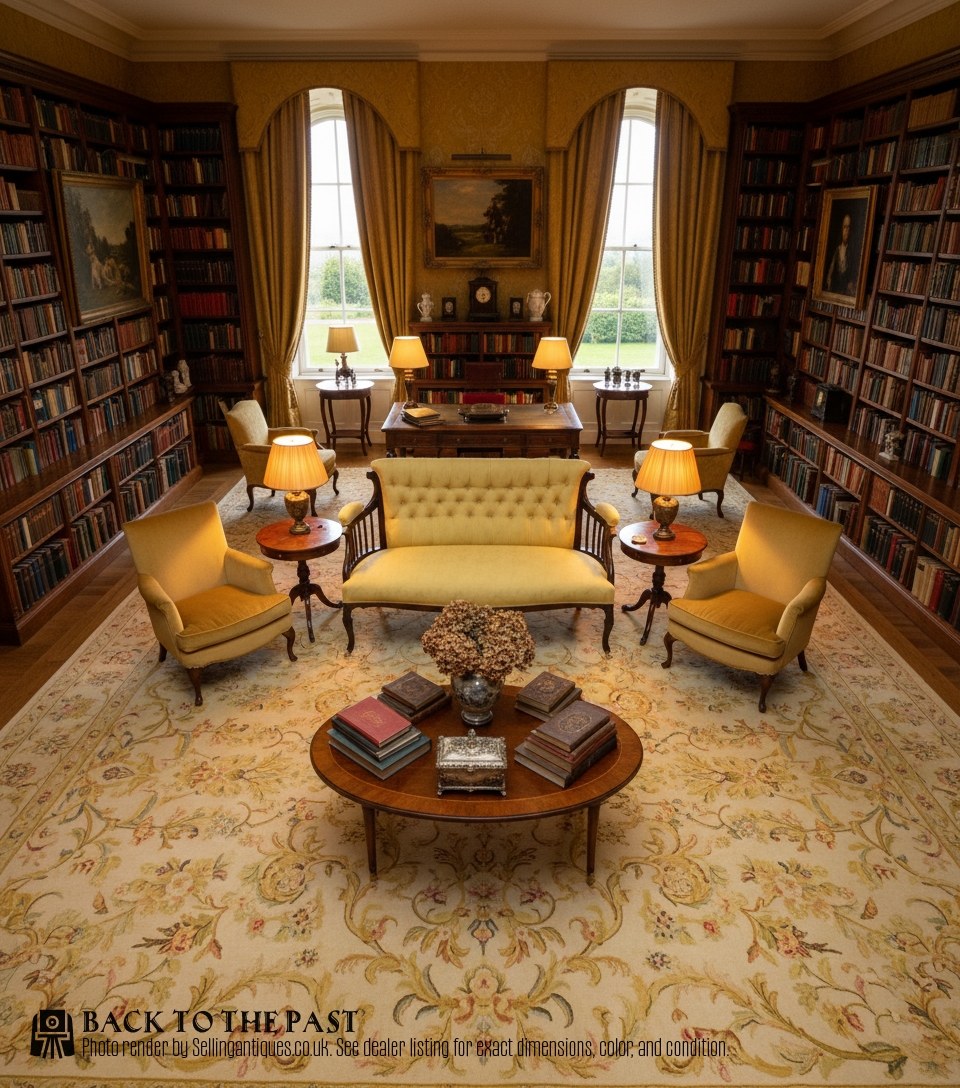
What yellow upholstered settees are
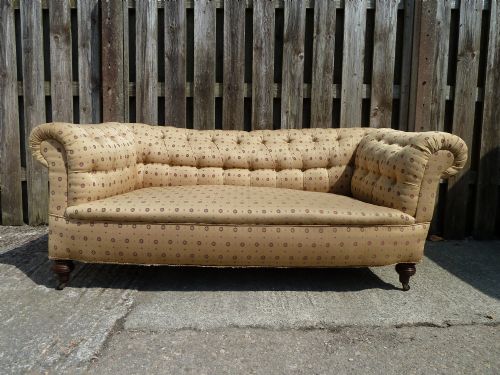
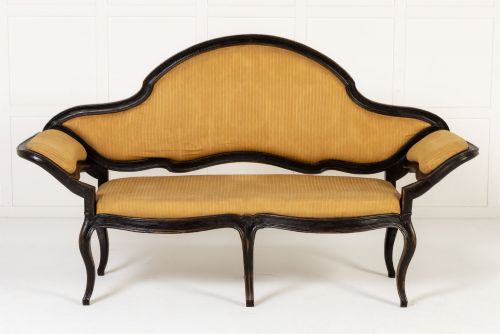
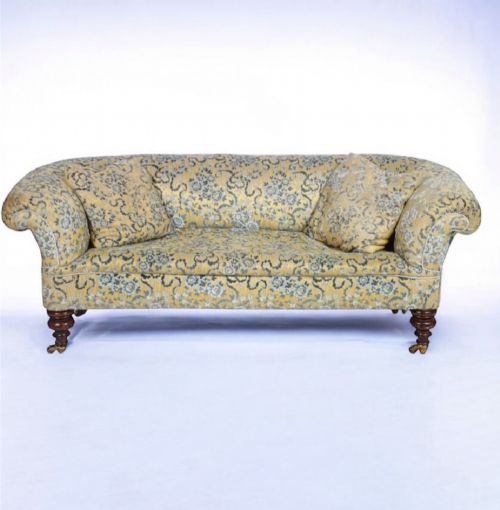
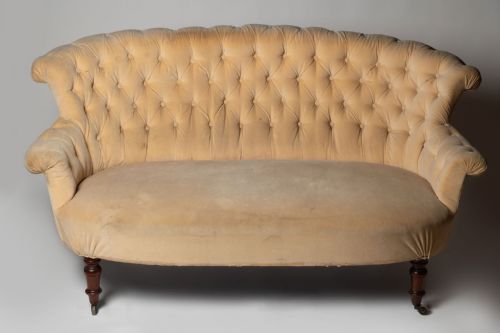
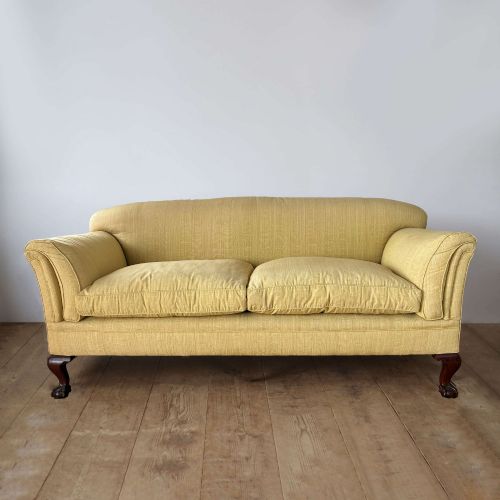
A yellow upholstered settee is a seating form designed for multiple people, appearing across distinct historical periods from the eighteenth century to the twentieth century. These pieces encompass various regional interpretations including Italian, French Louis XV style, and traditional British Victorian and Edwardian designs.
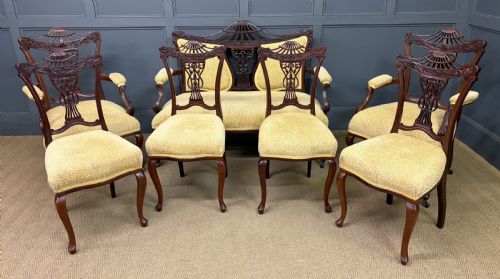
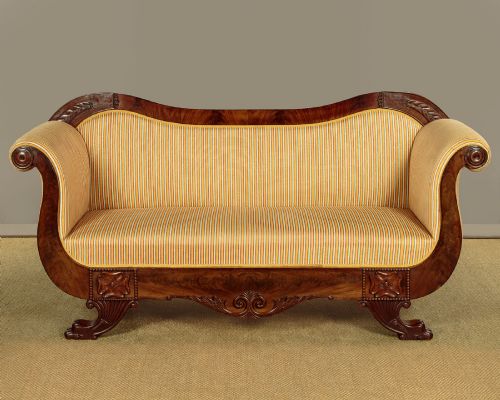
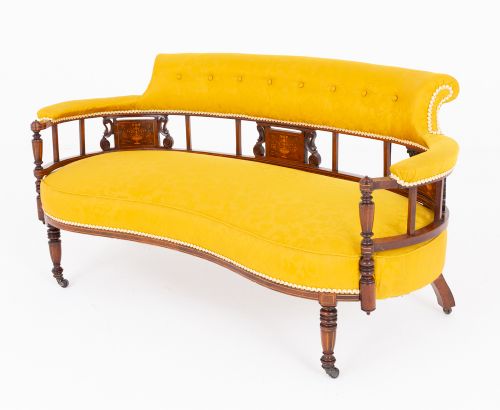
The selections available here showcase a range of structural forms, from walnut-framed two-seater settees and mahogany frames to ebonised wood and rosewood structures. Many incorporate stylistic elements such as carved scroll ends, inlaid satinwood details, and gilt finishes.
Victorian examples dominate the selection, often featuring robust walnut or rosewood frames paired with textile upholstery. Alongside these, buyers encounter earlier eighteenth-century forms and later pieces from the early decades of the twentieth century.
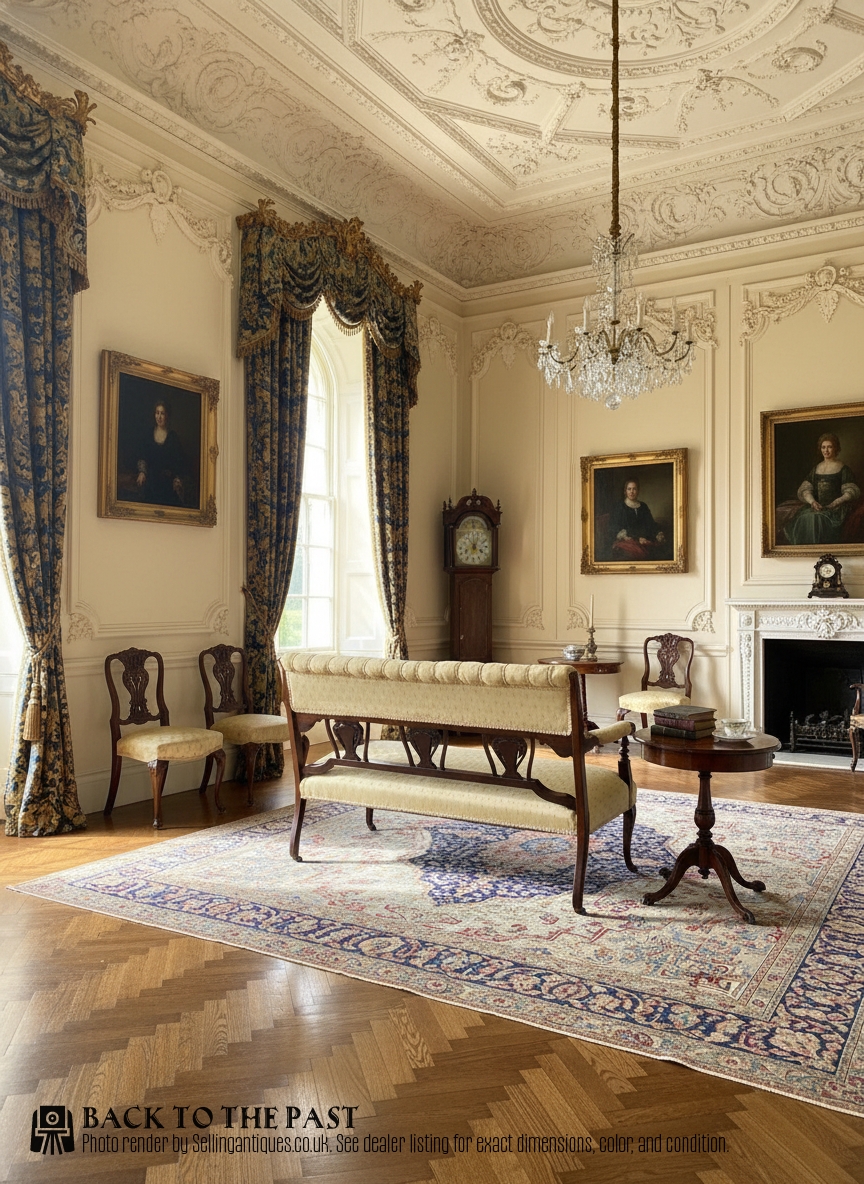
How they were made
Construction relies upon traditional timber framing using hardwoods such as walnut, mahogany, rosewood, and satinwood, occasionally enhanced by ebonised finishes or gilt work. Joinery supports the architectural integrity of the sofa, whilst brass components sometimes appear as decorative or functional accents.
Upholstery uses textiles applied over internal padding systems, paired with exposed wooden frames that display carved scroll ends or inlaid marquetry. Skilled cabinetmakers shaped the timber frames by hand, integrating decorative inlays and structural supports designed to endure.
Retail Price Guide 2026
Typical UK retail prices for yellow upholstered settee, calculated from the Sellingantiques database of over a million retail prices indexed since 2003. This retail price guide relies exclusively on Sellingantiques data; no external sources or auction records are used, so the figures do not describe the wider market.
Listings feature settees spanning the eighteenth century through to the 1920s, constructed from walnut, mahogany, rosewood, and satinwood.
What varies in quality
Quality rests in the refinement of the timber frame, the crispness of carved scroll ends, and the precision of inlaid satinwood or woodwork details. Superior examples exhibit harmonious proportions and expert joinery that unite the wooden structure with the upholstered body.
The choice of primary wood also distinguishes the pieces, with richly grained rosewood and figured walnut sitting alongside more standard timber frames. The sophistication of stylistic execution - whether capturing the fluid lines of Louis XV style or the solid presence of Victorian design - determines the standing of each settee.
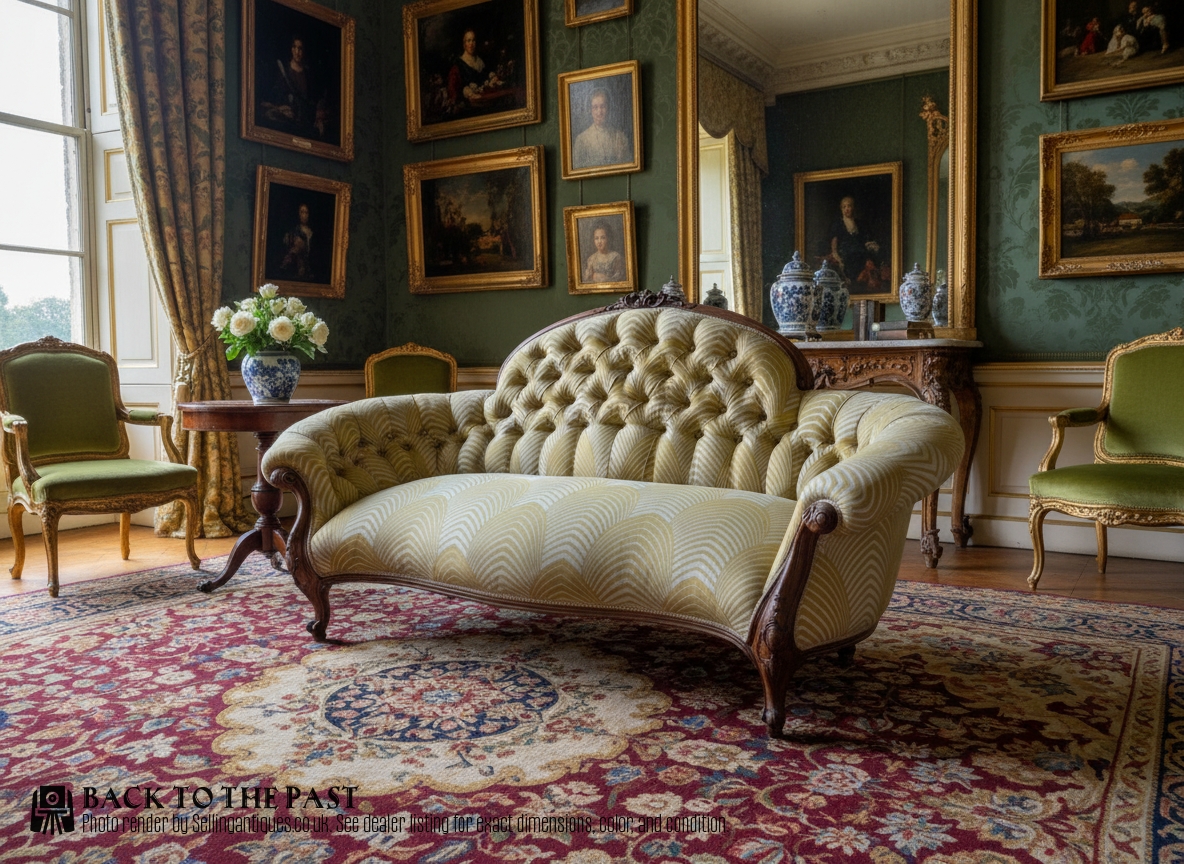
The Yellow Upholstered Settee Glossary
- Ebonised wood
- Timber treated with a chemical or stain to resemble expensive ebony. This dark finish provides a strong visual contrast against bright upholstery.
- Inlay
- A decorative technique where pieces of contrasting wood like satinwood are inserted into recesses within the primary timber surface. It creates detailed geometric or floral patterns.
- Rosewood
- A dense, heavily figured hardwood prized for its rich grain and deep colour. It frequently forms the primary structure of nineteenth-century seating.
- Scroll end
- A rolled or curved terminal shape found at the arms of a settee. This carved feature defines the silhouette of Victorian seating forms.
- Louis XV style
- A revived French decorative aesthetic characterised by asymmetric curves, floral motifs, and cabriole legs. It influences nineteenth-century gilt sofas.
Frequently Asked Questions
How do I date a settee?
Dating relies on examining the timber species, joinery methods, and stylistic characteristics present in the frame. Victorian pieces often utilise walnut or rosewood with heavy carved scroll ends, whereas eighteenth-century examples display different structural proportions.
Changes in decorative motifs, such as the transition from inlaid satinwood to gilt Louis XV ornamentation, help place a piece within its correct historical decade or century.
What is the difference between a settee and a sofa?
Historically, the terms settee and sofa were used interchangeably by makers and buyers alike to describe upholstered multi-seat furniture. Both forms appear across the same periods and share similar timber frames and textile coverings.
Regional preferences and maker terminology generally account for which name was applied to a specific piece during its manufacture.
How do I care for wooden frames?
Timber frames require protection from direct sunlight and dramatic changes in room humidity to prevent the wood from drying out. Regular dusting with a soft cloth maintains the finish of walnut, mahogany, or rosewood surfaces.
Avoid using harsh chemical polishes that can degrade historical finishes over time.
Where should I place a settee?
A settee functions well as a focal point in a living room, drawing room, or hallway where its upholstered profile can be appreciated. Positioning the piece away from direct heat sources protects both the wooden frame and the fabric upholstery.
Sufficient clearance around the furniture allows the carved details and scroll ends to remain visible.