


Victorian Parlour Settee
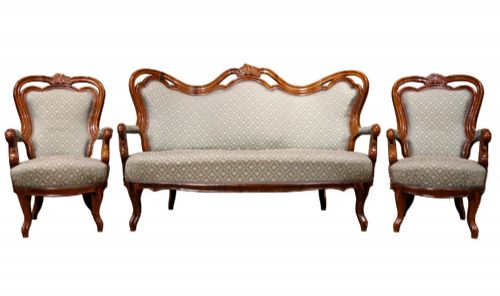
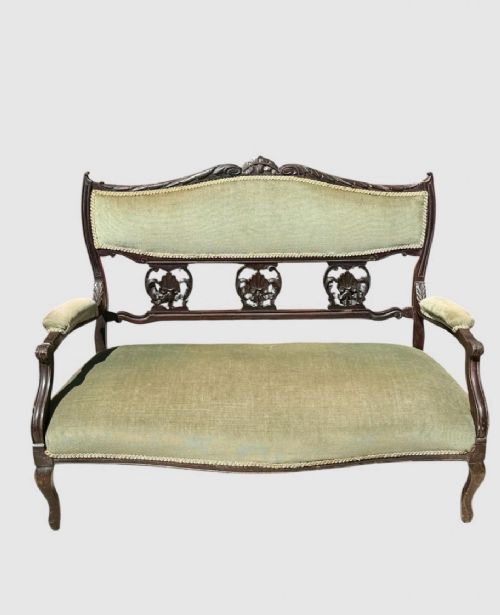
A victorian parlour settee offers formal seating in mahogany, walnut, or rosewood, bringing period presence to a reception room.
Victorian Parlour Settee
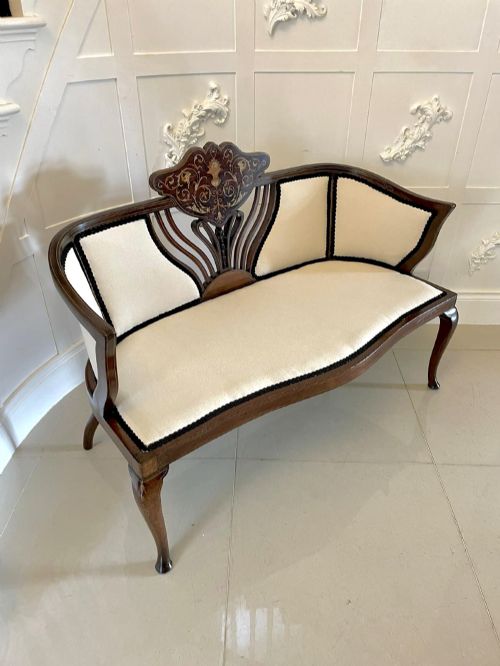
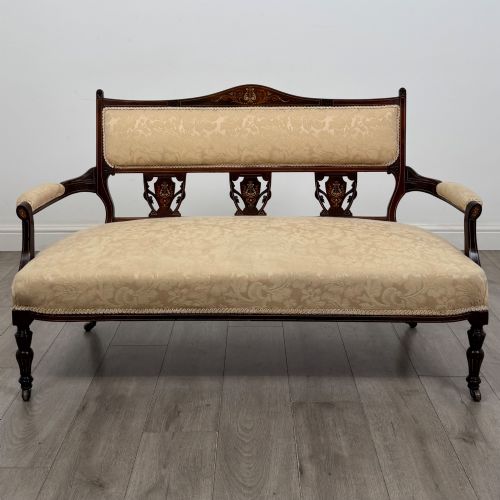
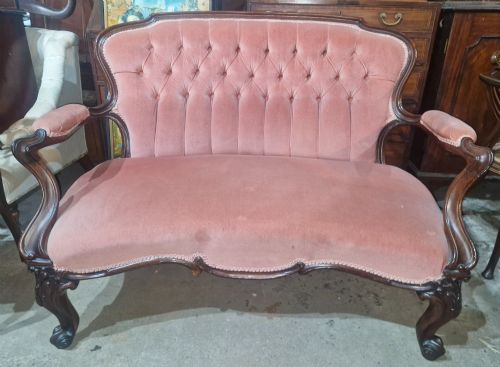
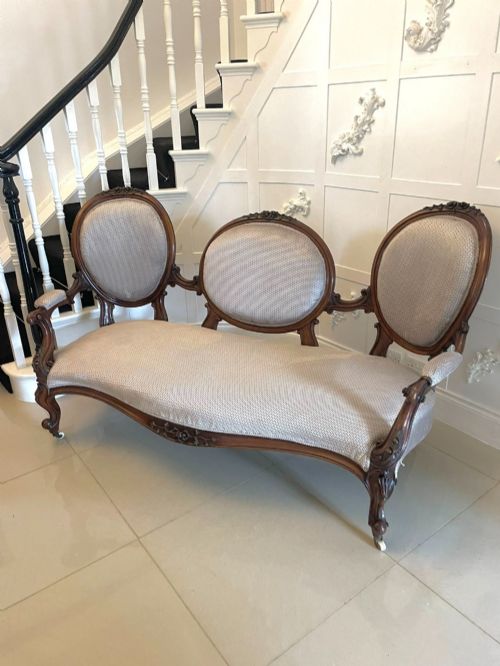
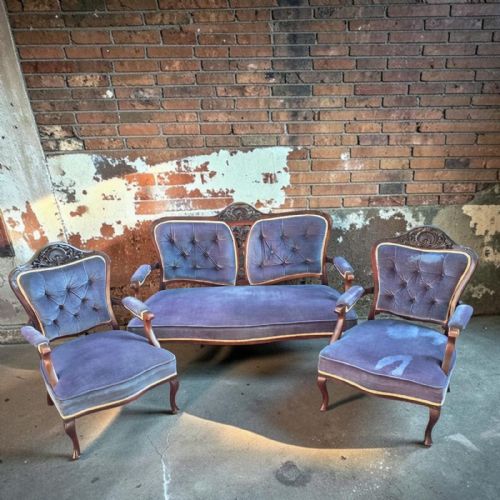
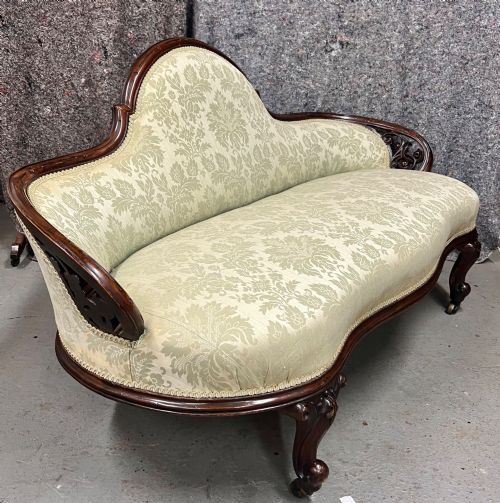
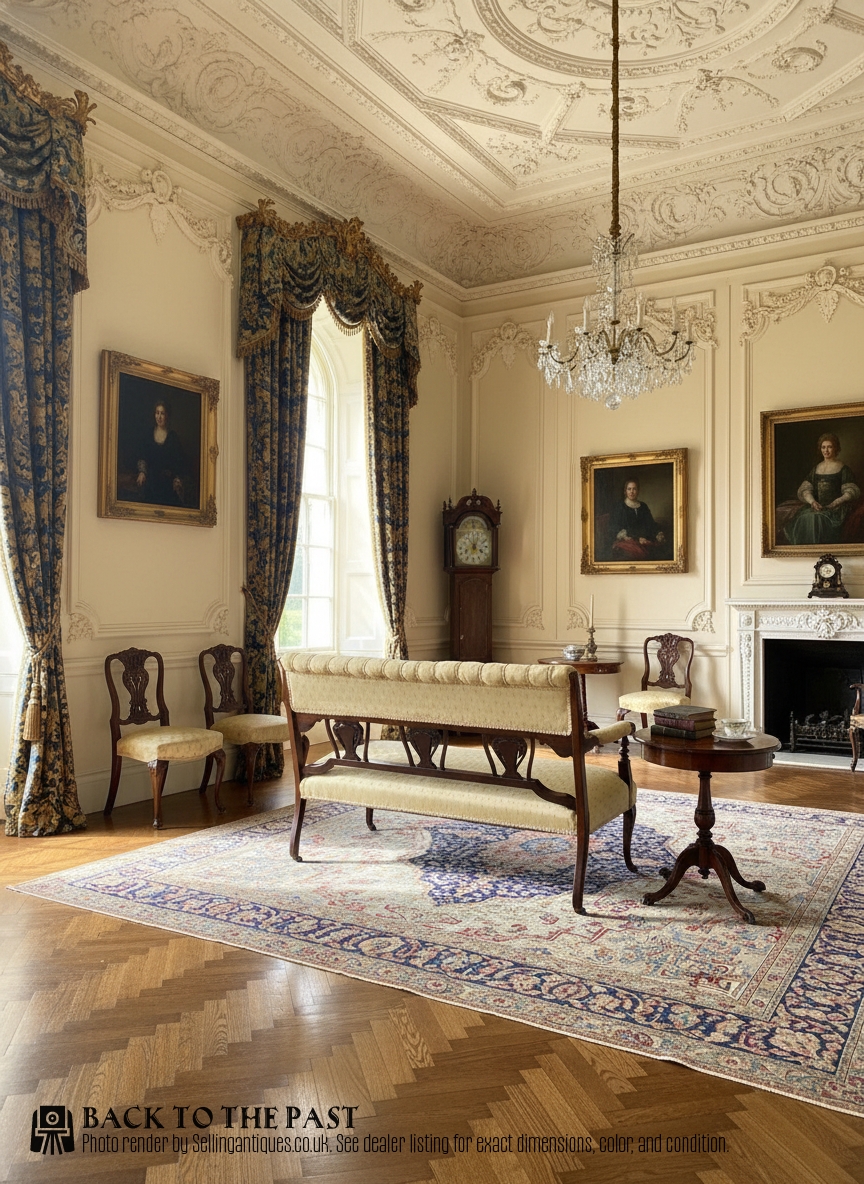
A victorian parlour settee is designed for formal drawing rooms and sitting spaces, appearing across nineteenth-century periods from early revival forms to late Edwardian crossover pieces. These items serve as twin-seater couches, double-ended sofas, or components of larger salon suites alongside matching chairs and footstools.
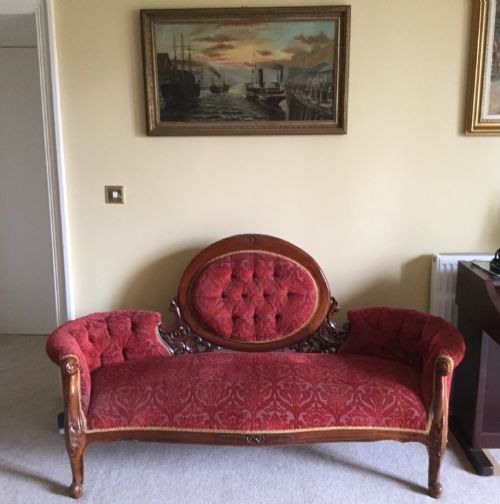
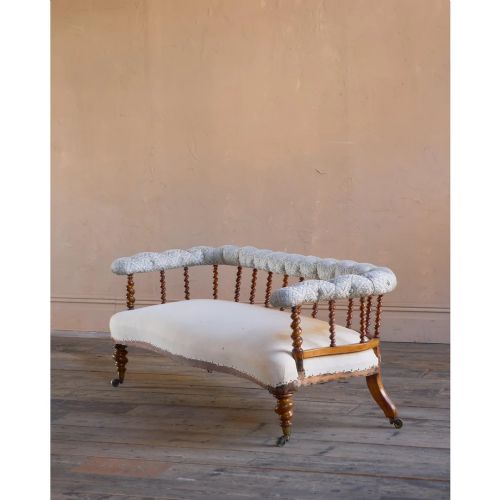
The materials and frames vary from carved mahogany and walnut to rosewood and ebonised timber, often shaped with cameo backs, spoon backs, or spindle backs. Buyers encounter varied upholstery treatments including damask, velvet, brocade, and deep buttoned textiles.
Materials and construction
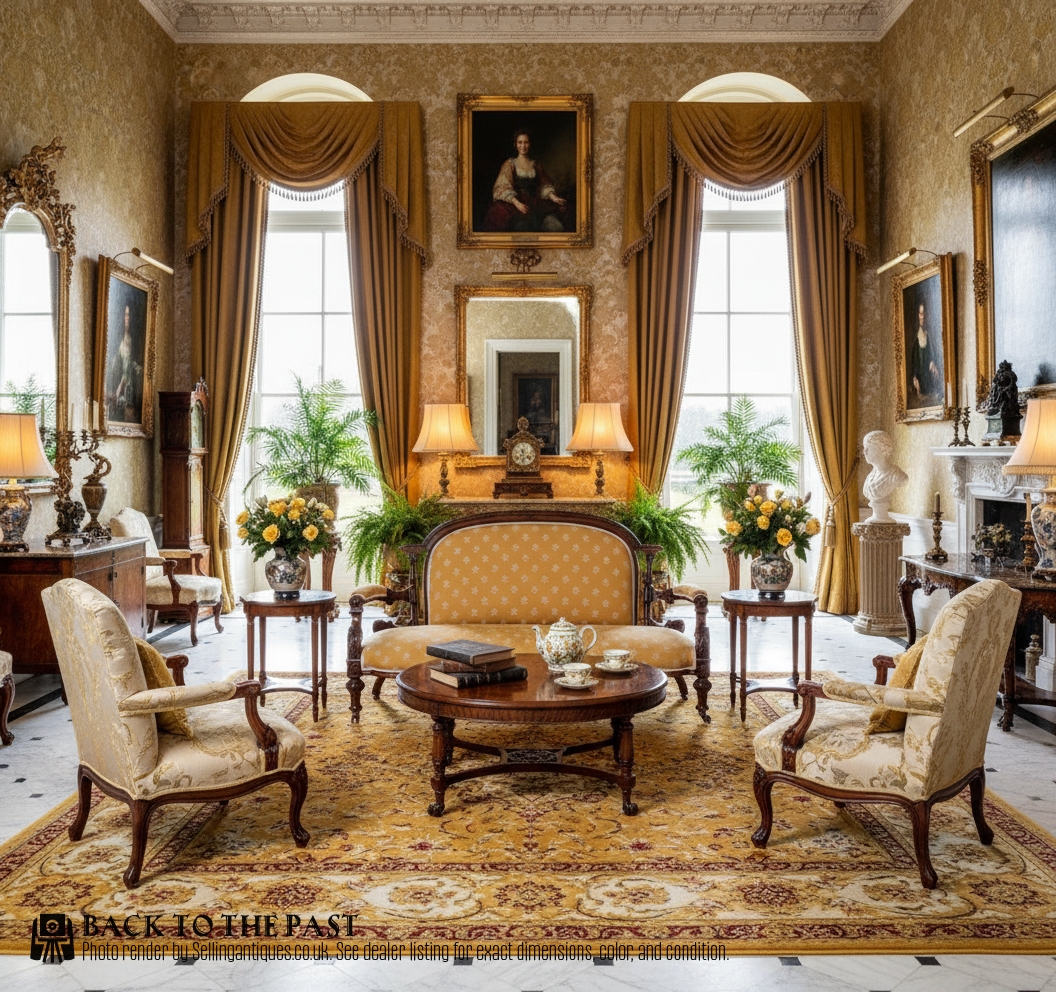
Cabinet makers utilised dense timbers like mahogany, walnut, and rosewood for structural frames, frequently applying fine stringing inlays or elaborate carvings. Turning and gilding also appear on specific giltwood and ebonised models.
Upholstery techniques combined sprung settee bases with layered stuffing and durable textile coverings such as damask, velvet, and deep pile brocade. Frames were joined using traditional cabinet-making methods to support the weight of multiple sitters.
Victorian Parlour Settee Retail Price Guide 2026
Typical asking prices for victorian parlour settee among the pieces listed under this phrase on Sellingantiques today, from the lower quarter to the upper quarter. They describe what is for sale here now, not the wider market.
Some settees sport such elaborate carvings that even the armrests required their own miniature floral bouquets.
Judging construction and finish
Quality rests in the crispness of the timber carving and the architectural balance of the frame, whether executed in solid mahogany or figured walnut. Pieces belonging to complete salon suites often display superior matching of veneers and harmonious proportions across every armchair and settee.
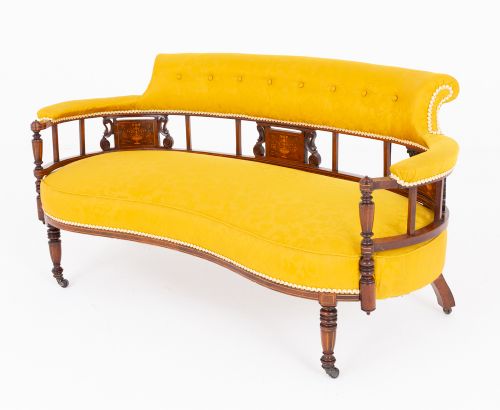
The refinement of inlaid details, such as delicate marquetry or brass hardware, distinguishes standard production from finer cabinet work. Originality of the timber frame and the retention of period upholstery styles contribute to the standing of each individual sofa.
C. Hindley & Sons·Jas / James Shoolbred
The Victorian Parlour Settee Glossary
- Cameo back
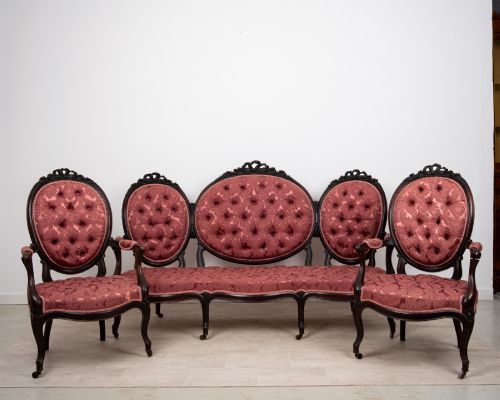
- A chair or settee back shaped with a distinct oval or medallion wooden frame resembling a carved gemstone cameo. This outline is typical of mid-nineteenth-century revival seating.
- Spoon back
- A padded upholstery form curving inward to match the contours of the human spine, resembling the bowl of a spoon. It is frequently seen on early pieces.
- Salon suite
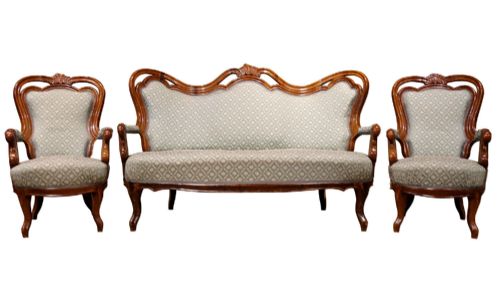
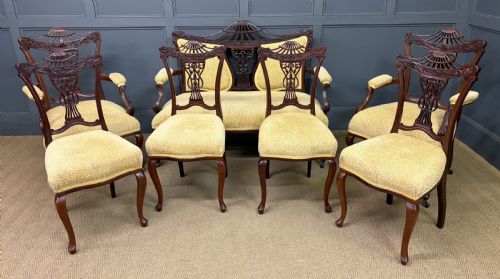
- A matched set of reception furniture comprising a settee accompanied by matching armchairs, side chairs, or footstools. These groups furnished formal Victorian drawing rooms.
- Brocade
- A heavy shuttle-woven fabric featuring raised decorative patterns, often utilised for period upholstery. It adds texture and colour to the seating surface.
Victorian Parlour Settee: Frequently Asked Questions
What is a parlour settee?
A parlour settee is a formal upholstered sofa designed during the nineteenth century for reception rooms and drawing rooms. These seats accommodated guests during formal visits and social gatherings.
They appear in various timber frames including mahogany and walnut, often ornamented with carved details or inlaid marquetry. Many survive as part of larger salon suites alongside matching chairs.
How do I date a Victorian settee?
Dating relies on observing stylistic markers such as Rococo Revival curves, Aesthetic ebonised finishes, or Sheraton Revival inlays. Cabinet construction methods and timber choices also indicate specific decades within the nineteenth century.
Early pieces often feature spoon backs and mahogany frames, while later models toward the end of the century incorporate spindle backs or lighter inlaid rosewood structures.
Were these settees used in bedrooms?
While primarily intended for formal ground-floor reception rooms and parlours, certain lighter settees and window seats were placed in private chambers and dressing rooms. Their compact proportions suited bedroom window recesses.
Larger multi-piece salon suites remained strictly within the domain of the main drawing room where visitors were received.
What is the difference between a sofa and a settee?
The terms are often used interchangeably in nineteenth-century contexts, though a settee traditionally implies an upholstered wooden bench or small sofa designed for formal seating. Settees frequently feature exposed carved wooden frames rather than fully upholstered frameworks.
Sofas in this period can range from simple sprung couches to large Chesterfield designs and ornate reception seating.