

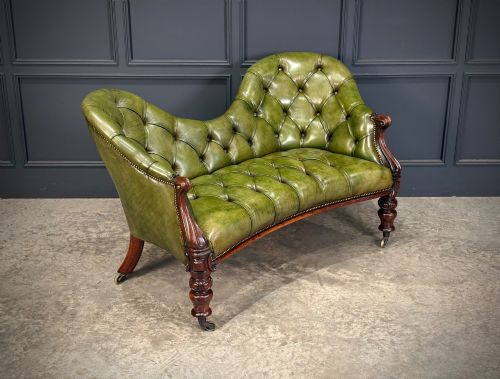
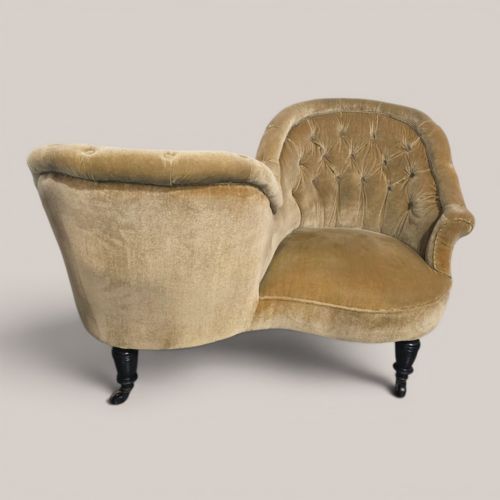


Antique Conversation Seat
An antique conversation seat brings people together for face-to-face talk, shaped in curved forms that let two or more sitters converse easily without turning their heads.
Antique Conversation Seat
An antique conversation seat is a specialised piece designed for social interaction, allowing two or more occupants to sit facing different directions while remaining close. You will most frequently encounter Victorian examples alongside earlier Georgian or later variations.
The layout typically involves an upholstered wooden frame configured in a circular, serpentine, or S-shape. These forms appear under alternative names such as tete-a-tete, courting chairs, or love seats within the selection.
Origins stretch from the eighteenth century into the twentieth, spanning periods from Georgian through Victorian to Edwardian. The Victorian iterations dominate, often exhibiting walnut, rosewood, or mahogany construction paired with button upholstery.
How they were made
Makers constructed the structural frames from hardwoods including walnut, rosewood, mahogany, fruitwood, and giltwood. Skilled joiners carved these timbers into ornate serpentine or barley twist shapes to support the complex seating configurations.
Upholstery forms a vital component of the construction, utilising fabrics such as velvet, leather, and general textiles. Craftsmen often applied deep buttoning techniques to secure the padding and shape the curved backs of the seats.
Some nineteenth-century conversation seats even include a hidden swivel mechanism, allowing sitters to rotate mid-chat.
What varies in quality
The refinement of the timber carving dictates much of the distinction between standard and superior pieces. Hand-carved giltwood and intricate walnut frames demonstrate a higher level of joinery than simpler turned supports.
The integrity of the original upholstery and the complexity of the frame shape also influence the standard of the piece. Swivel mechanisms, unusual Moorish designs, or double spoon-backs represent more ambitious manufacturing efforts.
The Antique Conversation Seat Glossary
- Tete-a-tete
- A French term meaning head-to-head, describing a two-seated piece where sitters face opposite directions. This form allows intimate conversation while maintaining a serpentine profile.
- Buttoned leather
- An upholstery style where buttons are pulled deep into the leather hide to create a padded, diamond-patterned surface. This finish provides both texture and structural support to the backrest.
- Barley twist
- A carved wooden furniture leg or frame member shaped like a spiralling helix. This decorative turning technique appears frequently on Victorian supports.
- Giltwood
- Timber coated with a thin layer of gold leaf. This material is typically found on high-status eighteenth-century frames.
- Double spoon-back
- A twin backrest design shaped to resemble the bowl of a spoon. It offers distinct cushioned lumbar support for each sitter.
Antique Conversation Seat: Frequently Asked Questions
How do I use a conversation seat in a modern room?
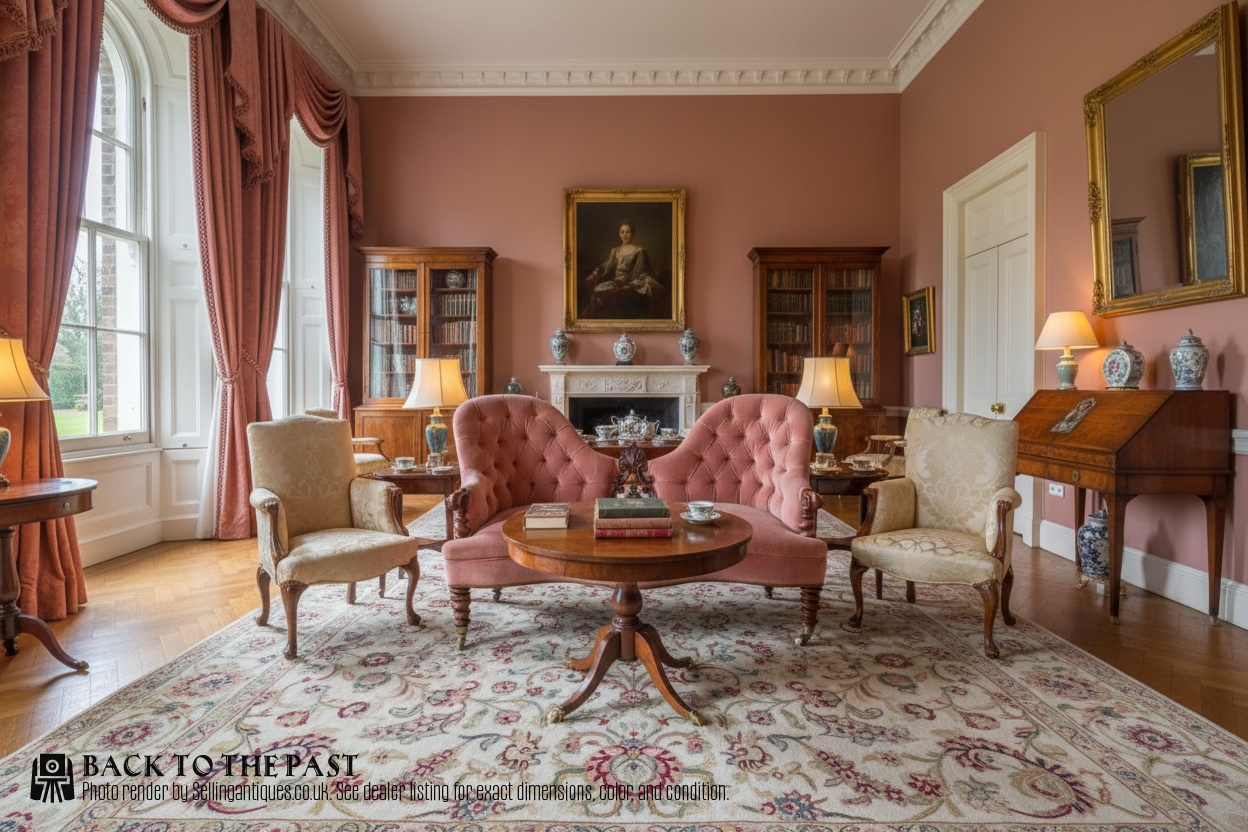
A conversation seat works effectively when placed in the centre of a spacious room rather than pushed against a wall. Its multidirectional design allows it to function as a sculptural focal point.
Positioning the piece away from boundaries lets people make full use of the facing seats for social gatherings, mirroring its original nineteenth-century purpose.
What is the difference between a love seat and a conversation seat?
A love seat typically seats two people side by side facing the same direction. A conversation seat allows occupants to sit facing different angles or opposite ways.
Many period pieces overlap in terminology across listings, but the distinct multi-directional curve remains the defining feature of the conversation layout.
Which wood types are most common on these seats?
Walnut, rosewood, and mahogany appear most frequently across the Victorian pieces in the selection. Earlier Georgian examples sometimes utilise fruitwood or giltwood.
These dense hardwoods provided the structural strength required to support curved frames and complex multi-seated upholstery.
How do I identify a Victorian piece?
Victorian conversation seats often feature dark hardwoods like walnut or rosewood combined with deep buttoned upholstery. Stylistic clues include Rococo Revival curves and barley twist turnings.
Makers during this period favoured elaborate, heavy frames designed to showcase polished timber and textured fabrics.