
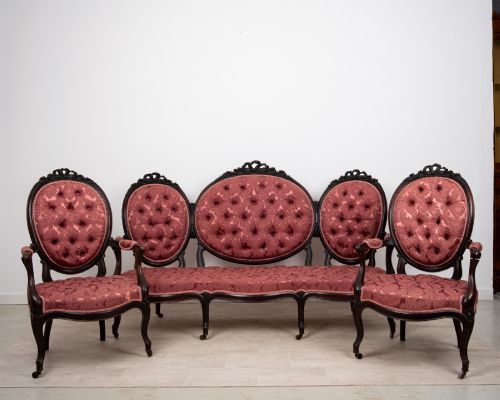
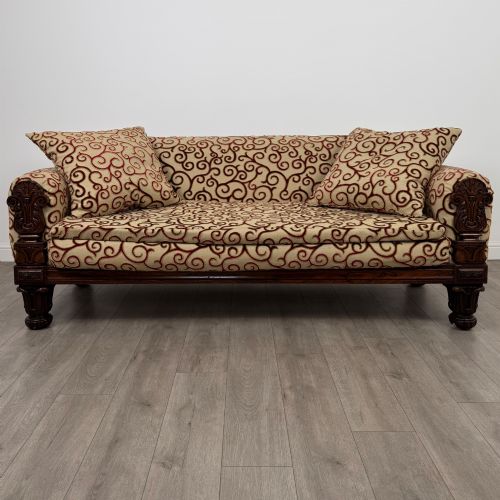


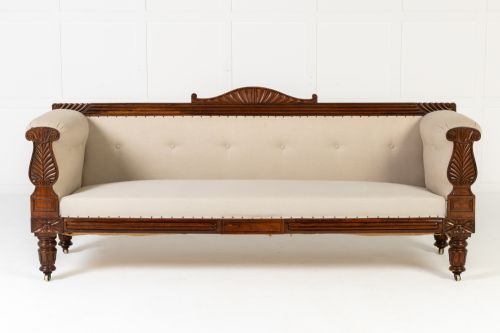


Dark Wood Settee
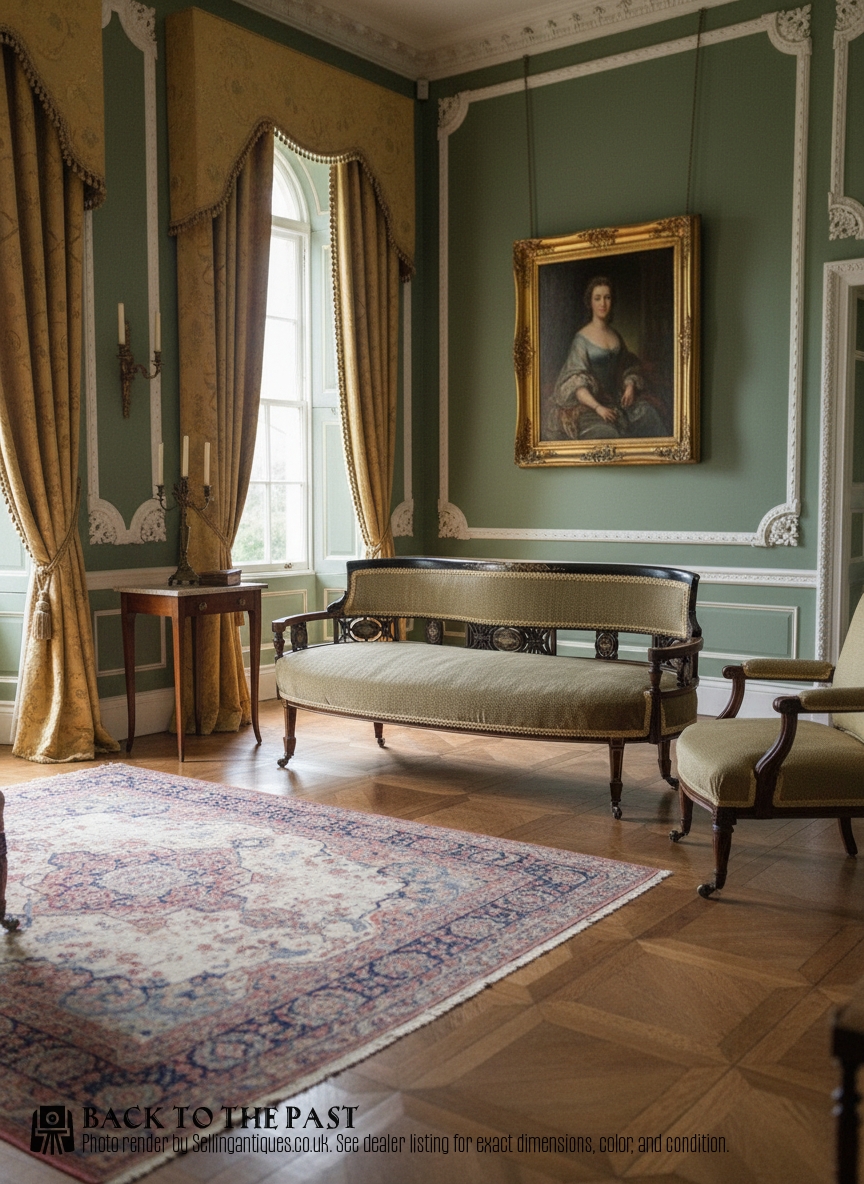
A dark wood settee brings deep tones and historic craftsmanship into a room, offering both seating presence and period character.
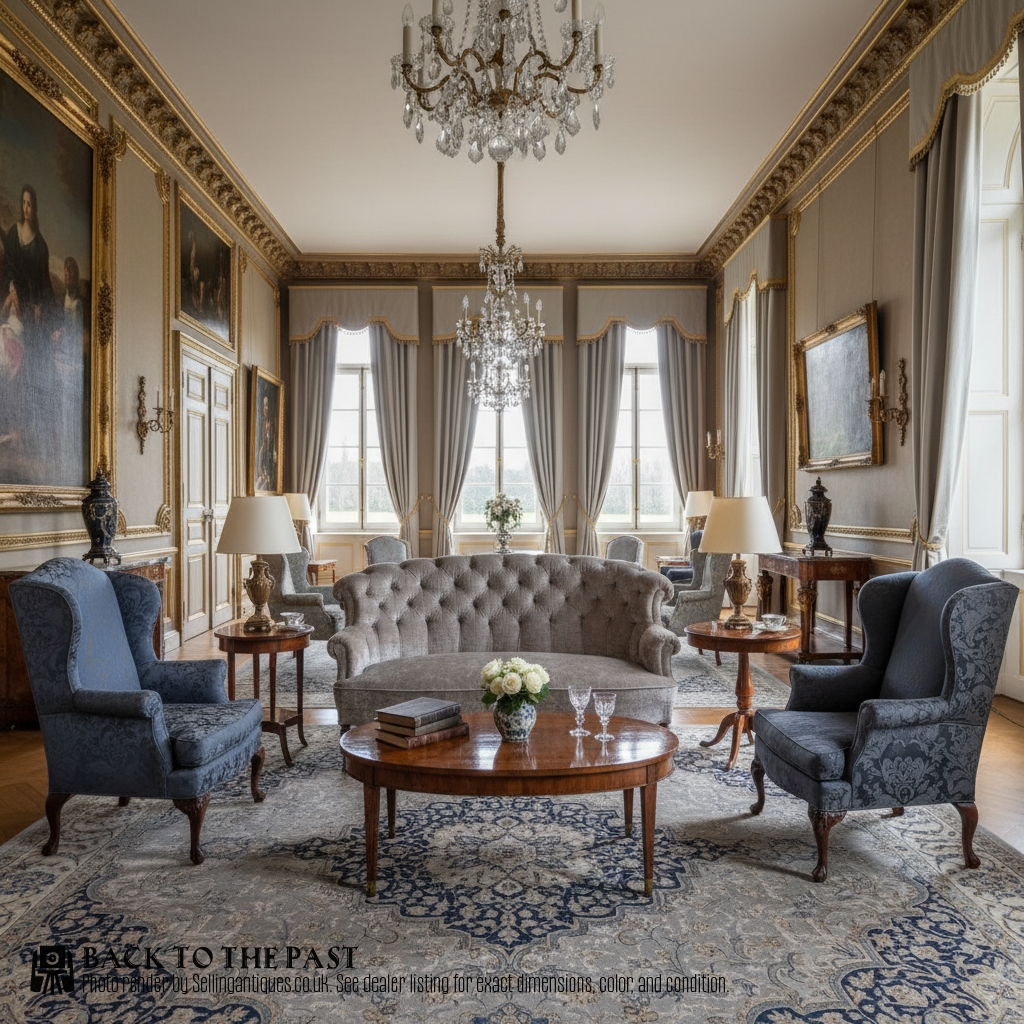
What a dark wood settee is
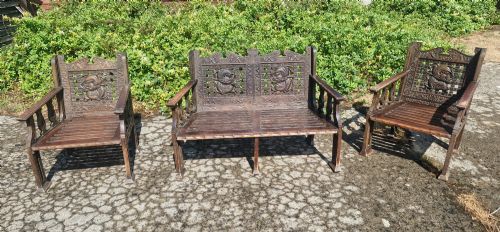
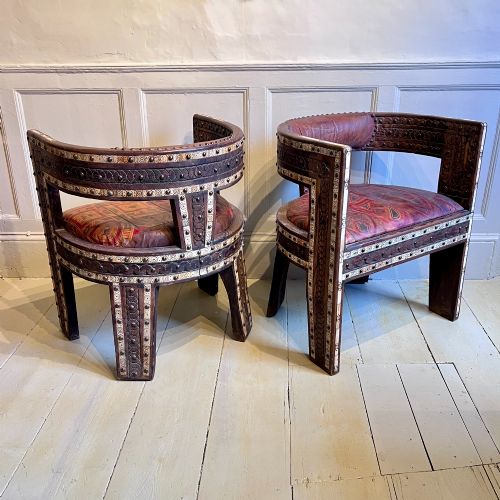
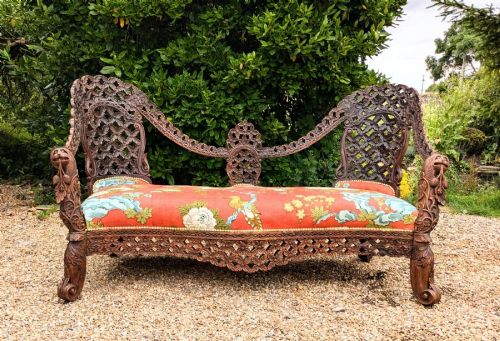
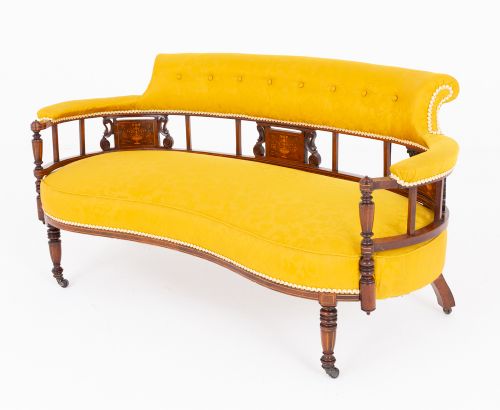
The versions most commonly met on this page are nineteenth-century pieces alongside eighteenth-century examples featuring upholstered surfaces in fabric, velvet, hessian, and brass details. They range from serpentine front camel back sofas to Anglo-Indian Bombay creations and country house seating.
Buyers seek these settees to anchor a principal room with rich timbers and traditional silhouettes. Each piece reflects the dominant stylistic preferences of its period, whether that is the restraint of the Georgian era or the decorative inlay of the late Victorian years.
What varies in quality
The distinction between standard examples and the finest pieces lies in the selection of the timber and the crispness of the carving or inlay work. Superior items display harmonious grain patterns in the rosewood or mahogany, alongside meticulously executed structural details that reflect the hand of a skilled maker.
The integrity of the frame construction and the preservation of original material elements dictate the standing of a piece within its period. High-grade examples maintain their original timber patination and structural cohesion without excessive replacement of core components.
Retail Price Guide 2026
Typical UK retail prices for dark wood settee, calculated from the Sellingantiques database of over a million retail prices indexed since 2003. This retail price guide relies exclusively on Sellingantiques data; no external sources or auction records are used, so the figures do not describe the wider market.
Some nineteenth-century makers hid secret compartments within the arm supports for storing reading glasses.
The Dark Wood Settee Glossary
- Camel back
- A sofa or settee featuring a contoured, undulating top rail that curves upward in the centre resembling a camel's hump. This profile was popular in eighteenth-century seating design.
- Serpentine front
- A furniture front rail that curves outward in the middle and inward at the sides in a continuous wave shape. It requires precise woodworking to achieve the fluid outline.
- Deep buttoning
- An upholstery technique where buttons are pulled tight through the padding at regular intervals to create a diamond pattern of folds and depressions. It provides both structural tension and a decorative surface.
- Inlay
- A decorative technique where contrasting pieces of wood or other materials are inserted into recessed portions of the base timber to form patterns. It adds visual complexity to the surface of the settee.
Frequently Asked Questions
Are these settees suitable for daily use?
These pieces were built to serve as functional seating in domestic settings, utilising robust timbers like mahogany and teak. Many handle regular sitting comfortably provided the internal webbing and upholstery remain in sound condition.
Placing them away from direct heat sources and strong sunlight preserves both the timber finish and the fabric coverings over time.
What is an Anglo-Indian settee?
An Anglo-Indian settee is a piece made in India during the nineteenth century, often for British residents or export, combining local carving traditions with European furniture forms. They frequently utilise dense tropical hardwoods.
These pieces showcase distinct regional decorative motifs that set them apart from standard domestic British production of the same era.
How should I care for rosewood and mahogany?
Maintenance involves dusting with a soft, dry cloth and avoiding silicone-based polishes that can build up a film over the historic surface. Keeping the timber away from rapid humidity changes prevents the wood from drying out.
Applying a traditional wax occasionally helps nourish the grain and maintain the natural lustre of the dark wood.