
Victorian Buttoned Settee
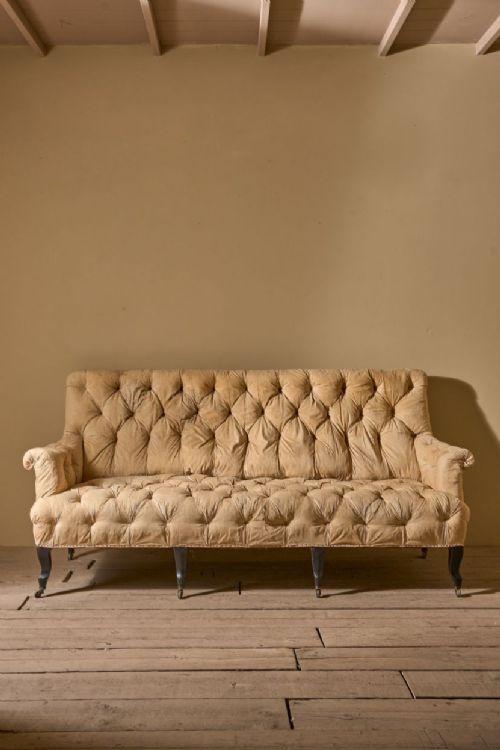
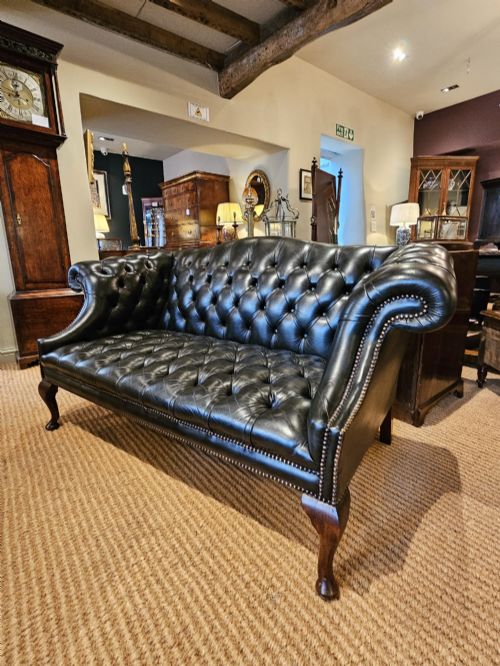
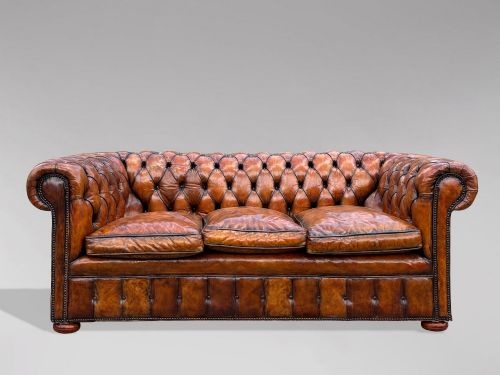
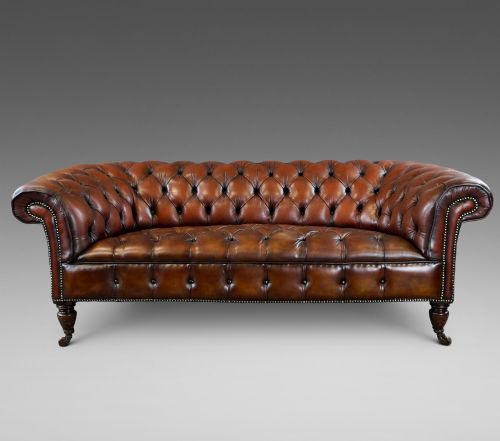
A victorian buttoned settee brings deep-buttoned upholstery and substantial nineteenth-century seating into a room.
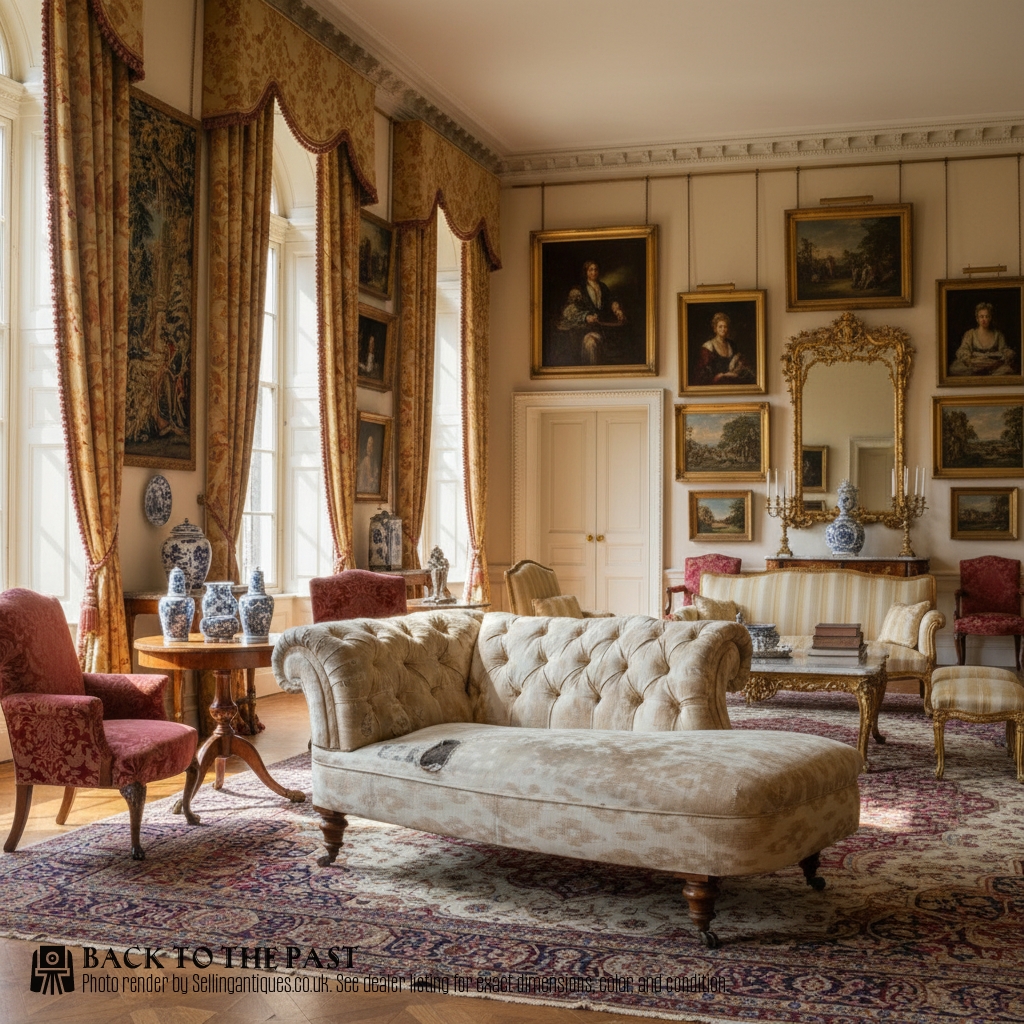
Victorian Buttoned Settee
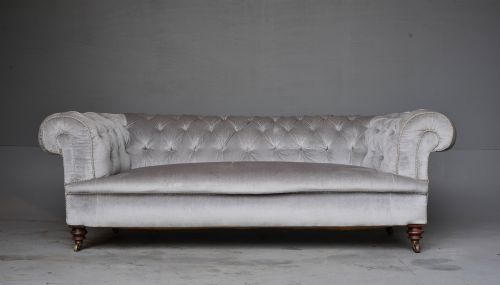
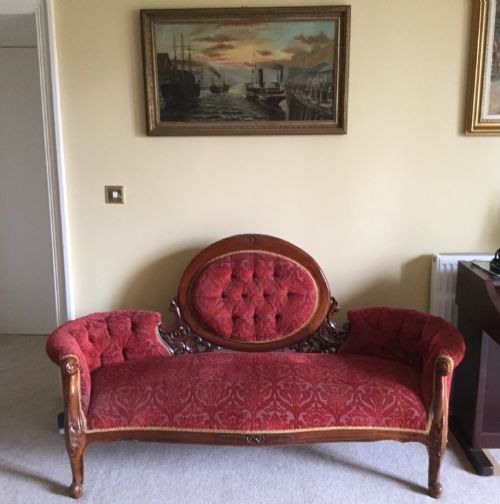
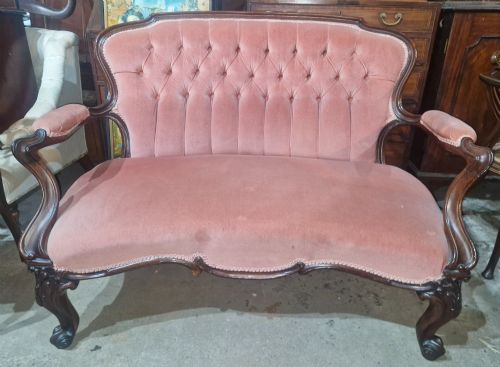
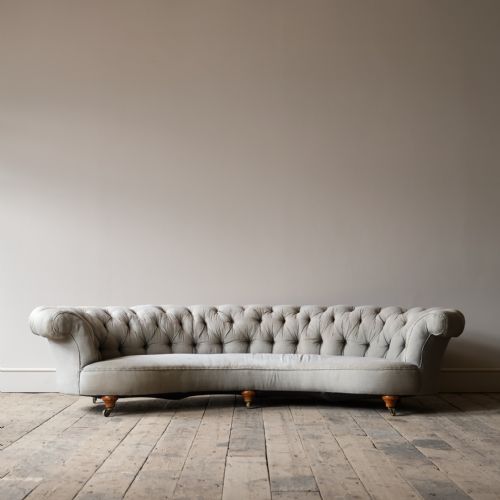
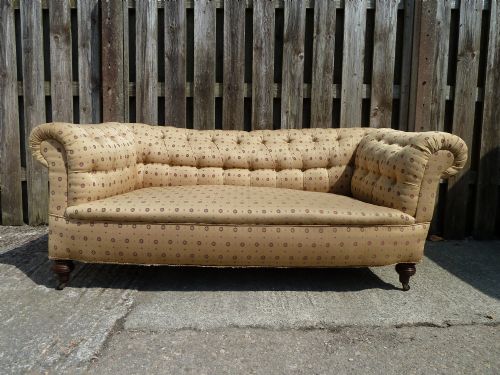
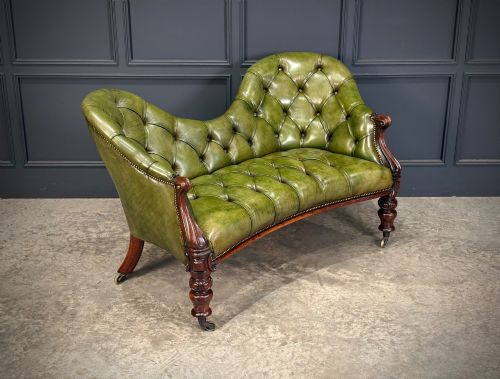
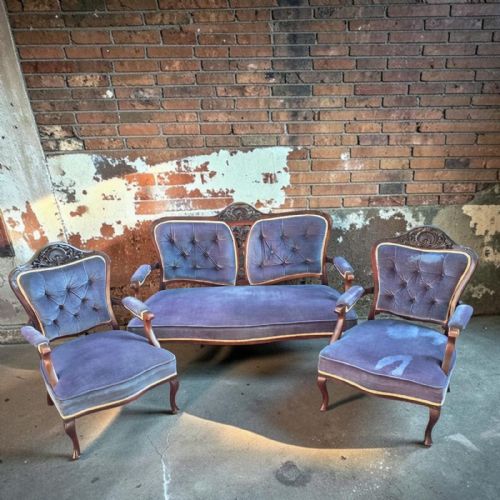
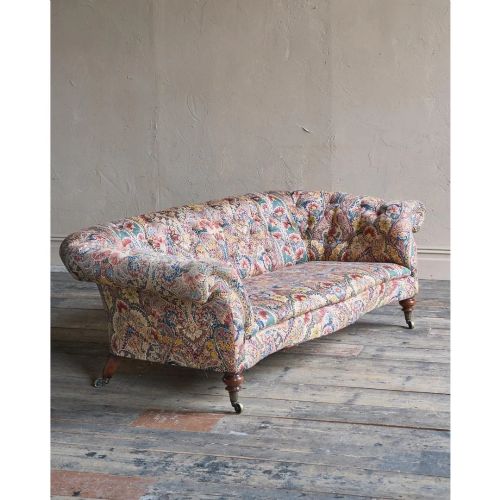
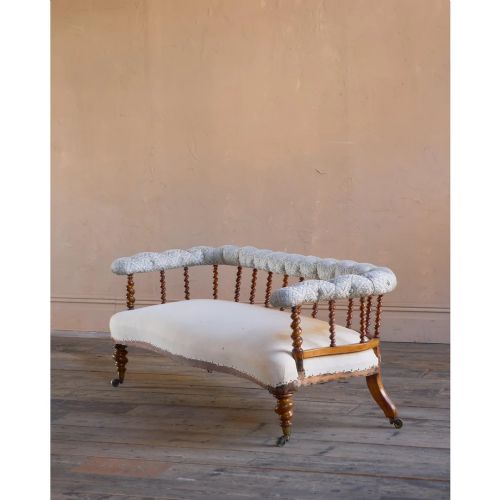
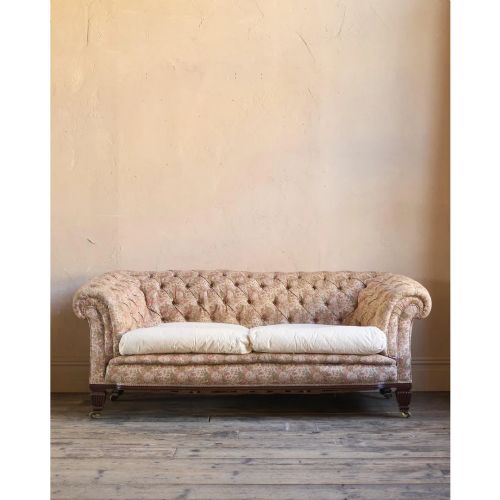
A victorian buttoned settee is a piece of nineteenth-century upholstered seating designed for formal reception rooms and parlours. The pieces found here include chesterfield sofas, chaise longues, window seats, and salon suites produced across the Victorian period.
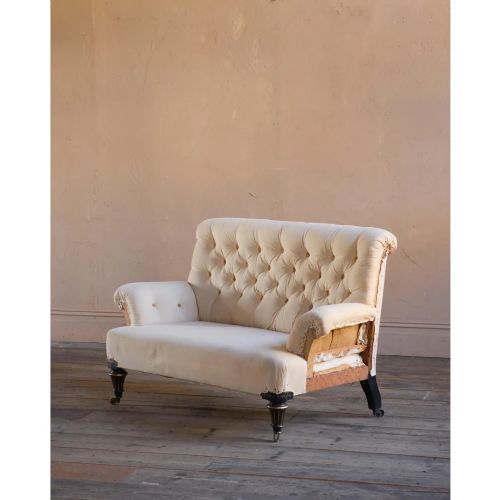
Most examples rely on deep buttoning across the backrest, a technique that creates a quilted surface with distinct tufts. Buyers will encounter walnut, mahogany, and rosewood frames paired with leather, velvet, or fabric upholstery.
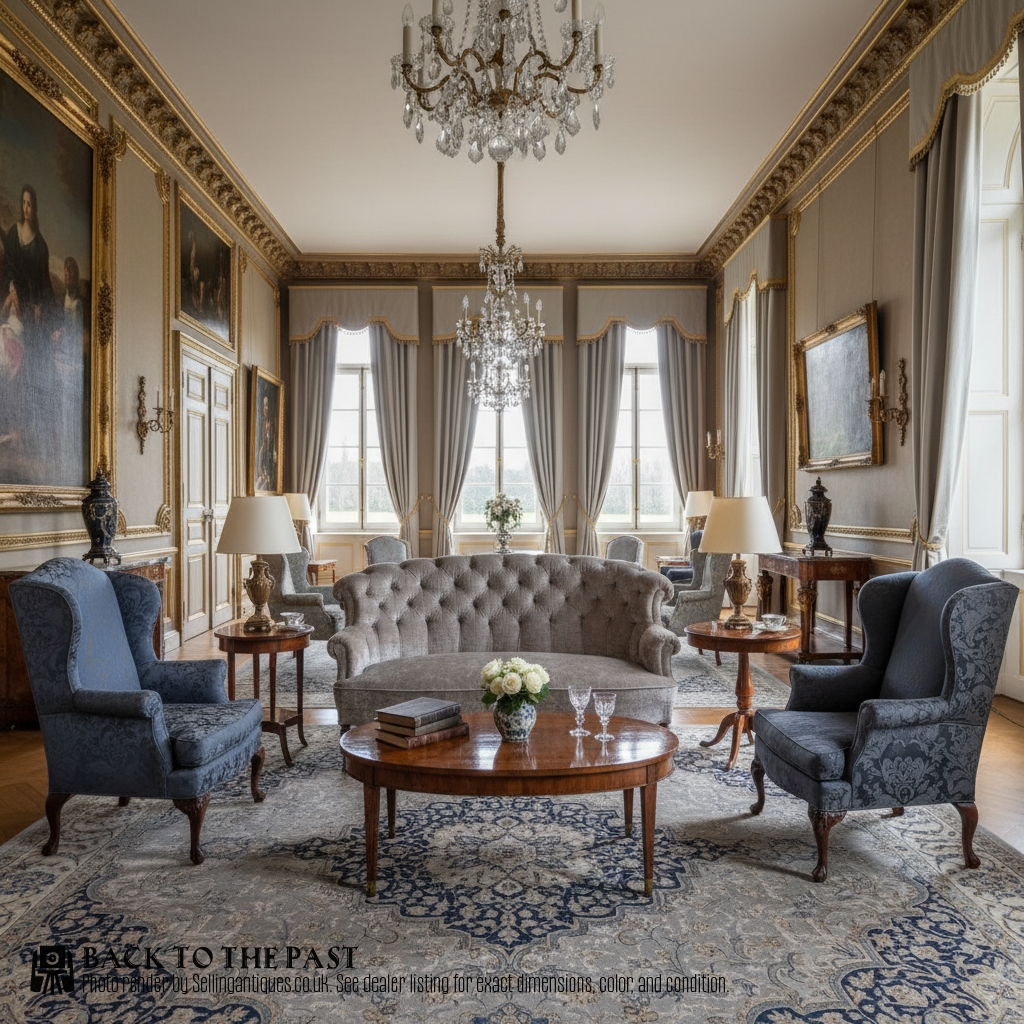
How They Were Made
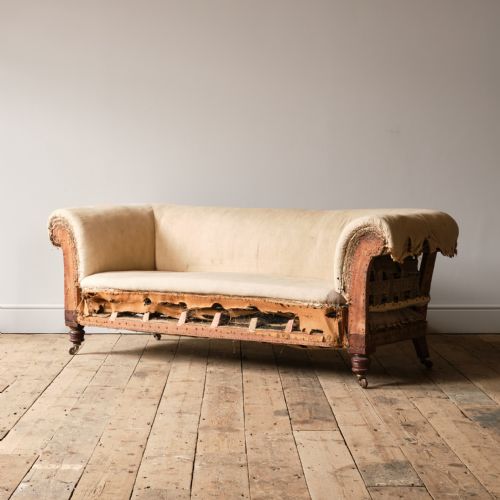
Cabinetmakers constructed the supportive frames using dense timbers like mahogany, walnut, and rosewood, often incorporating carved details along the woodwork. Joinery was reinforced to handle the tension of traditional sprung seats and heavy stuffing.
Upholsterers secured the horsehair or stuffing by pulling twine through to the front, creating the characteristic buttoned indentations. Leather, velvet, or brocade was then fastened tightly over the springs and padding.
A Victorian settee offers a proper place to recline while pondering whether your buttons are holding up as well as the horsehair stuffing.
What Varies in Quality
The sophistication of the timber carving and the precision of the frame determine the baseline standard of the seating. Walnut and rosewood frames with intricate hand-carved motifs represent a higher degree of workshop labour than plain wooden structures.
The execution of the buttoning and the choice of covering material dictate the refinement of the finished piece. Deep leather hides and rich velvet or brocade upholstery paired with traditional sprung bases indicate superior original construction.
Howard & Sons·C. Hindley & Sons·Jackson and Graham·Holland & Sons·H. Goodall & Sons
The Victorian Buttoned Settee Glossary
- Chaise Longue
- An elongated seat designed for reclining, combining elements of a sofa and a chair. These pieces often feature a single raised backrest at one end.
- Buttoned Back
- An upholstery method where tufting buttons are pulled deep into the padding to secure the filling and create a geometric pattern. This technique defines the texture of many nineteenth-century seats.
Victorian Buttoned Settee: Frequently Asked Questions
How were these settees used?
Victorian settees served as formal seating in drawing rooms, parlours, and reception spaces. They were designed for upright social sitting or, in the case of chaise longues, for reclining.
Their robust sprung bases and padded upholstery provided comfort during long periods of entertaining or resting in domestic interiors.
How do I live with one?
Integrating a nineteenth-century settee into a modern room works best by allowing the timber frame and buttoned upholstery to act as a focal point. Position the piece away from direct sunlight to protect leather or fabric coverings.
Regular dusting of the wooden frame and careful maintenance of the leather or textile surface will preserve the upholstery.
How do I tell periods apart?
Dating these pieces relies on observing the timber framing, carving styles, and upholstery methods. Earlier pieces often display elaborate rosewood or walnut carving associated with mid-century revival styles.
Later nineteenth-century examples incorporate different proportions and simpler structural lines, reflecting the transition toward Edwardian tastes.