


Victorian Tete a Tete
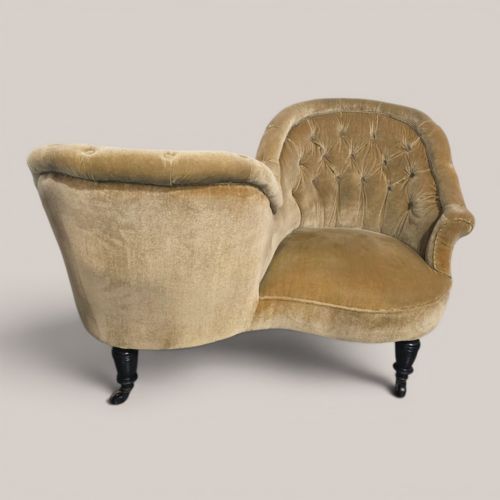
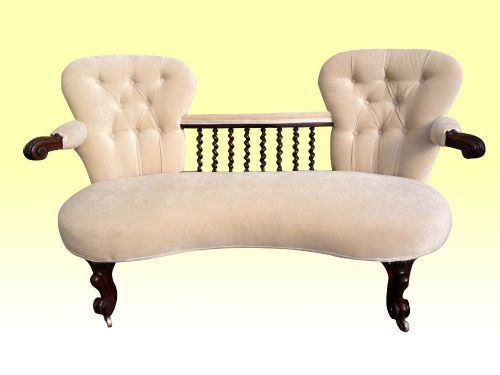
These Victorian tete a tete seating pieces offer facing seats designed for intimate conversation during the nineteenth century.
What a Victorian tete a tete is
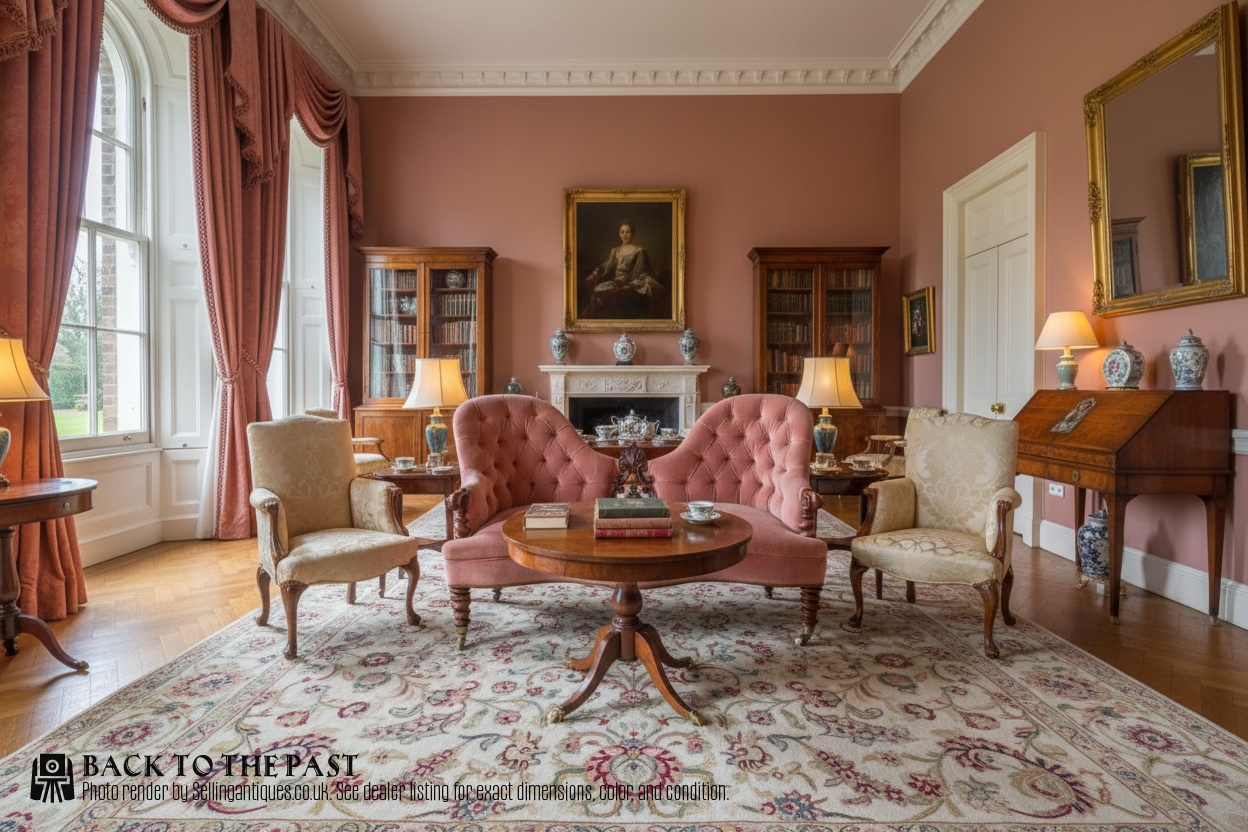
A Victorian tete a tete is an S-shaped conversational seat designed so two people can sit facing opposite directions while remaining close enough to talk easily. These pieces bring intimate Victorian seating forms into modern rooms as striking centrepieces.
The versions met on this page span the Victorian period, including pieces dated to eighteen fifty, eighteen sixty, and eighteen eighty. They appear in forms described as conversation sofas, conversation seats, settees, and chaise longues.
Materials and construction
Frames are constructed from hardwoods including walnut, rosewood, and mahogany, often shaped with carved details and barley twist supports. Some examples incorporate brass elements into their structural design.
Retail Price Guide 2026
Typical UK retail prices for victorian tete a tete, calculated from the Sellingantiques database of over a million retail prices indexed since 2003. This retail price guide relies exclusively on Sellingantiques data; no external sources or auction records are used, so the figures do not describe the wider market.
Current listings feature pieces exclusively from the Victorian period, spanning walnut, rosewood, mahogany, and brass.
Judging quality in conversation seats
Quality rests in the sculptural execution of the wooden frame, from the crispness of walnut and rosewood carving to the complexity of a barley twist or swivel mechanism. Finer examples display harmonious proportion across the double backrests and sturdy timber chassis.
The distinction between standard and superior pieces also lies in the execution of the upholstery, where deep buttoning and the choice of velvet or leather demand high skill. Original timber patination and balanced proportion elevate certain seats above basic variants.
The Victorian Tete a Tete Glossary
- Tete a tete
- A conversational double seat enabling two occupants to sit face to face in an S-configuration. This French term translates literally as head to head.
- Barley twist
- A carved wooden furniture leg or support resembling a twisted rope or column of barley sugar. This decorative turning technique appears frequently on nineteenth-century frames.
- Deep buttoning
- An upholstery method where tufting pulls the fabric deep into the padding to secure folds in a geometric pattern. This technique provides both structural firmness and decorative texture.
- Chaise longue
- An upholstered long chair intended for reclining, sharing lineage with the day bed. Nineteenth-century examples often display decorative wooden framing and padded backrests.
Frequently Asked Questions
What is a Victorian tete a tete?
A Victorian tete a tete is an S-shaped double seat built for two people to sit facing opposite directions. The arrangement allows occupants to converse face to face while sharing a single piece of furniture.
These pieces were popular in nineteenth-century drawing rooms for formal social interaction. Their distinctive curving form makes them striking focal points in contemporary interiors.
How were these seats used?
These conversation seats were used in nineteenth-century sitting rooms and parlours for close conversation. The S-shape allowed a pair to talk comfortably without turning their necks.
They functioned as social furniture for receiving guests or intimate family discussions. Today they serve well as central room dividers or statement seating.
What woods are used in the frames?
Frames are built from durable hardwoods selected for their rich grain and suitability for carving. Walnut, rosewood, and mahogany appear across the pieces.
Makers often highlighted the natural timber through polishing or shaped details like barley twists. These solid woods ensure structural integrity across the curving frame.