

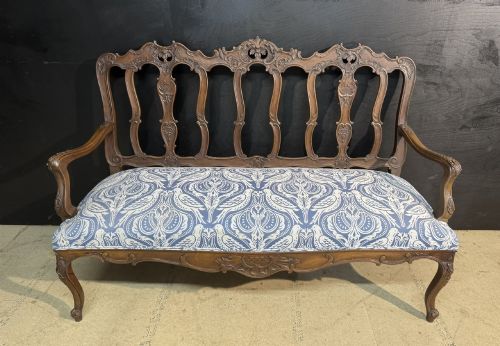
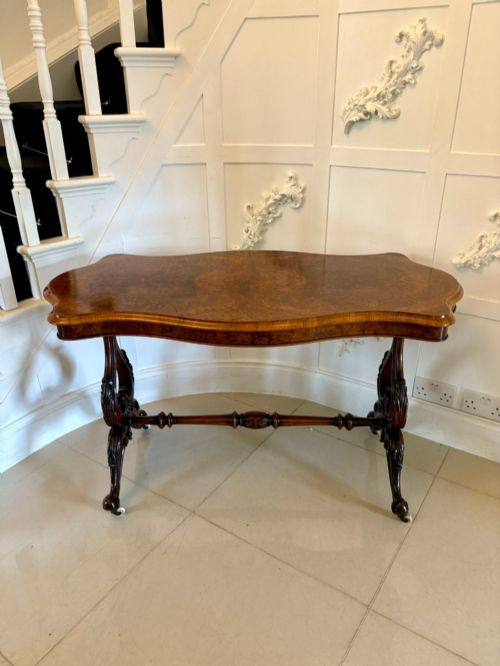
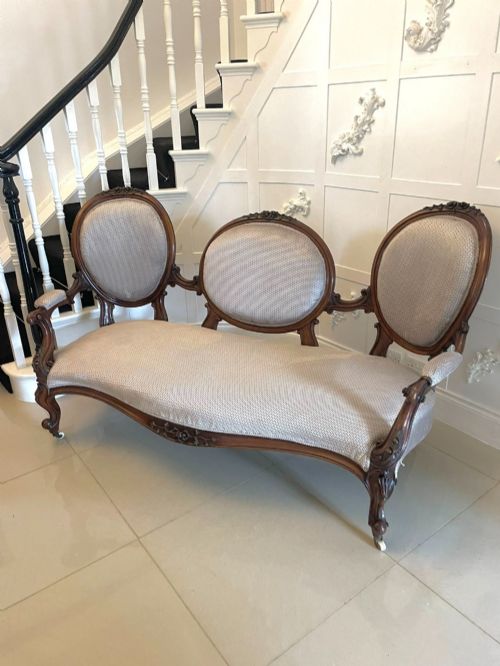
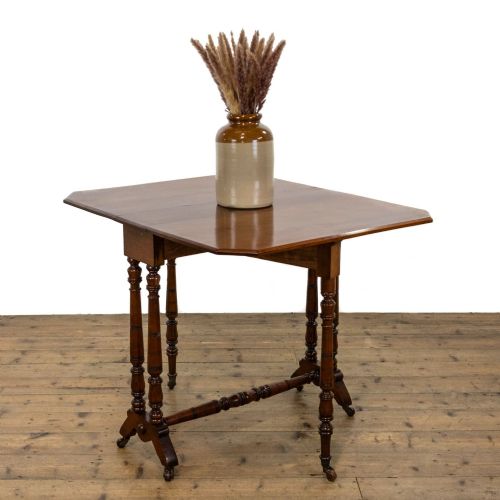
Victorian Walnut Sofa
A victorian walnut sofa brings nineteenth century warmth and fluid timber grain to a room, offering both show frame elegance and deep upholstered comfort.
Forms and Periods of the Victorian Walnut Sofa
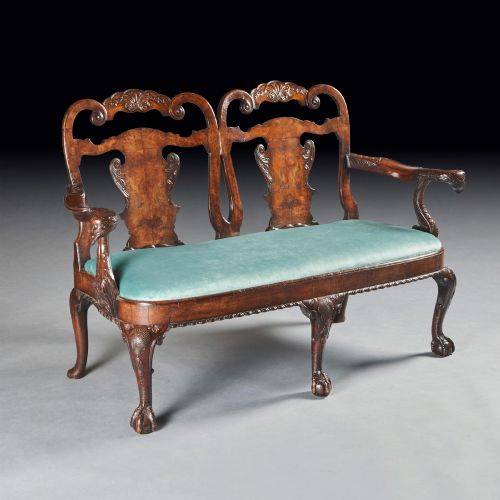
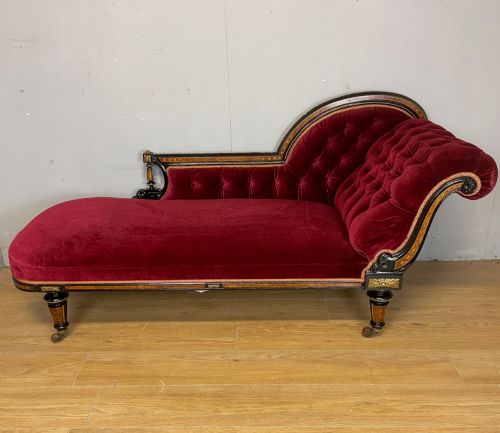
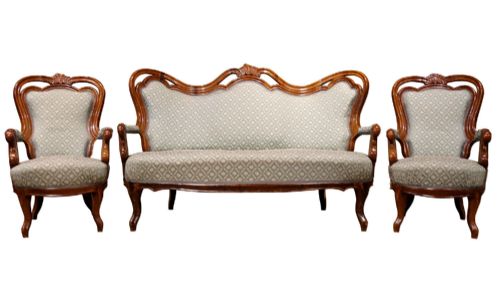
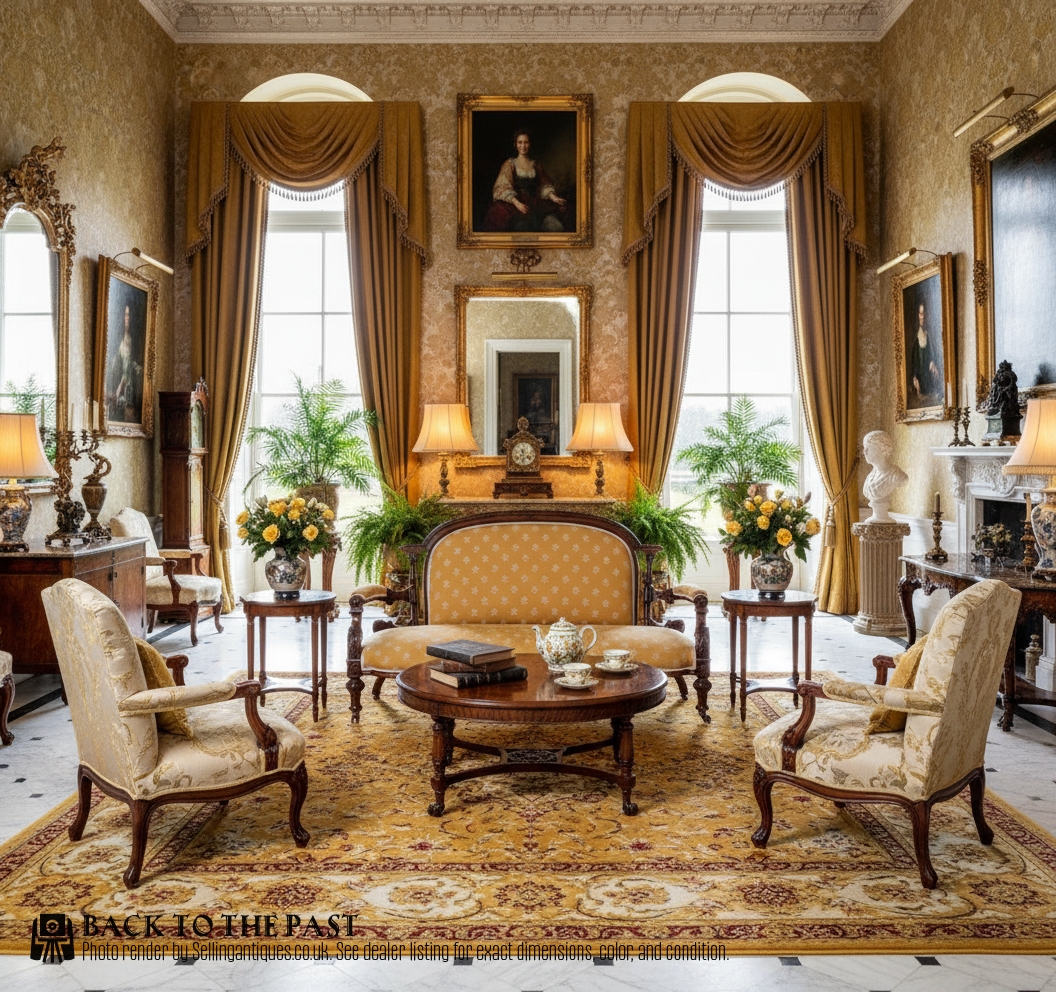
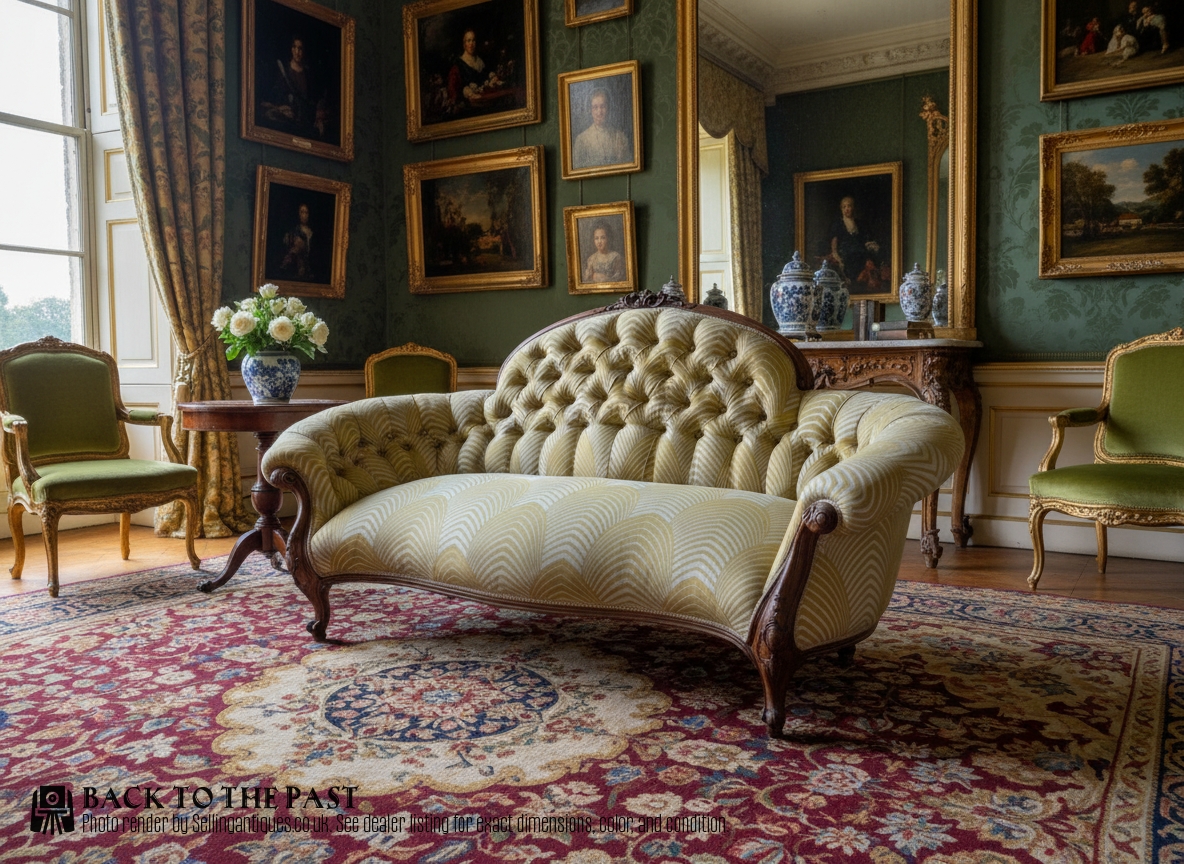
A victorian walnut sofa spans compact salon settees, double ended chaise longues, and larger chesterfield or conversation forms dated across the nineteenth century. These pieces emerge from periods including the eighteen fifties and eighteen sixties, alongside occasional Edwardian examples.
Buyers commonly encounter cameo back carved show frame settees and button back upholstered designs, often reflecting Rococo Revival or English Country influences. The timber displays rich figure, supporting diverse seating arrangements from boudoir window seats to substantial parlour suites.
Materials and Construction
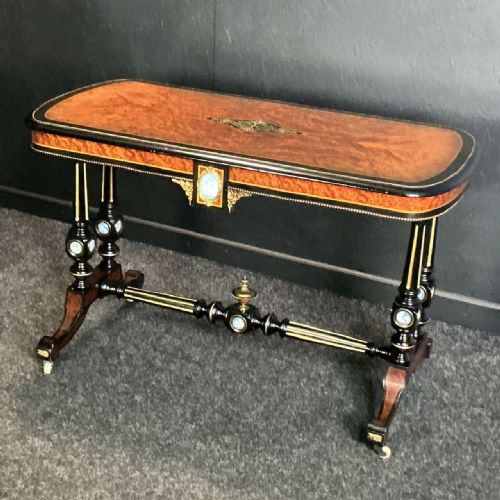
Makers utilised solid walnut and burr walnut veneers for structural frames, shaping them with hand carving around crest rails and cabriole legs. Show wood frames display distinct grain patterns, occasionally paired with inlaid details.
Upholstery incorporates traditional textile coverings such as velvet, leather, and fabric, secured over buttoned padding. Metal elements like brass castors appear on legs, while structural joins rely on period cabinet making techniques.
Retail Price Guide 2026
Typical UK retail prices for victorian walnut sofa, calculated from the Sellingantiques database of over a million retail prices indexed since 2003. This retail price guide relies exclusively on Sellingantiques data; no external sources or auction records are used, so the figures do not describe the wider market.
Listings feature walnut, fabric, brass, textile, and velvet across Victorian, Edwardian, Rococo Revival, and English Country styles.
Judging Quality in Walnut Seating
Quality rests on the crispness of the hand carving and the selection of walnut timber, where dense burr figures and deep grain contrast elevate the piece. Finer examples exhibit harmonious proportions between the exposed wooden show frame and the upholstered body.
The integrity of the original timber framing and the subtlety of stylistic details, such as Rococo Revival curves or refined cameo backs, distinguish standard parlour seating from exhibition grade items.
Howard and Sons
The Victorian Walnut Sofa Glossary
- Show frame
- A wooden structure left visible around the upholstered elements of a seat. This design highlights the carved walnut timber.
- Chaise longue
- An upholstered seating form combining a chair and a footstool for reclining. Nineteenth century versions often feature a single scrolled end.
- Chesterfield
- A deep buttoned upholstered seating form with arms and back of equal height. These pieces often incorporate leather or heavy fabric.
- Button back
- An upholstery technique where buttons are pulled deep into the padding to create a padded diamond pattern. This method secures the internal stuffing.
Frequently Asked Questions
What is a victorian walnut sofa?
A victorian walnut sofa is a nineteenth century wooden seated furniture piece featuring walnut timber frames and upholstered cushions.
These items range from small salon settees to large chesterfields, reflecting revival styles popular during the period.
How do I date a walnut sofa?
Dating relies on observing stylistic markers, frame shapes, and wood preparation methods recorded across nineteenth century examples.
Details like Rococo Revival carving, cameo backs, and specific upholstery styles help place pieces between the eighteen fifties and the Edwardian era.
Were these sofas used in parlours?
Walnut settees served as formal seating in nineteenth century parlours, drawing rooms, and salons to receive guests.
Smaller variants also furnished boudoirs and hallways as decorative or occasional seating.
How do I care for walnut wood?
Maintenance involves keeping the timber away from direct heat sources and sudden humidity changes to protect the wood grain.
Applying appropriate wax preserves the finish on carved show frames without harming underlying veneers.