

Antique Salon Settee
When you search for an antique salon settee, you are looking at formal upholstered seating designed for the reception rooms of nineteenth and early twentieth-century houses.
Antique Salon Settee
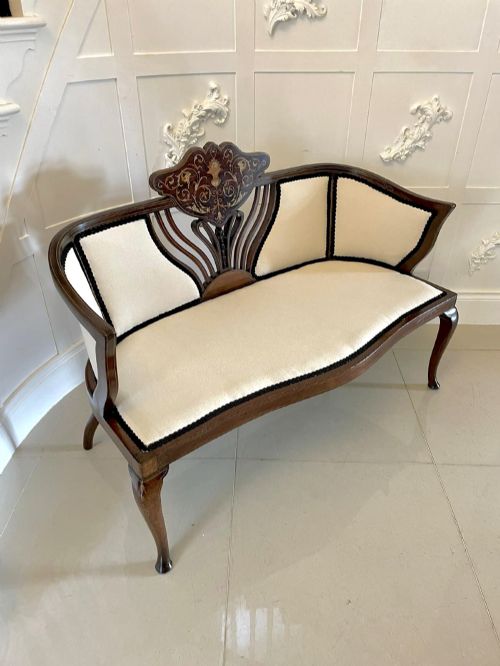
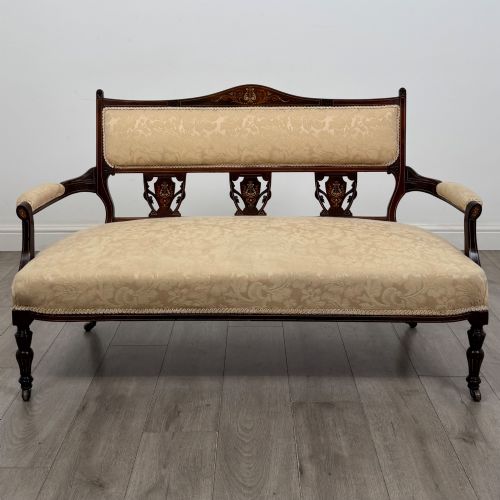
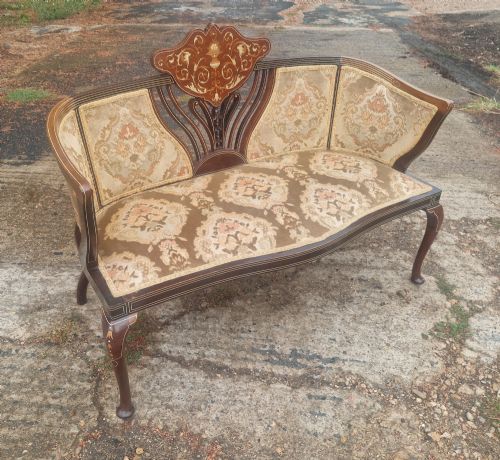
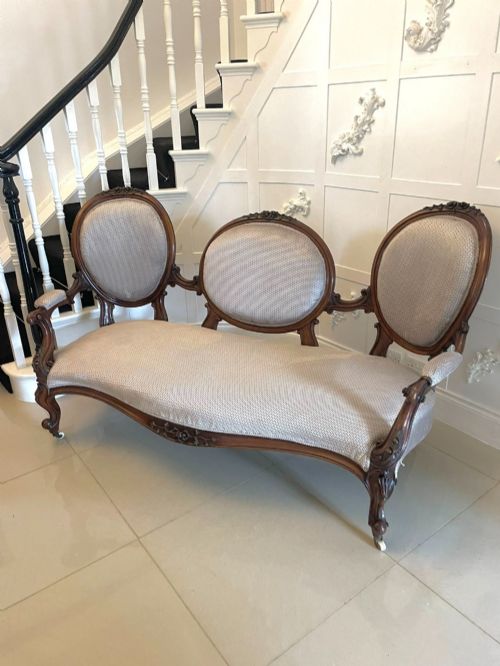
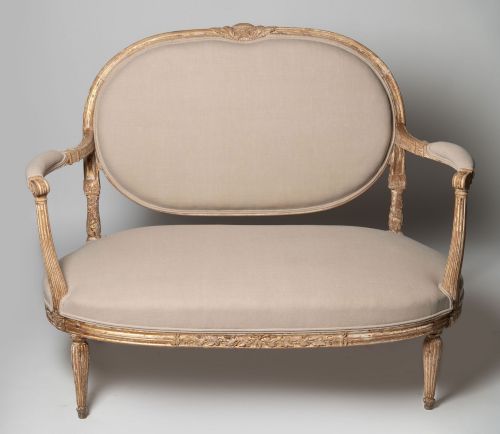
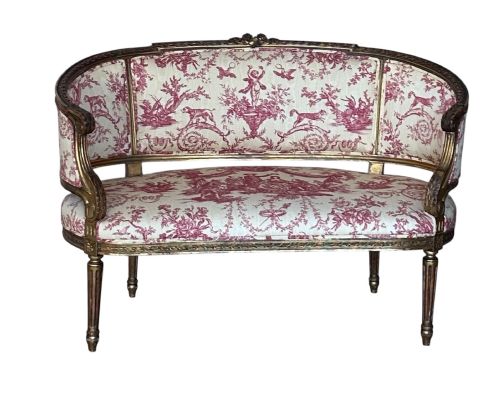
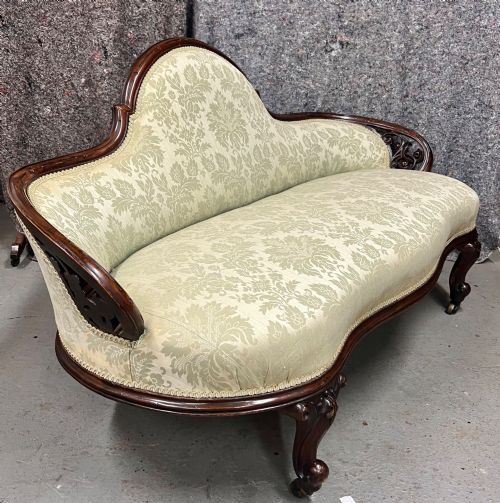
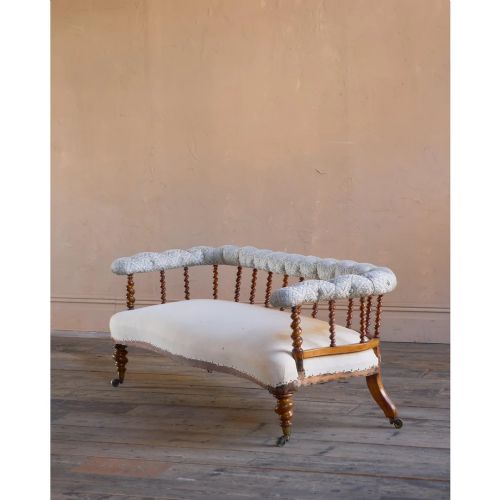
An antique salon settee encompasses formal two and three-seater couches made for drawing rooms, parlours and formal reception spaces during the nineteenth and early twentieth centuries. The pieces on this page span Victorian, Edwardian and continental periods, ranging from English mahogany frames to elaborately carved French giltwood and walnut designs.
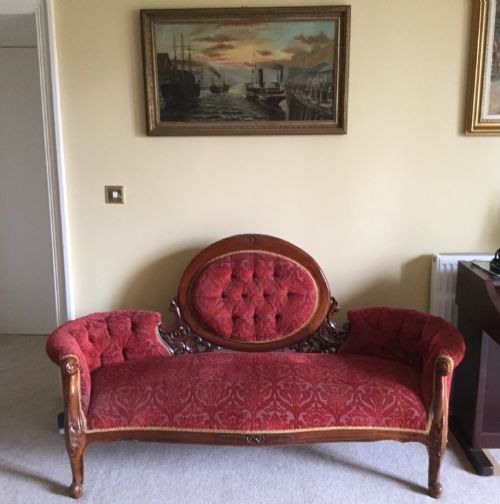
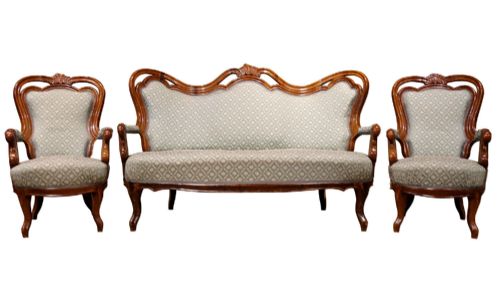
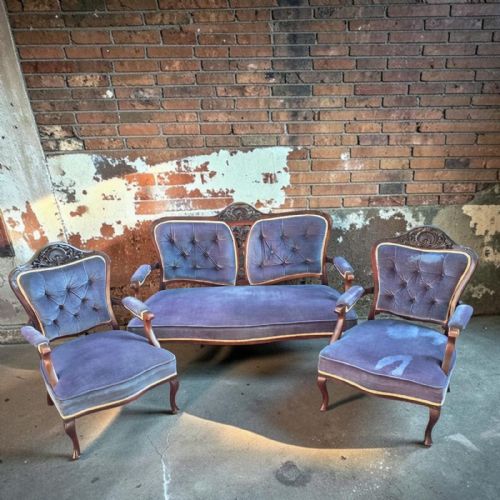
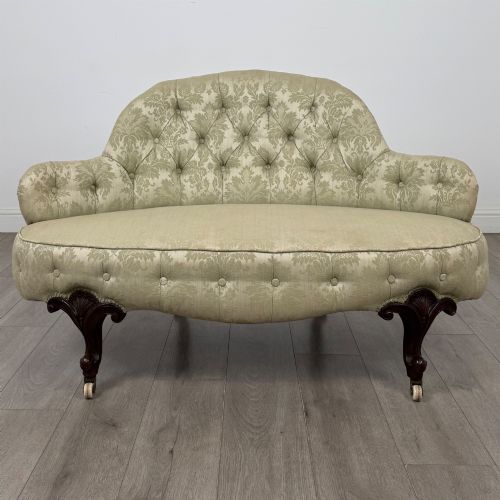
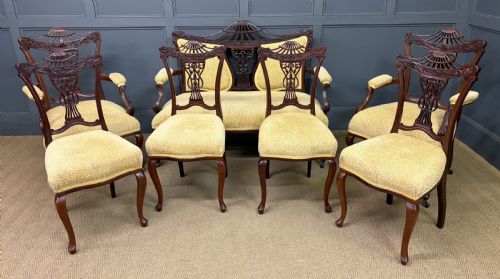
Buyers will encounter single settees alongside larger salon suites that include matching armchairs and occasional chairs. Forms vary from double-ended sofas and cameo back frames to Louis XV style canapés and inlaid mahogany window couches.
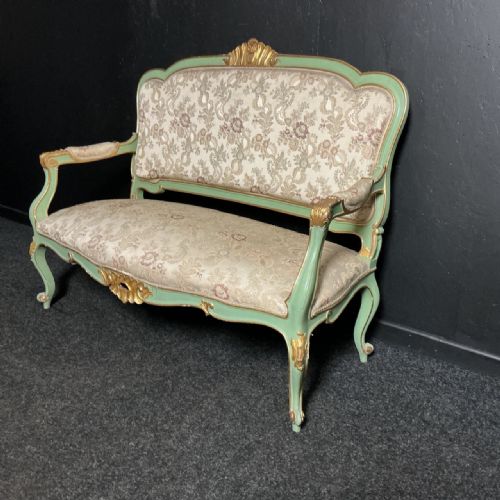
Origin and style divide these seats into distinct groups, with English mahogany and walnut pieces showing restrained inlay or carved woodwork, while continental examples often feature gilded frames, painted finishes and sweeping cabriole legs.
How they were made
Makers built the structural frames of these settees using solid hardwoods such as mahogany, walnut, rosewood, oak and beech, frequently shaping the timber with detailed hand-carving or delicate marquetry inlay in satinwood. Continental workshops often employed giltwood or painted finishes, sometimes complemented by brass and ormolu mounts.
Traditional upholstery techniques underpin the comfort and longevity of these seats, utilising deep buttoning, sprung bases and supportive webbing beneath textile coverings. Surviving examples appear in a variety of period textiles, including velvet, silk, brocade and modern upholstery fabrics applied during later restoration.
Antique Salon Settee Retail Price Guide 2026
Typical asking prices for salon settee among the pieces listed under this phrase on Sellingantiques today, from the lower quarter to the upper quarter. They describe what is for sale here now, not the wider market.
Listings feature Victorian, Edwardian and nineteenth-century pieces constructed from mahogany, walnut, rosewood and giltwood.
What varies in quality
The distinction between standard commercial seating and exceptional cabinet work rests in the crispness of the timber carving and the sophistication of the frame construction. Finer pieces demonstrate precise joinery, well-balanced proportions and high-grade timbers that retain their structural integrity over generations.
Upholstery execution and decorative embellishment further separate the tiers, visible in the precision of deep buttoning, the symmetry of marquetry inlay and the quality of original gilding or cast brass mounts.
C. Hindley & Sons
The Antique Salon Settee Glossary
- Canapé
- A traditional French upholstered sofa featuring an exposed wooden frame, often carved in the Louis XV or Louis XVI style. These pieces typically display slender cabriole legs and curved backs.
- Marquetry
- Decorative veneer work arranged in intricate patterns using contrasting timbers such as satinwood and mahogany. This technique frequently appears on Edwardian and late Victorian salon frames.
- Double-ended sofa
- A couch design with scrolled or raised ends of equal height, allowing a person to recline comfortably from either direction. These forms were popular in nineteenth-century drawing rooms.
- Cameo back
- An upholstered chair or settee back shaped to resemble a carved cameo profile, enclosed within a decorative wooden frame. This silhouette is characteristic of mid-Victorian walnut seating.
Antique Salon Settee: Frequently Asked Questions
What is a salon settee?
A salon settee is a formal upholstered seat created for nineteenth and early twentieth-century reception rooms. These pieces served as decorative seating for guests in drawing rooms and parlours.
Unlike everyday seating, they emphasise stylistic flair, featuring exposed carved wood, polished mahogany or walnut frames, and elaborate fabric upholstery.
How do I date an antique settee?
Dating relies on examining the timber, the carving style and the structural framing methods used by the maker. Victorian pieces often show heavier walnut or mahogany frames with deep buttoning, while Edwardian versions frequently feature lighter inlaid mahogany.
French pieces are typically categorized by revival styles such as Louis XV or Louis XVI, reflecting eighteenth-century design influences interpreted during the nineteenth century.
Where were salon settees used?
These settees belonged in the public rooms of substantial homes, including drawing rooms, parlours and formal reception spaces. They were positioned to facilitate conversation and display the taste and social standing of the household.
Smaller versions, sometimes described as boudoir or window couches, served in private chambers and dressing rooms.
Can I use an antique settee daily?
Many antique settees remain structurally robust for regular domestic use, provided the internal webbing and sprung bases have been properly maintained or restored. Careful consideration should be given to the delicate nature of antique polished wood and fine upholstery fabrics.
Placing them away from direct sunlight preserves the textiles and the original wood finishes.