
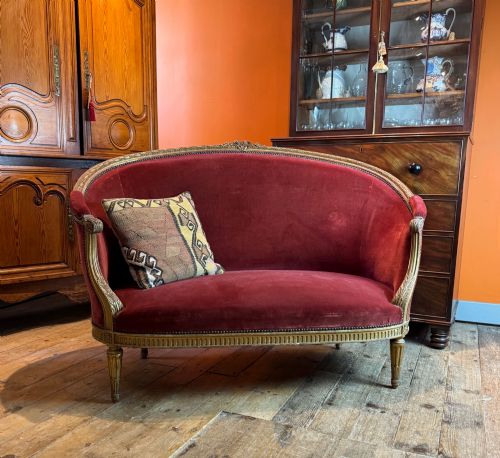
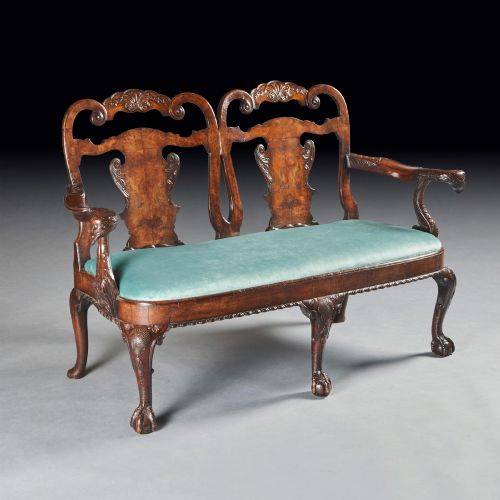
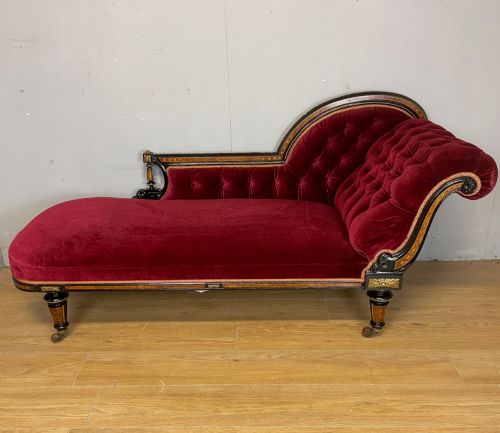
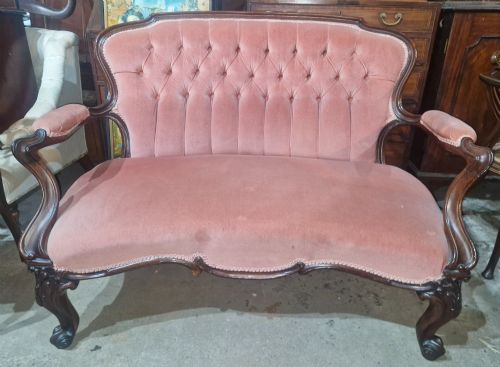
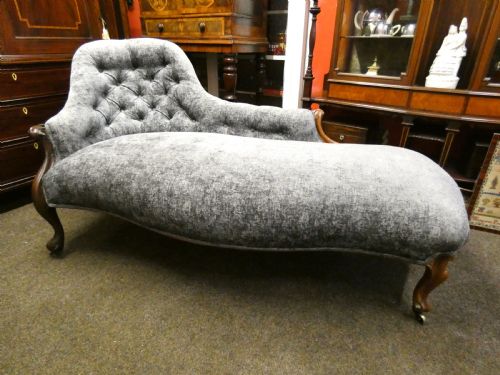
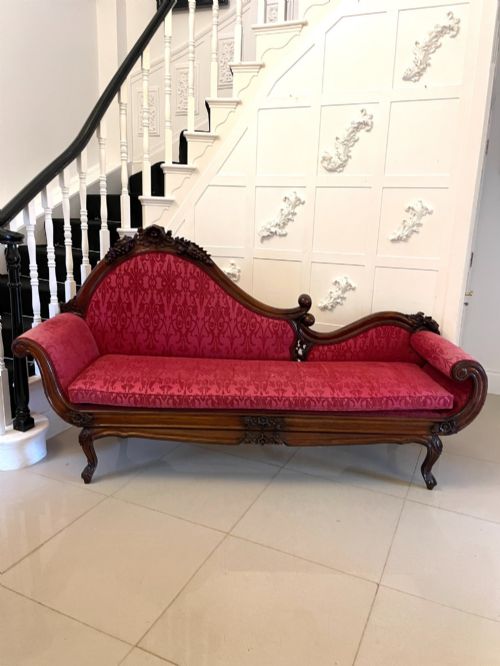
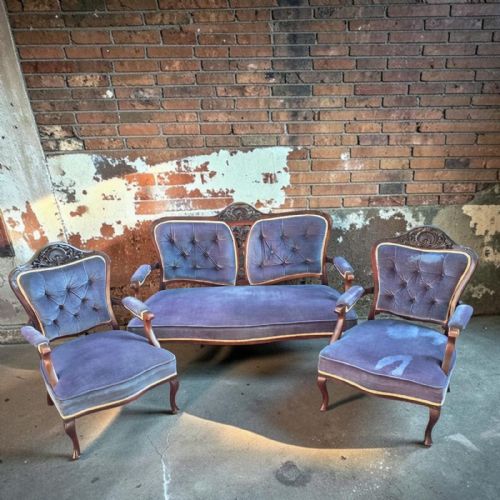
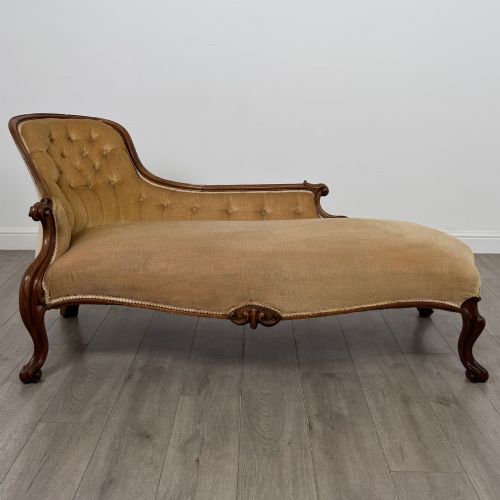
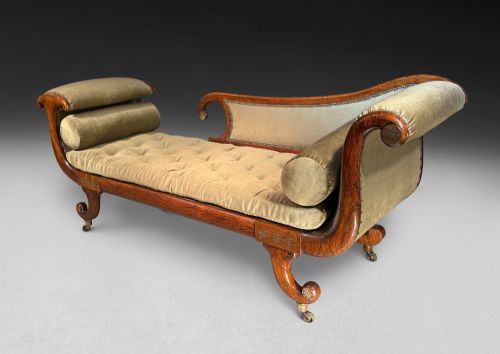
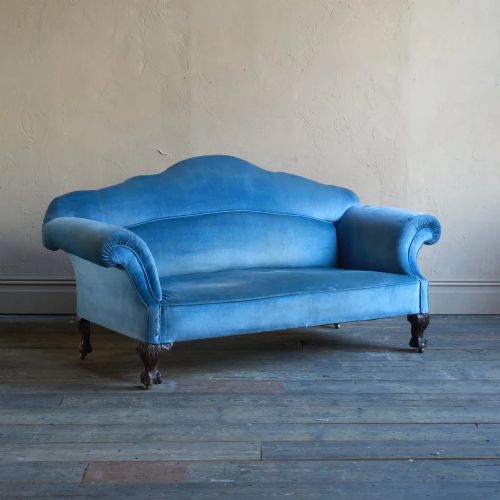
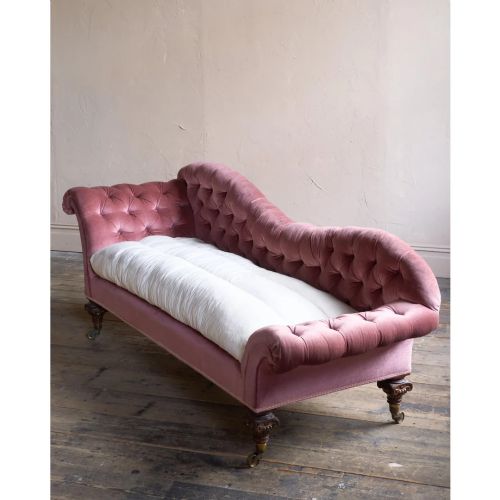
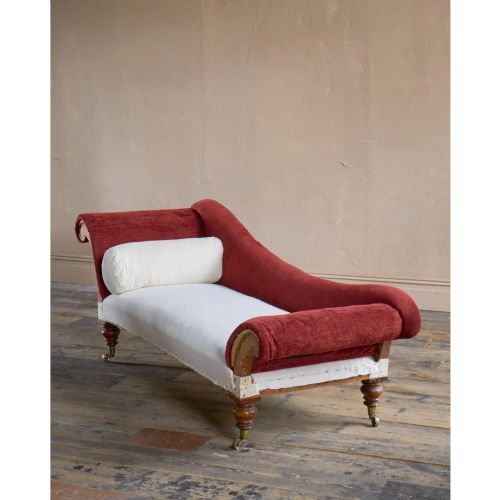
Antique Velvet Sofa
An antique velvet sofa brings texture and historical character to a room, offering deep upholstery paired with period timber frames.
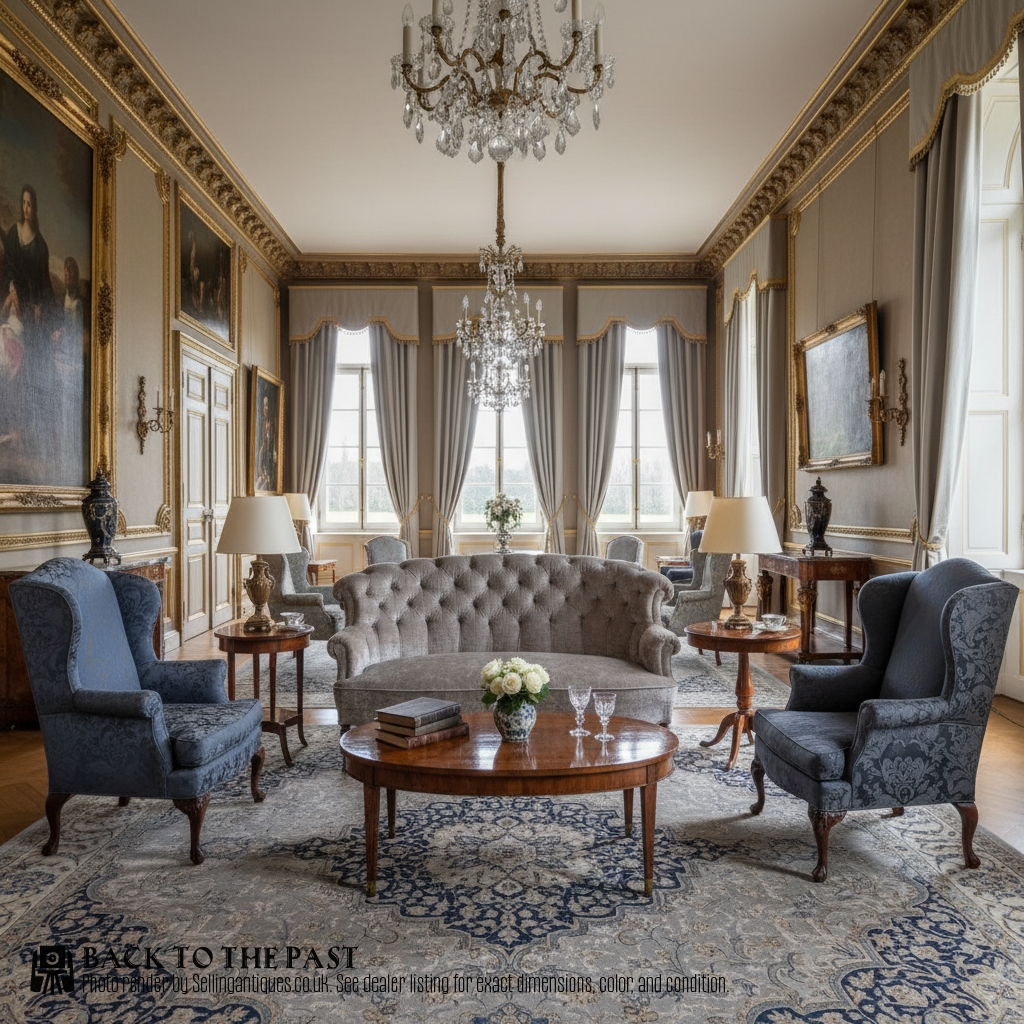
Antique Velvet Sofa
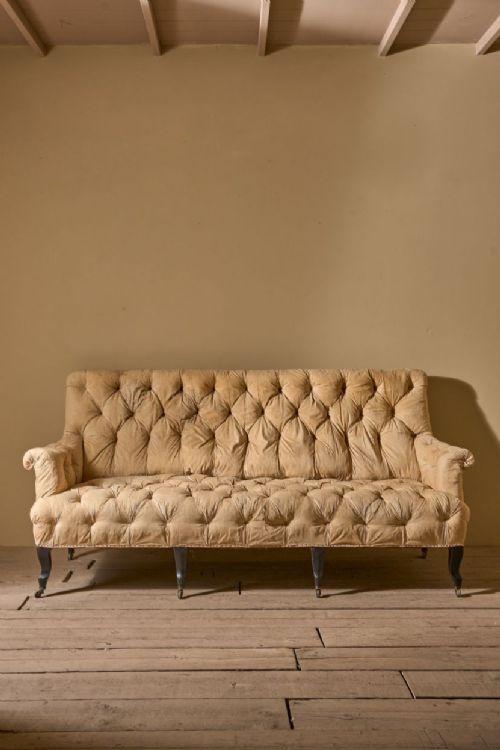
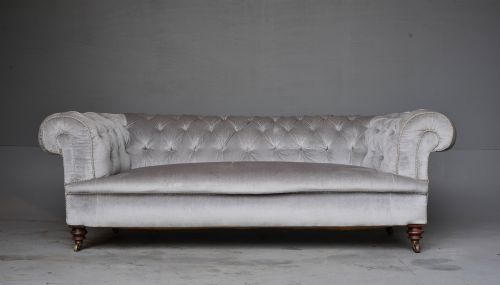
When you search for an antique velvet sofa, you encounter a range of nineteenth and early twentieth-century seating forms that span from buttoned Chesterfields and chaise longues to conversational twin chair backs and salon suites.
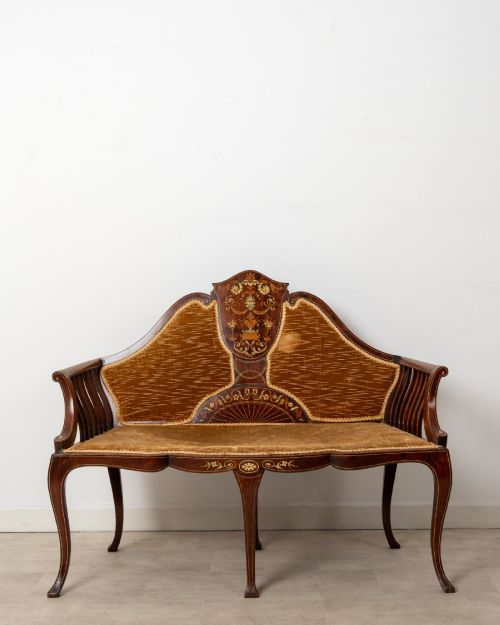
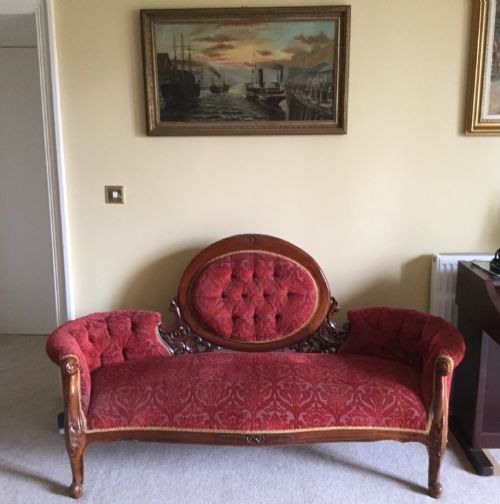
The most common versions on this page are Victorian and Edwardian settee designs, often built with walnut, mahogany, or rosewood frames that support plush fabric upholstery.
Makers and workshops of the period produced these pieces for formal drawing rooms and country houses, adapting French styles alongside traditional English shapes.
Materials and Construction
Frames are constructed from dense hardwoods like mahogany, walnut, and rosewood, sometimes accented with ebonised finishes, brass inlays, or ormolu mounts.
Upholstery relies on traditional techniques involving sprung seats, deep pile velvet or brocade fabrics, and hand-stitched buttoning to secure the cushioning.
Conversation sofas allowed two people to sit facing opposite directions, whispering secrets without straining their necks.
Distinctions in Execution
The standard of carving on the wooden frames dictates much of the visual hierarchy, with crisp hand-carved details and figured timber grains marking out superior pieces.
The integrity of the internal springing and the weight of the velvet pile also distinguish everyday seating from exceptional examples attributed to prominent workshops.
Howard and Sons·Holland and sons
The Antique Velvet Sofa Glossary
- Chesterfield sofa
- A deep-buttoned upholstered sofa traditionally featuring arms and back of the same height. It remains a staple of nineteenth-century seating design.
- Giltwood
- Wood that has been treated with gold leaf or gilt gesso. This finish appears frequently on French-influenced salon pieces.
- Buttoned back
- Upholstery style where depressions are formed in the padding by stitches pulled tight and secured with fabric-covered buttons. It creates a diamond pattern across the velvet.
Antique Velvet Sofa: Frequently Asked Questions
How do I identify a Victorian sofa?
Victorian sofas generally exhibit darker hardwood frames, such as walnut or rosewood, accompanied by heavier carved details and sprung upholstery.
Many examples incorporate button-backed velvet or serpentine lines reflecting the revival styles popular during the nineteenth century.
Are these sofas suitable for daily use?
Many antique velvet sofas are robust enough for everyday seating, particularly those with strong mahogany or walnut frames and modern internal restoration.
Checking whether the piece retains its original sprung base or has been re-webbed helps determine its practical comfort.
How do I care for antique velvet?
Antique velvet requires gentle brushing with the grain to maintain the pile and prevent crushing over time.
Professional dry cleaning or specialist upholstery care is recommended for treating spots without damaging the delicate pile or underlying timber.