

Victorian Settee
When buying a victorian settee, you are investing in a nineteenth-century seating piece that combines generous comfort with architectural timber framing.

Victorian Settee
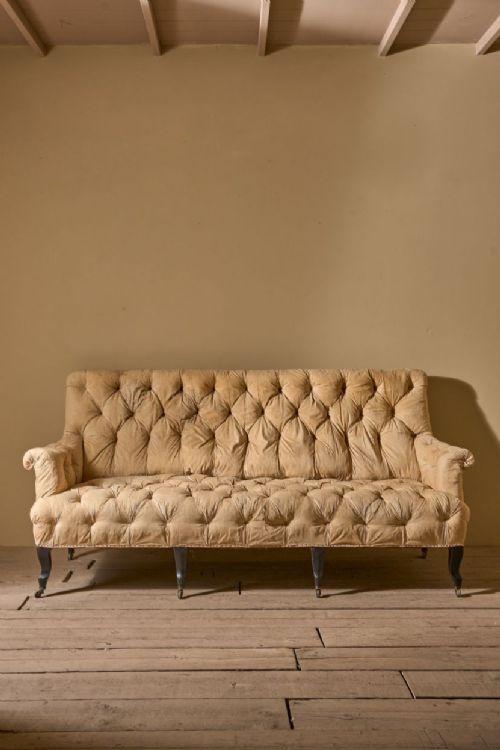
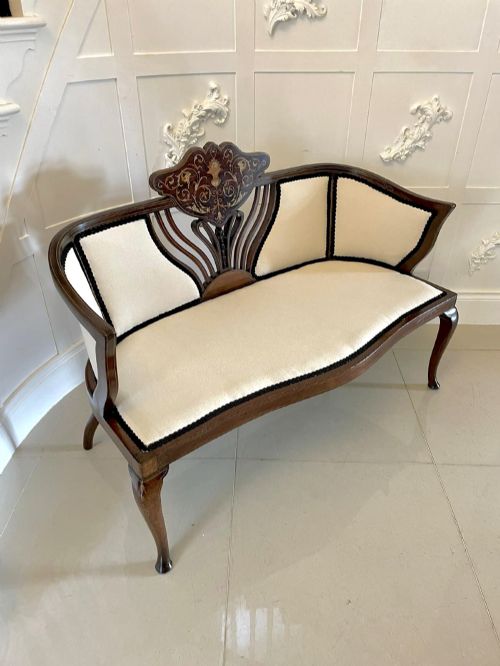
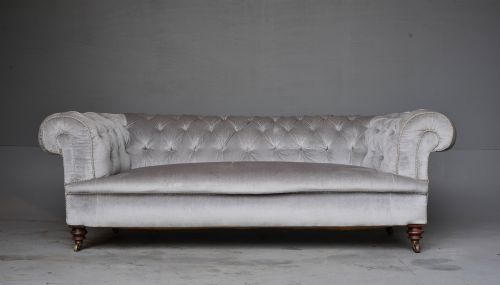
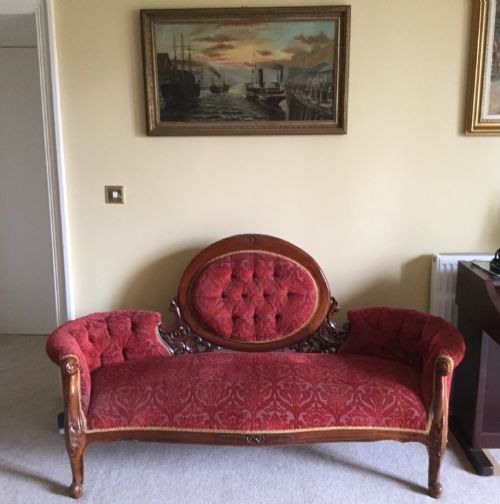
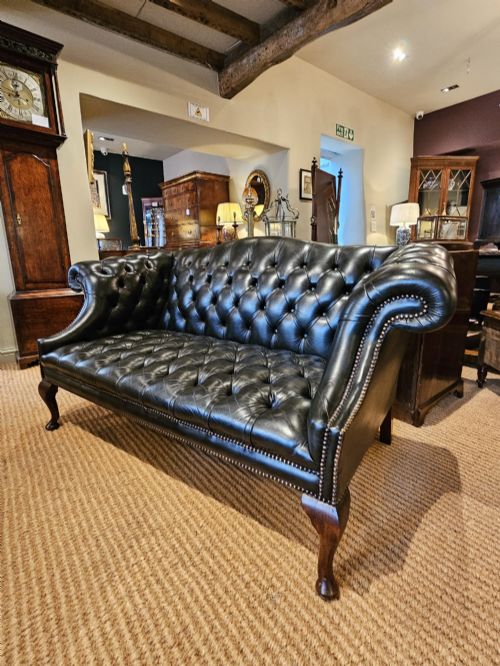
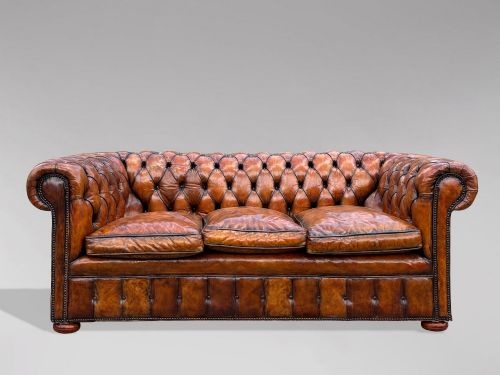
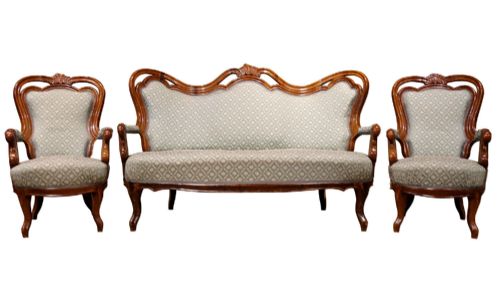
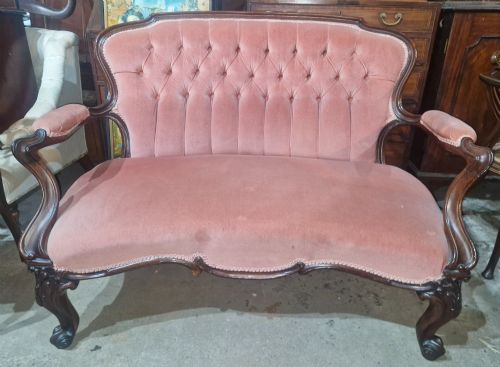
A victorian settee encompasses diverse seating forms including deep-buttoned Chesterfields, double-ended sofas, cameo-backed couches, and chaise longues dating through the nineteenth century. These pieces were designed for formal drawing rooms and parlours, providing cushioned seating for multiple occupants.
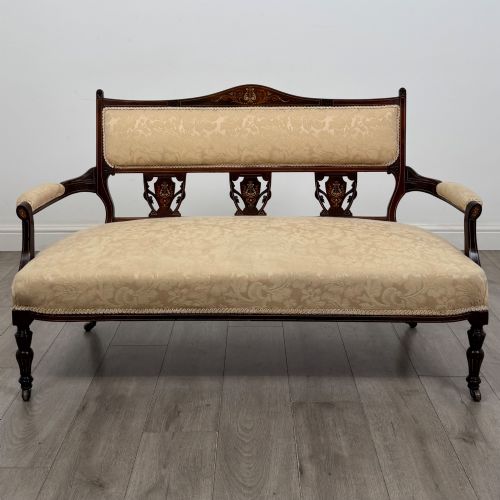
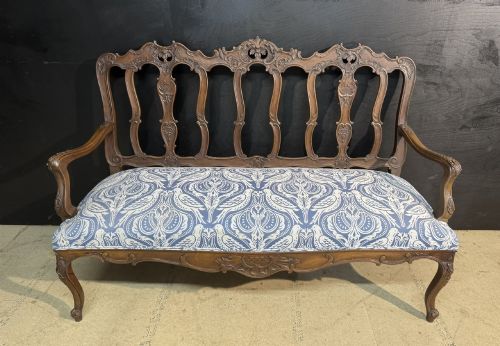
The most common variants encountered on this page feature walnut or mahogany frames paired with upholstered sprung bases. Examples range from compact salon seats to expansive three-seater sofas with carved woodwork.
Styles span from mid-century rococo revival curves to late-century aesthetic movement ebonisation and georgian revival outlines. Buyers find both intimate conversation seats and large Chesterfield sofas suited to contemporary living spaces.
Materials and Construction
Makers utilised solid timbers such as mahogany, walnut, and rosewood for structural frames, often incorporating hand-carved details or brass elements. Frames were constructed with traditional joinery to support heavy sprung interiors and deep upholstery.
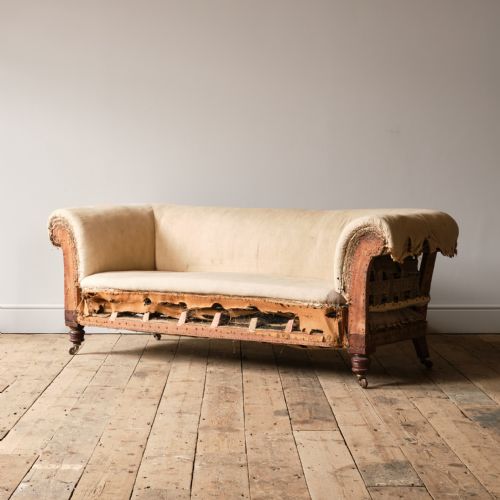
Upholstery materials recorded in the archive include velvet, leather, brocade, plush, and calico linen. Interior springing and deep buttoning provided the firm yet resilient support characteristic of nineteenth-century seating comfort.
Victorian Settee Retail Price Guide 2026
Typical asking prices for victorian settee among the pieces listed under this phrase on Sellingantiques today, from the lower quarter to the upper quarter. They describe what is for sale here now, not the wider market.
Listings feature pieces spanning from eighteen-fifty through nineteen-thirty, with walnut and mahogany serving as the primary framing timbers.
Judging Quality
The distinction between ordinary and exceptional pieces lies in the crispness of the timber carving and the integrity of the frame construction. Superior examples exhibit finely figured walnut or mahogany with hand-carved ornament rather than applied composition mouldings.
Workmanship on the sprung base and upholstery execution dictate the durability and comfort level of the settee. Pieces bearing maker stamps reflect higher workshop standards and retain stronger historical value.
Howard and Sons·C. Hindley and Sons·Jackson and Graham·Thonet·Hampton and Sons
The Victorian Settee Glossary
- Chesterfield
- A deep-buttoned upholstered sofa featuring rolled arms of the same height as the back. This form is traditionally finished in leather or heavy fabric.
- Chaise Longue
- An upholstered long chair or day bed designed for reclining, featuring a single raised backrest at one end. Many nineteenth-century examples incorporate carved timber frames.
- Cameo Back
- An oval-shaped upholstered backrest framed in carved wood, frequently seen on mid-century salon chairs and settees. The exposed timber frame often displays floral carving.
- Double Ended Sofa
- A couch featuring symmetrical scroll arms at both ends, allowing a user to recline comfortably facing either direction. These pieces usually rest on short turned or cabriole legs.
Victorian Settee: Frequently Asked Questions
How do I care for a leather Chesterfield?
Maintain leather upholstery by applying a nourishing wax or leather conditioner periodically to prevent drying and cracking. Avoid placing the settee near direct heat sources or strong sunlight.
Dust the buttoned crevices regularly with a soft brush to prevent grit accumulation. Professional cleaning is recommended for antique leather requiring deep restoration.
Where should I place a settee?
Position your settee away from direct radiators and fireplaces to protect the antique timber frame from splitting. Generous floor space allows double-ended sofas and large Chesterfields to anchor a room effectively.
Lighter salon suites and window seats suit smaller alcoves or bedroom dressing areas. Ensure pathways around the piece remain unobstructed to showcase the carved woodwork.
How do I distinguish mid-Victorian from late-Victorian pieces?
Mid-century pieces from the eighteen-fifties and sixties frequently feature robust walnut or rosewood frames with elaborate floral carving and serpentine contours. Upholstery tends to be richly coloured velvet or plush.
Late-century examples often lean toward aesthetic movement ebonised finishes, lighter mahogany inlays, or revival styles. Examining the turning of the legs and joinery techniques assists in narrowing the date.
Are these settees comfortable for daily use?
Nineteenth-century settees were engineered for structured upright sitting rather than modern slouching. Many feature robust sprung bases and firm horsehair or feather stuffing.
Chesterfield models and sprung double-ended sofas offer deeper, more relaxed seating suitable for everyday living. Re-upholstered examples maintain historical integrity while providing renewed cushion resilience.