
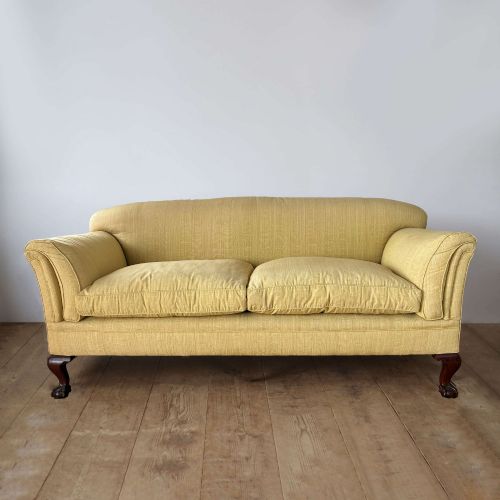
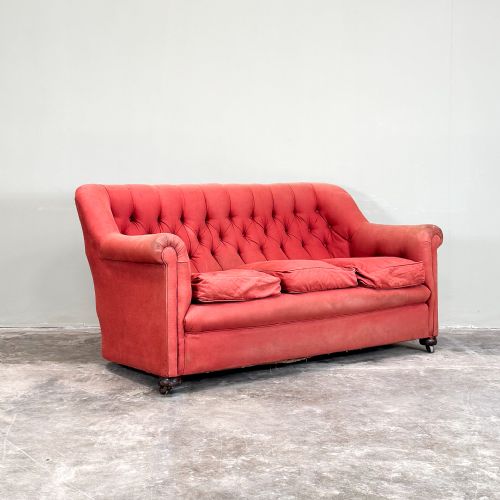
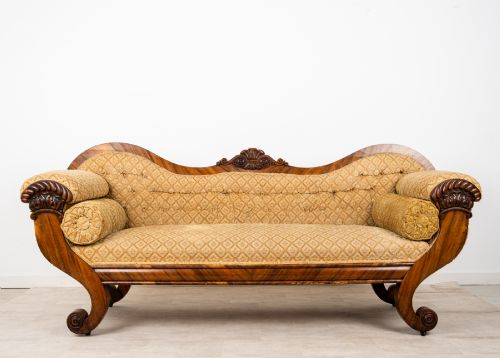
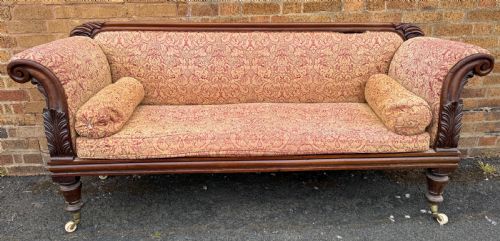


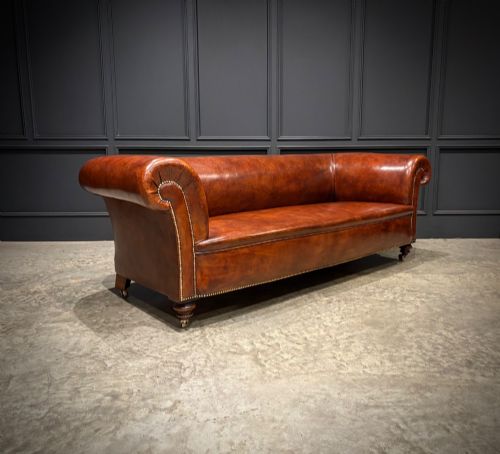
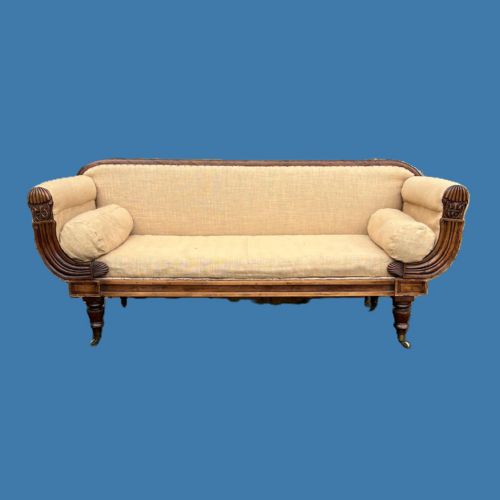
Scrolled Arm Settee
A scrolled arm settee offers generous seating shaped by curving woodwork, pairing period character with deep comfort.
Scrolled Arm Settee
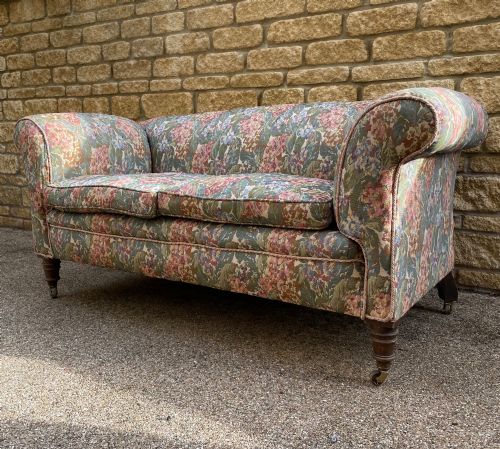
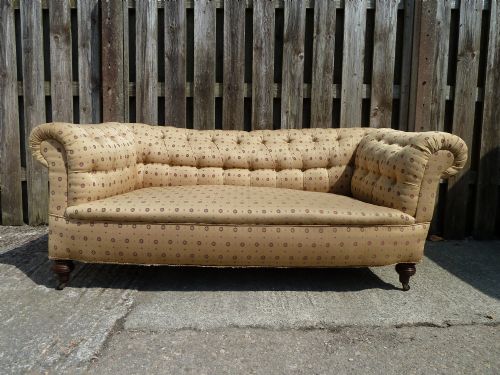
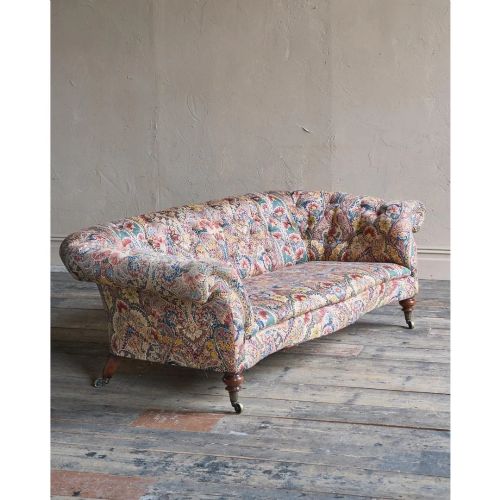
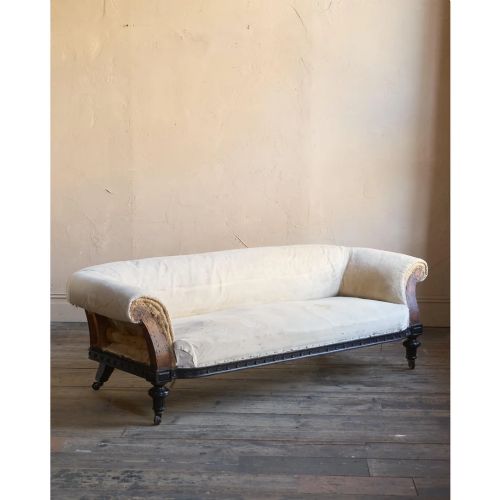
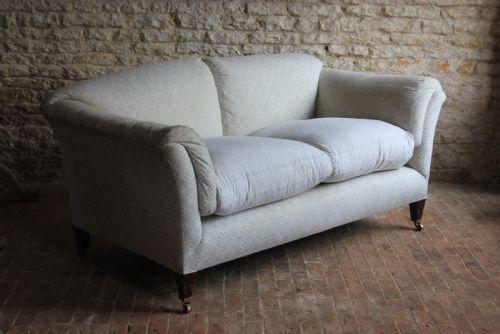
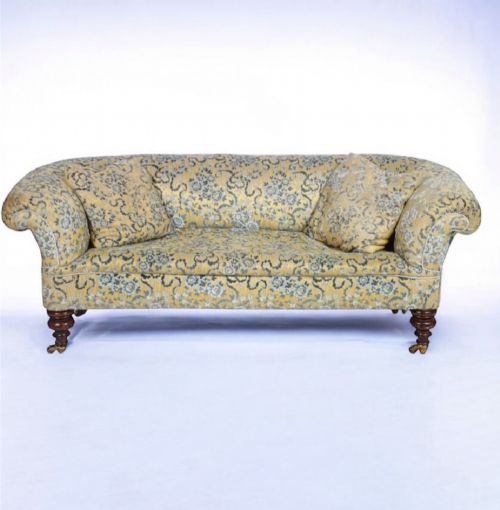
A scrolled arm settee brings together seating forms that span the nineteenth century into the twentieth, encompassing styles from Regency elegance to Victorian robustness. Buyers examining this page encounter diverse interpretations, including low-slung library models, deep country house Chesterfields, and formal double-ended frames.
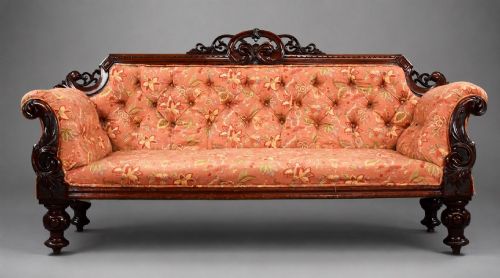
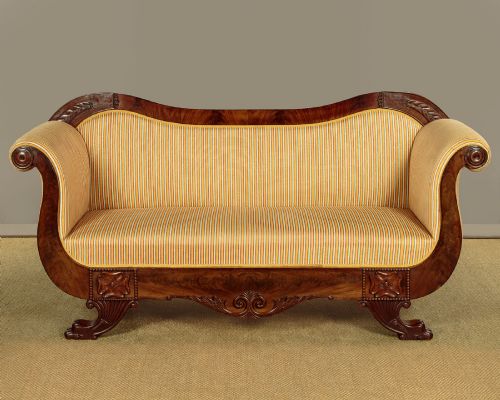
The prevailing examples on this page rely on nineteenth-century craftsmanship, anchored by Regency scroll-end couches and Victorian mahogany or rosewood framing. Makers shaped these settees with prominent scrolled terminals that define the silhouette, often pairing them with upholstered cushions and turned legs.
Materials and construction
Frames rely predominantly on dense hardwoods such as mahogany, walnut, and rosewood, chosen for their structural strength and capacity for carved detail. Ebonised finishes and simulated rosewood treatments also appear, reflecting period preferences for dark, polished surfaces.
Upholstery forms an essential component of construction, utilising traditional webbing, hessian, and stuffing beneath top layers of velvet, leather, and woven fabric. Brass accents, including castors, frequently finish the feet of these timber frames.
Listings span the nineteenth century up to the nineteen-thirties, featuring mahogany, rosewood, walnut, and leather.
Assessing quality and proportion
Quality rests in the harmony of the timber frame and the crispness of any carved scrollwork. Superior pieces display fluid lines in the woodwork, particularly where the arms sweep outward from the seat.
The integrity of the internal stuffing and the choice of outer covering also distinguish finer examples. Original or sympathetic upholstery retains the intended contours of the settee, whereas heavy alterations can obscure the original proportions.
Howard and Sons
The Scrolled Arm Settee Glossary
- Scroll end
- A wooden or upholstered arm terminal that curves outward in a tight spiral. This shape characterises many Regency and Victorian settees.
- Chesterfield
- A deep-buttoned upholstered sofa featuring arms and back of equal height. These forms are frequently associated with nineteenth-century country house interiors.
- Double-ended sofa
- A seating design featuring symmetrical scrolled ends at both extremities. This balanced layout allows the user to recline comfortably from either direction.
- Chaise longue
- An elongated upholstered seat intended for reclining, combining a sofa back with an extended foot platform. Examples often share stylistic traits with scrolled arm settees.
- Simulated rosewood
- A painted or stained finish applied to a secondary timber to imitate the grain and colour of genuine rosewood. This technique was common in Regency cabinet making.
Scrolled Arm Settee: Frequently Asked Questions
What is a scrolled arm settee?
A scrolled arm settee is a traditional upholstered seating form defined by curving timber or cushioned armrests.
These pieces range from formal Regency designs to robust Victorian Chesterfield sofas.
How do I date a scrolled arm settee?
Dating relies on observing the timber species, leg turnings, and overall frame silhouette.
Earlier nineteenth-century examples often feature figured rosewood or mahogany, while later pieces introduce walnut legs and varied upholstery depths.
Where should I place a scrolled arm settee?
These settees suit principal reception rooms, libraries, or spacious hallways where their profiles can be viewed from multiple angles.
Double-ended and scroll-end models work particularly well positioned away from walls.
Are these settees comfortable for daily use?
Many nineteenth-century and later models offer deep seating and sturdy upholstered support suited for regular relaxation.
Comfort levels depend on the condition of the internal webbing and padding.