

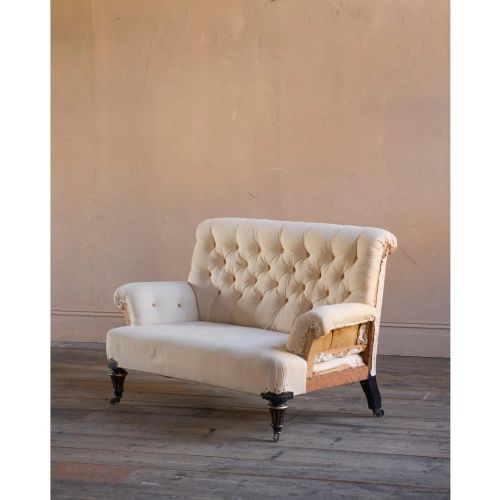
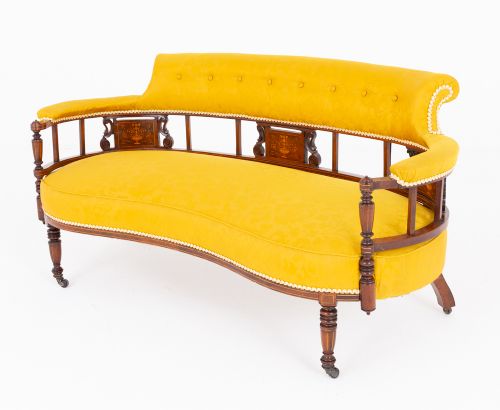
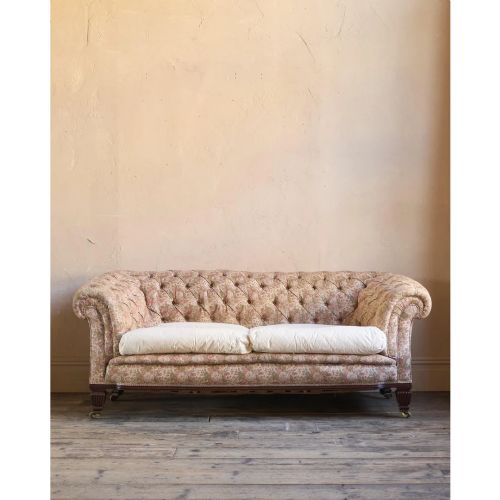
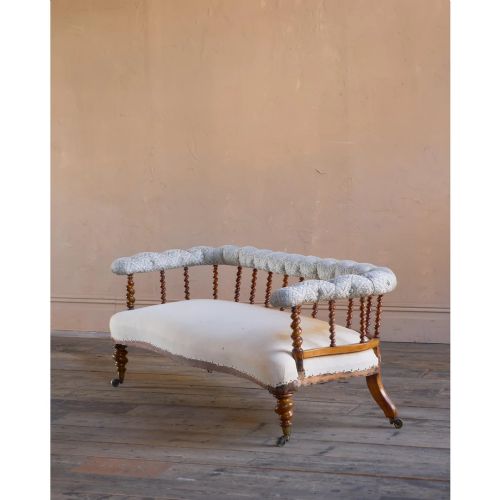
Button Back Settee
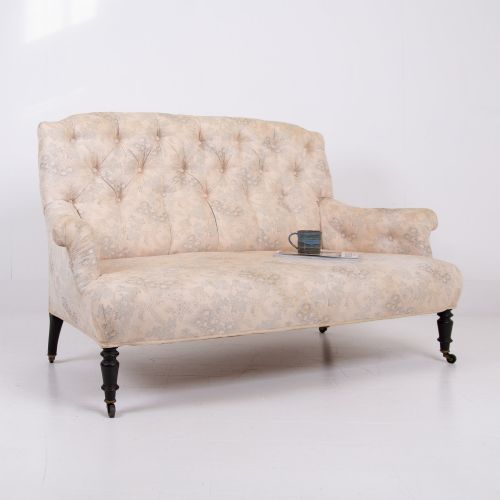
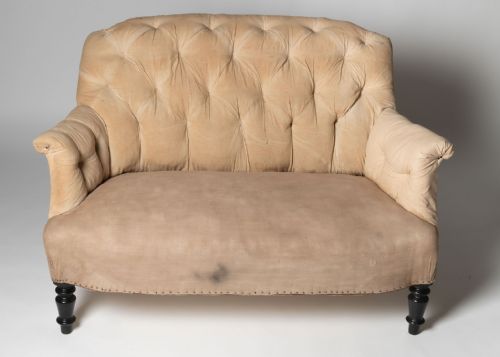
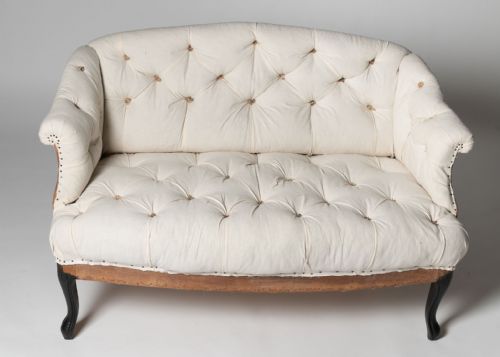
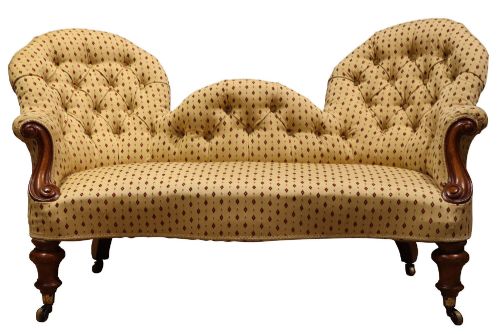
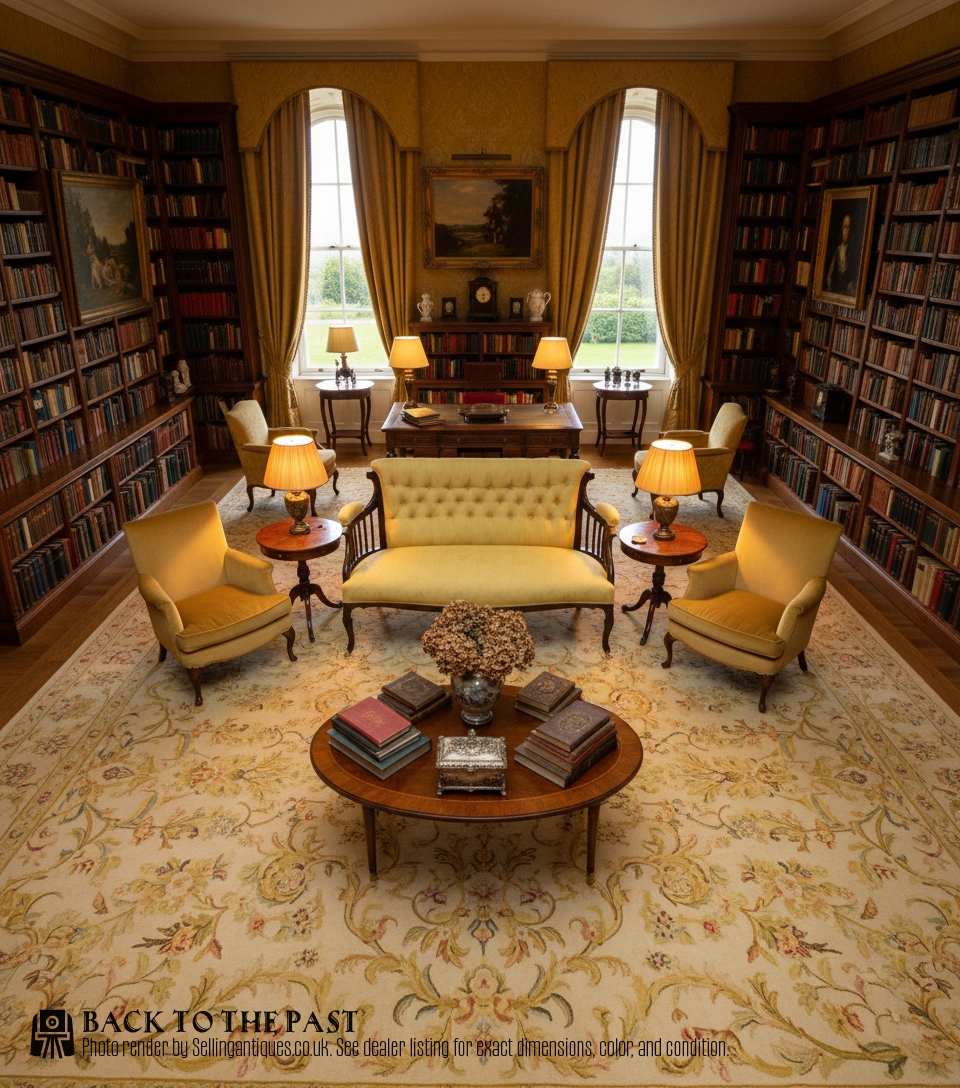
A button back settee brings deep-buttoned upholstery and nineteenth-century craftsmanship into a room, offering both formal structure and deep comfort.
Button Back Settee
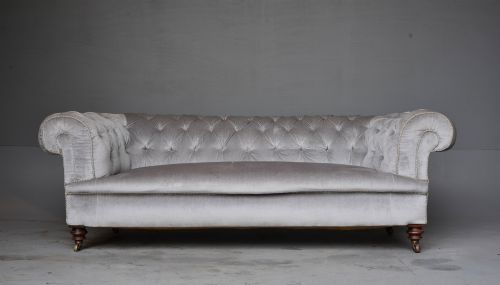
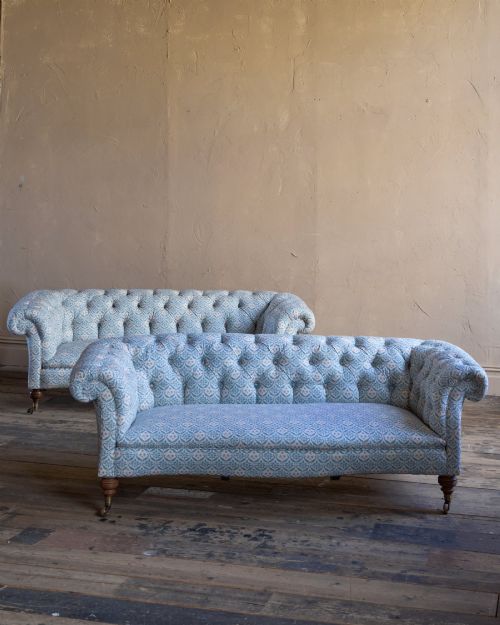
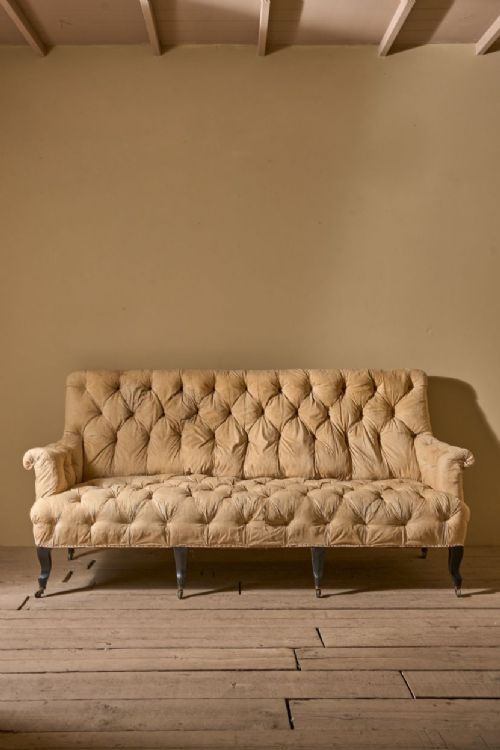
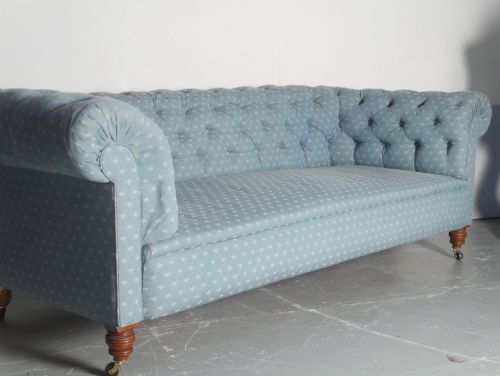
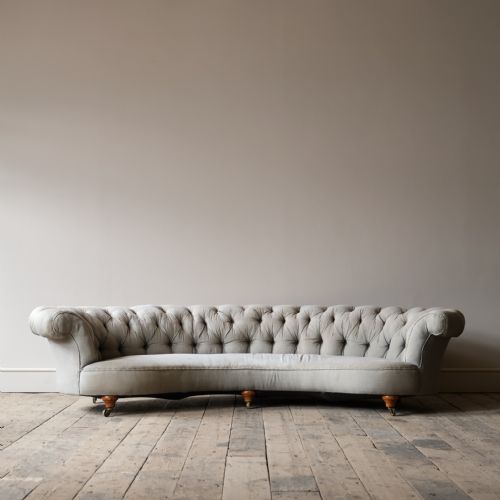
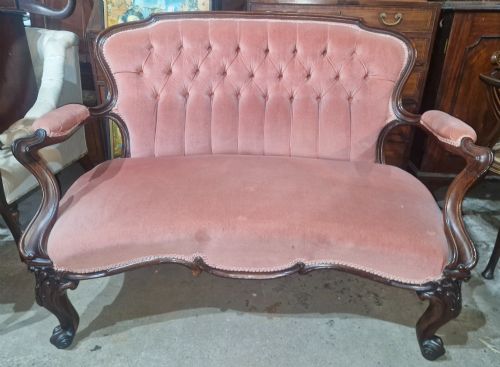
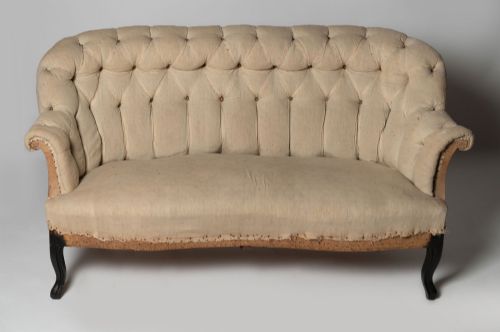
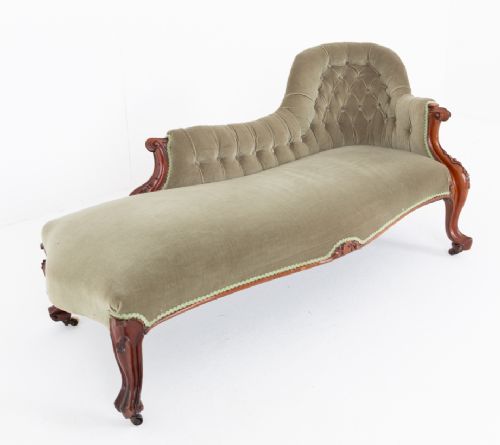
A button back settee is a deeply padded seat characterised by tufted upholstery pulled tight with buttons to secure the internal stuffing. The selection spans the nineteenth century through the Edwardian period and into the 1930s, encompassing Victorian Chesterfields, salon sofas, and chaise longues.
Most examples found here date from the Victorian era and are constructed from woods such as mahogany, walnut, and rosewood. Forms range from compact window seats and corner sofas to large Chesterfield and Napoleon III designs upholstered in velvet, leather, and brocade.
Materials and Construction
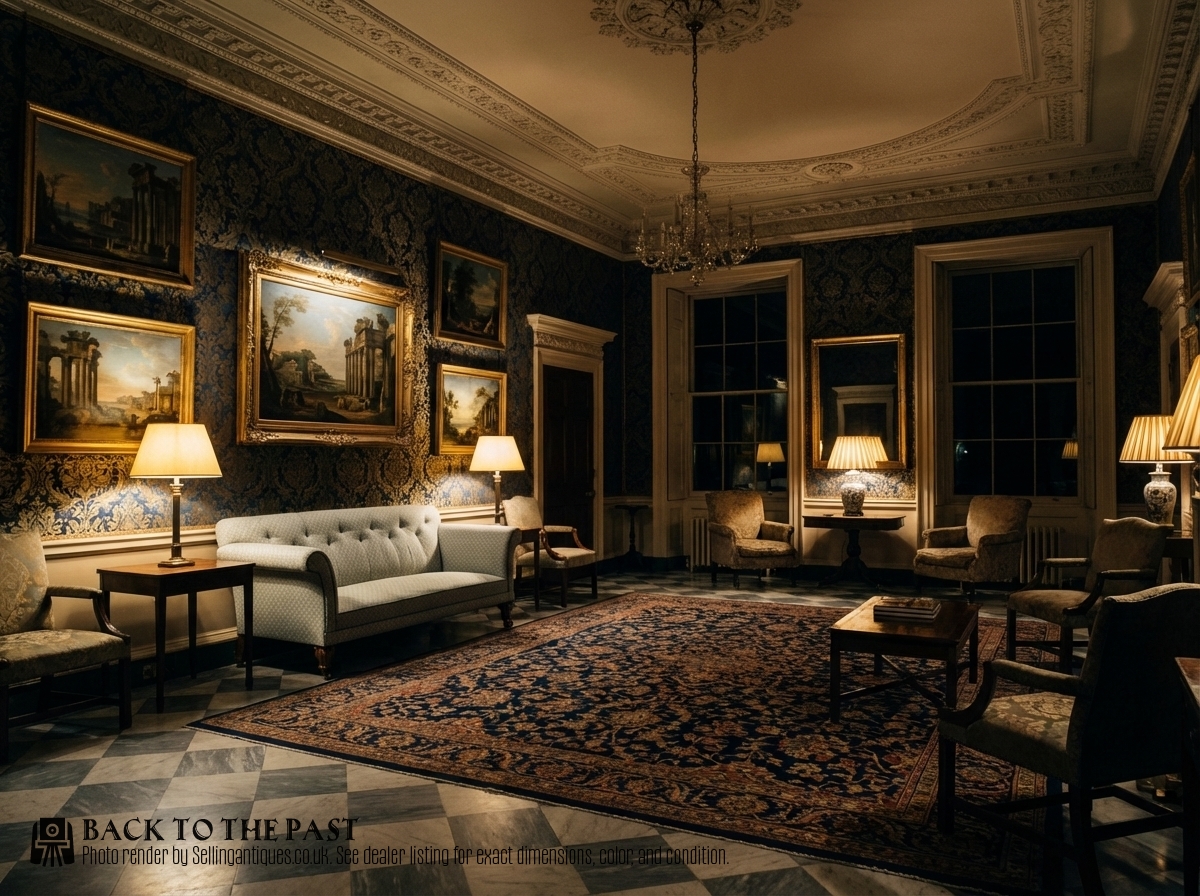
Frames are built from sturdy hardwoods like mahogany, walnut, rosewood, and ebonised timber, providing a rigid structural foundation for heavy upholstery. Joinery is traditionally robust, supporting carved details, open arms, and serpentine fronts.
Internal sprung bases are paired with hair or wool stuffing, then covered in textiles such as velvet, leather, and brocade. Deep buttoning requires skilled hand-tufting to pull the fabric evenly against the interior padding, creating the signature dimpled surface.
Button Back Settee Retail Price Guide 2026
Typical asking prices for button back settee among the pieces listed under this phrase on Sellingantiques today, from the lower quarter to the upper quarter. They describe what is for sale here now, not the wider market.
Periods represented span from the early Victorian era through the Edwardian years to the 1930s.
Assessing Quality and Execution
Quality rests upon the integrity of the timber frame and the precision of the hand-tufting. Superior pieces display crisp, hand-carved woodwork and balanced proportions that maintain their silhouette under daily weight.
The choice of covering material and the depth of the springing dictate the long-term resilience of the piece. Well-executed upholstery maintains tension across every button without sagging or pulling unevenly at the seams.

Howard & Sons·C. Hindley & Sons·Jackson and Graham·Holland & Sons·Hampton & Sons of Pall Mall
The Button Back Settee Glossary
- Button back
- Upholstery style where buttons are pulled deep into the padding at regular intervals. This technique creates a diamond pattern across the backrest.
- Chaise longue
- An upholstered couch shaped like a chair with a long seat for reclining. Many Victorian examples feature a single scrolled end and exposed carved wood framing.
- Salon suite
- A matched set of seating furniture designed for a formal drawing room. These groupings often include a settee alongside matching armchairs and occasional seats.
Button Back Settee: Frequently Asked Questions
How do I care for a leather button back settee?
Keep leather conditioned regularly with appropriate balms to prevent cracking around the button indentations. Avoid placing the settee near direct heat sources or strong sunlight, which can dry out the hide.
Dust the deep folds gently with a soft brush to prevent grit from accumulating in the tufted diamonds. Professional cleaning is recommended for antique leather and historic textiles.
Were these settees used in bedrooms or living rooms?
Larger Chesterfields and salon sofas were traditionally placed in drawing rooms and parlours for entertaining guests. Smaller chaise longues and window seats often sat in private chambers or dressing rooms.
Compact buttoned settees also suited hallways and reception areas where formal seating was required. Their versatile sizing allowed them to adapt to multiple rooms within a nineteenth-century home.
How do I distinguish a Victorian settee from an Edwardian one?
Victorian settees generally feature heavier carved rosewood or walnut frames with dense, dark upholstery fabrics. Their silhouettes tend to be robust, ornate, and deeply curved.
Edwardian pieces often display lighter wood framing and a more restrained approach to ornamentation. Proportions can be slightly airier, reflecting changing tastes at the turn of the century.
Can these antique settees be used every day?
Solid hardwood frames and traditional sprung bases are built to withstand regular use. Many surviving pieces retain strong structural integrity after more than a century.
Upholstery and internal webbing may require renewal depending on the condition of the piece. Consulting an upholsterer ensures the internal support is secure for daily sitting.