
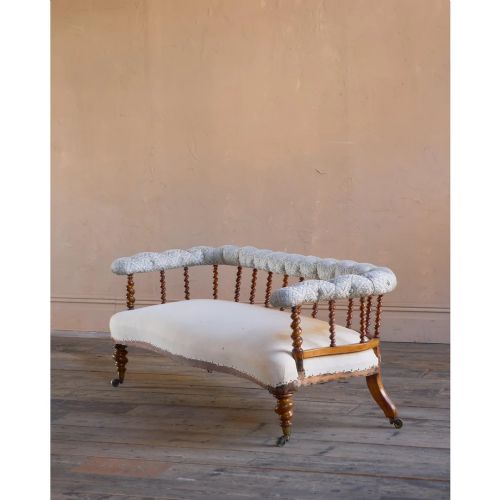
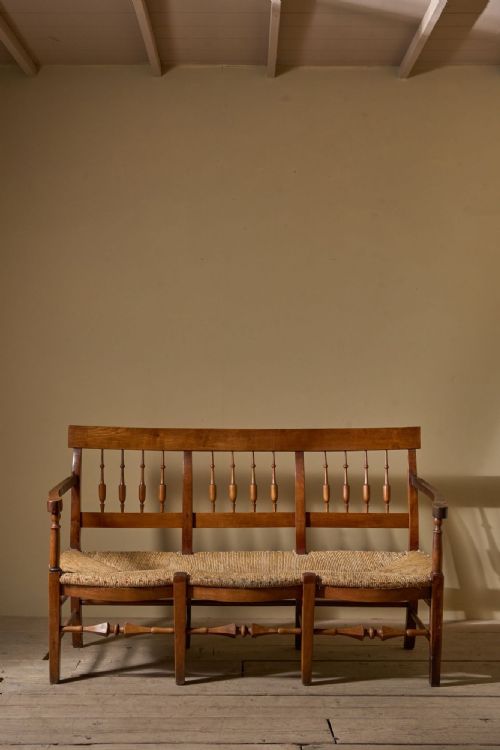


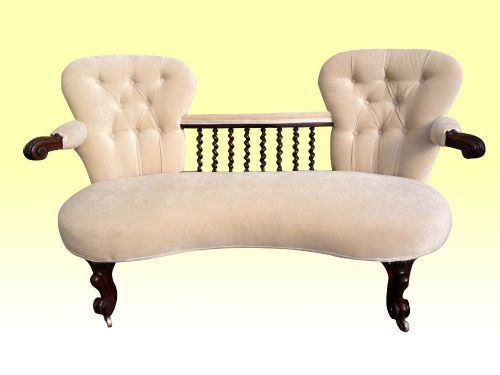
Spindle Back Settee
A spindle back settee offers slender turned supports and sturdy timber frames that anchor a room with functional grace.
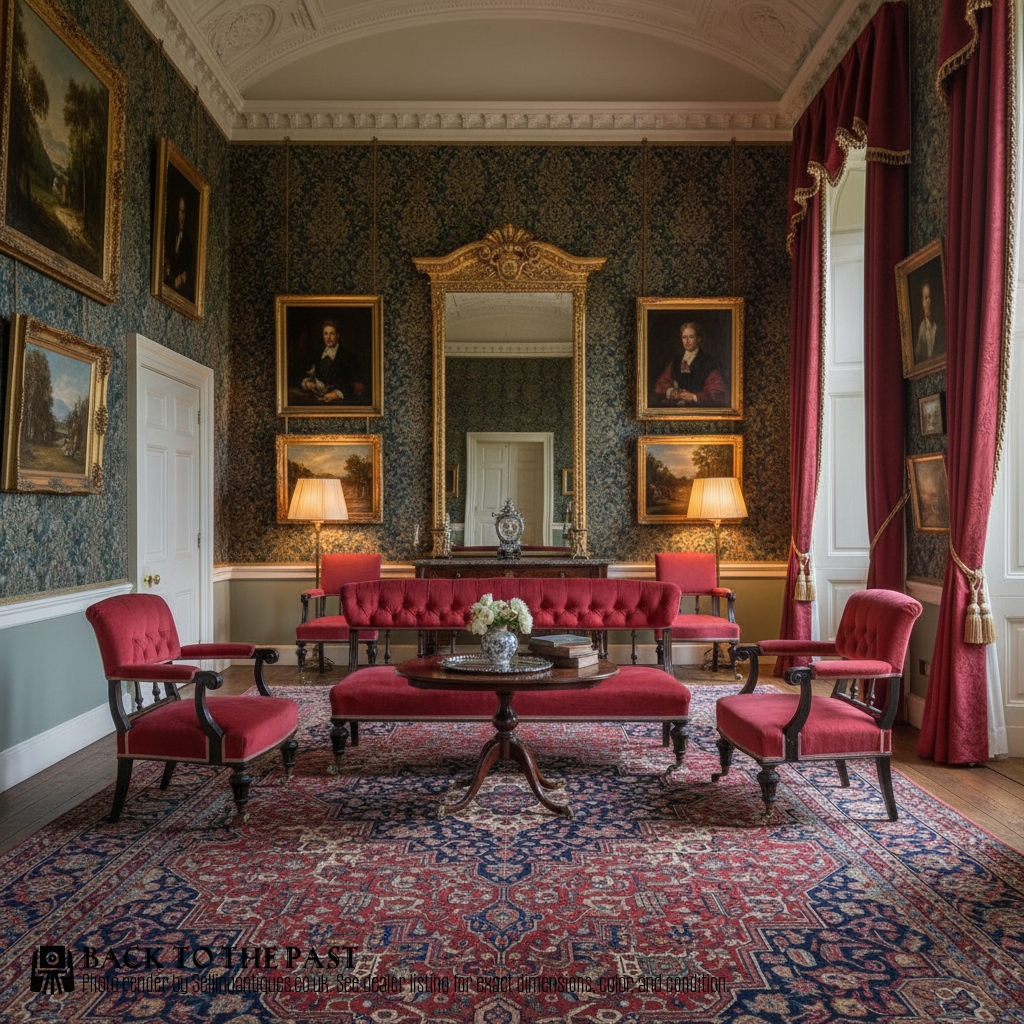
Spindle Back Settee
When you search for a spindle back settee, you are looking at long wooden seating forms defined by vertical turned spindles along the backrest or arm supports. These pieces combine the supportive length of a sofa with the lighter visual weight of open woodwork.
On this page, you are most likely to meet examples from the nineteenth century and the Victorian era, alongside earlier eighteenth century pieces. They appear in forms ranging from hall benches and salon sofas to occasional settees and window seats.
Makers and workshops constructed these seats in diverse regional traditions, from English aesthetic movement ebonised timber to French provincial rush-seated designs and Swedish painted settle benches. Each variant uses the signature turned uprights to create an airy profile distinct from solid upholstered sofas.
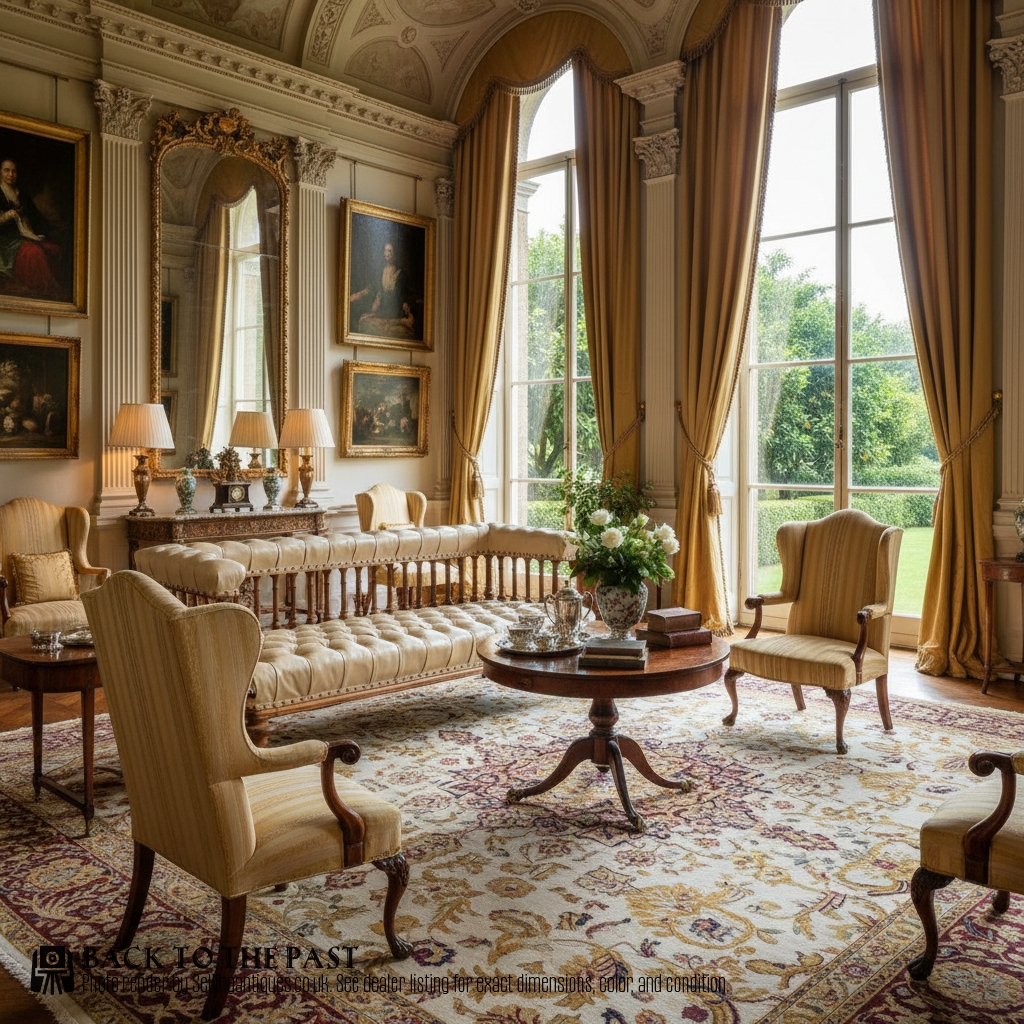
How they were made
Cabinetmakers shaped the frames of a spindle back settee using hardwoods such as mahogany, oak, fruitwood, rosewood, and ebonised wood. They turned individual spindles on a lathe to achieve uniform slender profiles, securing them firmly into top and bottom rails.
Seating areas incorporated woven rush or timber platforms designed for loose cushions, while other examples received traditional upholstery covered in fabric or velvet. Workshops occasionally integrated brass fittings and turned bobbin elements to enrich the structural framework.
Spindle Back Settee Retail Price Guide 2026
Typical asking prices for spindle back settee among the pieces listed under this phrase on Sellingantiques today, from the lower quarter to the upper quarter. They describe what is for sale here now, not the wider market.
Listings for this phrase span the eighteenth, nineteenth, and early twentieth centuries, featuring materials from mahogany and rosewood to rush and brass.
What varies in quality
The quality of a spindle back settee rests in the precision of the timber turning and the tightness of the joints holding the numerous spindles in place. Finer pieces demonstrate careful selection of grain in woods like mahogany and rosewood, where the timber has been seasoned and worked without splitting.
Design sophistication also distinguishes the range, as seen in the considered proportions of aesthetic movement ebonised frames or crisp French provincial carving. Original rush seats or well-preserved structural woodwork carry greater integrity than heavily altered or reconstructed examples.

C. Hindley & Sons
The Spindle Back Settee Glossary
- Spindle back
- A chair or settee back constructed from a series of slender, vertical turned wooden rods. This design lightens the overall weight of the seating frame.
- Bobbin turned
- Timber turned on a lathe to create a series of rounded, spool-like shapes along the length of the leg or stretcher. It is a decorative turning technique common in nineteenth-century furniture.
- Ebonised
- Wood finished with a dark stain or polish to imitate the appearance of ebony. This treatment was particularly popular during the aesthetic movement.
- Rush
- Dried marsh grass twisted into cords and woven to form a resilient seating surface. It appears frequently on provincial hall benches and country seats.
- Settle
- A wooden bench with high backrests, solid arms, and often enclosed lower sections to block drafts. Early examples provide sturdy seating in traditional hallways.
Spindle Back Settee: Frequently Asked Questions
What is a spindle back settee?
A spindle back settee is a long wooden seat featuring a row of slender, turned vertical wooden rods forming the backrest. These pieces provide sturdy seating while maintaining an open, airy appearance.
They emerged across various European traditions during the eighteenth and nineteenth centuries, serving diverse functions from salon seating to hallway resting places.
How were these settees used?
Historically, these settees served multiple domestic roles depending on their construction and location in the home. Rush-seated variants often stood in hallways for removing boots, while upholstered salon versions provided formal seating.
Lighter occasional settees could be moved easily between rooms to accommodate gatherings or provide a seat by a window.
How do I live with one?
Living with a spindle back settee involves placing it where the open woodwork can be appreciated against a contrasting wall. Keeping the timber dusted and away from direct heat sources helps preserve the dried wood and turned joints.
Adding loose cushions to wooden or rush bases introduces comfort while retaining the clean visual lines of the frame.
How do I tell periods apart?
Distinguishing periods relies on examining the choice of timber, turning styles, and upholstery techniques. Eighteenth-century pieces often display heavier painted pine or oak construction, while nineteenth-century versions frequently utilise rosewood, mahogany, or ebonised finishes.
Stylistic cues such as aesthetic movement decoration or Victorian deep buttoning provide further indicators of the date of manufacture.