


Edwardian Style Settee
When you search for an edwardian style settee, you are looking at early twentieth-century seating that brings revival craft and refined upholstery into the home.

Edwardian Style Settee
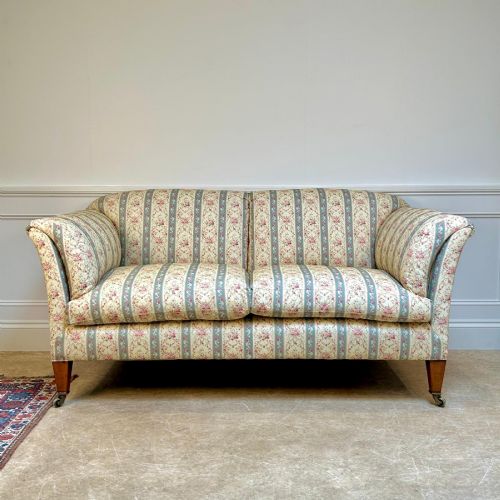
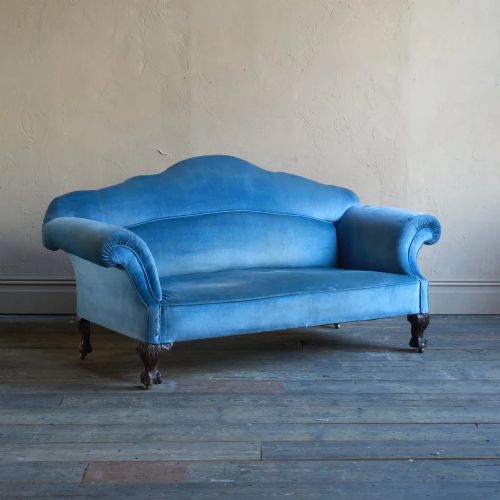
An edwardian style settee brings together classic revival forms and early twentieth-century domestic seating, drawing heavily on eighteenth-century design vocabularies like Chippendale, Sheraton, and Hepplewhite. Pieces seen range across the Edwardian period, 1900, 1910, 1920, and 1930, alongside earlier Victorian and Regency influences that inform the silhouettes.
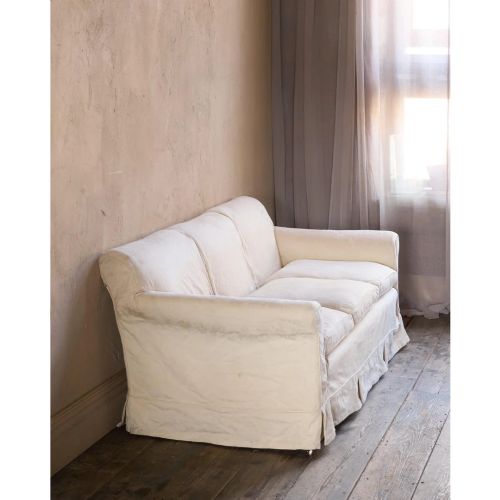
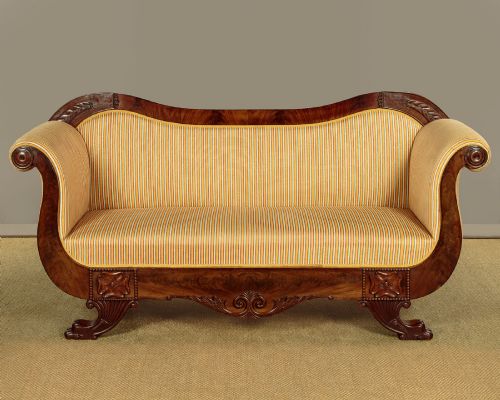
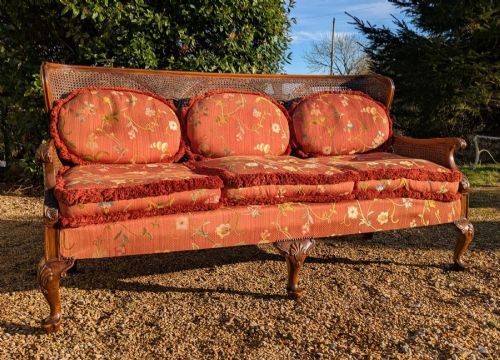
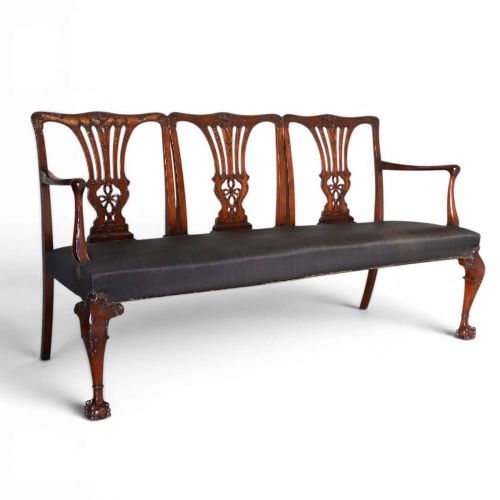
The most common formats on this page include mahogany frames with carved backs, satinwood pieces with painted or inlaid decoration, and deep-seated upholstered frames designed for country house comfort. You will also encounter bergere sofas with cane panels, leather-upholstered library pieces, and lighter salon suites.
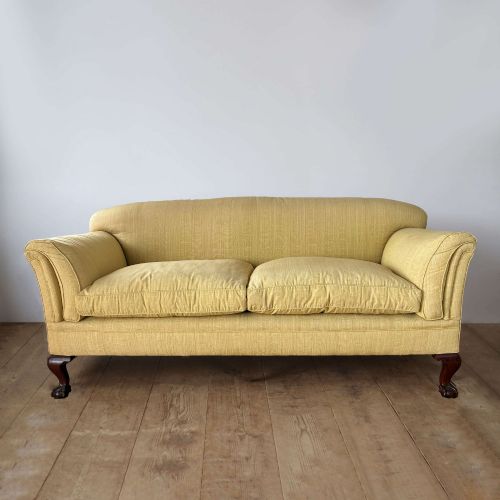
Makers and makers' retailers such as Howard and Sons appear alongside broader stylistic revivals, demonstrating how commercial workshops met the demand for historicist seating. Whether built as a camelback sofa, a window seat, or a three-seater carved settee, these pieces anchor a room with period proportion.
Materials and Construction
Makers relied primarily on mahogany, walnut, and satinwood for show frames, utilising timber veneers and delicate string inlay to achieve surface pattern. Painted finishes and canework appear frequently on lighter salon frames, while heavier library and country house models employ brass castors, ball and claw feet, and exposed carved mahogany.
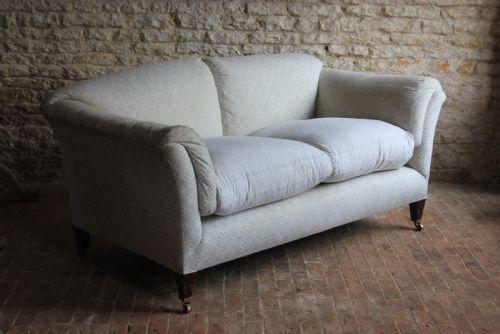
Upholstery techniques combined traditional stuffing like horsehair and feather cushions with heavy ticking, leather, velvet, and modern printed cottons. Frames incorporate structural joinery typical of revival cabinetmaking, supporting sprung seats or tight-back cushions designed for daily use.
Listings feature mahogany, walnut, satinwood, and brass, spanning the Victorian, Edwardian, and Regency periods.
Judging Quality and Execution
Quality rests in the crispness of the timber carving, the precision of satinwood inlay, and the integrity of the underlying frame structure. Finer examples display hand-carved details on ball and claw legs or chair backs, whereas simpler pieces rely on painted decoration or standard turned supports.
The standard of upholstery and the preservation of original materials, such as ticking, horsehair fill, or cane panels, distinguish exceptional pieces from standard commercial production. Maker attribution, particularly to firms like Howard and Sons, elevates the standing of a piece within the archive.
Howard and Sons·J. S. Kinsey
The Edwardian Style Settee Glossary
- Bergere
- A closed-arm armchair or sofa with upholstered sides, often featuring cane panels. This French-inspired form became popular in twentieth-century drawing rooms.
- Chippendale Revival
- A style drawing on eighteenth-century designs by Thomas Chippendale, characterised by carved ribbon backs, ball and claw feet, and rich mahogany frames. It dominated Edwardian formal seating.
- Satinwood
- A pale, hard timber native to India and Sri Lanka, highly prized for its lustrous sheen and golden colour. It serves as a primary veneer or background for painted decoration.
- Camelback
- A sofa shape featuring a continuous convex curved top rail resembling a camel's hump. This classic eighteenth-century silhouette was revived frequently during the Edwardian era.
- Canework
- Woven rattan or cane used to form open panels on the back or sides of seating frames. It added lightness and texture to Edwardian drawing room furniture.
Edwardian Style Settee: Frequently Asked Questions
What defines an Edwardian settee?
An Edwardian settee reflects the eclectic tastes of the early twentieth century, combining historical revivals like Chippendale and Sheraton with comfortable country house upholstery.
These pieces range from light, painted satinwood window seats to heavy mahogany frames with ball and claw feet.
How do I spot a Chippendale revival piece?
Chippendale revival frames feature characteristic mahogany construction, pierced or carved splat backs, and ball and claw feet.
Makers built these to echo eighteenth-century proportions while accommodating Edwardian comfort standards.
Were these settees used in formal rooms?
Many examples served as salon suites or drawing room furniture, designed for entertaining and formal display rather than casual lounging.
Lighter satinwood and caned pieces suited drawing rooms, while deep-seated leather and upholstered versions furnished libraries and country house halls.
How can I tell a satinwood settee's period?
Painted and inlaid satinwood settees date largely from the 1900 to 1920 window, reflecting a revival of neoclassical decorative schemes.
Examine the base timber and internal construction beneath the veneers to confirm the manufacturing date.
What is a bergere sofa?
A bergere sofa incorporates woven cane panels along the sides and back, creating an airy profile supported by a wooden frame.
These often include loose feather cushions for the seat and back.