

19th Century Chaise
A 19th century chaise offers a reclining seat built for domestic repose, combining elegance with a comfortable, elongated form.
Understanding the 19th century chaise
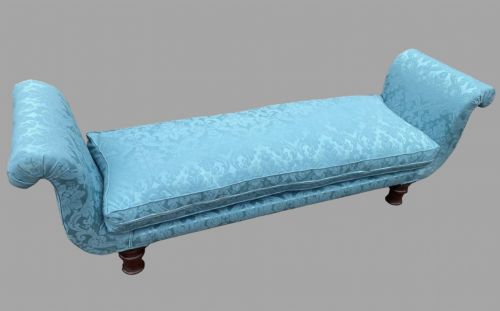
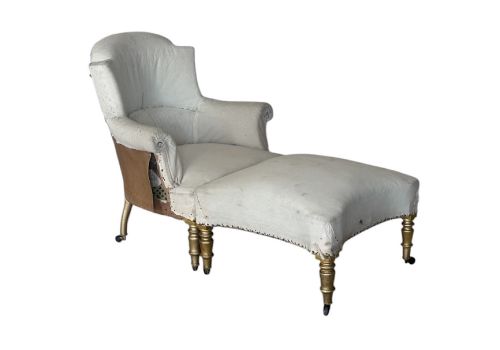
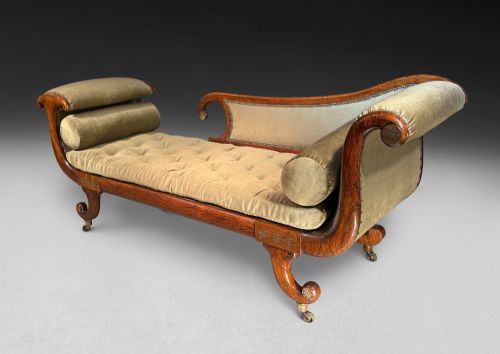
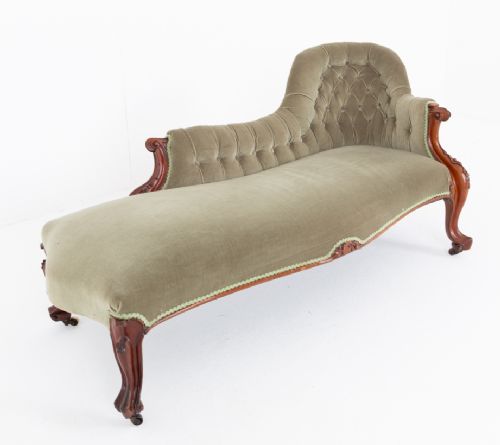
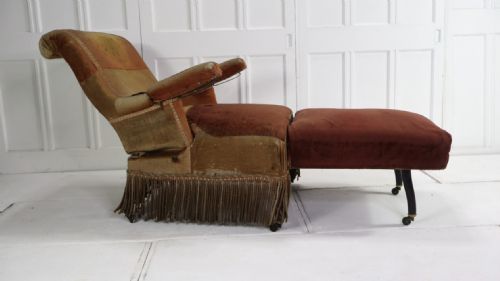
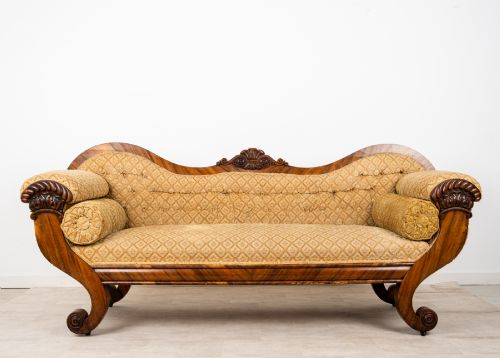
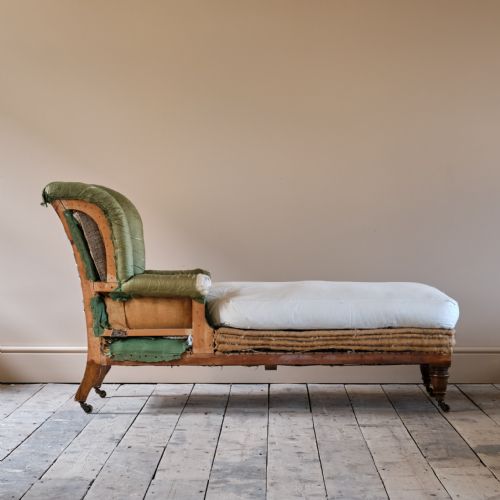
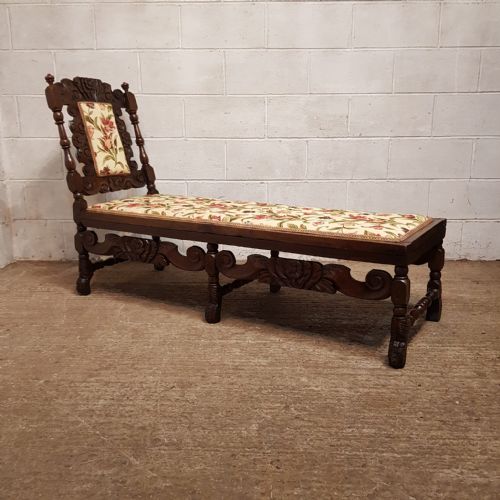
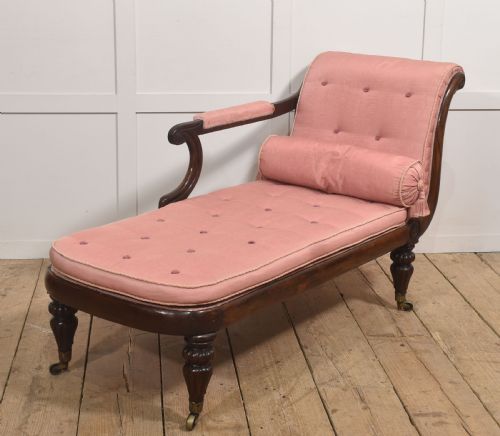
A 19th century chaise combines the comfort of a chair with the length of a day bed, designed for reclining in the home. These pieces appear frequently in mahogany, rosewood, and walnut, reflecting the tastes of the Victorian and Regency periods.
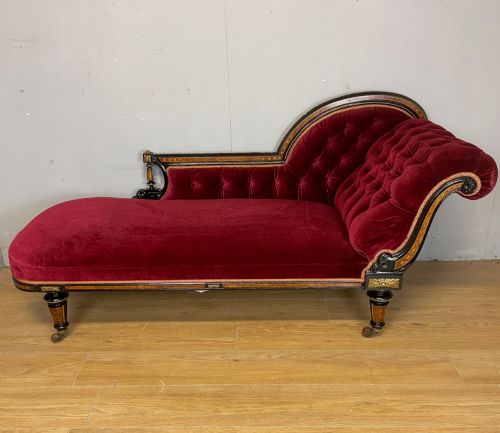
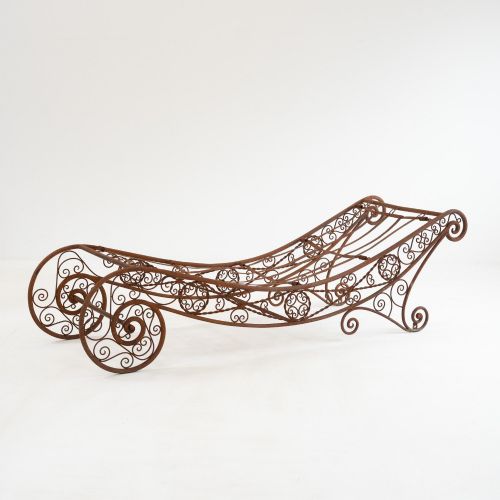
Buyers will encounter various forms ranging from country house styles to elaborately decorated ebonised frames and tub back designs. Many examples originate from English workshops, alongside occasional continental pieces.
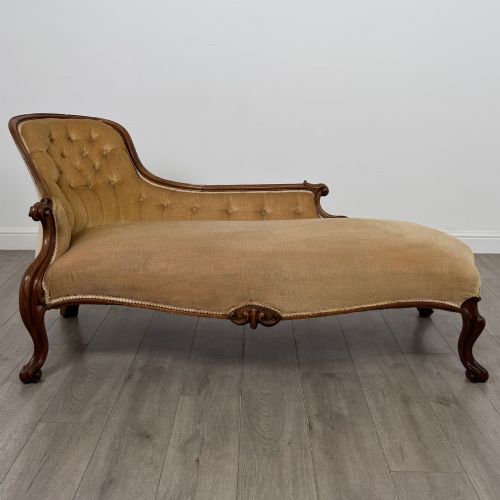
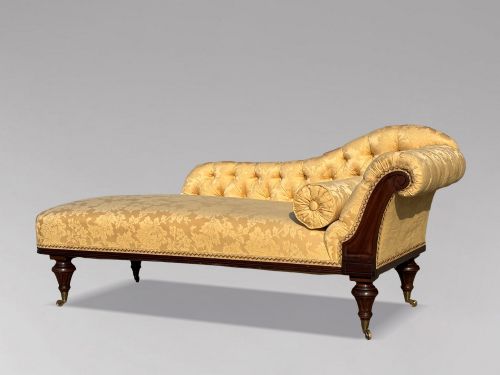
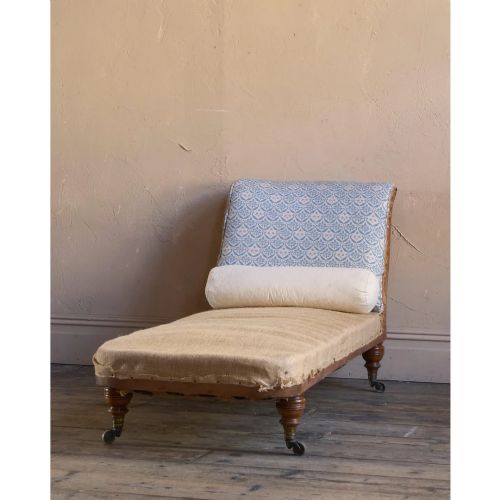
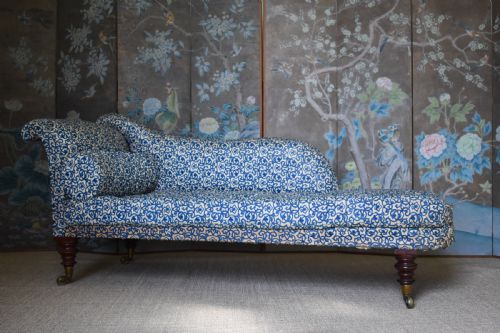
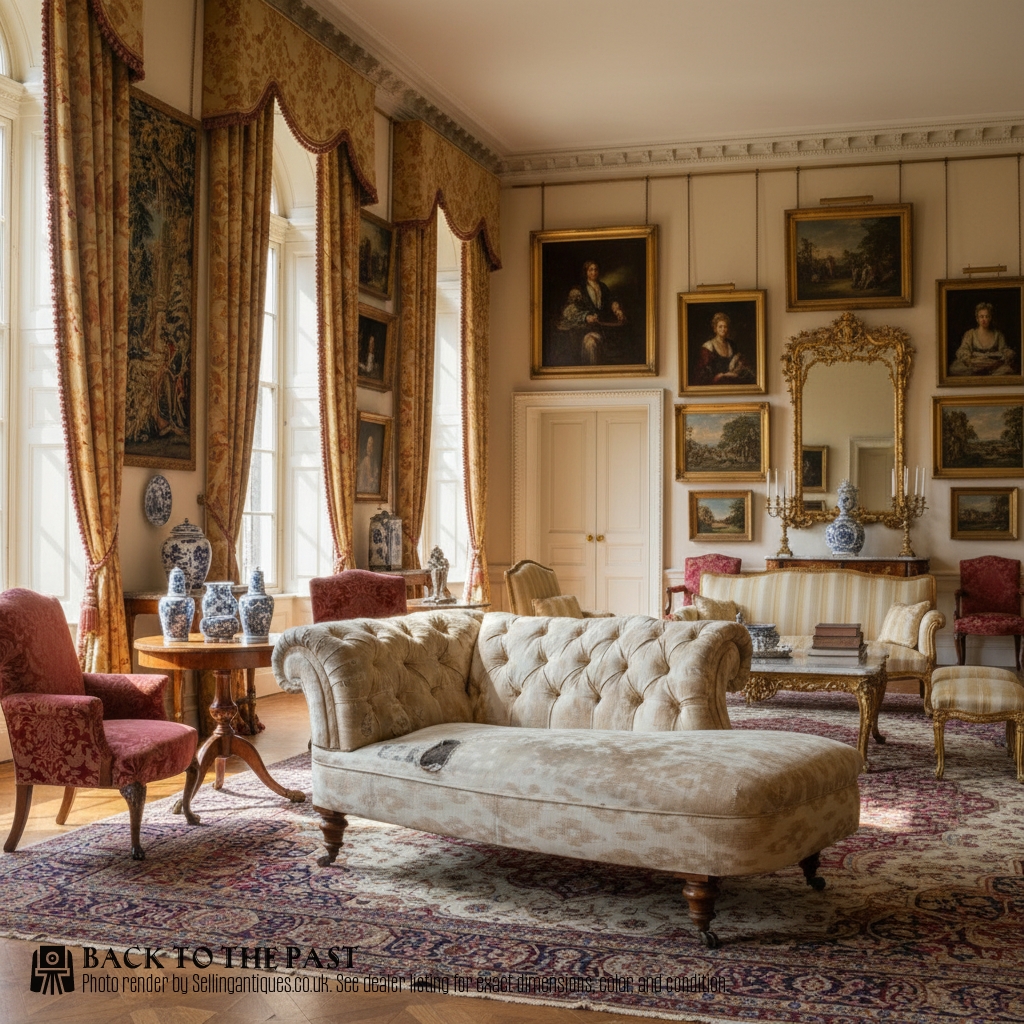
The layout of these day beds includes single-ended scrolling backs supported by turned legs, often upholstered in damask, velvet, or contemporary fabric.
Materials and construction
Cabinet makers utilised dense hardwoods such as mahogany, rosewood, and walnut to build the foundational frames of a 19th century chaise. Ebonised wood and oak also feature, sometimes accented with brass inlay or giltwood details.
Decorative elements included ormolu mounts, inlaid walnut panels, and hand-turned legs. Upholstery relied on traditional stuffing methods finished with velvet, damask fabric, or patterned textiles.
Retail Price Guide 2026
Typical UK retail prices for 19th century chaise, calculated from the Sellingantiques database of over a million retail prices indexed since 2003. This retail price guide relies exclusively on Sellingantiques data; no external sources or auction records are used, so the figures do not describe the wider market.
Some diminutive day beds were built shorter, suggesting nineteenth-century occupants possessed entirely different ideas about afternoon legroom.
Distinctions in quality
The refinement of the timber carving and the sophistication of the joinery separate standard examples from finer commissions. Workshops known for superior output often integrated intricate inlays and high-grade ormolu decorations.
Upholstery execution and the choice of textile also define the standard of a piece, with heavy damask and quality velvet representing more ambitious historical commissions.
Howard And Sons·H Goodall And Sons·Jas Shoolbred·Gillows
The 19th Century Chaise Glossary
- Ebonised
- Wood finished with a dark stain or polish to imitate ebony. This treatment was popular on decorative Victorian frames.
- Ormolu
- Gilded bronze mounts applied as ornamentation to furniture. It adds metallic contrast to dark woods like walnut and mahogany.
- Damask fabric
- A reversible figured fabric woven on a jacquard loom. It frequently appears as the upholstery choice on period seating.
- Tub back
- A rounded, enclosing backrest that curves continuously into the arms. This shape provides a contained seating position.
Frequently Asked Questions
Where were these day beds placed?
These pieces were typically positioned in drawing rooms, parlours, or large bedrooms for daytime resting.
Their elongated form allowed individuals to recline without retiring fully to a bed.
How do I identify a Regency period piece?
Regency examples often display classical revival motifs, using mahogany and sometimes brass inlay.
They date to the early part of the century before Victorian aesthetics took hold.
Can I use one in a modern interior?
These seating options integrate well into contemporary living spaces as statement accent furniture.
Their varied wood tones and historic textiles complement diverse interior schemes.