


Walnut Chaise Longue
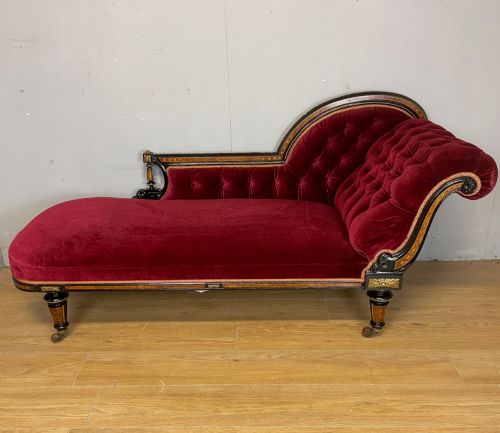
A walnut chaise longue offers an inviting spot for reclining, combining timber frames with upholstered comfort.
Walnut Chaise Longue
When you examine a walnut chaise longue, you are looking at nineteenth-century daybeds, settees and reclining seats designed for leisurely resting. These pieces range from Regency day beds to Edwardian designs, though Victorian examples dominate the available selection.
Materials and construction
Makers utilised solid walnut for the show wood frames, sometimes pairing the timber with ebonised wood, mahogany, or brass details. Inlaid panels, ormolu decoration and intricate carvings decorate the structural woodwork on select examples.
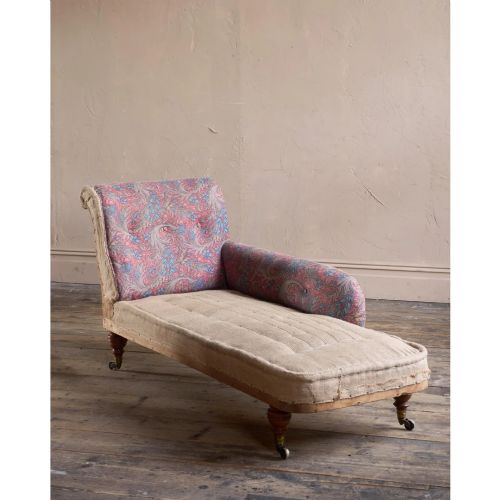
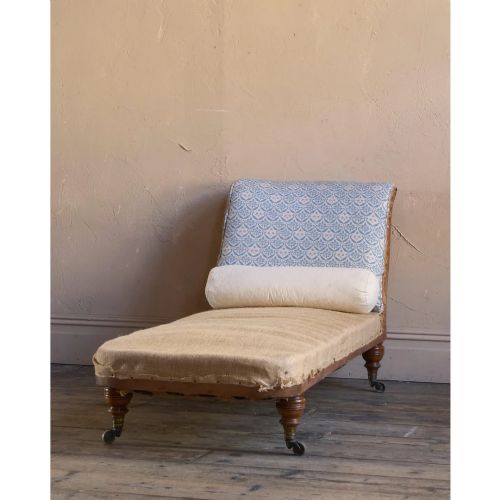
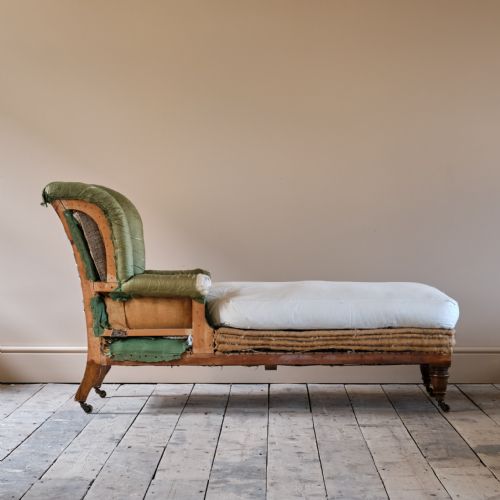
Upholstery forms a major component of these daybeds, with original and replacement coverings including fabric, velvet, leather and hessian over buttoned padding.
The listings feature nineteenth-century seating constructed from walnut, mahogany, and ebonised wood.
Judging quality in walnut furniture
The standard of carving and timber selection dictates the distinction between ordinary seating and exceptional pieces. Crisp hand-carved details in the walnut show wood indicate superior workshop output compared to softer moulding.
Makers such as Howard and Sons command attention through robust internal construction and established workshop reputation. The integrity of the frame and the quality of the surviving upholstery finish separate standard salon pieces from fine examples.
Howard and Sons
The Walnut Chaise Longue Glossary
- Chaise longue
- An upholstered sofa in the form of a chair with a long seat for reclining. This French term translates literally to long chair.
- Ormolu
- Gilt bronze mountings applied to furniture for decoration. Makers used these metallic ornaments to accent timber panels.
- Ebonised wood
- Timber treated to resemble ebony through a dark staining process. It appears alongside walnut on nineteenth-century frames.
- Double end
- A daybed design featuring raised scrolled supports at both ends rather than a single headboard. This symmetrical layout allows reclining from either direction.
- Day bed
- A long seating item intended for daytime resting and lounging. Examples range from Regency day beds to Victorian variations.
Walnut Chaise Longue: Frequently Asked Questions
What periods do these day beds cover?
The available pieces span from the Regency era through the Victorian period up to the early twentieth century. Most examples originate from the mid to late nineteenth century.
Victorian pieces represent the largest share of the inventory, encompassing various revival styles and simpler carved designs.
How were these reclining seats used?
Owners placed these items in drawing rooms, bedrooms and boudoirs for daytime resting and lounging. They provided a comfortable half-sitting posture for reading or conversing.
In period interiors, they functioned as principal display pieces as well as practical furniture for relaxation.
Are the fabrics original?
Many pieces retain later upholstery or replacement fabrics chosen by subsequent owners. Hessian, velvet and patterned textiles frequently reflect twentieth-century or modern reupholstery work.
Only a portion of surviving items maintain their nineteenth-century textile coverings and buttoned padding.