
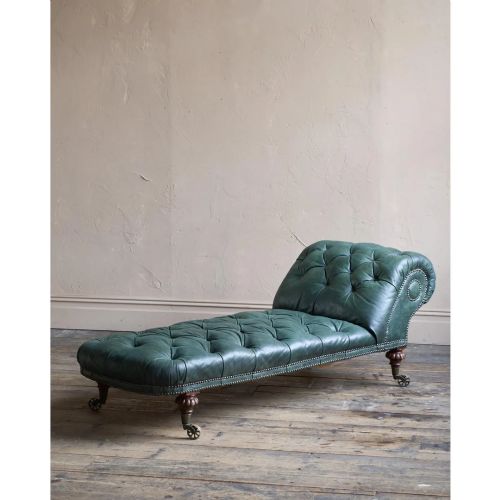
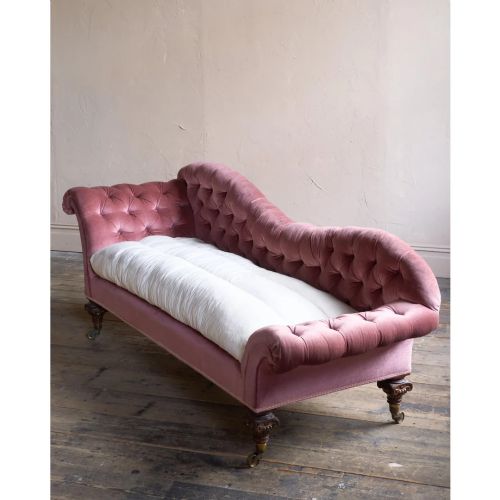
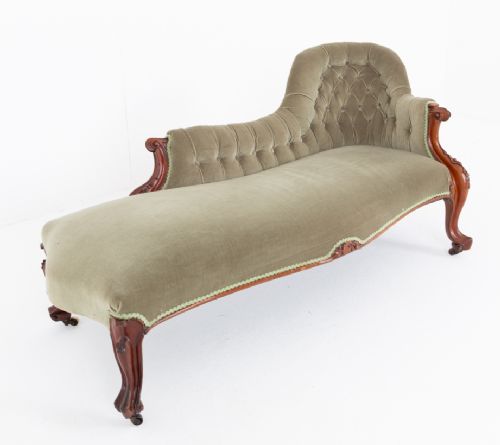


Button Back Chaise
A button back chaise offers the sort of deep, reclining comfort that nineteenth-century drawing rooms perfected, combining elegant woodwork with tufted upholstery.

Identifying a button back chaise
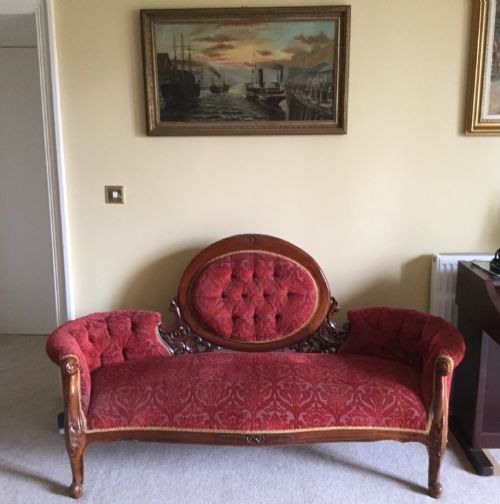
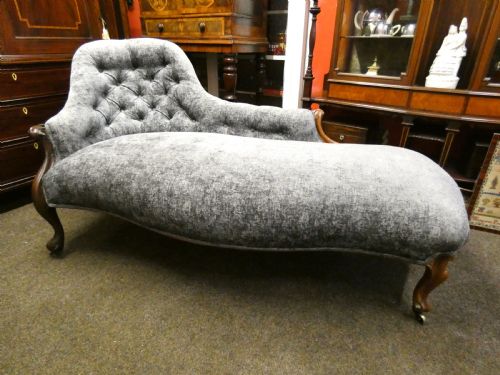
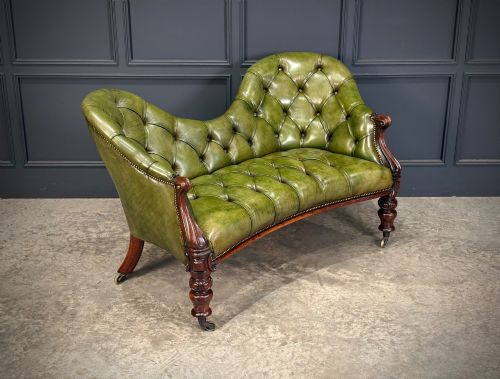
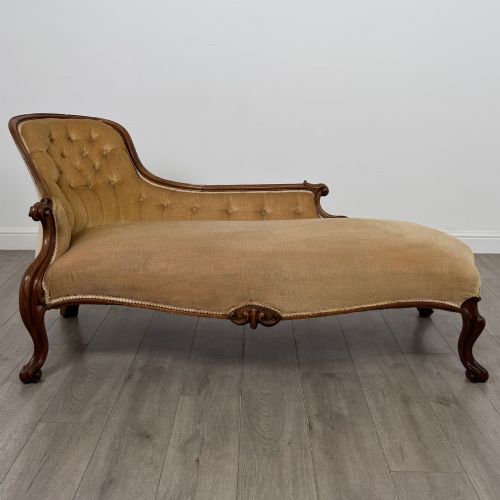
A button back chaise is a long, reclining seat designed for semi-recumbent repose, typically featuring one raised, scrolling end and a low backrest. When searching for a button back chaise, buyers encounter nineteenth-century forms ranging from early Victorian examples to French nineteenth-century daybeds.
The materials recorded in these pieces include mahogany, walnut, rosewood, and brass, paired with fabrics such as velvet, damask, leather, and traditional upholstery. Frames follow Victorian, French nineteenth-century, and Regency stylistic traditions.
Most items appearing on this page belong to the Victorian era, alongside a few French daybeds and Regency pieces. The upholstery frequently incorporates deep buttoning across the backrest and scroll ends.

Construction and materials
Frameworlks are constructed from dense hardwoods like mahogany, walnut, and rosewood, often carved with scrollwork or show wood detailing. These sturdy timbers provide the structural rigidity required for long reclining frames.
Upholstery relies on traditional techniques involving fabric, velvet, damask, or leather secured over deep buttoning. Metal elements such as brass appear in castors or decorative hardware supporting the wooden feet.
Retail Price Guide 2026
Typical UK retail prices for button back chaise, calculated from the Sellingantiques database of over a million retail prices indexed since 2003. This retail price guide relies exclusively on Sellingantiques data; no external sources or auction records are used, so the figures do not describe the wider market.
Listings feature nineteenth-century walnut, mahogany, and rosewood chaises upholstered in velvet, damask, and leather.
Assessing quality and craftsmanship
Superior examples demonstrate crisp, deep carving in the rosewood, walnut, or mahogany show wood frames, particularly along the scroll ends and legs. Lesser pieces feature softer detailing and plainer timbers.
The execution of the button upholstery defines the finish, with tight, even tufting indicating high-grade nineteenth-century workshop standards. The choice of primary timber, from humble wood to figured rosewood, immediately signals the standing of the piece.
Holland & Sons·Gillows·Howard & Sons
The Button Back Chaise Glossary
- Chaise longue
- A long seat for reclining, literally translating from French as long chair. These pieces combine the function of a chair and a daybed.
- Show wood
- The exposed polished timber frame of a piece of upholstered furniture. It highlights the quality of the underlying mahogany, walnut, or rosewood.
- Scroll end
- A sweeping, curved terminal on a seating frame resembling a rolled scroll. This feature provides the characteristic headrest silhouette on nineteenth-century daybeds.
- Button back
- An upholstery method where buttons are pulled deep into the padding to create a secure, tufted diamond pattern. It holds the stuffing firmly in place.
Frequently Asked Questions
Where did people put a chaise longue?
Nineteenth-century households placed these reclining seats in drawing rooms, master bedrooms, and private boudoirs where ladies rested during the day.
They served as versatile pieces for reading or receiving visitors in a semi-reclined posture without retiring fully to a bed.
How do I spot a Victorian chaise?
Victorian examples typically feature dark timber frames in mahogany, walnut, or rosewood, often paired with deep button-tufted upholstery and curved scroll ends.
Looking beneath the frame reveals traditional joinery and heavy turning that distinguishes mid-nineteenth-century work from later reproductions.
Can I use a chaise every day?
These antique daybeds suit daily relaxation provided the internal webbing and traditional padding remain sound and supportive.
Placing them away from direct sunlight protects delicate velvet, damask, or leather surfaces from fading over time.