

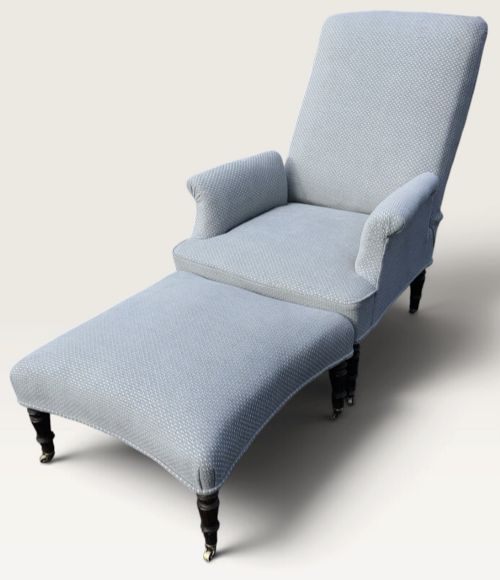
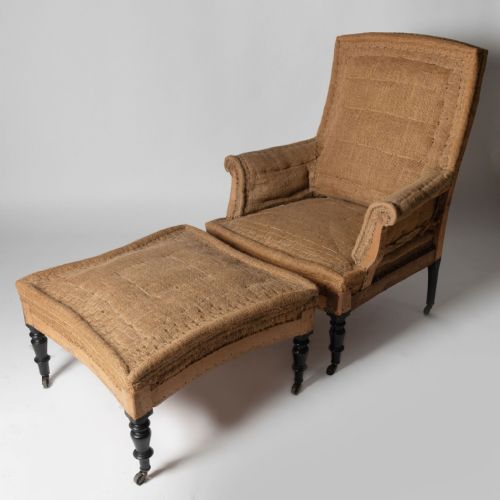
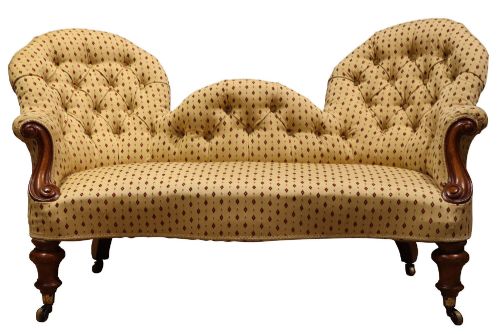
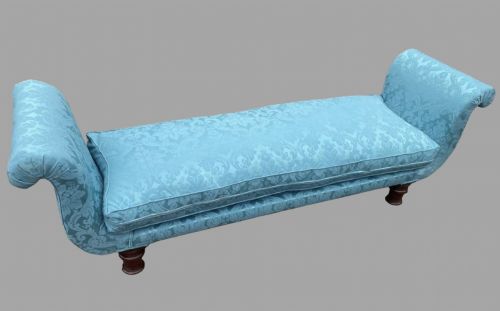
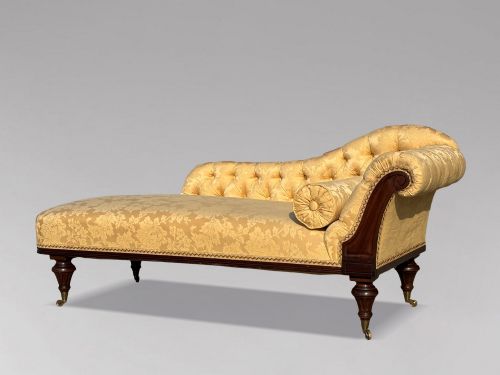
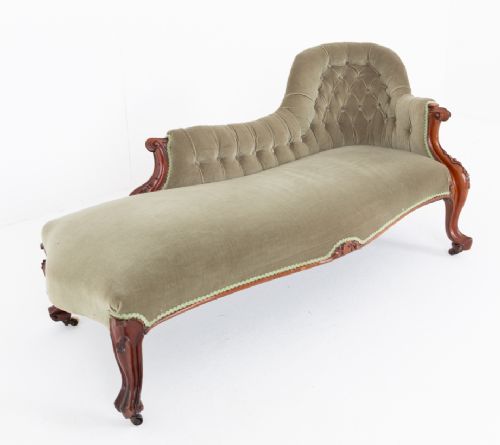
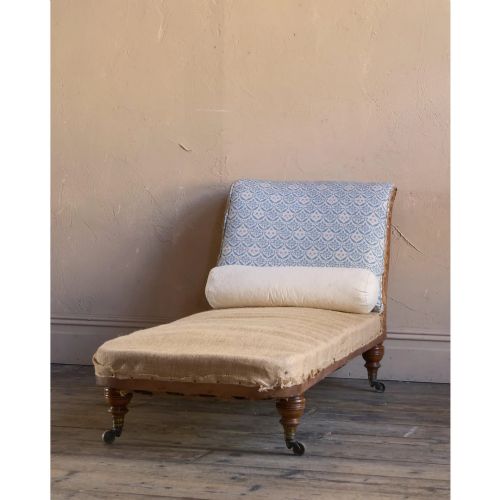

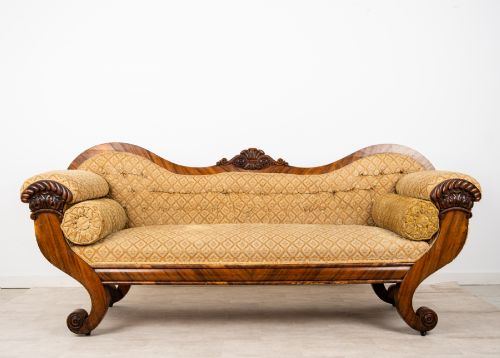
19th Century Chaise Longue
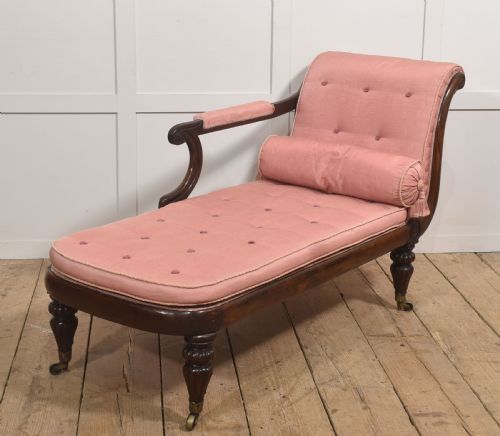
When choosing a 19th century chaise longue, buyers encounter diverse forms from Victorian parlours and Regency drawing rooms designed for reclining in comfort.

19th Century Chaise Longue
A 19th century chaise longue encompasses daybeds, reclouring chairs, and double-ended settees originating from English country houses, French salons, and Victorian workshops.
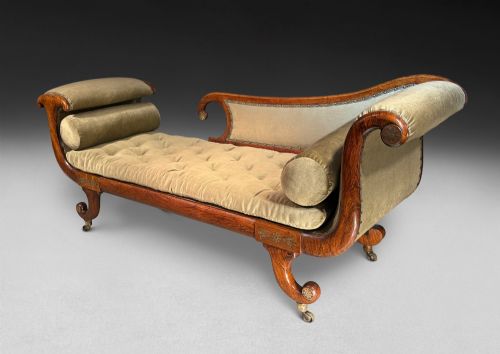
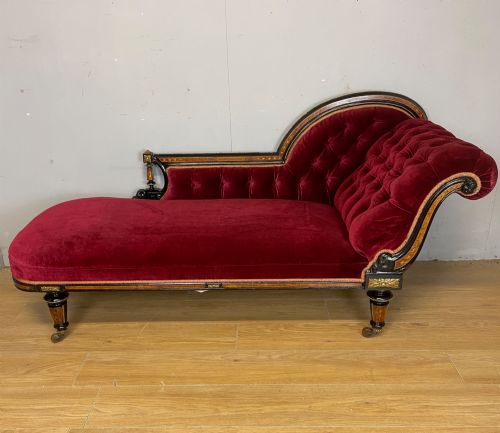
The most common examples on this page are Victorian and Regency pieces, utilising rich timbers like mahogany, rosewood, and walnut.
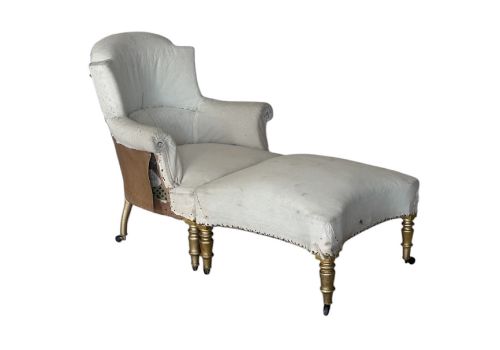
Makers and styles range from plain country frames to elaborate French Empire designs, scroll ends, and specialised seating like the duchesse brisée.
Materials and Construction
Frames are built from solid hardwoods including mahogany, walnut, oak, and rosewood, frequently enhanced by ebonising or gilt decoration.
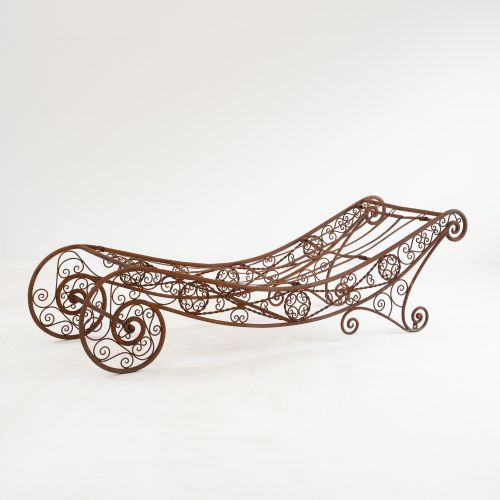
Decorative elements involve brass inlays, ormolu mounts, cane seating, and intricate carved scroll ends or turned legs.
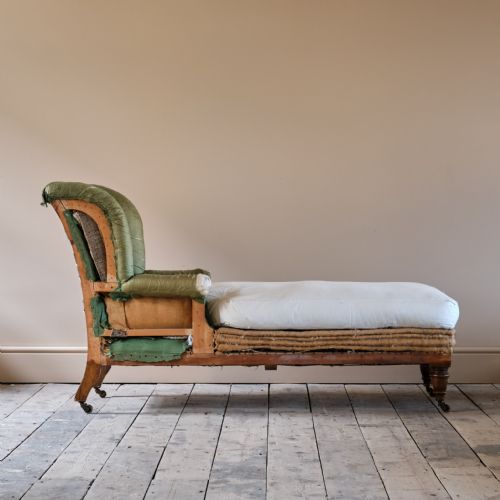
Upholstery relies on traditional fabrics, velvet, and modern replacement textiles paired with internal webbing and stuffing.
19th Century Chaise Longue Retail Price Guide 2026
Typical asking prices for 19th century chaise longue among the pieces listed under this phrase on Sellingantiques today, from the lower quarter to the upper quarter. They describe what is for sale here now, not the wider market.
Bobbin day beds bring tactile turned wooden spheres to nineteenth-century lounging.
Distinctions in Standard
The standard of a 19th century chaise longue depends upon the crispness of the timber carving, the integrity of the frame construction, and the presence of documented maker attribution.
Superior examples display balanced proportions, finely figured veneers, original brass details, and robust joinery that survives centuries of use.
Simpler provincial frames or pieces requiring extensive structural restoration sit at the alternative end of the range.

Howard and Sons·Holland and Sons·H. Goodall and Sons·Jas Shoolbred
The 19th Century Chaise Longue Glossary
- Ormolu
- Gilded bronze mounts applied to furniture for decoration. This technique was widely utilised in French and Regency pieces.
- Ebonised
- Timber treated to resemble ebony, creating a dark, polished finish. It appears frequently on Victorian and Regency frames.
- Duchesse brisée
- A multi-part reclining chair and stool combination forming a long daybed. These French forms allow modular separation.
- Scroll end
- A sweeping, curved wooden armrest characteristic of nineteenth-century daybeds. This feature defines the profile of many Regency and Victorian examples.
- Caning
- Woven rattan material used for seating panels. It provides a lightweight, resilient surface seen on select hardwood frames.
19th Century Chaise Longue: Frequently Asked Questions
Where were chaise longues placed?
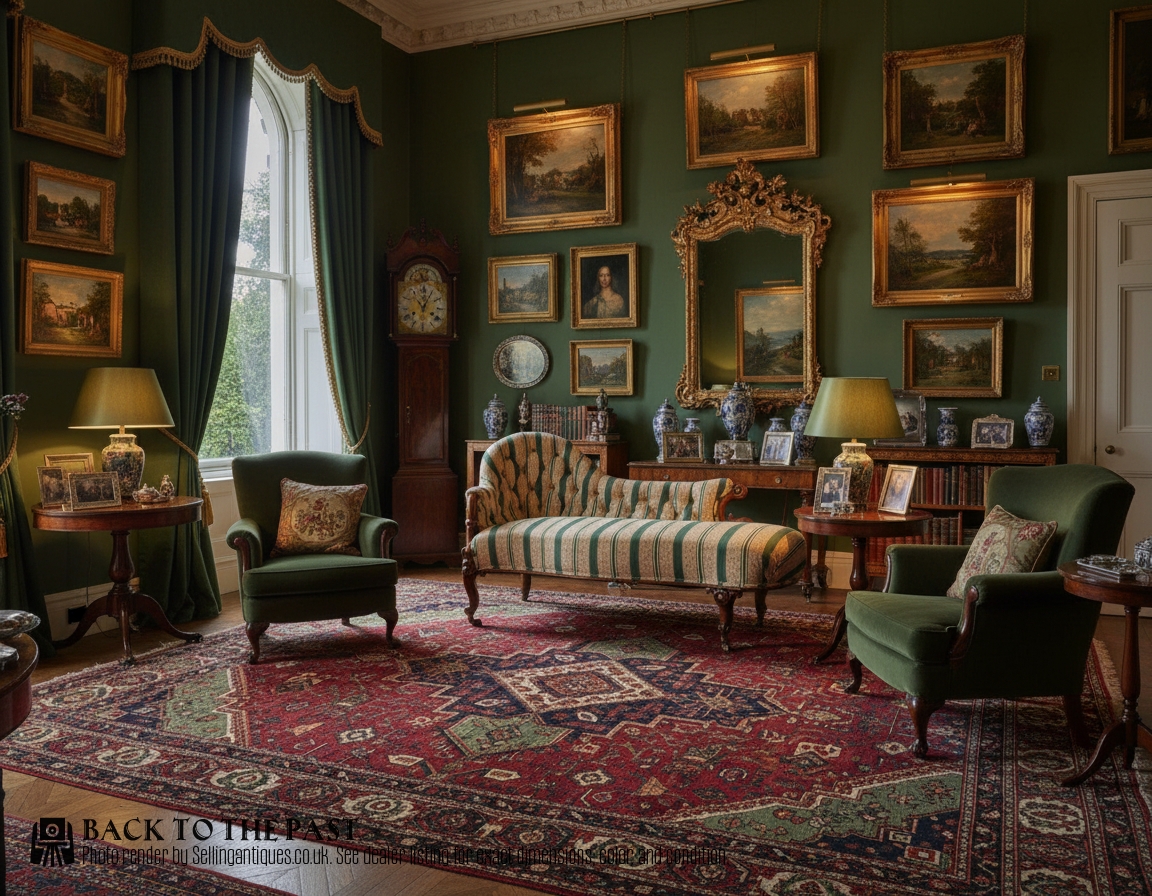
These pieces sat primarily in drawing rooms, master bedrooms, and morning rooms. They served as comfortable resting furniture for daytime lounging.
In larger country houses, owners positioned them near windows or within private parlours for reading and relaxation.
How do I identify a Regency piece?
Regency examples often display classical lines, brass inlay, and simulated rosewood finishes. They reflect early nineteenth-century design influences.
Look for bold scroll ends and austere mahogany frames that distinguish them from later Victorian ornamentation.
Can I use modern fabric?
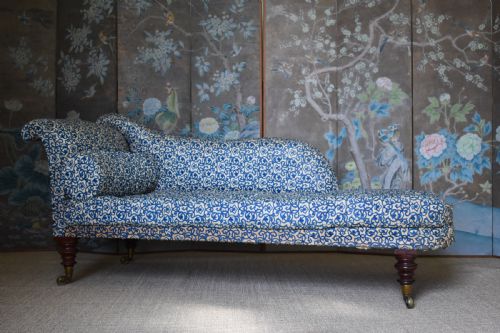
Many surviving frames have been reupholstered to suit contemporary interiors while retaining their historic structures. Original textile survival is uncommon.
Reupholstery allows buyers to match existing room decor without compromising the antique timber frame.