


Regency Daybed
A regency daybed brings classical elegance and asymmetric lounging to a room, combining architectural timber frames with deep upholstery.
Regency Daybed
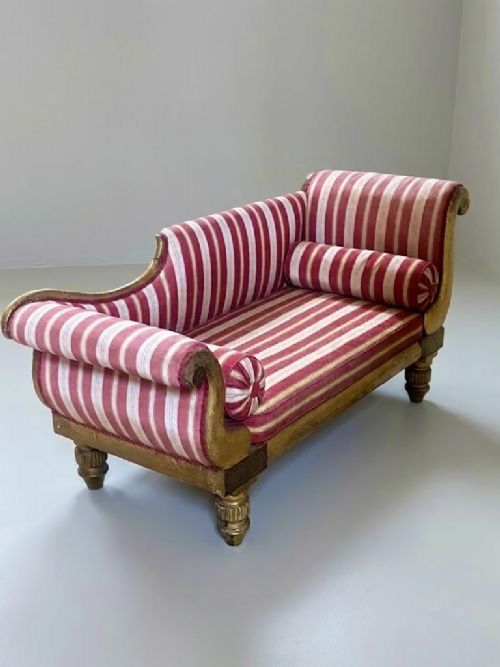
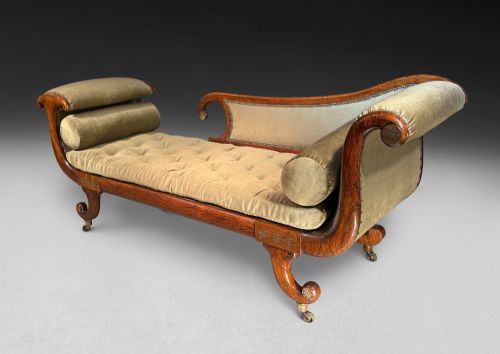
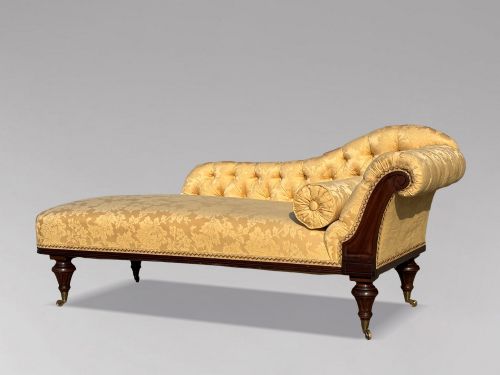
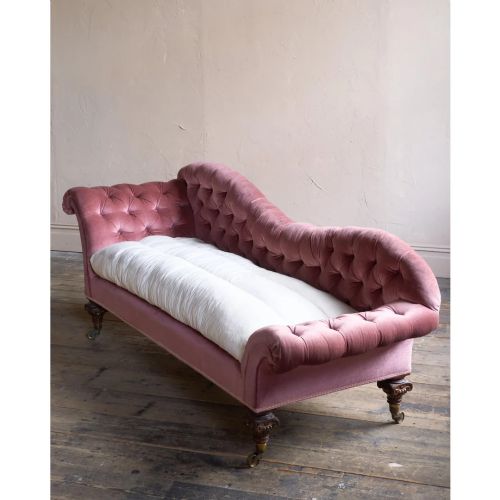
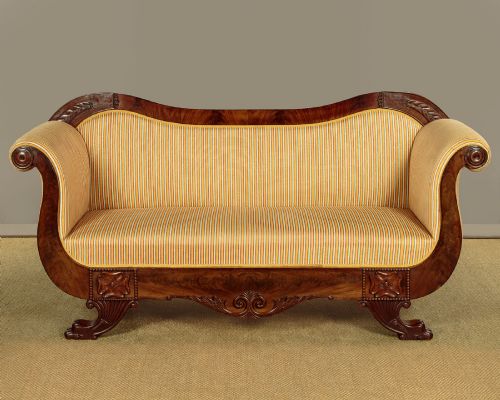
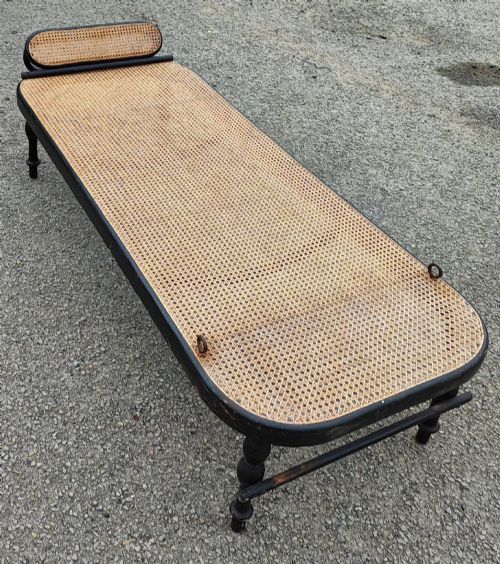
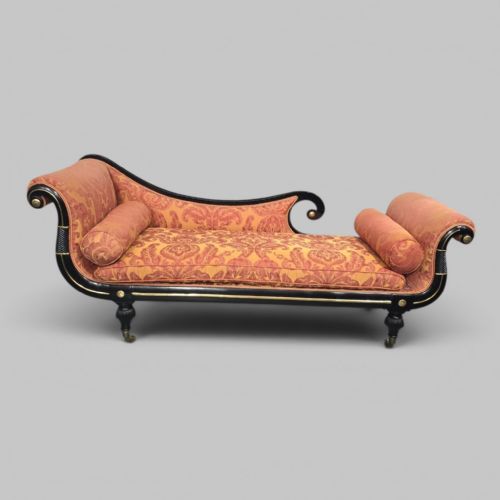
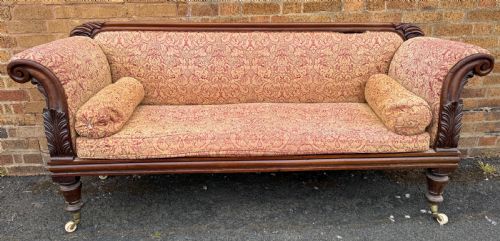
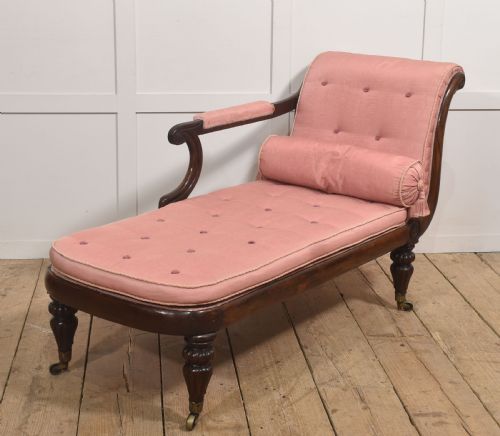
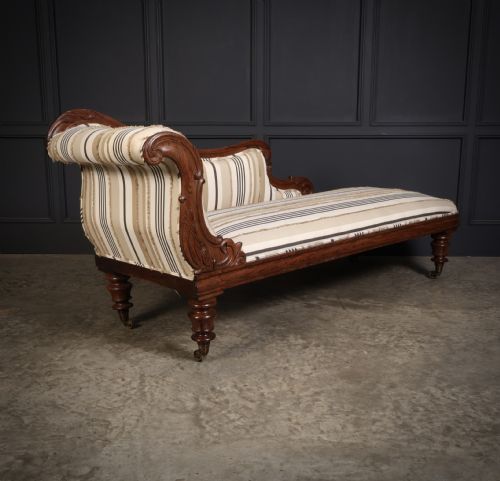
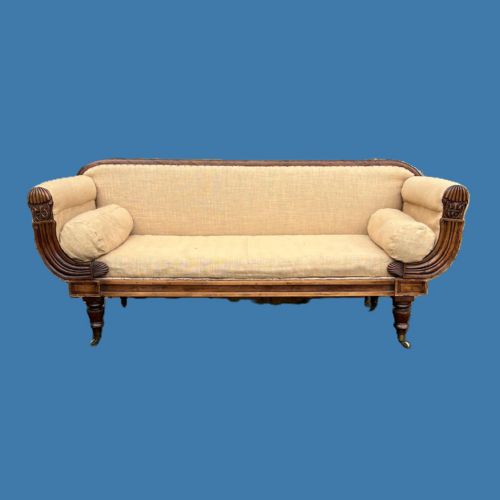
A regency daybed combines the low profile of a classical couch with the sweeping lines of a chaise longue, designed for reclining in grand rooms. These pieces originate primarily in the nineteenth century, spanning periods from the early eighteen hundreds through the William IV era. You will encounter forms ranging from double-ended settees and scroll-end couches to simpler cane-seated frames.
The silhouettes display distinct architectural influences, including scrolled ends, ionic column legs, and carved mahogany or rosewood structures. Many examples incorporate cane work or are upholstered in silk, velvet, and patterned linens. While some items present formal giltwood and brass inlay, others offer simpler country house variations.
Materials and construction
Cabinet makers constructed the frames using dense timbers like mahogany, walnut, and rosewood, alongside ebonised wood and simulated finishes. These hardwoods provided the structural strength needed for sweeping scroll arms and heavy weight-bearing rails without snapping under stress.
Detailing often involved applied brass inlay, intricate wood carvings, and woven cane seating panels. Upholstery techniques layered traditional stuffing beneath silk, velvet, or linen coverings, secured with meticulous tacking along the timber edges.
Assessing craftsmanship and condition
Superior pieces display crisp, deep wood carving on the scroll ends and structural integrity in the joinery of the frame. The sharpness of brass inlay work and the tightness of cane weaving also indicate the skill invested during manufacture.
Proportion and symmetry set finer examples apart from heavier, plainer regional furniture. Original timber patination and retained decorative elements elevate the standing of a piece.
Gillows·Holland and Sons·Morel and Hughes·Thomas Hope
The Regency Daybed Glossary
- Chaise longue
- An upholstered sofa shaped like a chair with a long seat for reclining. This form provides a comfortable backrest alongside an extended place to stretch out.
- Scroll end
- A sweeping, curved wooden terminal on a sofa arm or back. It borrows directly from classical Roman and Greek furniture designs.
- Simulated rosewood
- A painted timber finish mimicking the grain and rich colour of genuine rosewood. Craftsmen used this technique on secondary woods to achieve an expensive look affordably.
- Cane
- Woven rattan material used for seat panels and backs. It offers a lightweight, breathable surface popular in warm climates and period seating.
- Campaign bed
- Portable folding furniture designed for travel by military officers. These items feature clever joints and collapsible elements for easy transport.
Regency Daybed: Frequently Asked Questions
How do I use a daybed today?
A daybed works exceptionally well as a decorative lounging seat in a study, large hallway, or drawing room. It provides a comfortable place for daytime resting while adding distinct historical character to an interior.
Position the piece against a focal wall or let it float within a spacious room to showcase its architectural scroll ends and timber grain. Layer with simple cushions to match your personal interior style.
Are these pieces comfortable for sleeping?
Most antique daybeds and chaise longues feature a single raised end and a rigid backrest designed primarily for reclining rather than flat sleeping. The narrow proportions suit daytime resting rather than overnight guest use.
Upholstered versions offer a softer surface, while caned models often require a squab cushion for proper comfort. Consider the mattress depth if you plan to use the piece for extended relaxation.
How do I distinguish Regency from William IV?
Regency furniture typically dates from the early nineteenth century and exhibits lighter, more restrained classical proportions inspired by Greek and Roman antiquity. Brass inlay and sabre legs frequently appear on these pieces.
William IV items date slightly later, from the eighteen thirties onwards, and generally display heavier, more robust proportions with bolder mahogany carvings and robust scroll feet.
How do I care for antique wood and cane?
Keep wooden frames away from direct sunlight and sudden temperature shifts to prevent the timber from splitting or warping. Dust regularly with a dry cloth and apply appropriate wax sparingly to maintain the finish.
Caned panels benefit from occasional light wiping with a damp sponge to keep the rattan flexible and prevent snapping. Avoid placing heavy loads on caned surfaces to protect the weave from sagging.