
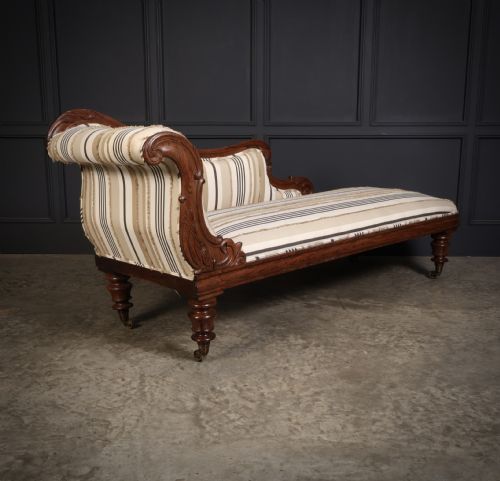


Rosewood Chaise Longue
A rosewood chaise longue offers a reclining seat with undeniable presence, bringing sculptural elegance and historical gravitas to any room.
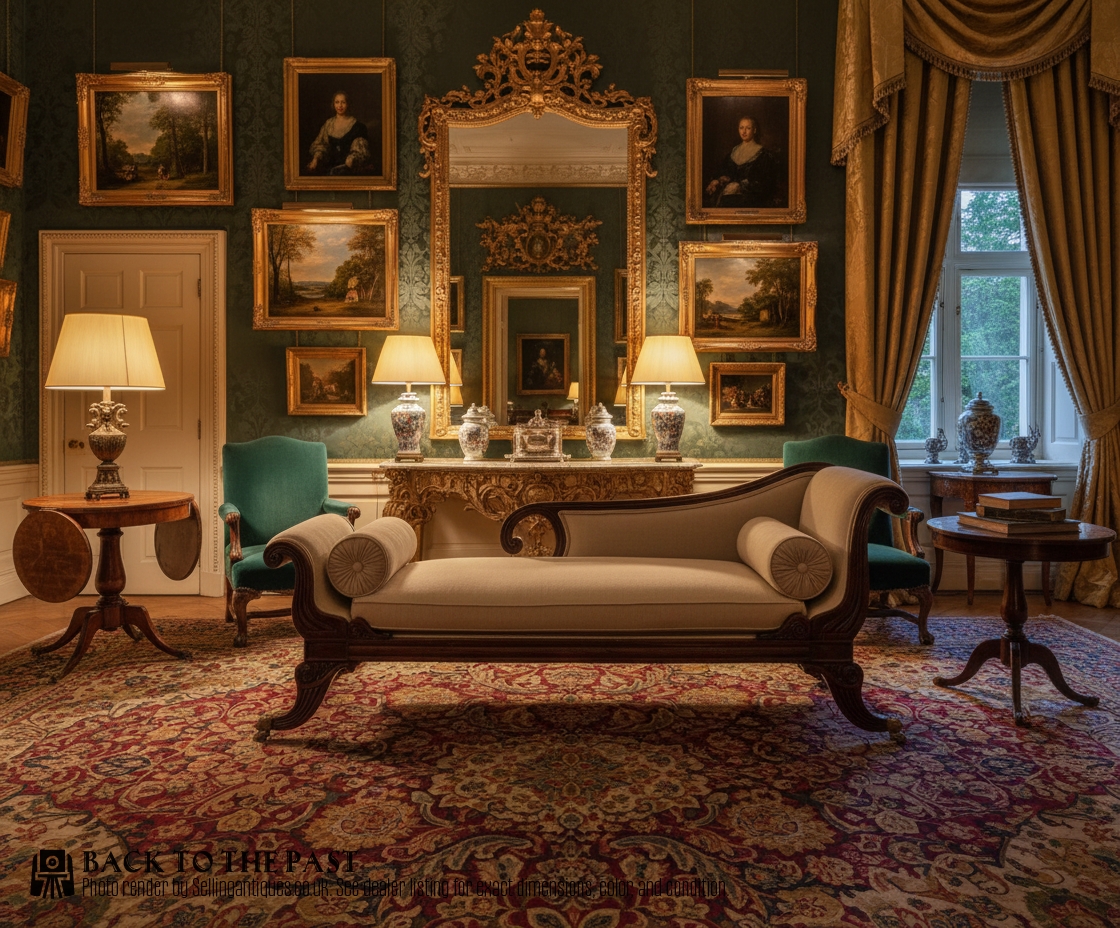
What they are
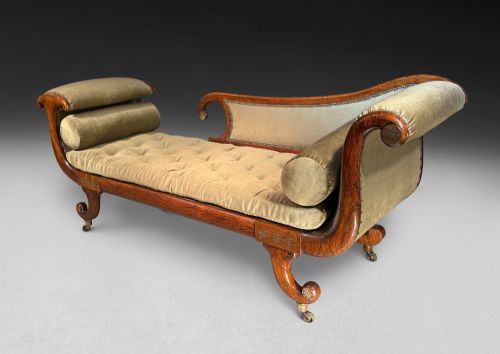
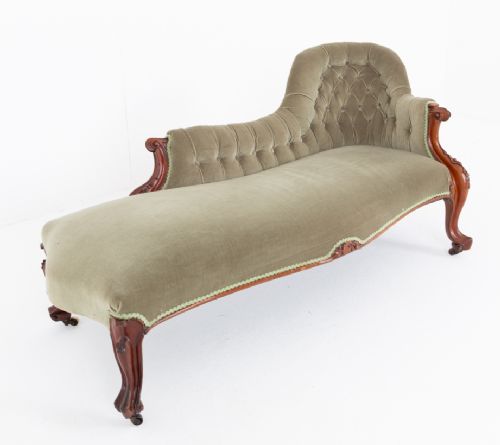
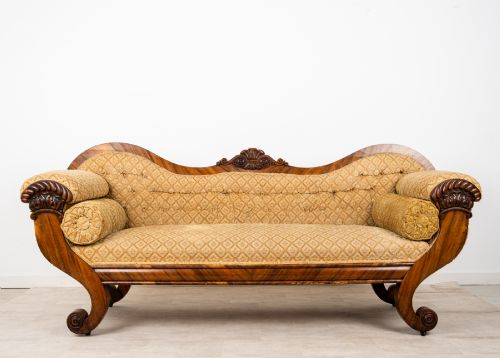
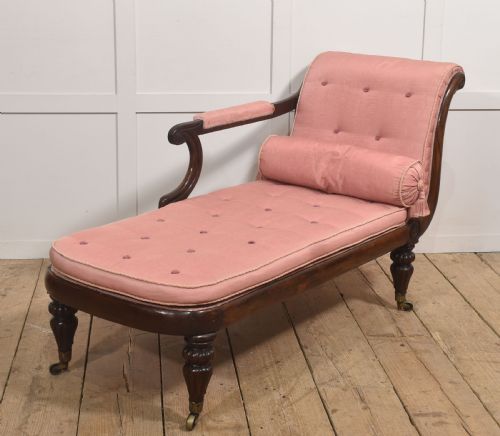
A rosewood chaise longue combines the formal grace of a daybed with the upright comfort of a sofa, designed for semi-reclined relaxation. These pieces span the Regency, William IV, and Victorian periods, showcasing a steady evolution in domestic seating.
The version most commonly encountered on this page is the Victorian or Regency example, often featuring a scrolled backrest and a single raised end. They appear variously as daybeds, settees, and couches in both solid timber and simulated finishes.
How they were made
Joiners built the structural frames using dense rosewood or simulated rosewood, sometimes integrating brass inlay work along the wooden surfaces. Carved details on early Victorian frames demonstrate skilled hand-shaping of the timber.
Upholstery methods utilised traditional materials and fabrics, including velvet, silk, and general textile coverings over sprung or padded foundations. Canework also appears on specific daybed variants to provide a lighter support surface.
Retail Price Guide 2026
Typical UK retail prices for rosewood chaise longue, calculated from the Sellingantiques database of over a million retail prices indexed since 2003. This retail price guide relies exclusively on Sellingantiques data; no external sources or auction records are used, so the figures do not describe the wider market.
Several Victorian models feature a double spoon back, ensuring nobody ever quite figured out which end was the proper top.
What varies in quality
The refinement of the timber grain and the precision of the brass inlay distinguish standard examples from finer workshops. Richly figured rosewood and deep relief carving elevate the visual impact of the frame.
Structural integrity depends upon the solidity of the main scroll and the joinery connecting the backrest to the chassis. Proportion and scale also dictate quality, with larger or more harmoniously curved frames commanding greater design interest.
H. Goodall & Sons·Gillows of Lancaster
The Rosewood Chaise Longue Glossary
- Rosewood
- A dense, heavily grained exotic hardwood prized for its dark purple-brown coloration and rich figure. It forms the primary structural and decorative material for these nineteenth-century seats.
- Simulated Rosewood
- Painted or stained grain work applied to a secondary timber to imitate the appearance of genuine rosewood. This technique was common during the Regency period.
- Chaise Longue
- A long reclining chair or daybed designed for one person to stretch out. The form integrates a partial backrest with a single raised headrest.
- Brass Inlay
- Thin strips or motifs of brass embedded flush into the wooden surface of the frame. This decorative method frequently marks out Regency pieces.
- Daybed
- An elongated seating form intended for resting during the day. It shares functional similarities with the chaise longue in nineteenth-century interiors.
Frequently Asked Questions
How do I style a rosewood chaise longue?
Position the piece away from the wall to let the sculptural curves and carved rosewood backrest remain visible from multiple angles. It works effectively as a statement lounger in a spacious bedroom or drawing room.
Keep surrounding furniture understated so the dark timber and historic upholstery retain their visual focal point without competing against other ornate antiques.
What is the difference between Regency and Victorian models?
Regency models tend to feature cleaner architectural lines, simulated rosewood finishes, and delicate brass inlay work. Their forms often lean towards classical revival motifs.
Victorian pieces introduce heavier carved rosewood frames, serpentine shapes, and more substantial upholstered bodies designed for deeper domestic comfort.
Were these used as beds?
Despite the literal translation of the name as long chair, these pieces served primarily for daytime resting, reading, or receiving visitors in a semi-reclined posture. They were not intended as overnight primary beds.
The raised end supported the head while the long seat allowed the legs to stretch out during afternoon leisure hours.
How do I care for antique rosewood?
Protect the timber by keeping the chaise longue away from direct sunlight and strong heat sources that can dry out the polished surface. Dust regularly with a soft, dry cloth.
A light application of appropriate wax polish helps maintain the lustre of the rosewood grain without building up a heavy film over time.