

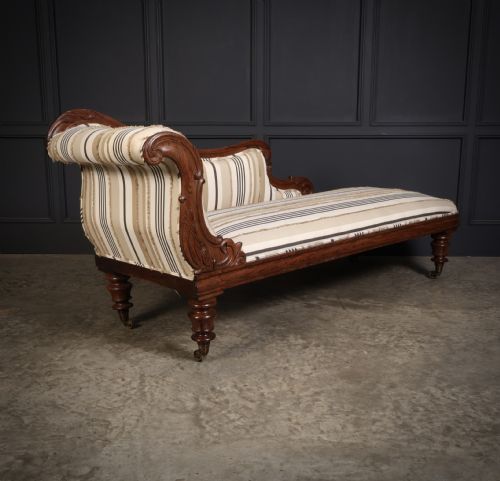


William IV Sofa
A william iv sofa anchors a drawing room with architectural timber and scrolling arms, offering solid nineteenth-century comfort.
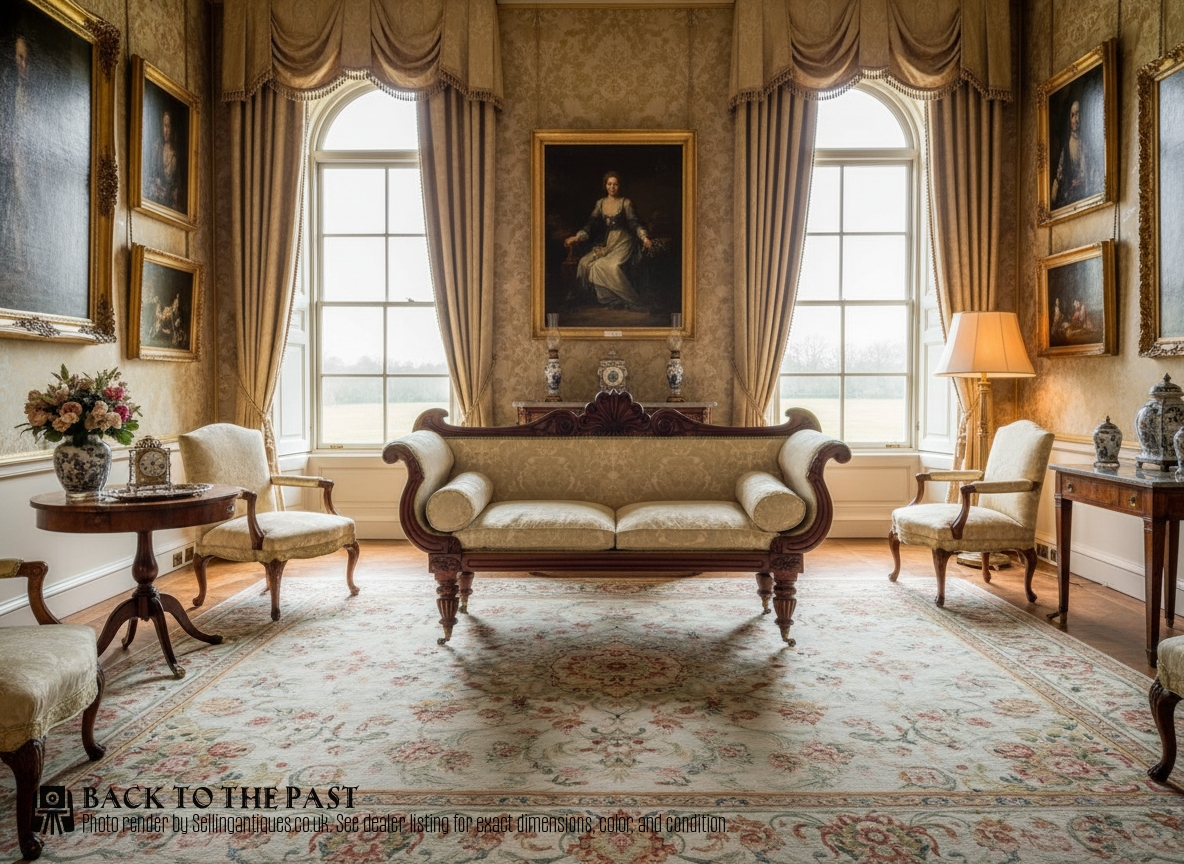
William IV Sofas and Settees
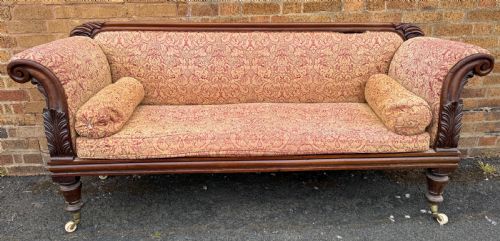
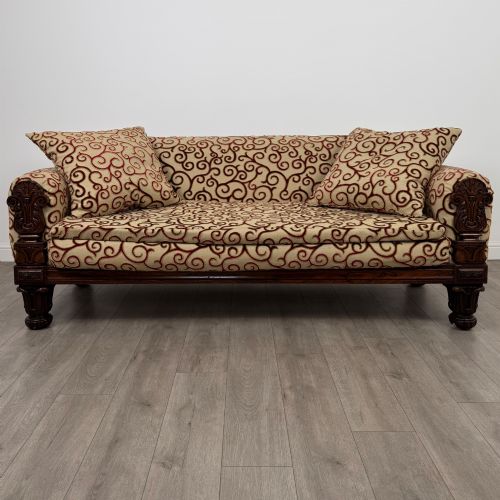
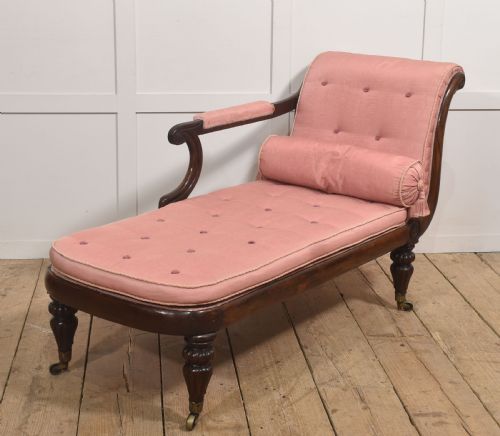
The william iv sofa emerges from the nineteenth century in substantial forms, including large country house settees, double-ended couches, and rosewood chaise longues. Makers shaped these pieces during the transitional decades spanning late Regency and early Victorian periods, often employing scroll arms and show frames.
Examples on this page draw from nineteenth-century aesthetics, showing mahogany and rosewood timbers paired with upholstery. Settees range from compact seats to generous three-seater proportions suitable for historic and modern drawing rooms alike.
Timber and Construction
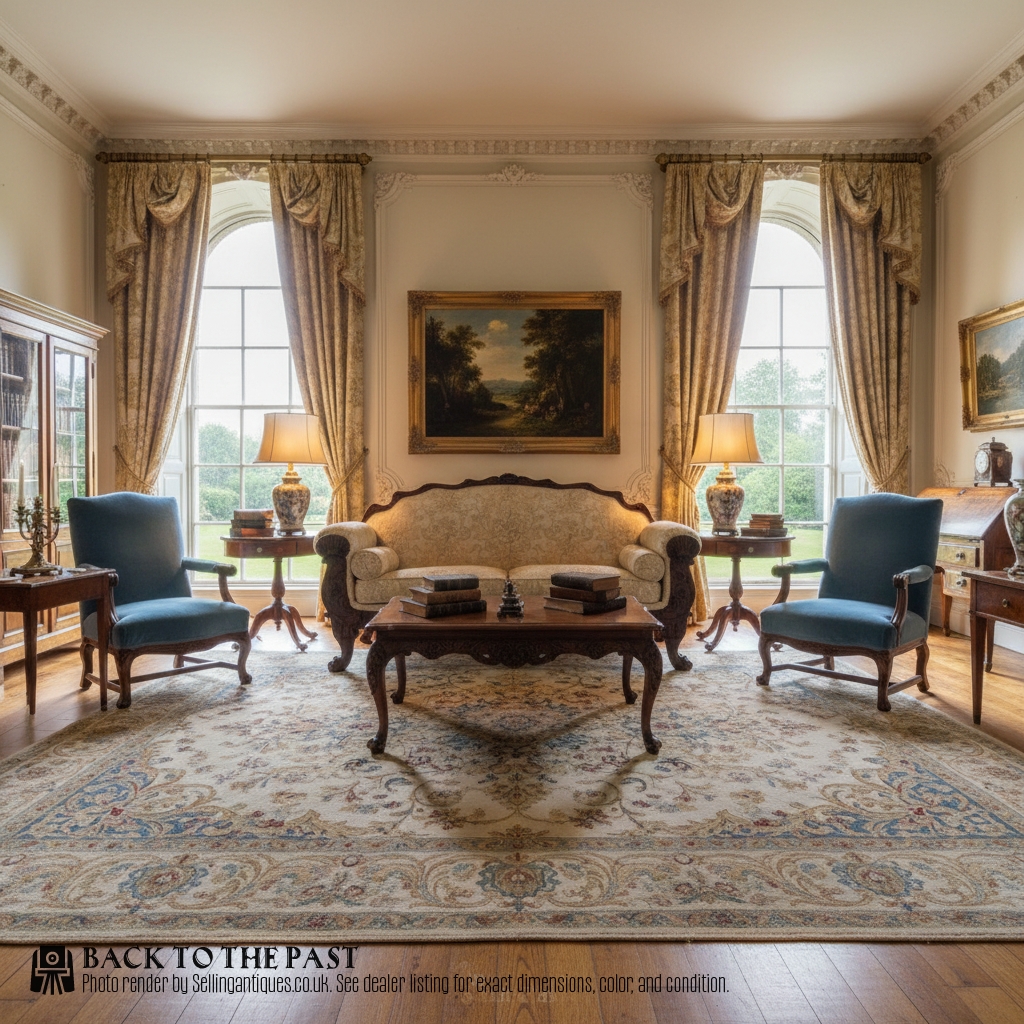
Cabinet makers built these frames primarily from solid mahogany and rich rosewood, sometimes incorporating oak or satin walnut beneath the surface. Elements such as brass castors support heavy timber feet, while internal construction relies on traditional joinery.
Upholstery relies on historic materials including hessian and fabric covers, with styles varying from plain damask to deep-buttoned brown leather. Carved details highlight the show frames, reflecting revival influences across the period.
Retail Price Guide 2026
Typical UK retail prices for william iv sofa, calculated from the Sellingantiques database of over a million retail prices indexed since 2003. This retail price guide relies exclusively on Sellingantiques data; no external sources or auction records are used, so the figures do not describe the wider market.
Early nineteenth-century cabinet makers occasionally deployed satin walnut when rosewood was unavailable, proving that even trees follow fashion.
Gradations in Quality
Quality rests upon timber selection and the crispness of carved ornamentation on the show frame. Finer examples display dense mahogany or highly figured rosewood, coupled with balanced proportions and substantial scroll ends.
The sophistication of the joinery and the integrity of the original show frame separate standard pieces from high-status country house models. Superior seating balances architectural presence with refined carving across the arms and rails.
John Taylor·George Smith
The William IV Sofa Glossary
- Show frame
- A visible timber structure surrounding the upholstered portions of a seat. It displays the grain and carved details of the wood.
- Scroll arm
- An armrest curved outward in a tight spiral scroll. This form characterises seating from the nineteenth century.
- Chaise longue
- An upholstered long chair designed for reclining. It combines a sofa back with an extended seat.
- Double-ended settee
- A sofa featuring matching scroll ends at both extremities. This symmetry allows a user to recline against either end.
- Goncalo Alves
- An exotic dense timber used in nineteenth-century cabinet making. It yields striking figuring similar to rosewood.
Frequently Asked Questions
How do I identify a william iv sofa?
Look for heavy nineteenth-century timber frames in mahogany or rosewood, characteristically featuring prominent scroll arms and show frames.
Many examples incorporate classical revival motifs and sit upon sturdy turned legs fitted with brass castors.
Where were these sofas placed originally?
These pieces suited the principal entertaining spaces of nineteenth-century residences, such as drawing rooms, libraries, and grand country house halls.
Their substantial scale allowed them to sit away from walls as centrepieces within large rooms.
What fabrics cover these frames?
Original and replacement upholstery schemes utilise traditional textiles like damask, woven fabrics, and brown leather secured over hessian foundations.
Many surviving pieces retain deep-buttoned leather or patterned upholstery that suits the period aesthetic.