




Regency Mahogany Settee
A regency mahogany settee brings substantial nineteenth-century presence to a room, offering deep scroll ends and rich timber grain.
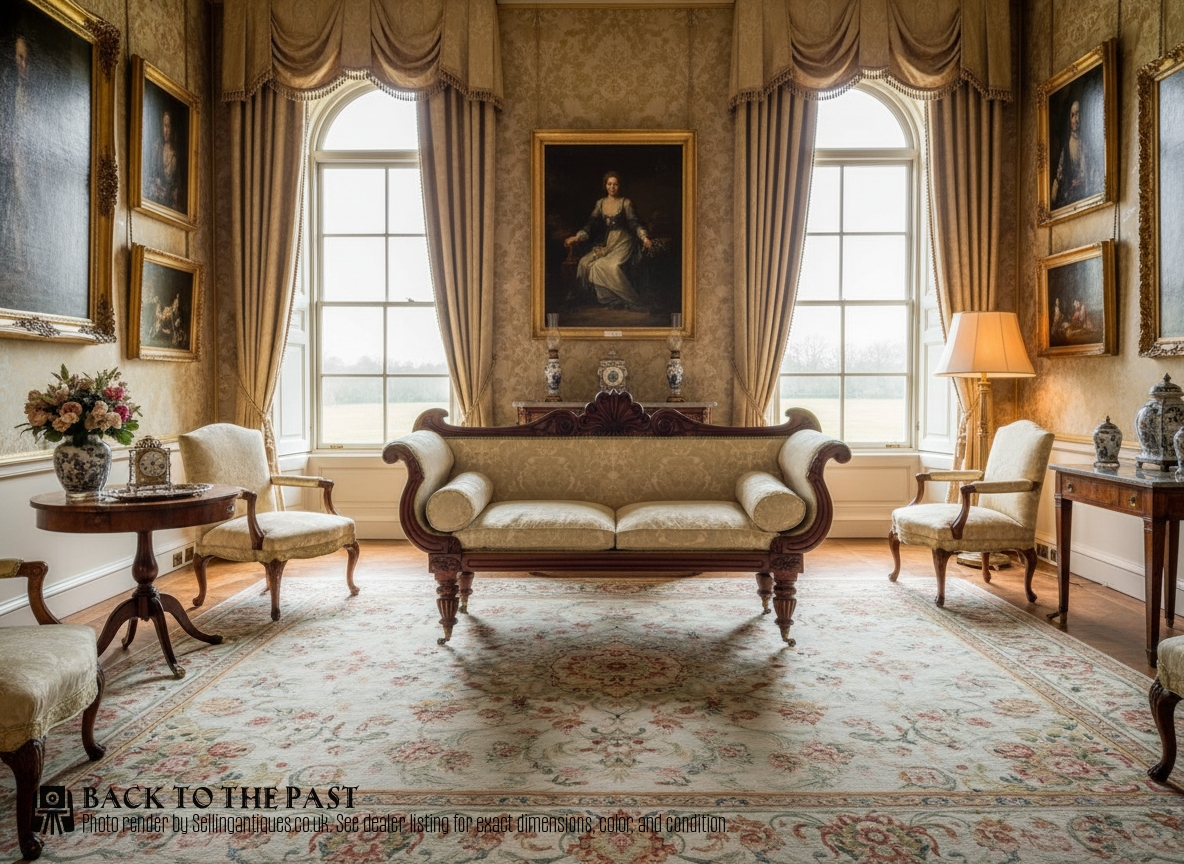
Regency Mahogany Settee
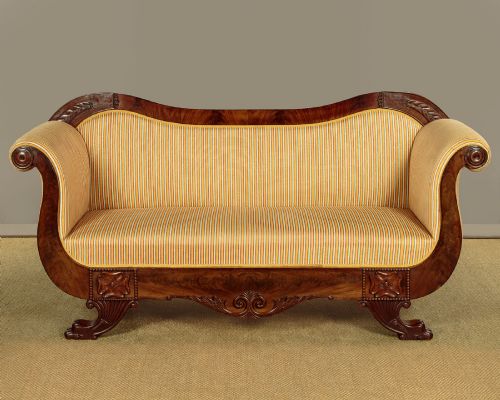
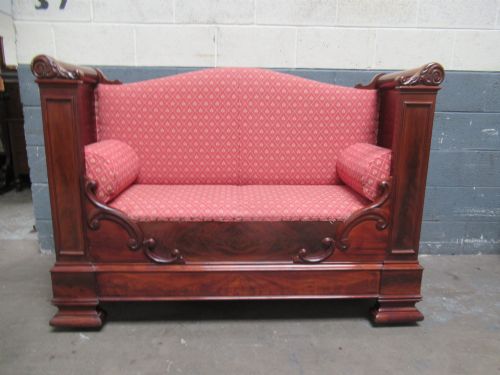
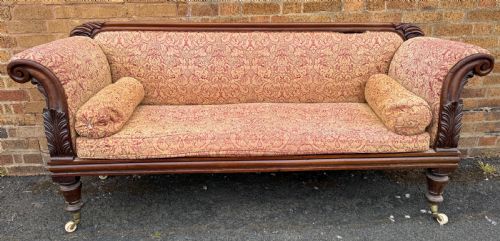
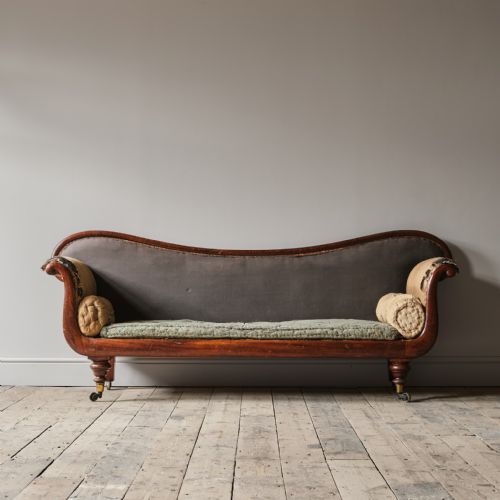
A regency mahogany settee represents the height of early nineteenth-century seating design, spanning the Regency, William IV, and Early Victorian periods. These pieces appear primarily as scroll-end sofas, double-ended settees, and large country house models fashioned from heavy timber.
The silhouettes vary from simple bench seats to carved show-frame couches with lyre shapes or herms statue supports. Buyers encounter variations that range from stripped frames awaiting upholstery to fully restored brown leather examples.
Originating predominantly from English workshops, these settees function as principal drawing room seating or grand window seats. Their proportions accommodate multiple sitters, utilising sturdy mahogany frames designed for formal reception spaces.
Materials and Construction
Cabinetmakers built these frames using dense mahogany and occasional rosewood veneers, accented with brass inlay or brass mounts. Structural support relied on heavy timber carcases shaped with hand-carved scrolls and turned legs.
Upholstery techniques involved horsehair stuffing, hessian webbing, and traditional springs covered in fabric or leather. The visible show-frame timber received hand-polished finishes to highlight the grain while the internal padding provided firm support.
Some nineteenth-century settees incorporate carved herms statues into the frame, glaring sternly at anyone daring to lounge too informally.
Judging the Workmanship
Quality rests in the crispness of the timber carving and the architectural balance of the scroll ends. Superior examples display fluent hand-carved details on the show frame rather than flat or purely machine-finished mouldings.
The integrity of the underlying mahogany structure dictates longevity, with heavier timbers and tighter joinery distinguishing finer workshop output. Original brass inlays and well-preserved timber patination elevate the standing of a piece.
The Regency Mahogany Settee Glossary
- Scroll end
- A sweeping, curved armrest that rolls outward at the terminal of the settee. This prominent feature defines the silhouette of early nineteenth-century seating.
- Show frame
- A exposed wooden framework surrounding the upholstered portions of a sofa. It allows the carved mahogany or rosewood structure to remain visible.
- Double-ended sofa
- A seating form with identical scrolled ends at both sides, allowing a person to recline comfortably in either direction. These pieces often feature symmetrical carved decoration.
- Hessian
- A coarse woven fabric utilised as a traditional foundation layer beneath upholstery stuffing. It provides a stable base for horsehair and springs.
- Biedermeier design
- A Central European aesthetic style influencing furniture forms during the early nineteenth century. It emphasises clean lines and utilitarian grace over excessive ornamentation.
Regency Mahogany Settee: Frequently Asked Questions
How do I place a settee in a modern room?
Position the piece against a long wall or let it float within a spacious living area to showcase the carved mahogany back. The low profile works well beneath windows or paired with a central coffee table.
Ensure adequate clearance around the scroll ends so the silhouette remains unobstructed by other furniture. Neutral walls allow the dark timber and leather tones to stand out effectively.
What is the difference between a sofa and a settee?
In historical terminology, the terms often overlap to describe large upholstered seating designed for multiple occupants. Settees sometimes feature more exposed show-frame timber and bench-like proportions.
Sofas traditionally leaned toward heavier upholstery and enclosed padded arms. Both forms served similar formal reception functions in nineteenth-century interiors.
How do I care for nineteenth-century leather?
Maintain antique leather by applying suitable conservation waxes to nourish the hide and prevent cracking. Avoid placing the furniture near direct heat sources or strong sunlight.
Dust the surface regularly with a soft, dry cloth to protect the finish. Professional restoration may be needed if the leather requires deep conditioning or dyeing.
Can I reupholster an antique frame?
Many frames survive in need of new webbing, padding, and top fabric to suit modern interiors. Traditional materials like horsehair and hessian preserve the historical integrity of the piece.
Consult a restorer experienced in nineteenth-century upholstery methods to protect the show frame. Choosing appropriate period fabrics ensures the finished seat maintains its aesthetic balance.