

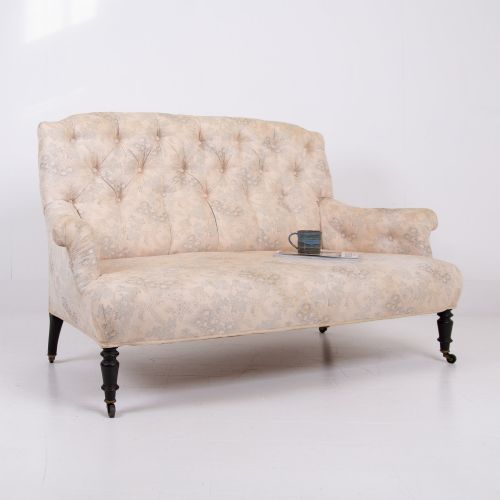
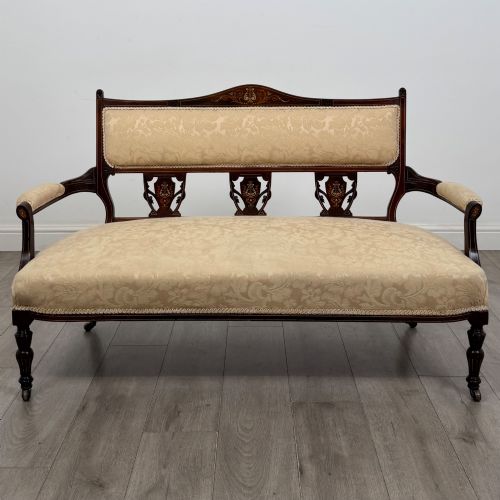
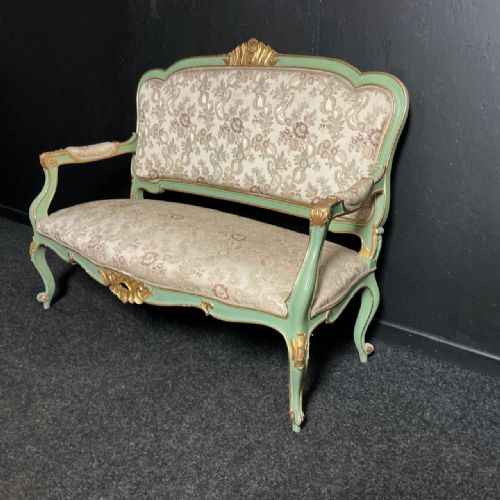
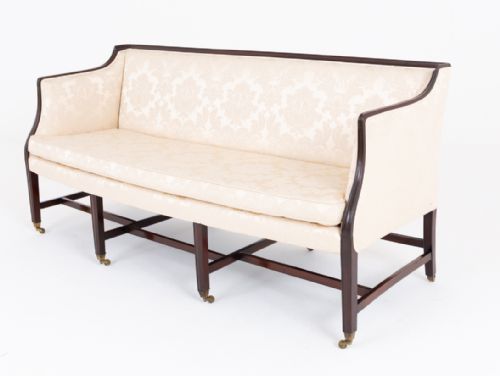


Cream Damask Settee
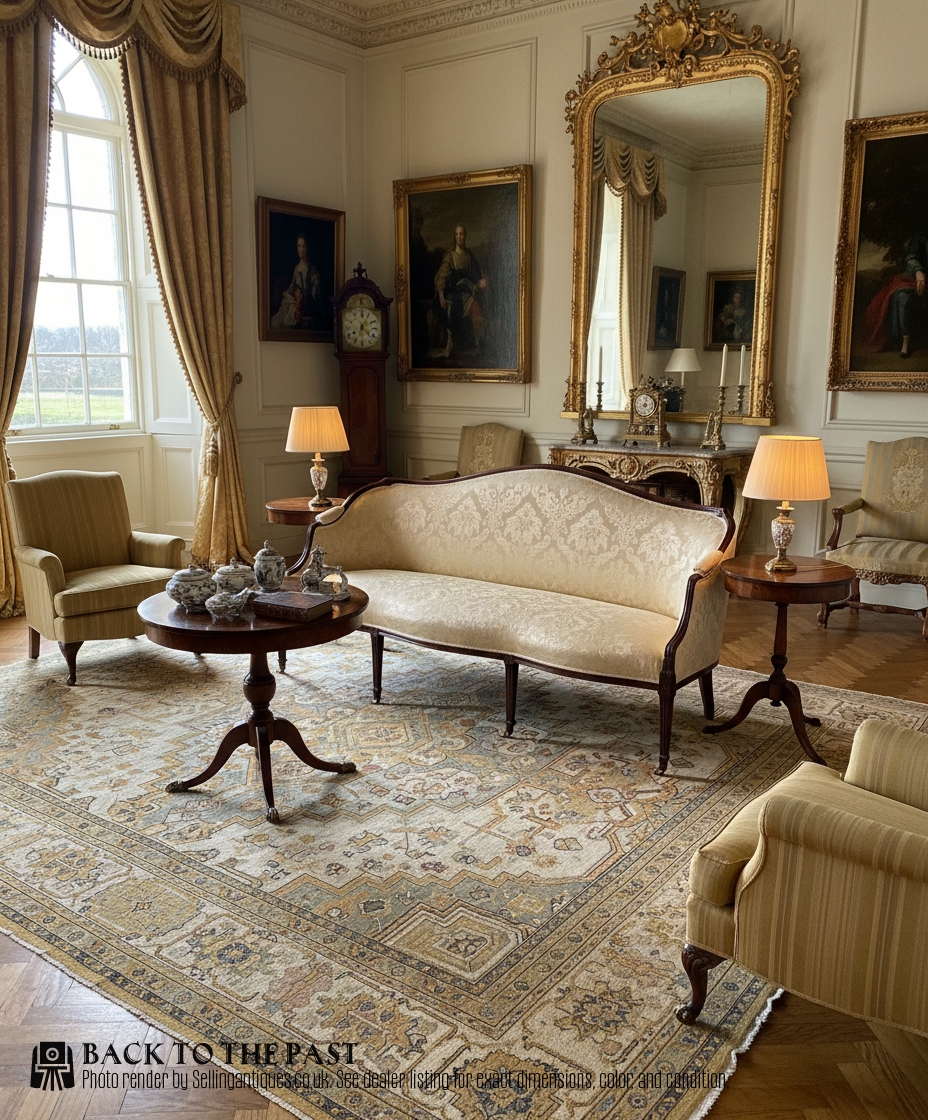
A cream damask settee brings refined pattern and generous seating to a drawing room, uniting period upholstery with classic timber frames.
Cream Damask Settee
A cream damask settee is what a buyer finds when searching for patterned historic seating, typically encountering Victorian, Edwardian, and Georgian pieces within the listings. These forms span formal salon suites, show-frame couches, and double-ended settees upholstered in durable patterned fabrics.
The selection ranges from carved walnut frames to mahogany and satinwood structures, reflecting centuries of seating design from George III styles to Louis XVI revivals. Buyers will discover both single settees and larger multi-piece suites designed for drawing rooms and reception spaces.
Materials and construction
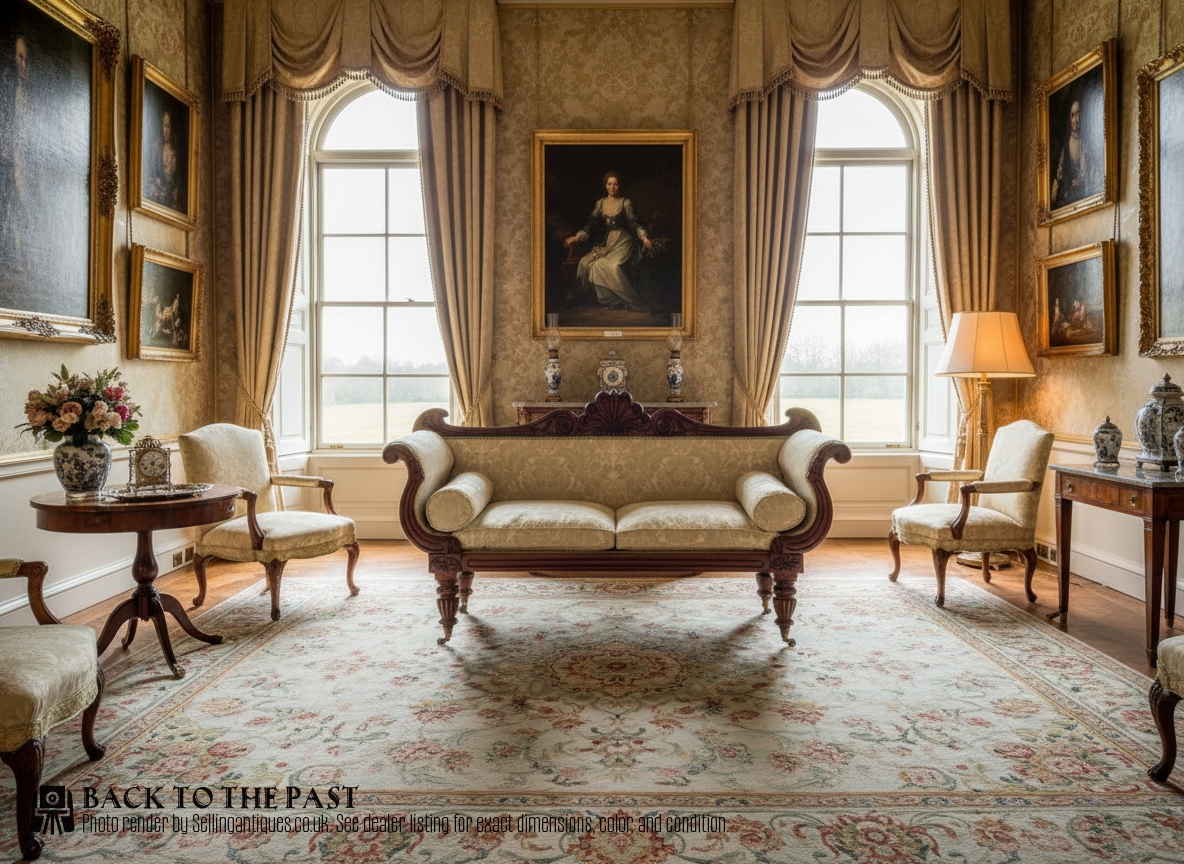
Makers utilised solid timbers such as mahogany, walnut, and satinwood to build the structural frames of these settees, often incorporating intricate carving, boxwood inlay, or brass mounts. These dense hardwoods provided the robust skeletons necessary for enduring daily use.
Textiles like damask fabric were secured over traditional stuffings to create the upholstered surfaces, while painted finishes and gilt highlights adorned French revival and Chinoiserie examples.
Cream Damask Settee Retail Price Guide 2026
Typical asking prices for cream damask settee among the pieces listed under this phrase on Sellingantiques today, from the lower quarter to the upper quarter. They describe what is for sale here now, not the wider market.
The listings on this site feature timbers including mahogany, walnut, and satinwood paired with damask upholstery across Victorian, Edwardian, and Georgian periods.
Distinctions in craftsmanship
Quality separates through the crispness of timber carving, the precision of inlay work, and the structural integrity of the frame joints rather than the mere presence of decoration. Superior examples display fluent hand-carved details and tightly jointed hardwoods that withstand centuries of shifting weight.
The execution of the upholstery work and the selection of fine textiles dictate the upper tier of the range, where the fabric pattern aligns harmoniously with the contours of the wooden show frame.
The Cream Damask Settee Glossary
- Damask
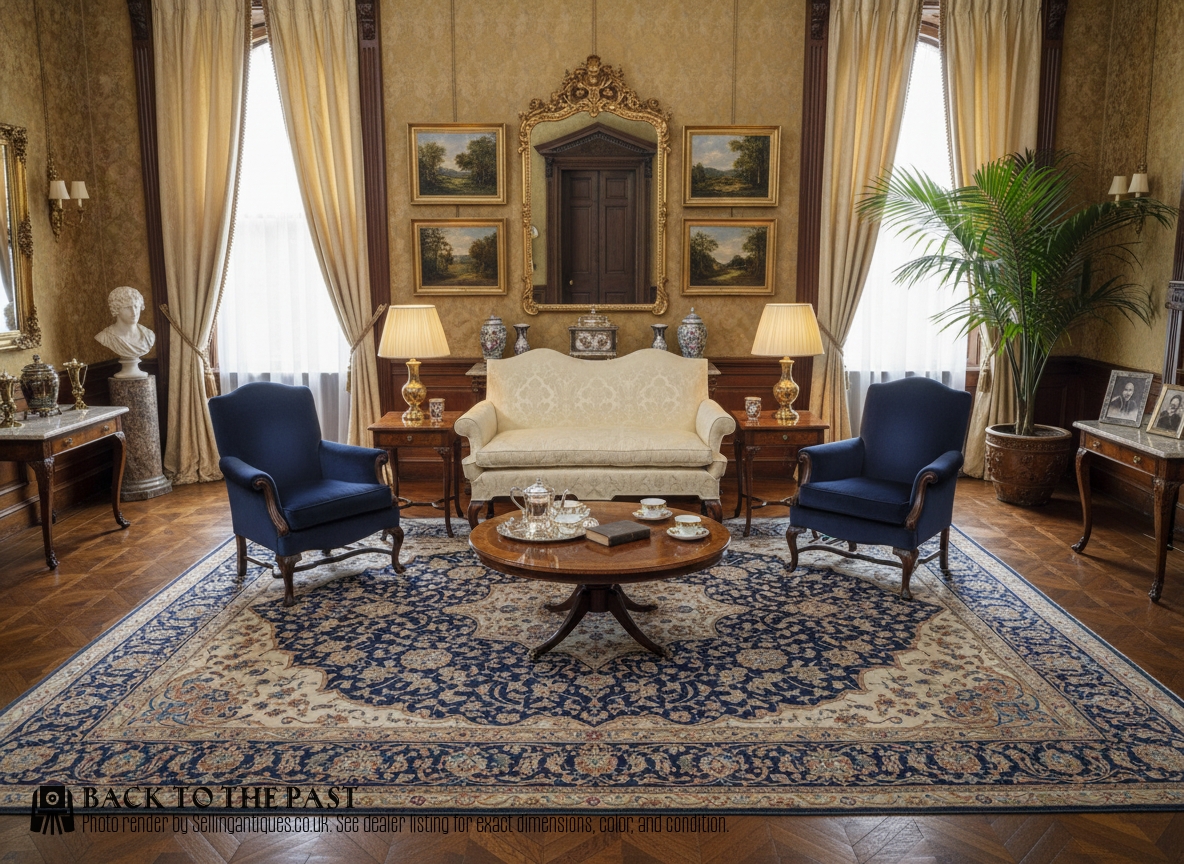
- A reversible figured fabric with patterns formed by contrasting warps and wefts. It provides the signature textured surface seen on these traditional upholstered seats.
- Show frame
- A exposed wooden framework where the carved timber borders the upholstery rather than being entirely concealed. This construction highlights the quality of the underlying wood.
- Double-ended
- A settee style featuring scrolled or raised armrests at both ends of the seat, allowing a person to recline comfortably from either direction.
- Ormolu
- Gilded bronze mounted to furniture as decorative ornament. It appears frequently on French revival pieces to accent the mahogany or painted structures.
Cream Damask Settee: Frequently Asked Questions
How do I place a settee?
These pieces suit formal drawing rooms, large bedrooms, or reception spaces where seating combines with historic character. They anchor a room when positioned against a panelled wall or floating near the centre of a spacious interior.
Ensure adequate clearance around the frame so the carved woodwork and upholstery remain visible from multiple angles in the room.
What periods do these cover?
The selections span from the eighteenth century through the Victorian and Edwardian eras into the twentieth century. Georgian and Victorian examples sit alongside later revivals.
Style markers like cabriole legs, inlay, and carved motifs help identify the specific era of manufacture.
Are these comfortable for daily use?
Historic frames were built for upright drawing room posture rather than modern lounging. Their supportive stuffing and sprung bases provide firm seating.
Consider the seat depth and back angle to ensure the proportions suit your daily routine and room layout.
How do I care for damask?
Protect the fabric from direct sunlight to prevent fading of the cream tone. Regular gentle vacuuming with a soft brush attachment removes dust from the woven pattern.
Address spills immediately by blotting with a clean dry cloth rather than rubbing the delicate textile fibres.