

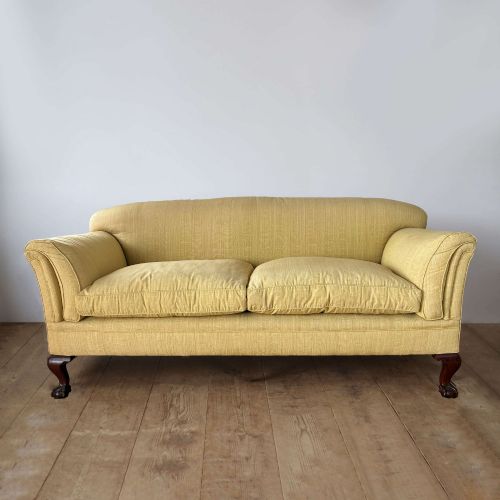


Victorian Two Seat Sofa
A victorian two seat sofa brings nineteenth-century craftsmanship into a modern interior, offering compact seating with rich period character.
Victorian Two Seat Sofa
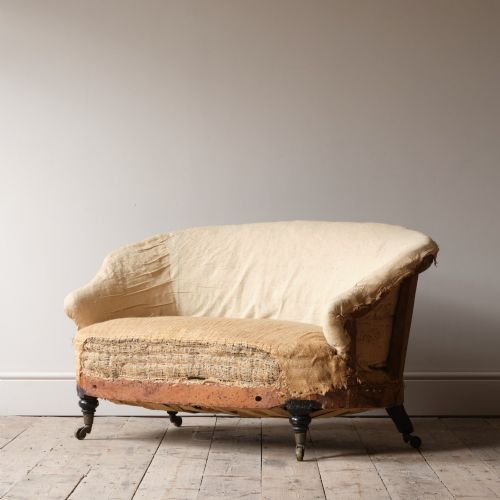
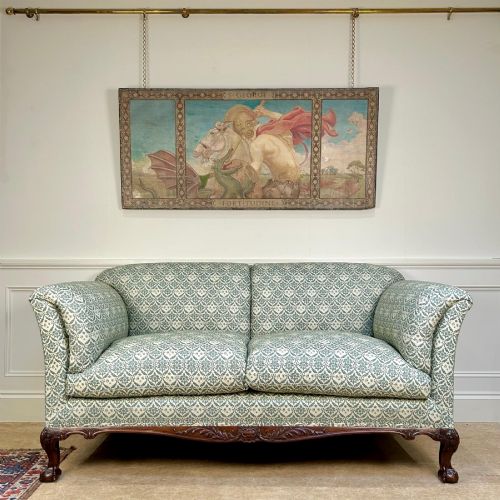
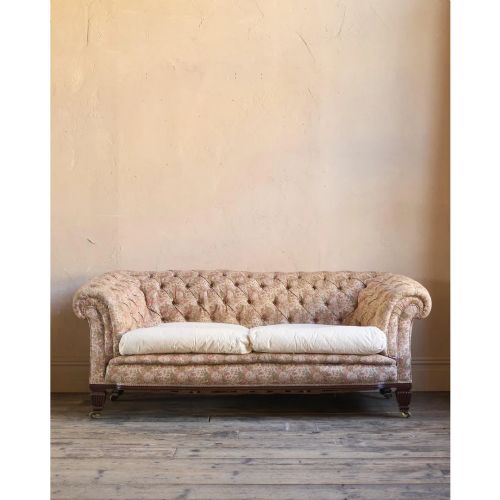
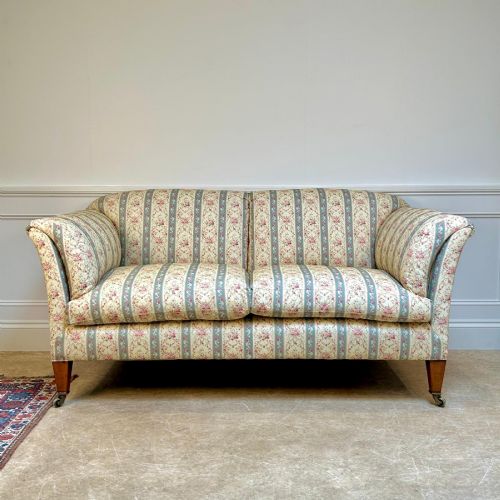
A victorian two seat sofa encompasses compact settees, couches, and small chesterfields produced during the nineteenth century and the early decades of the twentieth century. These pieces serve as intimate seating options, often designed with exposed wooden frames or fully upholstered profiles.
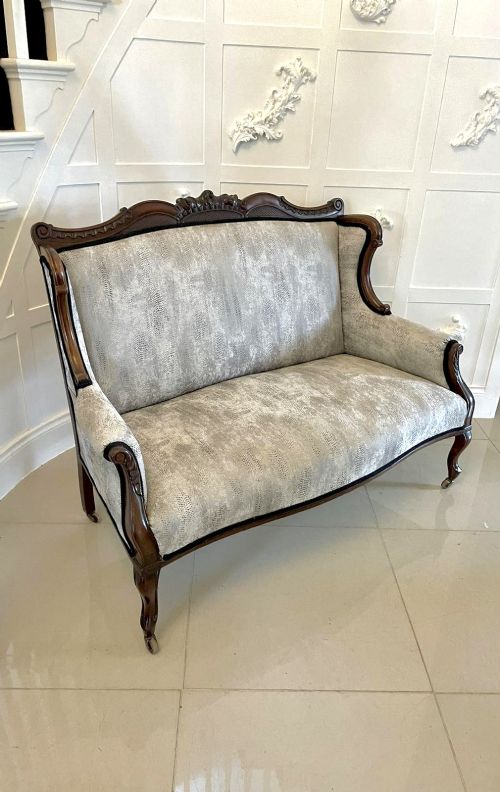
The selections span standard parlour forms, low salon seats, and deeply sprung models originating from English, Irish, and continental workshops. Walnut, mahogany, and rosewood frame structures appear alongside revival styles such as Chippendale and Rococo influences.
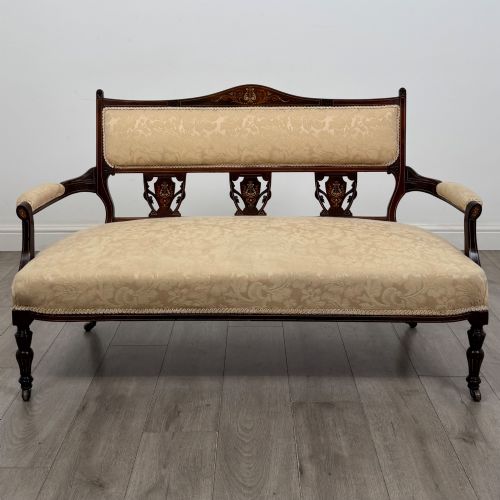
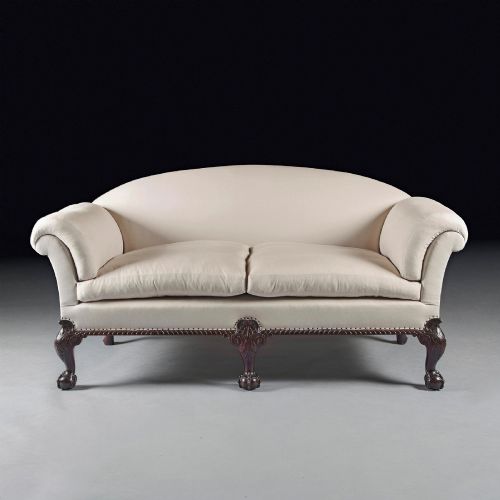
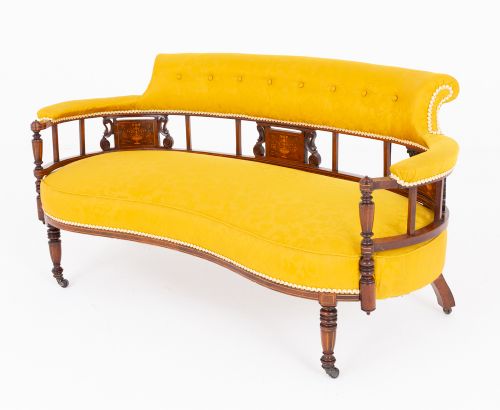
Buyers encounter variations ranging from simple mahogany framing with inlaid details to elaborate ball and claw foot designs. Smaller formats like love seats and window seats provide functional seating for restricted spatial layouts.
Materials and Construction
Frames rely on hardwoods including mahogany, walnut, rosewood, and ebonised timber, frequently shaped through turning, carving, and fine inlay work. Structural support often integrates brass castors, iron frames, and traditional webbed springing.
Upholstery techniques utilise calico foundations, original ticking fabrics, damask, velvet, linen, and hand-dyed leather. Deep buttoning and feather seat cushions provide interior padding, while exposed show frames display polished wood finishes.
Victorian Two Seat Sofa Retail Price Guide 2026
Typical asking prices for victorian two seat sofa among the pieces listed under this phrase on Sellingantiques today, from the lower quarter to the upper quarter. They describe what is for sale here now, not the wider market.
Listings feature periods spanning from the Victorian era through the Edwardian period to the 1930s, utilising mahogany, walnut, rosewood, and brass.
Assessing Quality
Quality rests in the integrity of the timber framing, the precision of carved details or marquetry inlay, and the retention of original structural components like castors and springs. Finer examples display crisp botanical or geometric carving on solid walnut and rosewood rather than simplified secondary timbers.
The sophistication of the upholstery work and the pedigree of the maker distinguish standard commercial output from exceptional commissions. Maker signatures on castors or frame linings elevate historical significance considerably.
Howard and Sons·Butlers of Dublin
The Victorian Two Seat Sofa Glossary
- Chesterfield
- A deeply buttoned upholstered sofa characterised by arms and back of the same height. This form offers traditional rolled profiling and substantial padding.
- Inlay
- A decorative technique where contrasting woods or materials are inserted into depressions within the primary wood surface to create flat patterns. Mahogany and rosewood frames frequently utilise this embellishment.
- Show Frame
- An exposed wooden structural skeleton surrounding the upholstered sections of a seat. Walnut and mahogany show frames define parlour and salon variations.
- Drop Arm
- A movable arm mechanism that can be lowered on one or both sides to transform the seating piece into a daybed or lounger. This mechanical adaptation appears on select nineteenth-century designs.
- Button Back
- An upholstery method where tufts are pulled deep into the padding and secured with buttons in a diamond grid pattern. This secures internal stuffing and creates a textured surface.
Victorian Two Seat Sofa: Frequently Asked Questions
Where were these sofas placed originally?
These compact seats found placement in nineteenth-century drawing rooms, parlours, and private bedrooms. Smaller formats served specific architectural functions near windows or in intimate conversational groupings.
Their scaled dimensions allowed them to fit into secondary reception spaces where larger three-piece suites would overwhelm the room layout.
How do I identify the period of a piece?
Stylistic markers such as exposed mahogany show frames, rosewood marquetry, and walnut cabriole legs point toward specific decades within the Victorian and Edwardian eras. Secondary clues include the presence of brass castors and traditional webbed upholstery foundations.
Later pieces from the early twentieth century often blend traditional profiles with simpler turned supports or updated textile coverings.
Can I use original upholstery daily?
Historic fabric covers like nineteenth-century ticking, tapestries, or delicate silks require careful preservation and may not withstand heavy daily traffic. Many historical examples have undergone professional reupholstery in calico or modern textiles to ensure structural longevity.
Buyers intending frequent seating often select pieces that have been professionally restored while retaining their internal spring systems.
What distinguishes a settee from a couch?
A settee traditionally designates a formal, upholstered wooden-framed bench designed for multiple sitters with a defined back and arms. A couch historically implied a piece intended for reclining, often featuring a raised or adjustable single end.
Nineteenth-century makers frequently used these terms interchangeably in trade catalogues to describe compact two-seat furniture.