




Scrolled Arm Chaise
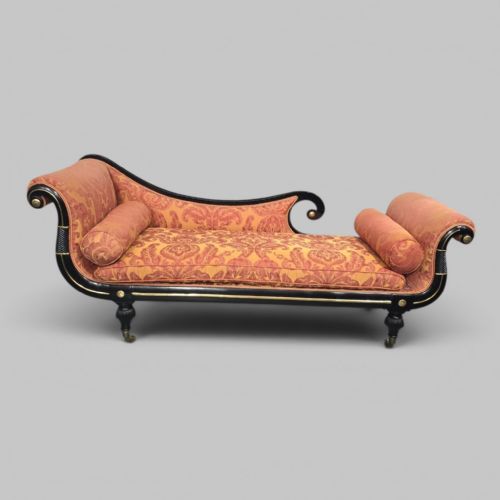
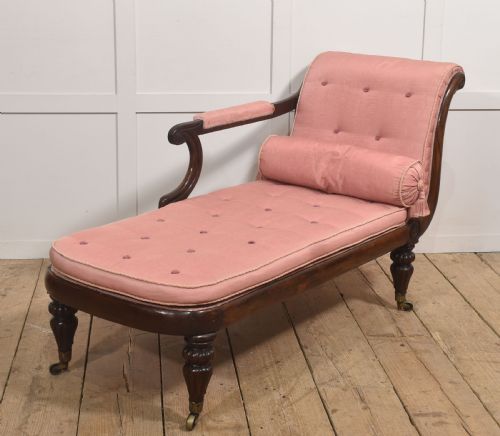
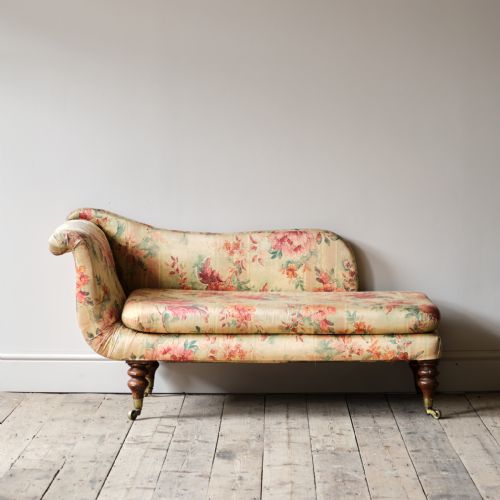
A scrolled arm chaise offers a singular place for reclining, combining deep wooden frames with distinct rolled ends tailored for afternoon rest.
Scrolled Arm Chaise
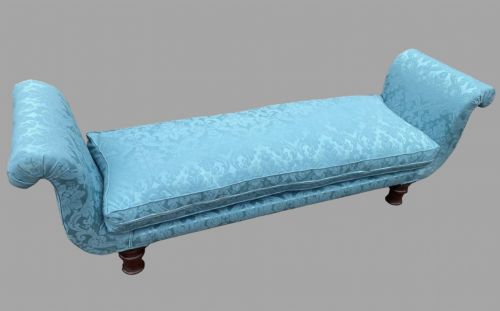
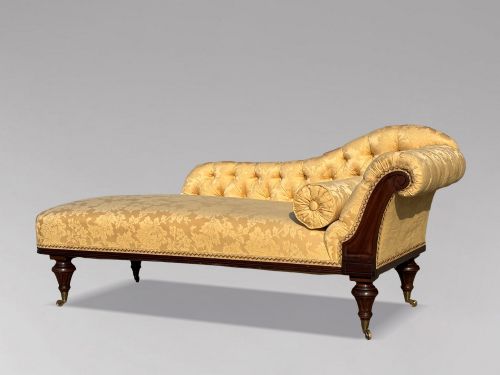
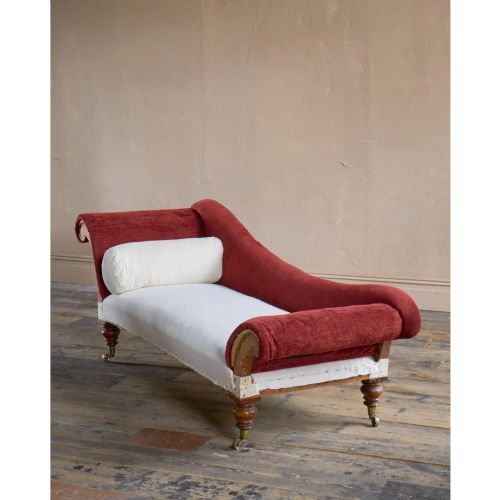
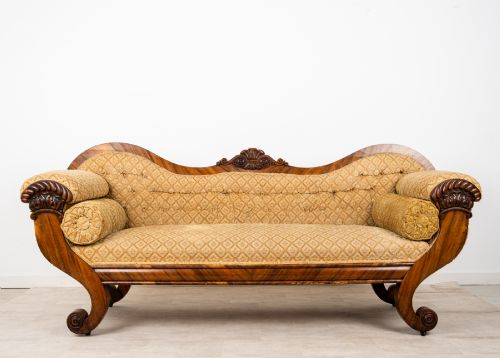
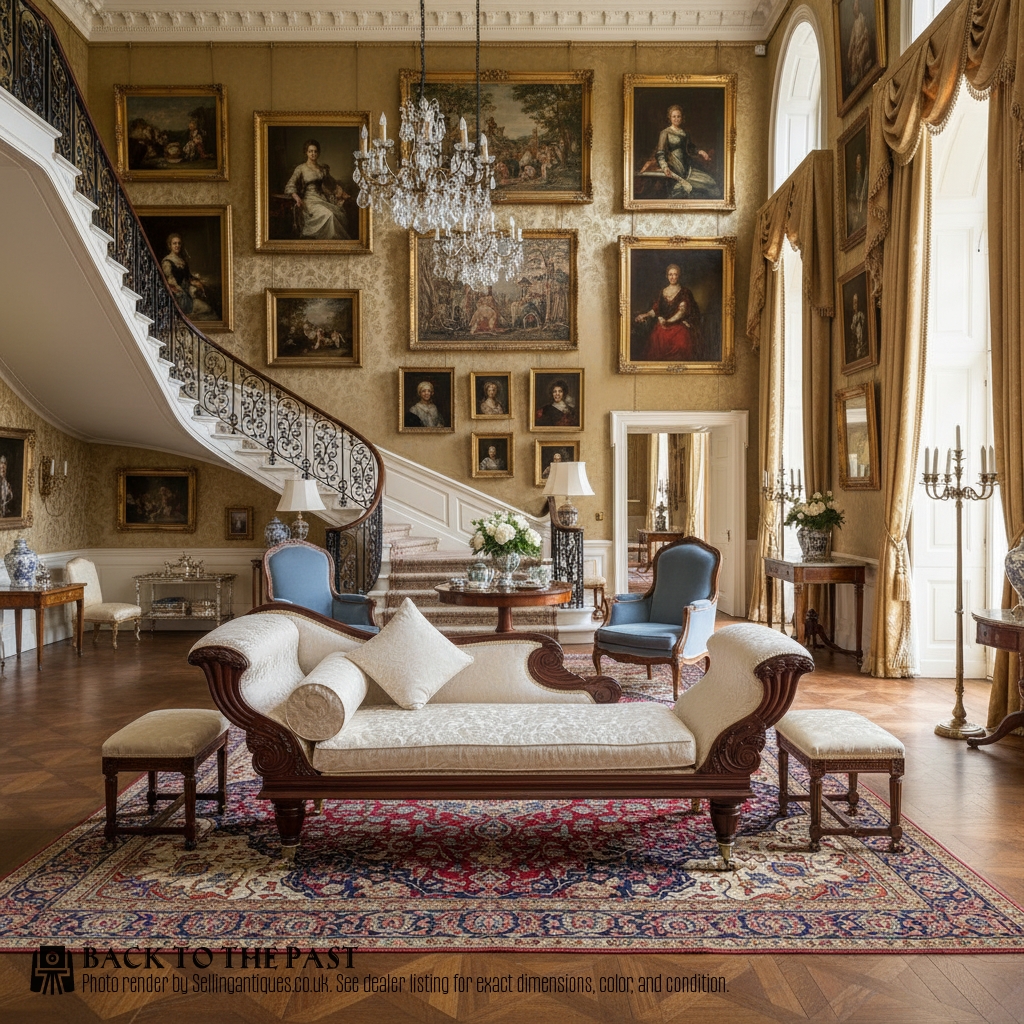
A scrolled arm chaise is a reclining seat designed for a single occupant, featuring one raised end and a sweeping backrest intended for daytime lounging. These pieces emerge primarily from the nineteenth century, spanning the Regency, William IV, and Victorian periods.
The dominant forms on this page include mahogany and rosewood frames alongside ebonised wood and upholstered variations. Makers of the era constructed these daybeds to anchor grand drawing rooms and private chambers alike.
How they were made
Makers utilised dense timbers such as mahogany and rosewood to form the structural carcasses, often shaping the arm terminals into deep, flowing scrolls. These hardwood frames support sprung and padded upholstery covered in velvet, damask, or plain fabric.
Brass castors frequently support the legs, allowing easy movement across carpeted and wooden floors. Frame construction relies on traditional joinery to stabilise the weight placed upon the single raised end.
Scrolled Arm Chaise Retail Price Guide 2026
Typical asking prices for scrolled arm chaise among the pieces listed under this phrase on Sellingantiques today, from the lower quarter to the upper quarter. They describe what is for sale here now, not the wider market.
The listings on this page span the Regency, William IV, and Victorian periods, utilising mahogany, rosewood, and ebonised wood.
What varies in quality
The crispness of the carved scrollwork dictates the visual distinction between standard production and superior examples. Workshops that employed skilled carvers produced terminals with deep relief and fluid lines.
The selection of timber grain on exposed mahogany or rosewood surfaces marks the difference in original cost and current standing. Richly figured veneers and solid secondary timbers indicate higher workshop execution.
Holland and Sons·Gillows·Willian Trotter
The Scrolled Arm Chaise Glossary
- Chaise longue
- A long reclining chair that bridges the form of a chair and a sofa, designed for semi-recumbent posture. The name translates directly from French as long chair.
- Scroll arm
- An armrest curved inward or outward in a tight spiral reminiscent of a scroll of paper. This shape defines the primary visual characteristic of these daybeds.
- Récamier
- A type of daybed with two raised ends or one raised end and a partial back, named after Madame Récamier who was painted reclining on such a piece in eighteen hundred.
- Lit bateau
- A bed or daybed with scrolled ends resembling the sides of a boat, popular during the French Empire and Regency eras. The timber frame curves symmetrically or asymmetrically.
Scrolled Arm Chaise: Frequently Asked Questions
How do I style a scrolled arm chaise at home?
Position the piece against a principal wall or floating slightly away from it to showcase the profile of the scroll end. Ensure the room retains enough clearance around the length to allow uninterrupted movement.
Pair the daybed with a low occasional table nearby to hold books or tea. Natural daylight from a nearby window enhances the timber grain and upholstery texture.
How do I care for antique upholstery fabric?
Vacuum the fabric surfaces gently using a soft brush attachment to remove dust particles from the tufted folds. Keep the piece away from direct sunlight to prevent the damask or velvet colours from fading.
Consult a professional textile restorer before attempting any liquid cleaning on historic upholstery. Regular rotation of the room keeps wear even across the cushion.
How do I date a nineteenth-century daybed?
Examine the timber species and carving style to determine the chronological period. Regency and William IV pieces often display heavier mahogany or rosewood with bold scrolled terminals.
Victorian iterations introduce ebonised finishes and altered proportions. The presence of brass castors and internal webbing provides further clues to the decade of manufacture.