
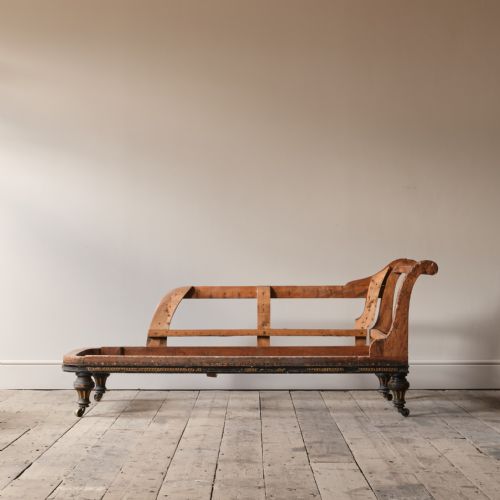
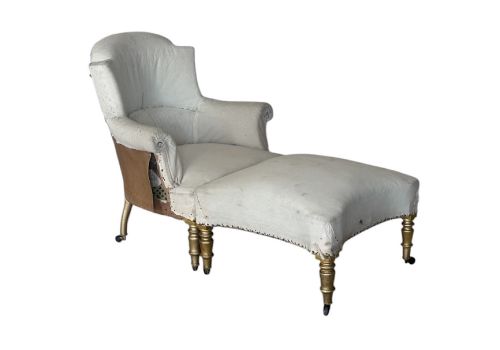
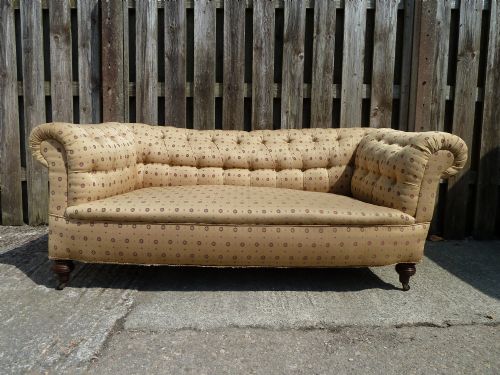
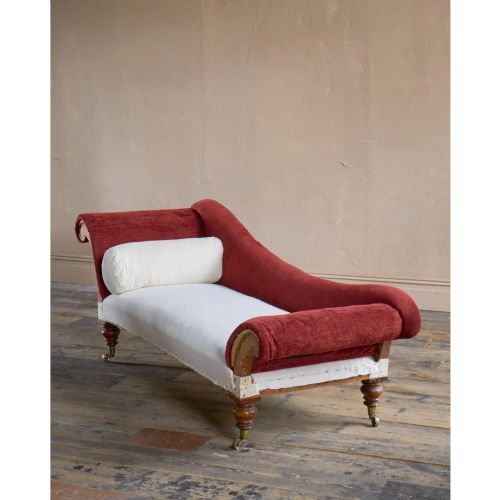


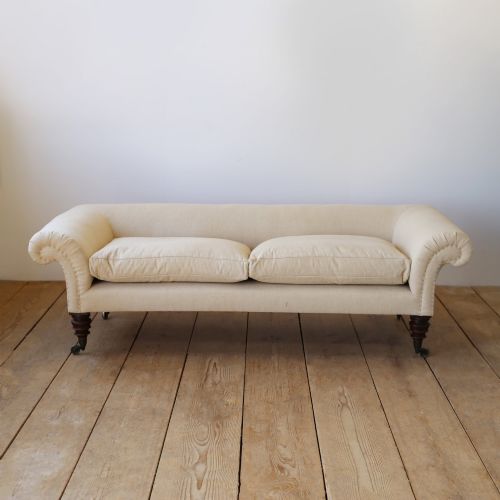
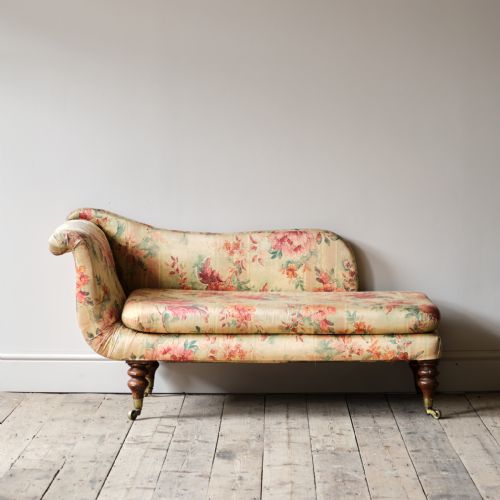
Turned Leg Daybed
A turned leg daybed is a nineteenth-century seat for daytime reclining that brings traditional woodwork and upholstered comfort into a modern room.
Turned Leg Daybed
When you search for a turned leg daybed, you encounter nineteenth-century daybeds, chaise longues, and sofas defined by turned wooden supports. These pieces emerge from periods such as the Regency and Victorian eras, alongside French and Anglo-Indian variants.
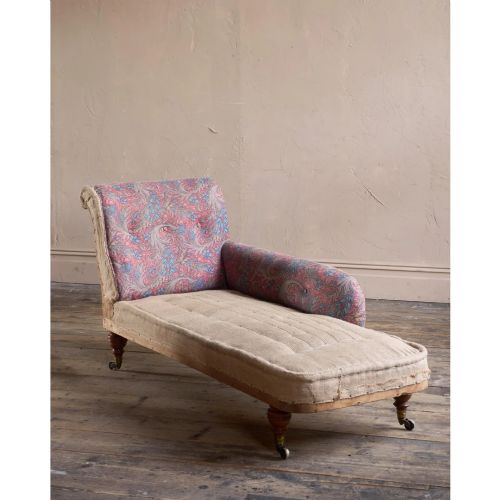
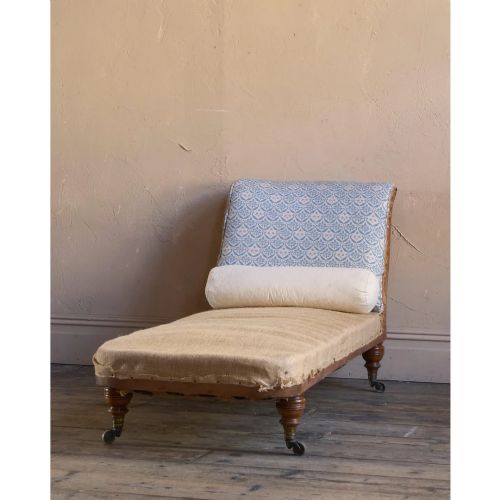
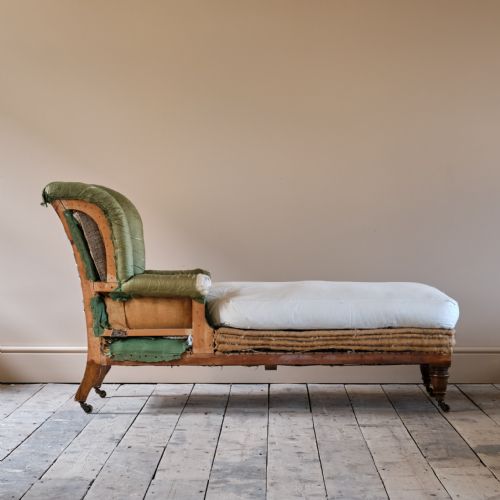
The version most commonly met on this page is the nineteenth-century chaise longue or day bed upholstered in fabrics like velvet, calico, or leather, resting upon turned wooden legs often fitted with castors.
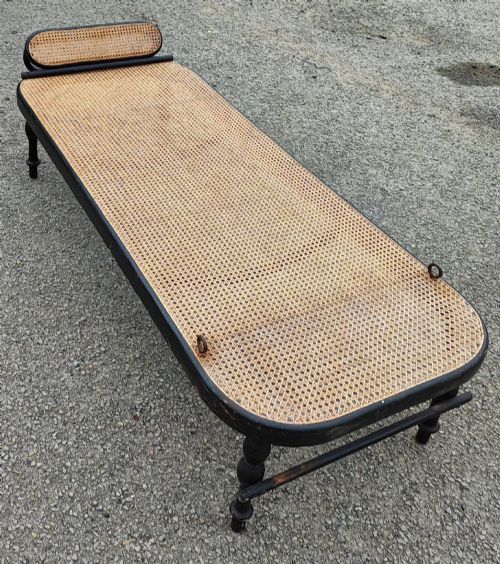
Forms span from buttoned velvet day beds to ebonised cane day beds and campaign beds with detachable legs. Makers such as Holland and Sons and Howard and Sons frequently appear among these nineteenth-century forms.
How they were made
Construction relies primarily on timbers such as mahogany and ebonised wood, shaped into structural frames and turned legs by nineteenth-century cabinet makers. Caning also appears on specific day bed frames.
Upholstery techniques involve stuffing and covering frames in materials including velvet, calico, hessian, fabric, and brown leather, frequently finished with buttoning.
Functional hardware includes original castors on legs and adjustable mechanisms for reclining day beds and campaign beds.
Turned Leg Daybed Retail Price Guide 2026
Typical asking prices for turned leg daybed among the pieces listed under this phrase on Sellingantiques today, from the lower quarter to the upper quarter. They describe what is for sale here now, not the wider market.
Upholstery materials recorded across the pieces include velvet, calico, hessian, leather, and standard fabric.
What varies in quality
The distinction between tiers of quality rests upon the integrity of the timber frame, the precision of the wood turning, and the attribution to established nineteenth-century makers like Howard and Sons or Holland and Sons. Pieces associated with notable workshops demonstrate superior joinery and cabinet-making skill.
Upholstery execution and the preservation of original elements, such as castors and turning details, dictate the refinement of the piece. Fully restored examples or those retaining period fabric and buttoning reflect careful historic maintenance.
Holland and Sons·Howard and Sons·Miles and Edwards
The Turned Leg Daybed Glossary
- Daybed
- A long seat intended for daytime reclining and resting, combining elements of a chair and a bed. These frames often feature turned wooden legs.
- Chaise longue
- An upholstered sofa in the shape of a chair with a long seat large enough to support the legs. Nineteenth-century examples frequently exhibit carved or turned supports.
- Ebonised
- Wood treated with a finish to resemble ebony, common on nineteenth-century frames and day beds. This dark surface accentuates the turned details.
- Castor
- A small wheel mounted on a swivel attached to the bottom of legs for ease of movement. Many Victorian day beds retain original castors on their turned legs.
- Campaign bed
- A portable bed designed for travel, featuring detachable legs for transport. Late Victorian versions occasionally appear with adjustable mechanisms.
Turned Leg Daybed: Frequently Asked Questions
How do I use a daybed?
A daybed serves as daytime seating for reading or resting while functioning as an auxiliary piece of furniture in a study or drawing room.
Position the piece against a wall or float it within a larger room to showcase the turned legs and upholstery from all angles.
Are these pieces comfortable?
Nineteenth-century daybeds and chaise longues were built with sprung and stuffed upholstery designed for extended reclining.
Many examples feature buttoned backs or adjustable elements that allow for customized lounging positions.
How do I date a daybed?
Dating relies on observing stylistic markers, frame timbers such as mahogany, and specific turning patterns associated with the Regency and Victorian periods.
Attributions to nineteenth-century makers and structural details like detachable legs or brass castors also help narrow the timeline.
What is a campaign bed?
A campaign bed is a portable sleeping or resting platform engineered with detachable legs for easy disassembly during travel.
Late Victorian versions found here maintain this functional design while incorporating upholstered elements.