


Blue Chaise Longue
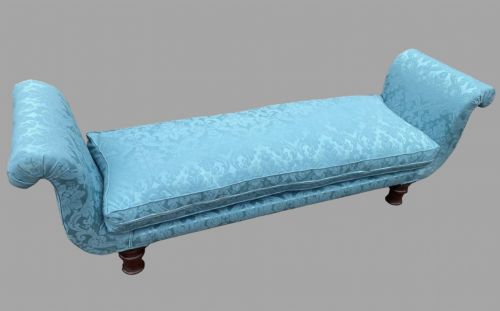
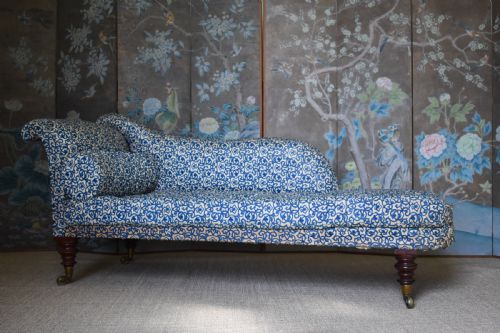
A blue chaise longue brings elegance to a room, offering a comfortable place to recline with its characteristic asymmetric backrest.

Blue Chaise Longue
When you search for a blue chaise longue, you encounter nineteenth-century daybeds, French lit bateau designs, and kidney-shaped sofas upholstered in damask, velvet, and cotton. These seating forms originate from the nineteenth century, including specific Victorian examples and French nineteenth-century Empire styles.
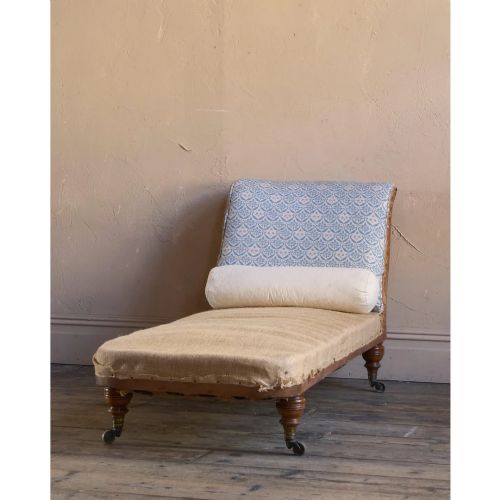
The pieces listed on this page span day beds and traditional chaise longues, often finished in blue fabric and supported by timber or mahogany frames with castors. You are most likely to meet nineteenth-century examples featuring turned legs and original castors.
Makers represented in this category include Howard and Sons and Miles & Edwards, alongside anonymous French and Victorian workshops. These seating items served as sophisticated resting furniture in period drawing rooms and boudoirs.
How they were made
The framework of these seats utilises timber, specifically mahogany and wood, providing a sturdy foundation for daily use. Master cabinetmakers shaped these structures with turned legs to support the substantial weight of the piece.
Upholstery techniques involved traditional stuffing covered in textiles such as cotton, velvet, and damask upholstery. Buttoning secured the fabric while brass components, including original castors, aided mobility.
Upholstery materials across the selection include cotton, velvet, and damask in shades of blue.
What varies in quality
Quality rests in the integrity of the wooden frame and the precision of the joinery beneath the upholstery. Pieces by documented makers like Howard and Sons or Miles & Edwards demonstrate superior cabinetwork compared to anonymous workshop output.
The sophistication of the carved wooden details and the retention of original brass castors elevate a piece. Furthermore, the grade of the textile covering, whether damask or velvet, influences the overall distinction of the seating.
Howard and Sons·Miles & Edwards
The Blue Chaise Longue Glossary
- Chaise longue
- An upholstered sofa in the shape of a chair that is long enough to support the user's legs. This French term translates literally to long chair.
- Lit bateau
- A French bed style with scrolled ends resembling a boat, popular in the nineteenth century. It frequently appears in nineteenth-century French Empire designs.
- Damask
- A reversible figured fabric of silk, wool, linen, cotton, or synthetic fibres, patterned with flat designs. It provides a traditional patterned blue upholstery for period seating.
- Castor
- A small wheel fixed to the legs of furniture to facilitate moving. Original brass versions indicate untampered nineteenth-century manufacturing.
- Daybed
- A couch that can be used as a seat during the day and as a bed for resting. These pieces share forms with nineteenth-century chaise longues.
Blue Chaise Longue: Frequently Asked Questions
What is a blue chaise longue used for?
These pieces served as daytime resting furniture in nineteenth-century drawing rooms and bedrooms. They allowed occupants to recline comfortably without retiring fully to a bed.
Today, they function as statement seating pieces in living rooms and studies. Their asymmetric shape provides a decorative focal point while offering a practical place to lounge.
How do I identify a 19th-century piece?
Nineteenth-century construction methods rely on solid timber frames, often mahogany, joined by hand rather than modern fasteners. Look for turned wooden legs fitted with brass castors characteristic of the period.
Upholstery styles also signal the era, with traditional buttoning and textiles like damask or velvet. Maker stamps on the wooden frame or webbing can confirm the nineteenth-century origin.
How do I care for antique velvet upholstery?
Velvet textiles require gentle brushing with a soft-bristled brush to maintain the pile direction and prevent crushing. Keep antique pieces out of direct sunlight to prevent the blue dye from fading.
Professional textile cleaning is recommended for antique cotton and velvet fabrics to preserve the underlying stuffing. Avoid harsh chemical cleaners that can damage nineteenth-century fibres.