




Antique English Chaise
An antique english chaise offers extended lounging in mahogany or rosewood, combining deep-scroll timber frames with sumptuous fabric upholstery for aristocratic comfort.
Antique English Chaise
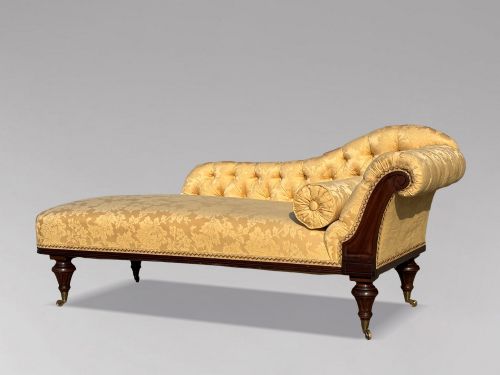
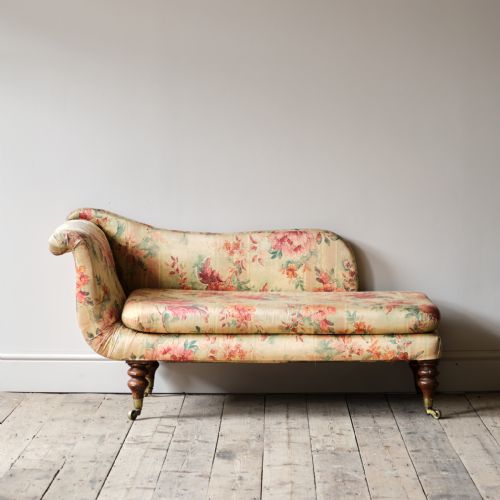
The antique english chaise spans the Regency, William IV, and Victorian eras, functioning as a day bed, sofa, or couch for reclining during daylight hours. These pieces display asymmetric scroll ends, carved wooden frames, and robust timber construction designed for formal drawing rooms and country house libraries.
Materials and construction methods
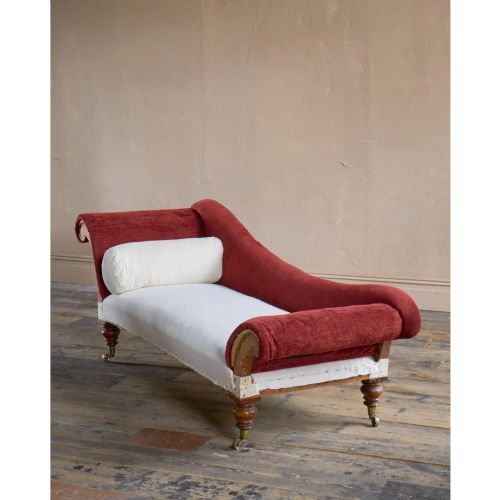
Cabinet makers built these frames primarily using solid mahogany, walnut, or rosewood, often employing steam-bending techniques to curve the characteristic scroll headboards. Secondary timbers provided internal support for the upholstered decks, which utilised traditional webbing, horsehair stuffing, and heavy springs.
Finishing details included hand-turned wooden legs fitted with brass castors for mobility, alongside decorative brass studwork securing upholstery fabrics such as velvet, calico, and damask silk. Maker signatures or stamps occasionally appear on the exposed timber rails or interior webbing frames.
Early nineteenth-century owners frequently utilised these reclining couches for dramatic fainting performances during intense theatrical parlor readings.
Distinctions in construction and design
Quality rests upon the crispness of the timber carving and the architectural balance of the scroll end relative to the main body. Superior pieces feature densely figured mahogany or rosewood with deeply carved foliate details rather than plain, flat surfaces.
The integrity of the internal joinery and the presence of documented cabinet maker attribution elevate certain examples significantly. Pieces bearing workshop stamps display finer timber selection and more rigorous joinery in the structural frame.
Holland and sons·Howard and Sons·H. Goodall and Sons·Jas Shoolbred·Miles and Edwards·Gillows
The Antique English Chaise Glossary
- Scroll-end
- A sweeping, curved wooden headboard resembling a rolled scroll. This distinctive architectural feature supports the user's head and dominates the visual profile of a nineteenth-century day bed.
- Daybed
- An elongated piece of furniture serving as both a seat and a bed. These objects accommodate recumbency during daytime hours and appear frequently in nineteenth-century domestic interiors.
- Castor
- A small wheel mounted in a swivel frame attached to furniture legs. They allow heavy timber frames to roll across carpets and floorboards without damaging the wood.
- Ottoman
- A padded seat without a back or arms, sometimes integrated into modular day bed configurations. They provide supplementary footrests or secondary seating surfaces in reception rooms.
- Webbing
- Interwoven strips of strong fabric stretched across the frame interior to support spring units and stuffing. Traditional installations utilise heavy jute bands tacked directly to the wooden rails.
Antique English Chaise: Frequently Asked Questions
How do I date an antique english chaise?
Examine the timber species and the profile of the wooden frame to determine the manufacturing era. Regency pieces display clean neoclassical lines and rich mahogany, whereas later Victorian variants often feature rosewood, heavier carving, and buttoned upholstery.
Look underneath the frame for maker stamps, retailer paper labels, or handwritten inscriptions. Castor designs and screw types also offer reliable clues regarding the specific decade of production.
Where should I place a chaise in my home?
Position your day bed against a primary living room wall where the scroll end can function as a striking visual focal point. They fit naturally beneath large windows or at the foot of a grand bedroom scheme.
Ensure adequate clearance around the piece so the extended platform remains accessible from multiple angles. Avoid direct sunlight to protect antique textiles and polished timber finishes from fading.
How do I maintain the upholstery fabric?
Vacuum velvet and damask surfaces gently using a soft brush attachment to remove surface dust and prevent fibre compaction. Address spills immediately by blotting with a dry cloth rather than rubbing the textile.
Periodically check the tension of the internal webbing and springs beneath the deck to maintain proper support. Professional conservation specialists can re-web or re-stuff the interior using traditional materials when restoration becomes necessary.