




Turned Leg Chaise
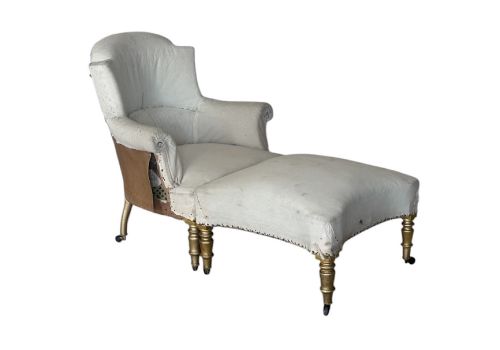
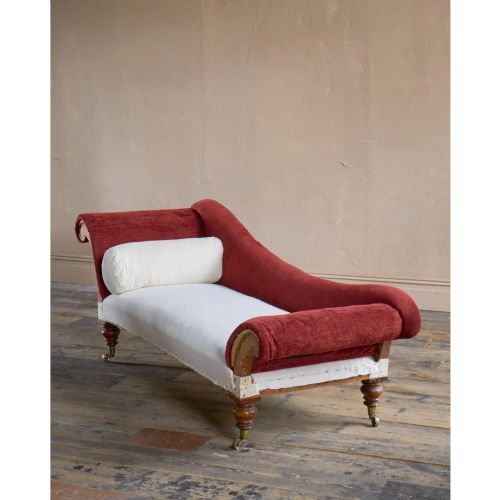
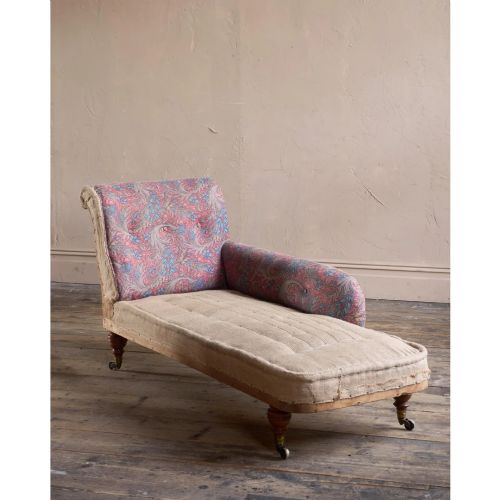
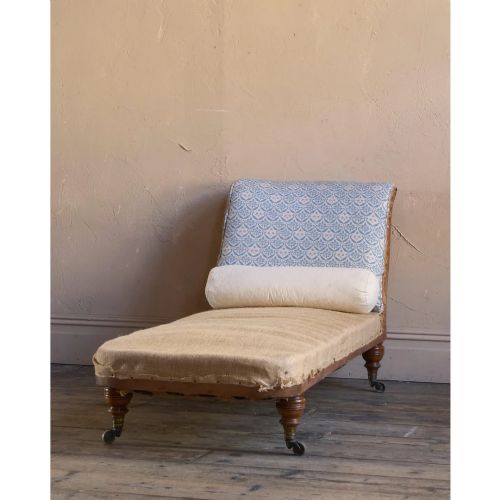
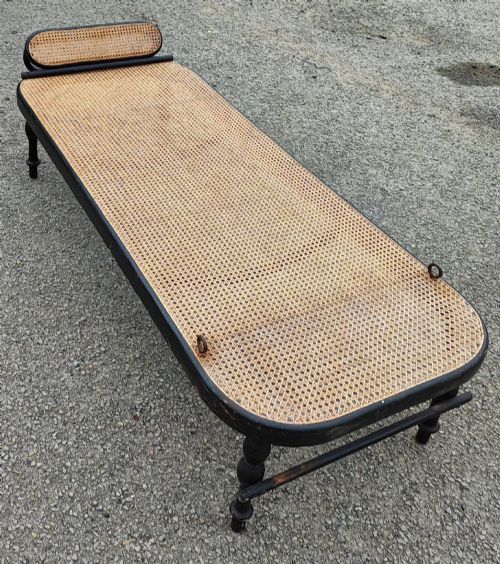
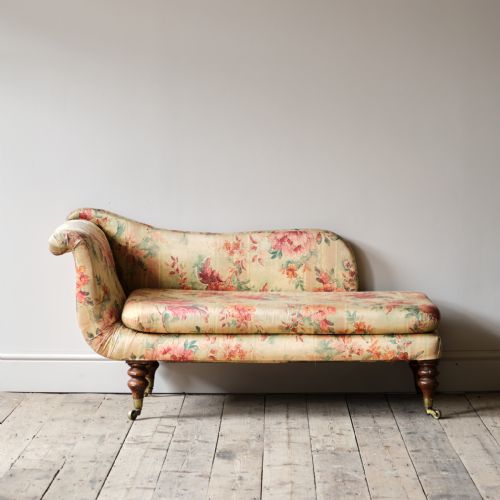
These turned leg chaise pieces offer day bed lounging from the Regency and Victorian eras, combining hardwood frames with brass and upholstery.
What a turned leg chaise is
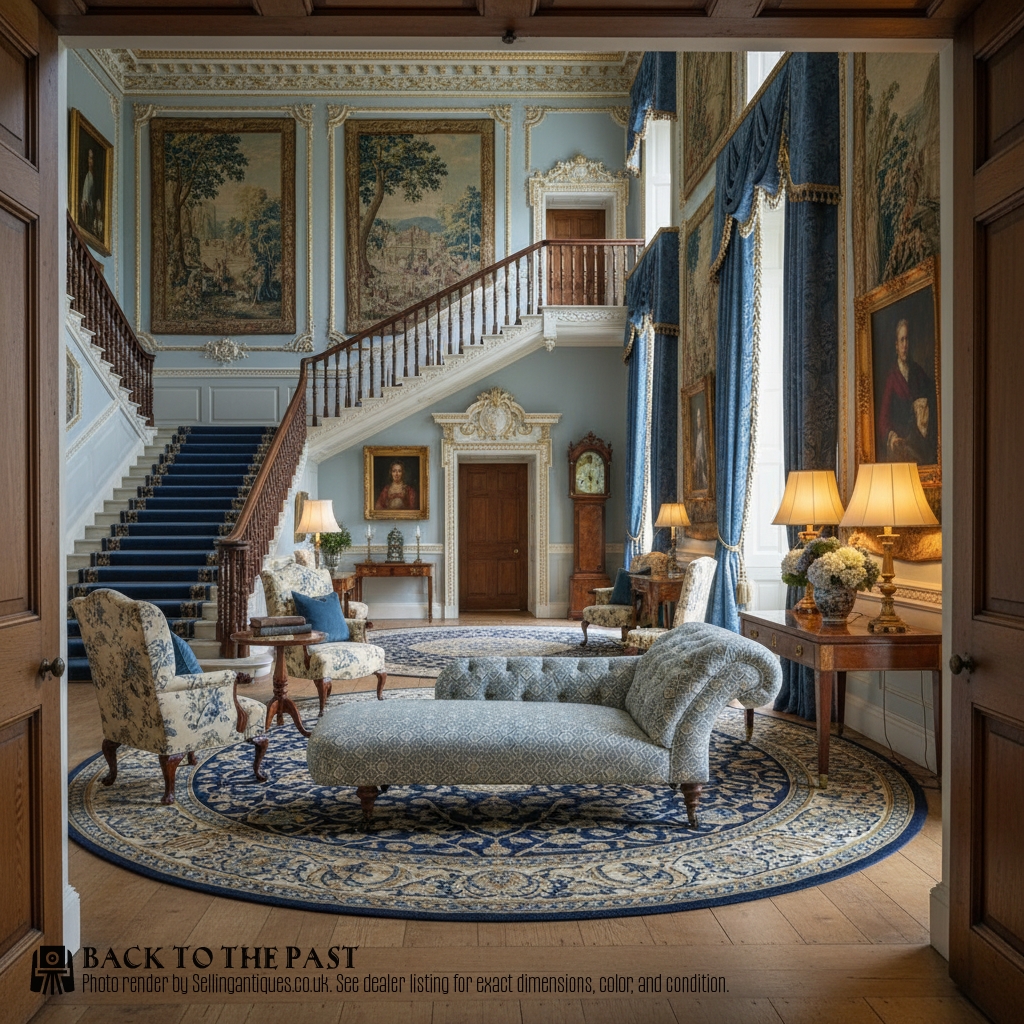
A turned leg chaise provides an extended seat for reclining, drawing upon Regency and Victorian forms. These pieces appear as chaise longues and day beds, designed for interior lounging.
The selection ranges from early nineteenth century examples to mid nineteenth century pieces. Makers such as Holland and Sons, Howard and Sons, and Miles and Edwards produced notable variants in this category.
Mahogany, walnut, and hardwood frames form the structural foundation of these designs. The characteristic turned legs support upholstered bodies covered in calico, velvet, cotton, and fabric.
How they were made
Frames utilise hardwoods including mahogany, walnut, and pine, shaped through traditional carpentry. Turning techniques form the distinct cylindrical legs, often paired with brass castors for mobility.
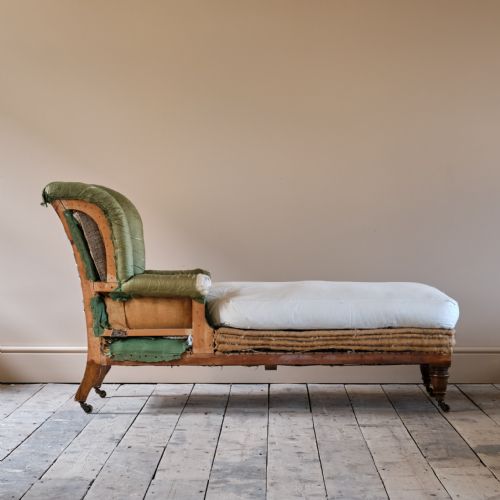
Upholstery methods involve layers of fabric, cotton, velvet, and calico applied over internal padding. Structural elements combine exposed timber with fully upholstered seating surfaces.
Retail Price Guide 2026
Typical UK retail prices for turned leg chaise, calculated from the Sellingantiques database of over a million retail prices indexed since 2003. This retail price guide relies exclusively on Sellingantiques data; no external sources or auction records are used, so the figures do not describe the wider market.
Listings feature items from the 19th Century, 1850, 1860, and the Regency period, utilising mahogany, walnut, and hardwood.
What varies in quality
The refinement of the turned woodwork distinguishes standard workshop output from exceptional cabinet work. Crisp timber turning and precise joinery elevate the architectural presence of the frame.
Attribution to prominent makers like Holland and Sons or Howard and Sons elevates the standing of a piece. The selection of primary timbers, such as figured mahogany or walnut, dictates the visual depth of the woodwork.
Holland and Sons·Howard and Sons·Miles and Edwards
The Turned Leg Chaise Glossary
- Chaise Longue
- An elongated seat designed for reclining, functioning as a combination of chair and day bed. This form appears extensively across nineteenth century domestic interiors.
- Turned Leg
- A structural support shaped on a lathe to create cylindrical or decorative profiles. These wooden legs often incorporate brass elements at the base.
- Regency
- A design period spanning the early nineteenth century characterised by classical revival influences. Pieces from this era often employ mahogany and refined proportion.
- Calico
- A plain-woven cotton fabric traditionally utilised as an underlying layer for upholstery work. It provides a stable foundation before outer decorative textiles are applied.
Frequently Asked Questions
How do I identify a Regency chaise?
Regency examples date from the early nineteenth century and typically feature mahogany frames with classical design influences. The woodwork reflects the restrained elegance associated with this period.
Details often include precise turning on the legs and traditional upholstery methods using fabrics such as cotton and velvet.
Where were these day beds used?
These pieces served as formal reclining furniture in nineteenth century drawing rooms and parlours. They provided a comfortable place for resting during the day without retiring to a bedroom.
Their finished backs allowed them to sit away from walls as central room furnishings.
What materials make up the frames?
Frames are constructed from hardwoods including mahogany, walnut, and pine. These timbers provide the structural strength required for an extended reclining form.
Exposed wooden elements are turned and polished, while concealed sections utilise secondary woods.