
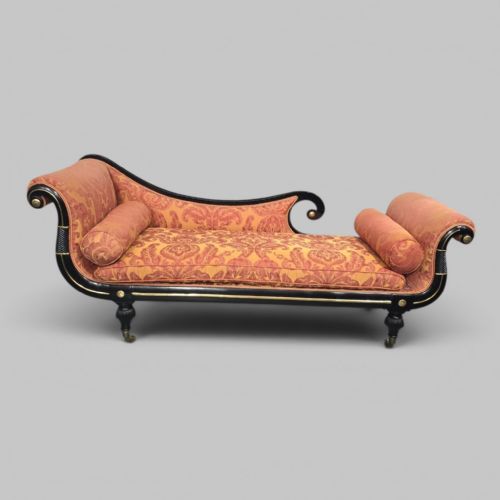


Damask Upholstered Daybed
These damask upholstered daybed pieces span the nineteenth century and the nineteen-twenties, offering classical seating and reclining forms covered in patterned fabric.

Damask Upholstered Daybed
A damask upholstered daybed unites long seating forms with woven patterned textiles across various historical periods. Search results for a damask upholstered daybed reveal nineteenth-century pieces alongside items dated around nineteen-twenty.
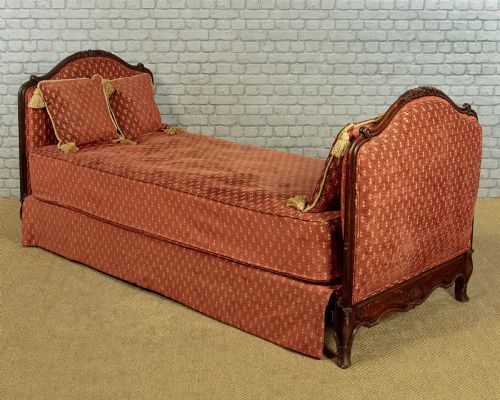
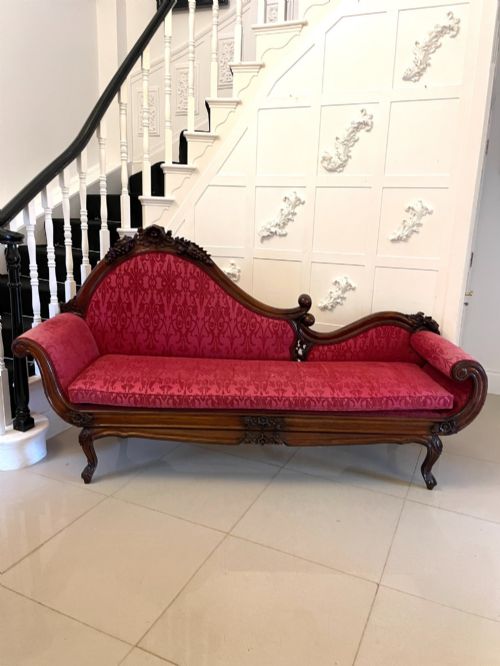
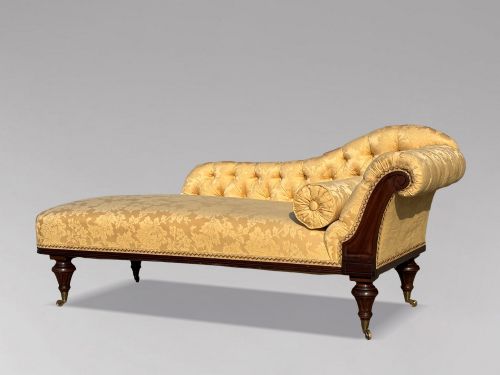
The objects take several distinct shapes including chaise longues, double-ended sofas, settees, and lit bateaux. Makers and makers' styles include French Provincial, French Empire, Victorian Chinoiserie, and Regency influences.
Origin points range from British workshops to French studios and Irish commissions. These daybeds serve primarily for reclining and formal lounging in period interiors.
How they were made
Construction relies upon solid timber frameworks shaped from mahogany, walnut, and general wood. These structural carcasses support padded stuffing and tensioned support systems underneath the outer textile layers.
Surfaces feature exposed carved wood elements alongside metal components such as brass details. The defining textile layer consists of damask upholstery fabric, secured across the frames to create patterned seating areas.
The listings combine mahogany, walnut, and brass elements with woven fabric upholstery across British, Irish, and French design traditions.
What varies in quality
Quality separates through the crispness of the timber carving and the architectural proportions of the frame. Pieces attributed to documented makers display superior joinery and cabinet-making execution compared to standard workshop output.
The grade of the damask fabric and the integrity of the underlying upholstery influence the overall refinement of the surviving piece. Distinct stylistic details, such as elaborate Victorian chinoiserie or precise Regency lines, elevate the visual impact.
Thomas Hope·Miles & Edwards
The Damask Upholstered Daybed Glossary
- Damask
- A reversible figured fabric with patterns formed by contrasting warp and weft threads. It provides the characteristic textured surface seen on these daybeds.
- Chaise Longue
- A long chair for reclining, combining elements of a chair and a daybed. Examples appear frequently within nineteenth-century French and British seating.
- Lit Bateau
- A French boat bed featuring scrolled ends of equal or near-equal height. This form translates classic daybed silhouettes into nineteenth-century domestic furniture.
- Double Ended Sofa
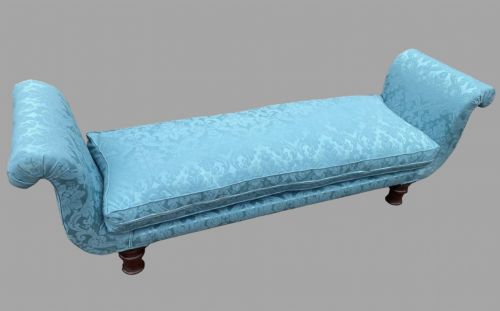
- A sofa or settee with matching scrolled ends that allow reclining from either direction. These pieces feature prominently in William IV and Regency contexts.
Damask Upholstered Daybed: Frequently Asked Questions
What is a damask upholstered daybed?
A damask upholstered daybed is a historical reclining seat covered in woven patterned fabric. These items encompass chaise longues, sofas, and settees originating from the nineteenth century and the early twentieth century.
They combine wooden frames, including mahogany and walnut, with traditional upholstery techniques. The resulting forms serve both decorative and practical functions in historic interiors.
How do I date a daybed?
Dating relies on stylistic markers and structural timber types associated with specific design periods. Pieces range from Regency and William IV eras through Victorian interpretations and French Empire styles.
Specific design vocabulary, such as chinoiserie details or lit bateau profiles, helps assign pieces to eras like eighteen-twenty or eighteen-ninety. Comparing construction methods further clarifies the period of manufacture.
Where were these daybeds used?
These daybeds functioned primarily in formal drawing rooms, bedrooms, and boudoirs of grand residences. They provided a comfortable place for daytime resting without requiring occupants to retire to a bedchamber.
French salons and British country houses both utilised these reclining forms for daily leisure and entertaining guests. Their decorative textiles matched the sophisticated interior schemes of the period.
How do I clean damask fabric?
Damask upholstery requires gentle surface care to preserve the delicate woven pattern and underlying fibres. Regular light vacuuming with a soft brush attachment removes dust accumulation from the recesses of the textile.
Professional textile conservation or specialised upholstery cleaning is recommended for deep stains or aged fabrics. Avoiding direct sunlight prevents fading of the delicate threads used in historical damask.