



Rosewood Settee Sofa
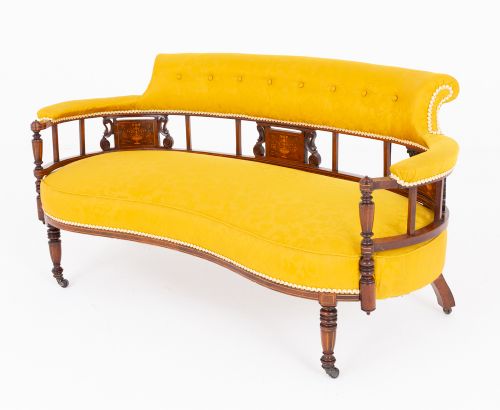
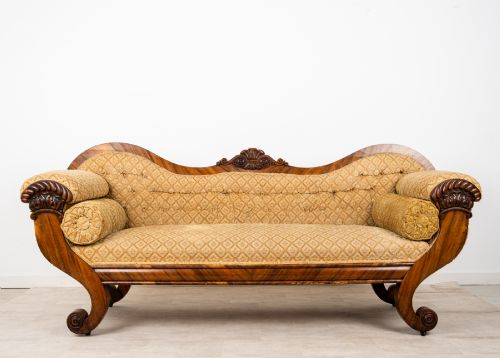
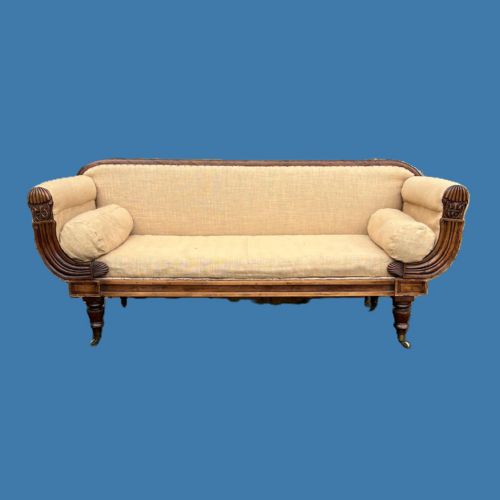
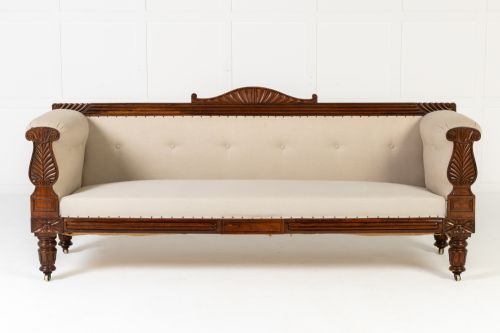
A rosewood settee sofa brings rich tropical grain and sculptural timber framing into a principal room.
Rosewood Settee Sofa
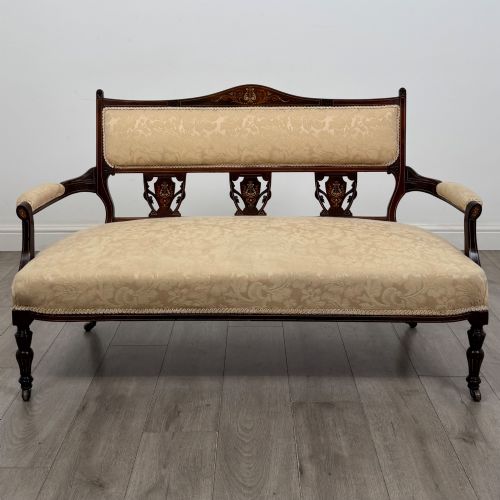
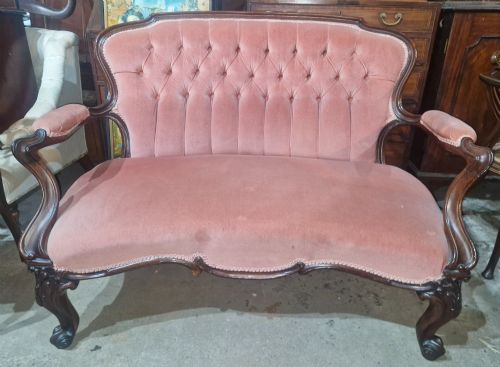
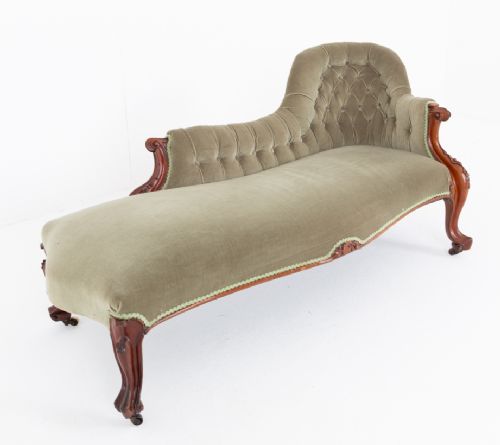
A rosewood settee sofa encompasses a broad variety of formal seating forms designed for nineteenth-century and early twentieth-century reception rooms. You are most likely to encounter Victorian and Regency examples, alongside Anglo-Indian and Edwardian pieces, ranging from double spoon back settees to scroll-ended day beds.
The materials span solid rosewood, simulated timber surfaces, and hardwoods such as padauk and huanghuali. Upholstery choices vary widely from period velvet and damask to deep-buttoned leather and contemporary fabric.
Makers frequently integrated brass inlay, mother-of-pearl, and delicate marquetry into the frames. These seating items function as substantial architectural focal points as well as comfortable places to sit.
How they were made
Cabinet makers utilised dense exotic timbers, shaping structural frames with carved scroll ends, deep buttoning, and exposed wooden mouldings. Timber surfaces were often polished to highlight the natural grain patterns of rosewood or carefully painted to simulate the exotic grain.
Decoration relied on precision craftsmanship, incorporating brass inlay, intricate marquetry, and mother-of-pearl details into the hardwood structures. Upholstery techniques involved traditional springing and stuffing, finished with silk, damask, velvet, or leather fixed with secure tacks.
Several items double as conversational sofas, built with opposing seats so occupants can chat without cricking their necks.
What varies in quality
The distinction between ordinary and exceptional pieces lies in the crispness of the timber carving and the complexity of the frame geometry. Superior examples display deeply sculpted scroll work, well-matched grain patterns, and integrated decorative elements like brass inlay or mother-of-pearl.
Originality of the frame structure and the retention of period upholstery materials influence the standing of a piece within the range. Pieces bearing maker stamps or attributed workshops demonstrate higher levels of workshop provenance and design ambition.
H. Goodall & Sons·James Shoolbred
The Rosewood Settee Sofa Glossary
- Rosewood
- A dense, heavy tropical timber prized for its deep colour and pronounced grain figures. It forms the primary structural and visual material for the finest nineteenth-century salon furniture.
- Chaise Longue
- An upholstered seating form designed for reclining, featuring a single raised end or scroll back. These pieces combine the function of a chair and a day bed.
- Marquetry
- The art of applying decorative veneer pieces to a structural surface to create pictorial patterns. It appears frequently on Edwardian and Victorian salon furniture.
- Simulated Rosewood
- A painted or stained finish applied to a secondary timber to imitate the appearance of genuine rosewood. This technique was common in Regency cabinet making.
- Double Spoon Back
- A chair or settee backrest shaped with two recessed, oval wooden panels resembling spoons. This form is characteristic of early Victorian upholstery styles.
Rosewood Settee Sofa: Frequently Asked Questions
How do I identify a Regency rosewood sofa?
Regency pieces typically feature classical proportions, scroll ends, and sometimes brass inlay reflecting early nineteenth-century design tastes.
They rely on clean architectural lines and simulated or solid rosewood surfaces without the heavy carving seen in later Victorian furniture.
What is an Anglo-Indian settee?
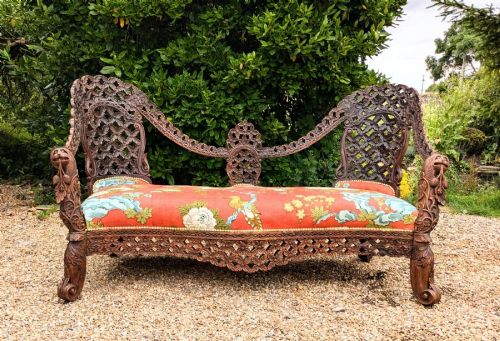
Anglo-Indian settees are nineteenth-century pieces made in India using dense local timbers like padauk and rosewood, often featuring deep hand-carved ornamentation.
These designs blend traditional British furniture forms with intricate regional carving styles and exotic wood grains.
How do I care for rosewood furniture?
Keep wooden frames away from direct sunlight and steady heat sources to prevent the dense timber from drying or splitting. Dust regularly with a dry cloth and avoid harsh chemical polishes that can damage historic finishes.
Can I use a Victorian settee daily?
Victorian settees are robustly constructed from hardwoods and designed for practical use in reception rooms and hallways.
Many survive in daily service, though periodic checks of the internal webbing and upholstery support help preserve their structural integrity.