
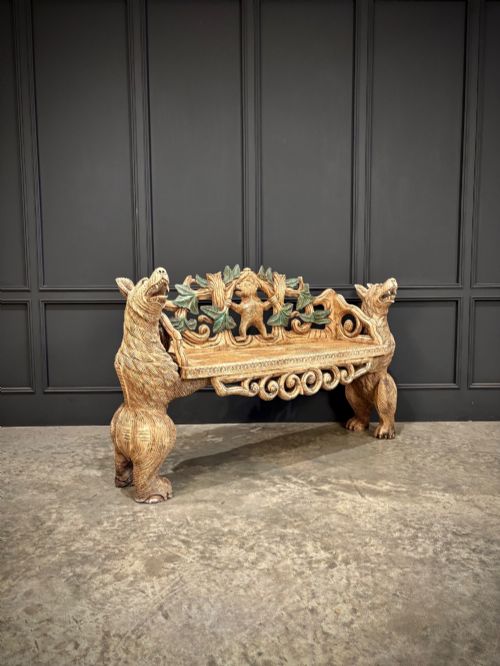

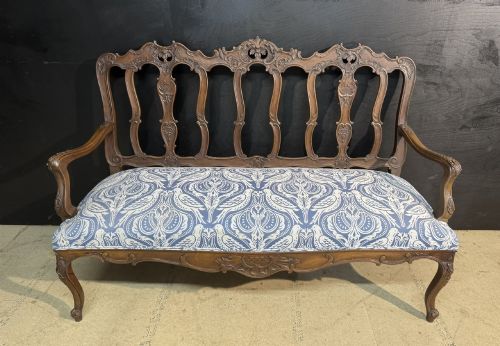
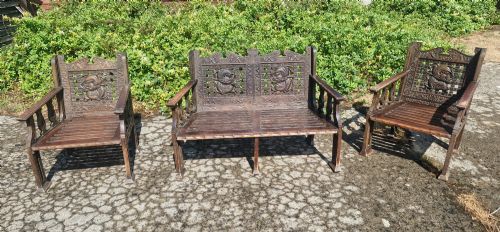
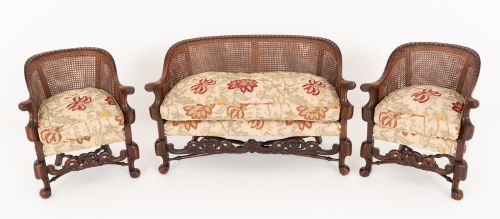


Carved Wooden Settee
A carved wooden settee brings grand continental and Victorian presence to a room, offering generous seating fashioned from rich timber.

What these pieces are
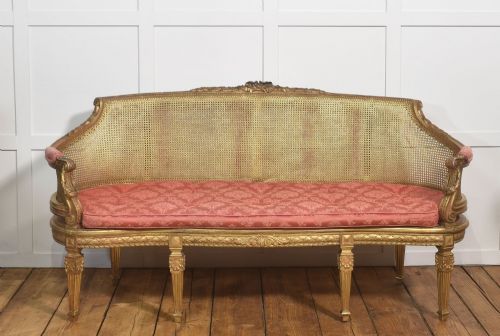
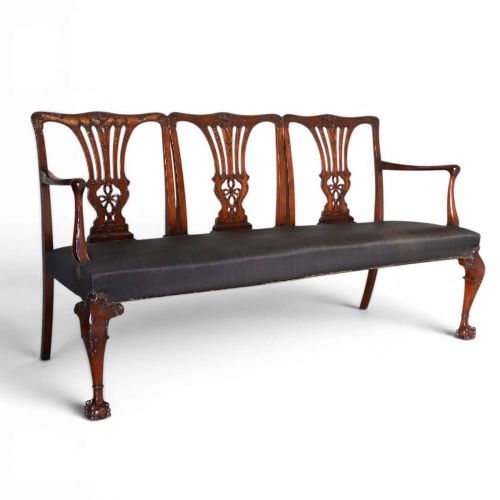
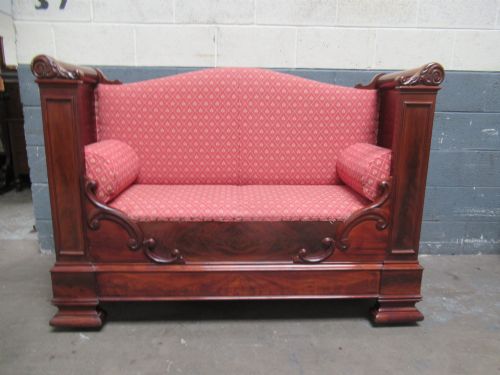
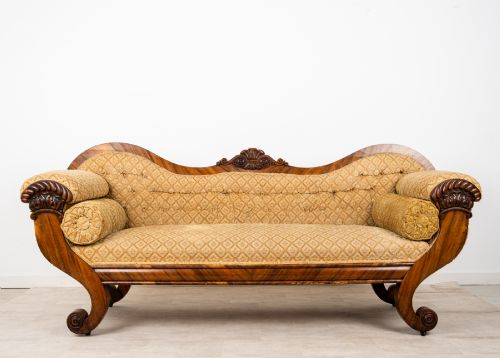
A carved wooden settee is a substantial upholstered or timber seat designed for multiple occupants, emerging across several distinct periods. The examples on this page span the eighteenth century, the nineteenth century with specific dates around 1880 and 1890, and the Edwardian era.
The forms encompass formal salon settees, hall seats, and sofas influenced by continental aesthetics. Buyers encounter styles ranging from Victorian and Biedermeier to Neoclassical, Louis XVI, and French Chateau.
Origins vary across Europe, with pieces originating from Italy, France, and Sweden alongside British Victorian examples. Each piece utilises traditional timber framing combined with varied upholstery and decorative carving.
How they were made
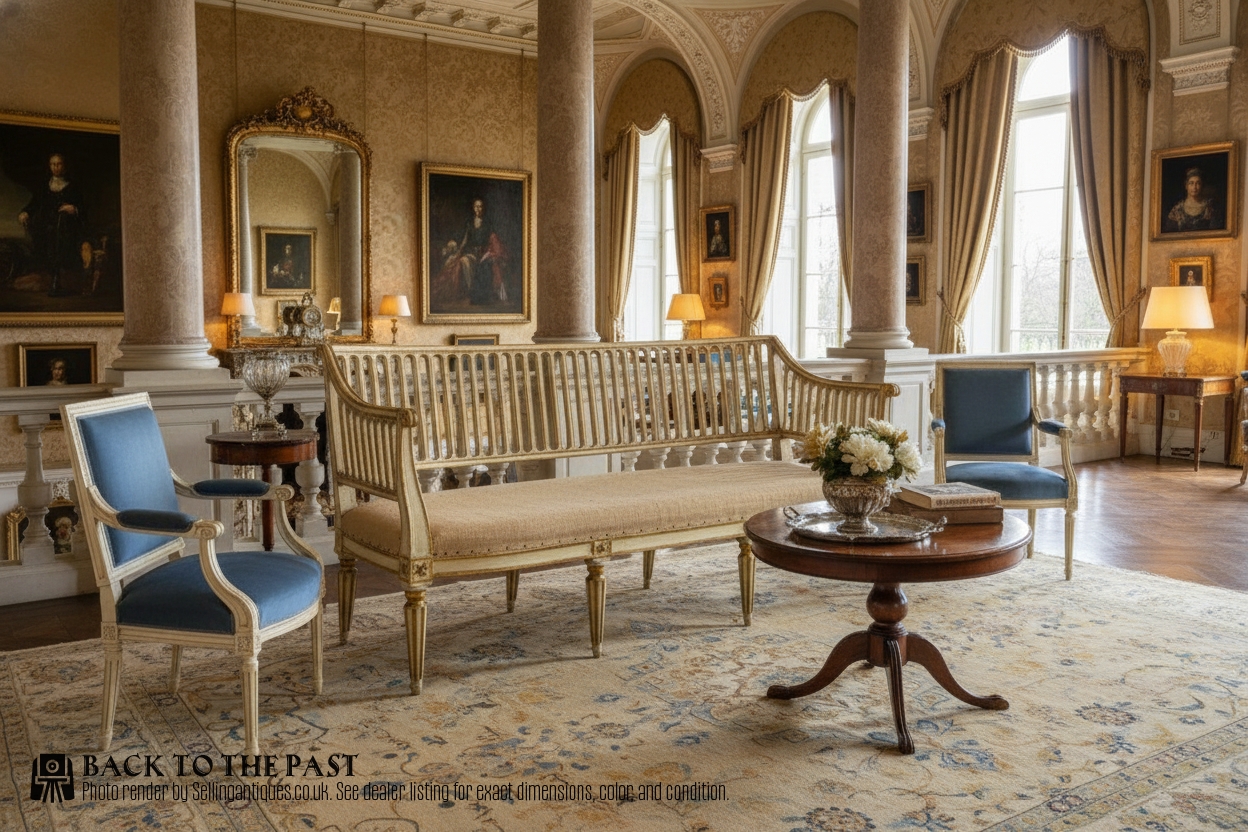
Cabinetmakers constructed these frames using solid hardwoods such as walnut, rosewood, birch, and painted wood. Structural elements incorporated detailed hand-carving, particularly around scroll ends and crest rails.
Surfaces were finished with natural polishing, paint, or gilt details to highlight the timber and carved motifs. Upholstery techniques made use of materials like leather, linen, and decorative upholstery fabric, secured with brass detailing where appropriate.
Retail Price Guide 2026
Typical UK retail prices for carved wooden settee, calculated from the Sellingantiques database of over a million retail prices indexed since 2003. This retail price guide relies exclusively on Sellingantiques data; no external sources or auction records are used, so the figures do not describe the wider market.
Design influences represented include Victorian, Neoclassical, Louis XVI, Biedermeier, and French Chateau styles originating from Italy, France, and Sweden.
What varies in quality
Quality rests in the crispness and depth of the timber carving, where hand-chiseled detail outclasses mechanical shaping. The choice of primary wood dictates the baseline character, with dense rosewood and walnut sitting alongside painted or gilded surfaces.
Proportion and structural integrity define the higher tiers of these seats, ensuring the frame supports the decorative scroll ends and upholstered areas harmoniously. The integration of period textiles and brass elements completes the distinction between standard workshop output and finer salon pieces.
The Carved Wooden Settee Glossary
- Settee
- A long upholstered seat for more than one person, sharing characteristics with a sofa. It serves as a principal seating focal point in a reception room.
- Scroll end
- A rolled or curved terminal at the arm of a seat, often embellished with carved wooden details. This form frequently defines nineteenth-century Victorian seating.
- Neoclassical
- A style drawing inspiration from classical antiquity, featuring restrained ornamentation and symmetrical lines. It appears across continental European furniture of the eighteenth and nineteenth centuries.
- Gilt
- A thin layer of gold leaf applied to wooden surfaces to create a lustrous decorative finish. It enhances carved details on formal salon furniture.
Frequently Asked Questions
What is a carved wooden settee?
A carved wooden settee is a large seat designed for multiple people, featuring an exposed wooden frame with decorative carving. These pieces function as statement furniture in halls, drawing rooms, and large reception spaces.
They combine structural timber work with upholstered seating areas, reflecting the stylistic preferences of periods from the eighteenth century through the Edwardian era.
How do I date a settee?
Dating relies on observing the interplay of timber choice, upholstery materials, and stylistic motifs such as Neoclassical symmetry or Victorian scrollwork. Comparing the framing techniques and regional characteristics helps narrow the origin.
Makers often drew upon prevailing European design movements, giving each era a distinct decorative signature visible in the woodwork.
Where should I place a settee?
These pieces suit large hallways, living rooms, and grand bedrooms where their length and decorative frames can be appreciated. A hall seat version works well in spacious entranceways, while salon settees anchor formal seating arrangements.
Ensure adequate floor space around the piece to showcase the carved wooden details and scroll ends without crowding the room.
What materials are used in these settees?
Frames are constructed from timbers including walnut, rosewood, birch, and painted or gilded wood. Upholstery utilises fabrics such as linen, standard upholstery textile, and leather, occasionally accented with brass.
These materials vary according to the regional origin and the specific period style of the piece.