





French Provincial Sofa
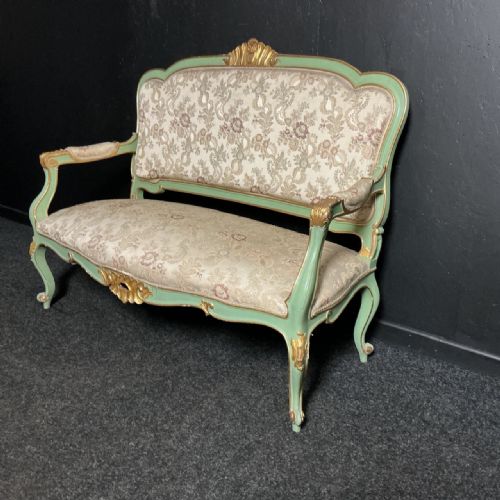
These French provincial sofas bring relaxed continental elegance to a room, offering intimate seating with carved wooden frames and classic upholstered lines.
Identifying the french provincial sofa
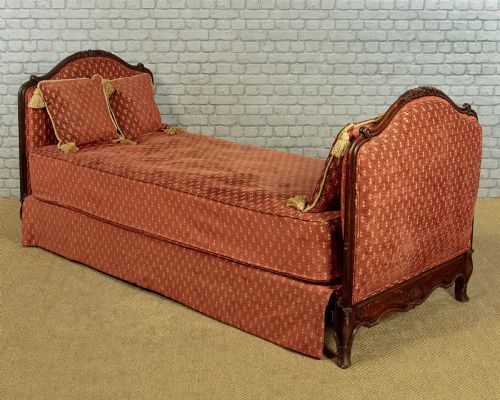
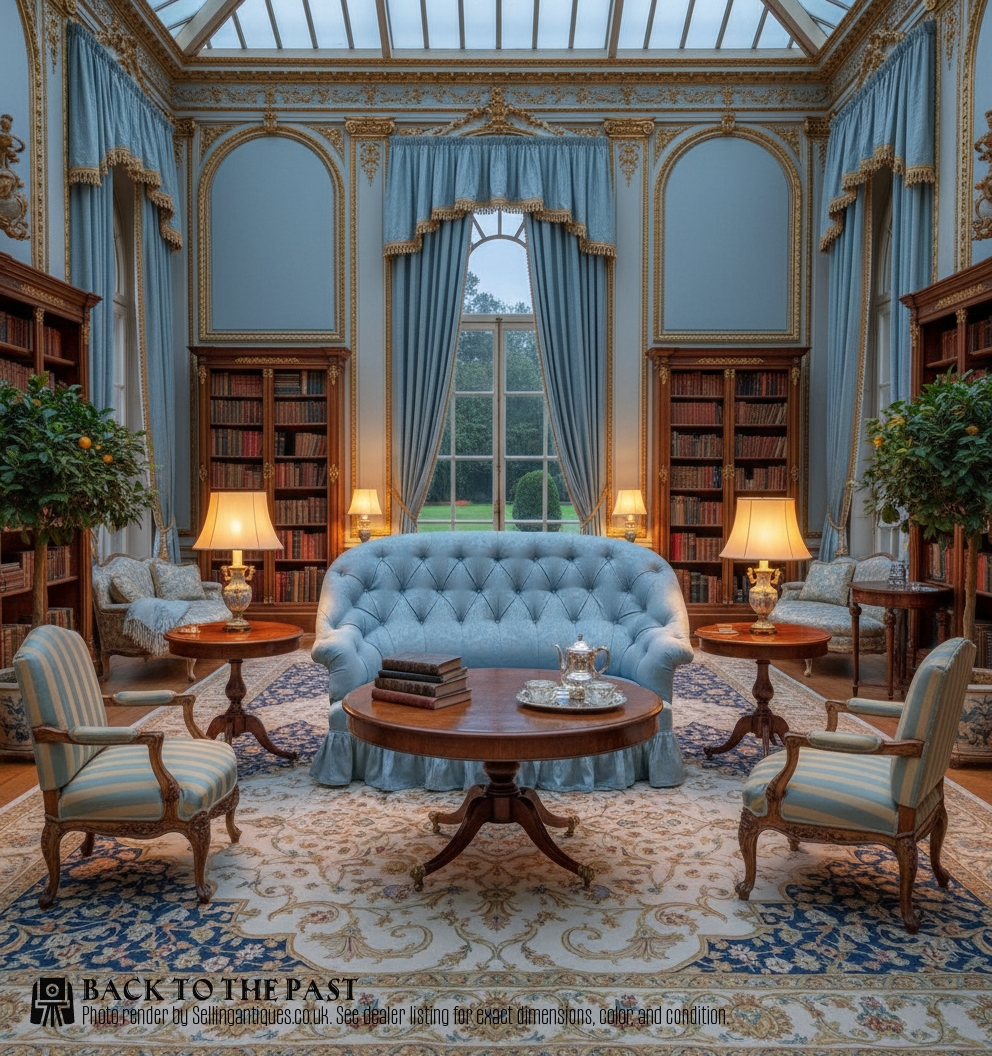
A french provincial sofa combines traditional seating forms with continental craftsmanship, drawing on Louis XV and Louis XVI design vocabularies. These pieces appear in configurations ranging from small end of bed two seater settees to large carved upholstered walnut sofas.
The evidence shows periods spanning the Edwardian era through the early decades of the twentieth century, specifically 1880, 1900, 1910, and 1930. Makers adopted historical revival styles, creating settees and sofas that translate grand court aesthetics into more domestic provincial proportions.
Materials and construction
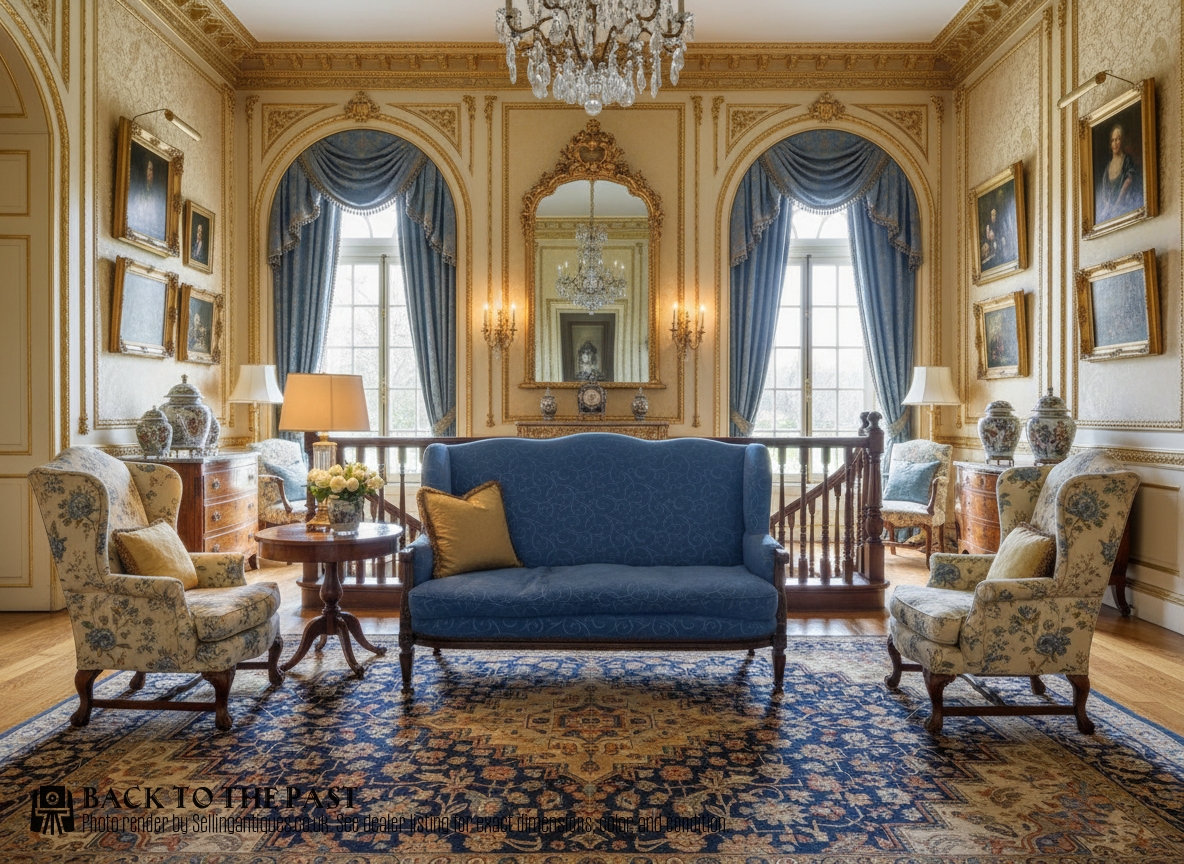
Frames rely on sturdy timbers such as walnut, beech, and mahogany, chosen for their capacity to hold intricate carved detail. Wood surfaces appear in natural polished finishes or painted treatments, providing structural integrity while framing the upholstered elements.
Upholstery relies on traditional textiles including linen, velvet, and specialised upholstery fabrics fixed over supportive internal webbing and stuffing. Metal components may support internal joints or decorative hardware, while exposed woodwork often displays fluted legs or carved mouldings.
Retail Price Guide 2026
Typical UK retail prices for french provincial sofa, calculated from the Sellingantiques database of over a million retail prices indexed since 2003. This retail price guide relies exclusively on Sellingantiques data; no external sources or auction records are used, so the figures do not describe the wider market.
Frame materials recorded across the selection include walnut, beech, mahogany, and general wood, paired with textiles such as linen and velvet.
Judging quality in continental seating
Quality rests primarily in the depth and sharpness of the hand carving upon the wooden frame, where crisp floral motifs and clean lines distinguish finer pieces from softer, later machine interpretations. The choice of primary timber, such as solid walnut rather than secondary woods, elevates the standing of a settee.
Proportion and scale dictate the visual success of the piece, particularly how gracefully the arms, backrest, and legs harmonize. Upholstery execution, from the tension of the fabric to the neatness of the finishing trim, completes the measure of craftsmanship.

The French Provincial Sofa Glossary
- Louis XV Revival
- A nineteenth and early twentieth century style emulating the curved lines, asymmetry, and naturalistic ornamentation of the mid eighteenth century French court. It favours cabriole legs and flowing floral carvings.
- Fluted legs
- Vertical parallel grooves carved into the column of a furniture leg, characteristic of the neoclassical taste associated with Louis XVI design. This detail introduces architectural rigour to the frame.
- Settee
- A medium length upholstered bench with a back and arms, designed to seat two or more people comfortably. In provincial forms, it serves as a lighter alternative to a full sized sofa.
- Upholstery fabric
- The outer textile covering applied over padding and springs to provide comfort and colour. Surviving examples employ historical weaves like linen and velvet.
Frequently Asked Questions
What defines a french provincial sofa?
These pieces are characterised by exposed wooden frames in walnut, beech, or mahogany, featuring traditional carving inspired by Louis XV and Louis XVI styles. They combine comfortable upholstered seating with regional continental proportions.
Unlike formal court furniture, provincial versions offer a more relaxed domestic charm while maintaining classic design motifs such as fluted legs and curved backs.
Where should I place a small settee?
A small two seater settee or end of bed sofa works exceptionally well in bedrooms, dressing rooms, or smaller sitting areas where a full sized couch would overwhelm the floor plan. Their compact footprint provides intimate seating without cluttering the space.
They also sit comfortably in hallways, landings, or beneath large windows as an accent piece that introduces texture and historic character.
How do I care for antique upholstery?
Protect antique textiles like linen and velvet by keeping them out of direct sunlight to prevent fading and degradation of the natural fibres. Gentle vacuuming with a soft brush attachment helps remove dust without stressing the fabric or internal padding.
Professional cleaning is recommended for deeper maintenance to avoid damaging historic materials or altering the tension of the upholstery.
How can I tell the period of the sofa?
Dating relies on examining the timber species, the crispness of the hand carving, and the structural construction methods used in the frame. Edwardian and early twentieth century revival pieces often adapt earlier Louis styles using machinery alongside traditional hand finishing.
Comparing the decorative details, such as the straight fluted legs of Louis XVI design versus the curved lines of Louis XV, helps narrow down the stylistic era.