

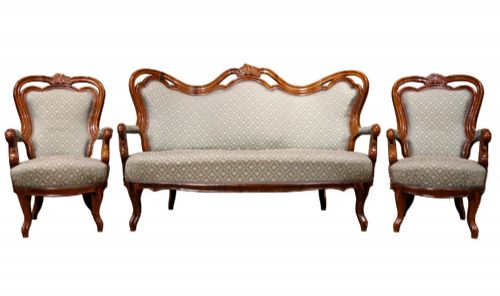


Louis XV Settee
A louis xv settee brings curvaceous Rococo lines and French chateau elegance into a modern drawing room.
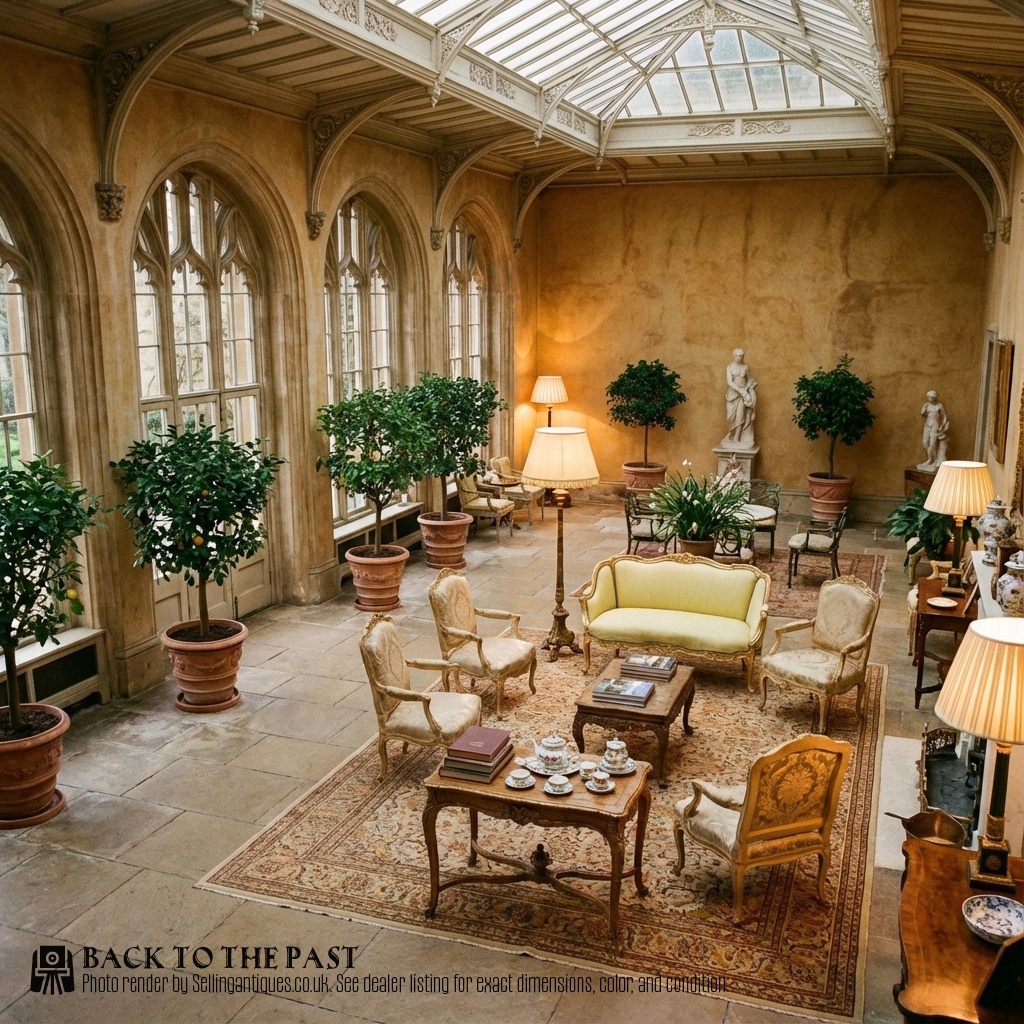
Louis XV Settee
A louis xv settee takes the form of a double or triple seat designed for the formal salons of the eighteenth century, though most surviving examples date from the nineteenth century. These seating pieces appear under various designations such as canape, salon couch, or two-seater sofa, reflecting the fluid terminology of French revival furniture.
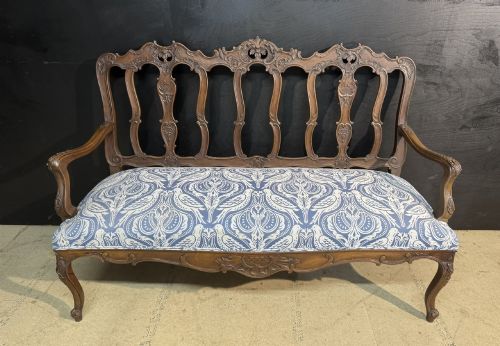
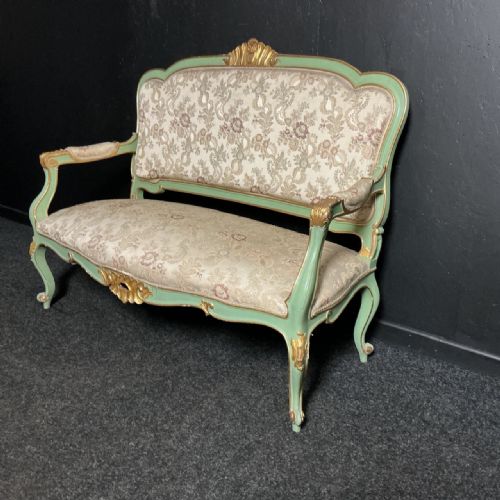
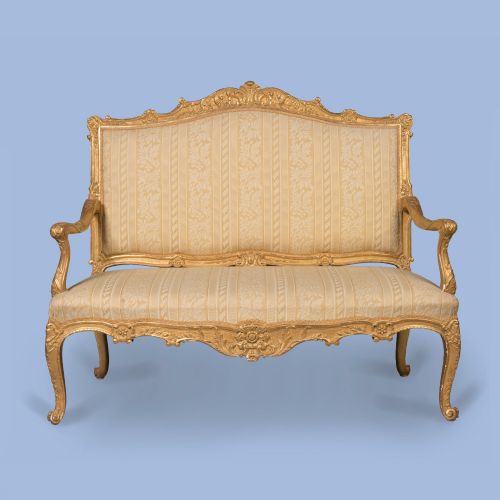
The prevalent version on this page is the nineteenth-century revival piece, which channels the asymmetrical curves and organic motifs of the original French court style. walnut frames, giltwood finishes, and painted timber dominate the offerings, often upholstered in silk damask, velvet, or floral needlepoint tapestry.
Buyers encounter formats ranging from carved walnut showframes to double-caned bergere settees and smaller two-seater end-of-bed sofas. The craftsmanship bridges antique European design and nineteenth-century cabinet-making traditions.
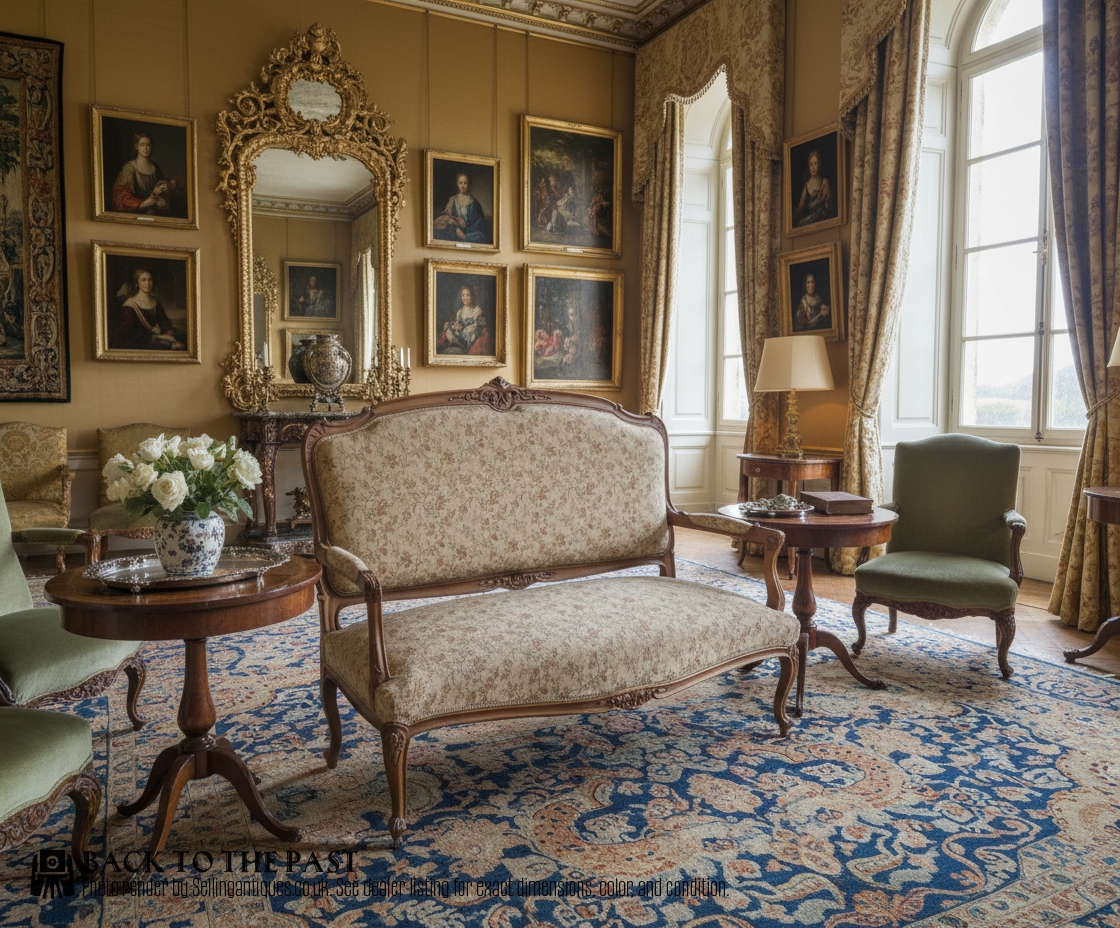
Craftsmanship and Proportion
The distinction between tiers of quality rests in the crispness of the wood carving and the harmony of the proportions. Finer frames exhibit deeply undercut floral and scroll ornamentation carved directly into the solid timber rather than applied in composition ornament.
Integrity of the structural joints and the retention of original gilding or paint layers elevate a piece above simpler domestic productions. The sophistication of the upholstery textiles, from heavy silk damask to detailed needlepoint, correlates with the original commission's status.
Retail Price Guide 2026
Typical UK retail prices for louis xv settee, calculated from the Sellingantiques database of over a million retail prices indexed since 2003. This retail price guide relies exclusively on Sellingantiques data; no external sources or auction records are used, so the figures do not describe the wider market.
Some nineteenth-century makers packed so many alternative names into their couch labels that the furniture could double as a bedroom daybed.
The Louis XV Settee Glossary
- Canape
- A traditional French term for an ornamental sofa or settee, usually featuring an upholstered back and seat within an exposed wooden frame.
- Bergere
- An enclosed upholstered armchair or settee with wooden sides, often incorporating cane work into the frame construction.
- Giltwood
- Timber treated with a thin layer of gold leaf applied over a prepared gesso ground, creating a brilliant metallic surface.
- Cabriole leg
- A furniture leg that curves outward in a convex arc and tapers inward to a scroll or pad foot, characteristic of Rococo design.
- Needlepoint
- A form of counted thread embroidery used historically to cover the seats and backs of formal salon couches.
Frequently Asked Questions
How do I distinguish a louis xv settee from a louis xvi settee?
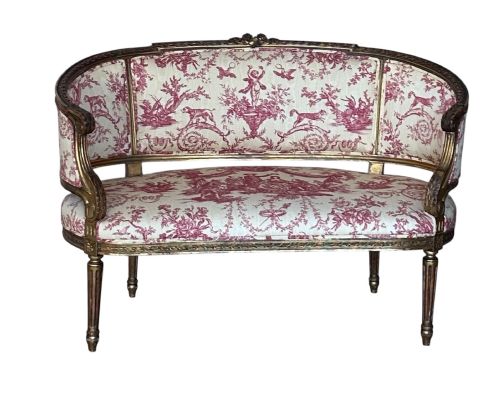
A louis xv settee relies on asymmetrical curves, cabriole legs, and flowing serpentine lines characteristic of the Rococo aesthetic.
In contrast, the later louis xvi style introduces straight tapering fluted columns, geometric symmetry, and neoclassical restraint.
Were these settees made in the eighteenth century?
The overwhelming majority of these seating pieces date from the nineteenth century, specifically from revivals around eighteen-fifty to nineteen-ten.
Craftsmen of this later period consciously recreated the forms and decorative vocabulary of the earlier French court.
What is a caned settee?
A caned settee incorporates woven cane panels into the backrest or seat frame rather than complete textile upholstery.
This technique produced a lighter, airier furniture form suitable for warmer garden rooms and summer parlours.
Can I use these settees in a modern interior?
These pieces function effectively as statement seating in contemporary living rooms, bedrooms, or entrance halls.
Their decorative wood frames and classic upholstery complement minimalist modern spaces by adding historical texture and contrast.