
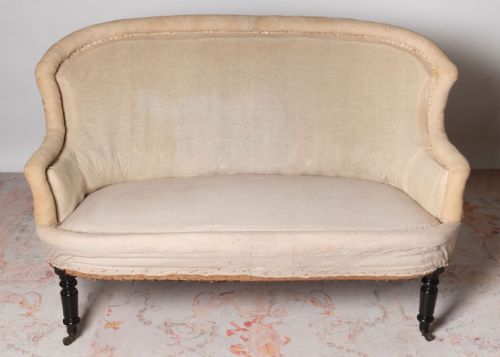
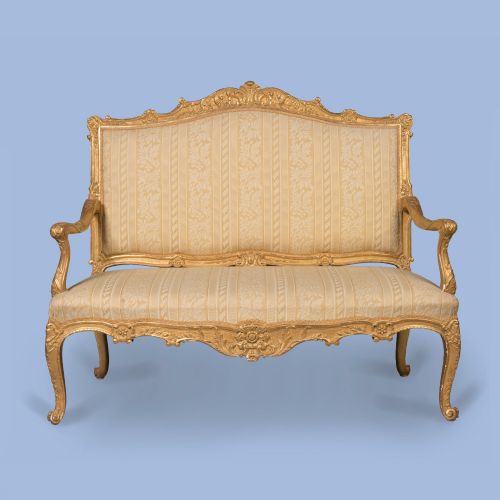
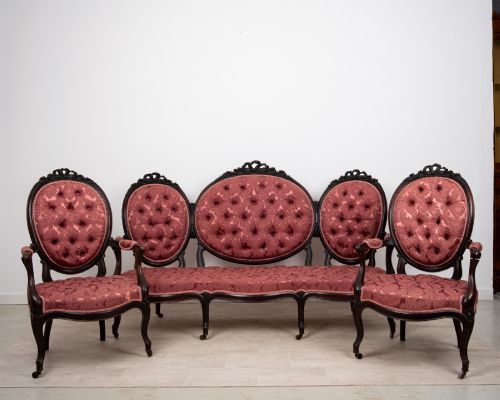

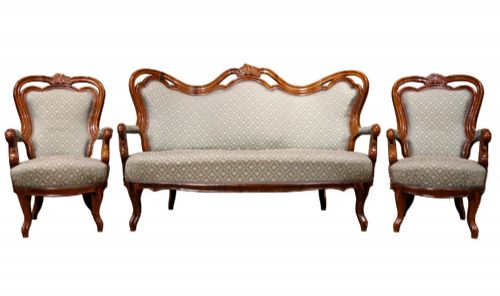


French Salon Sofa
A french salon sofa brings graceful seating to a room, offering carved wooden frames and traditional upholstery that catch the eye.
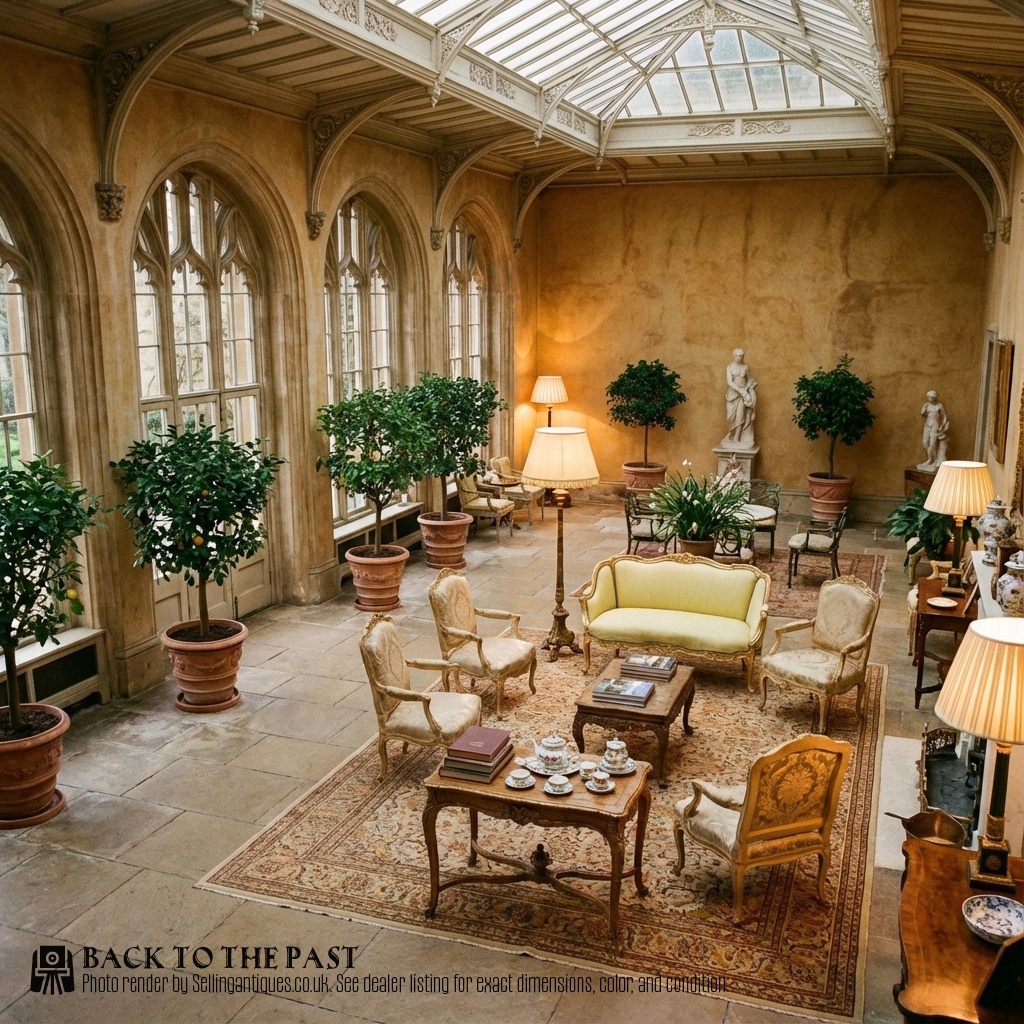
What a french salon sofa is
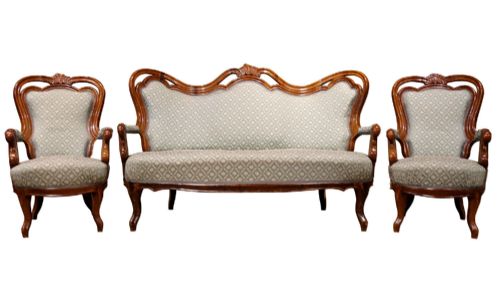
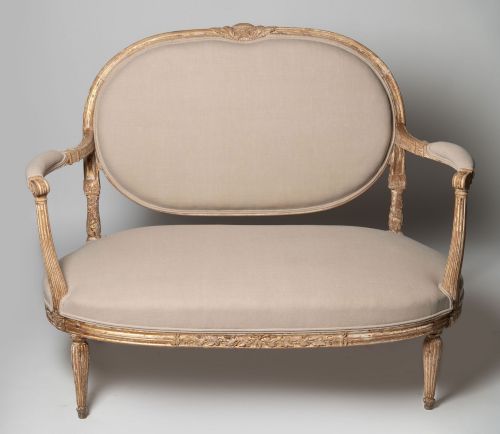
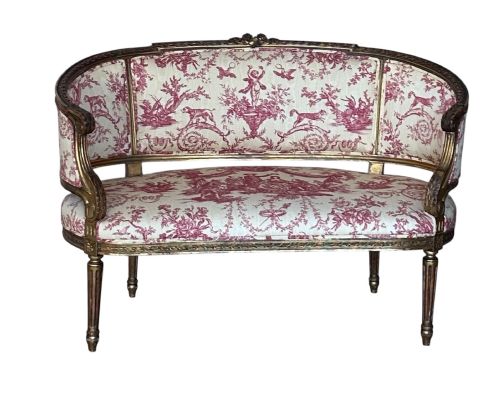
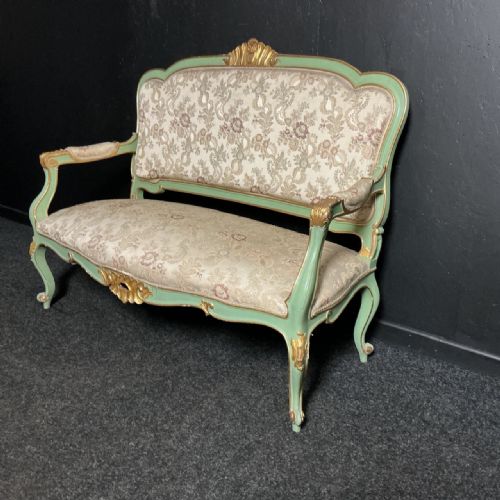
A french salon sofa provides elegant seating designed for formal rooms, appearing in forms such as settees and couches across the nineteenth century. These pieces reflect historic French design influences including Louis XV, Louis XVI, and Napoleon III styles.
The versions met on this page span the nineteenth century and early twentieth century, taking the form of giltwood canapés, carved walnut frames, and mahogany settees. They range from compact two-seat sofas to larger parlour arrangements.
Makers and craftsmen shaped these frames to suit sophisticated interiors, utilising classical curves and ornamental details. Buyers encounter pieces upholstered in needlepoint, silk damask, linen, and modern grey fabric.
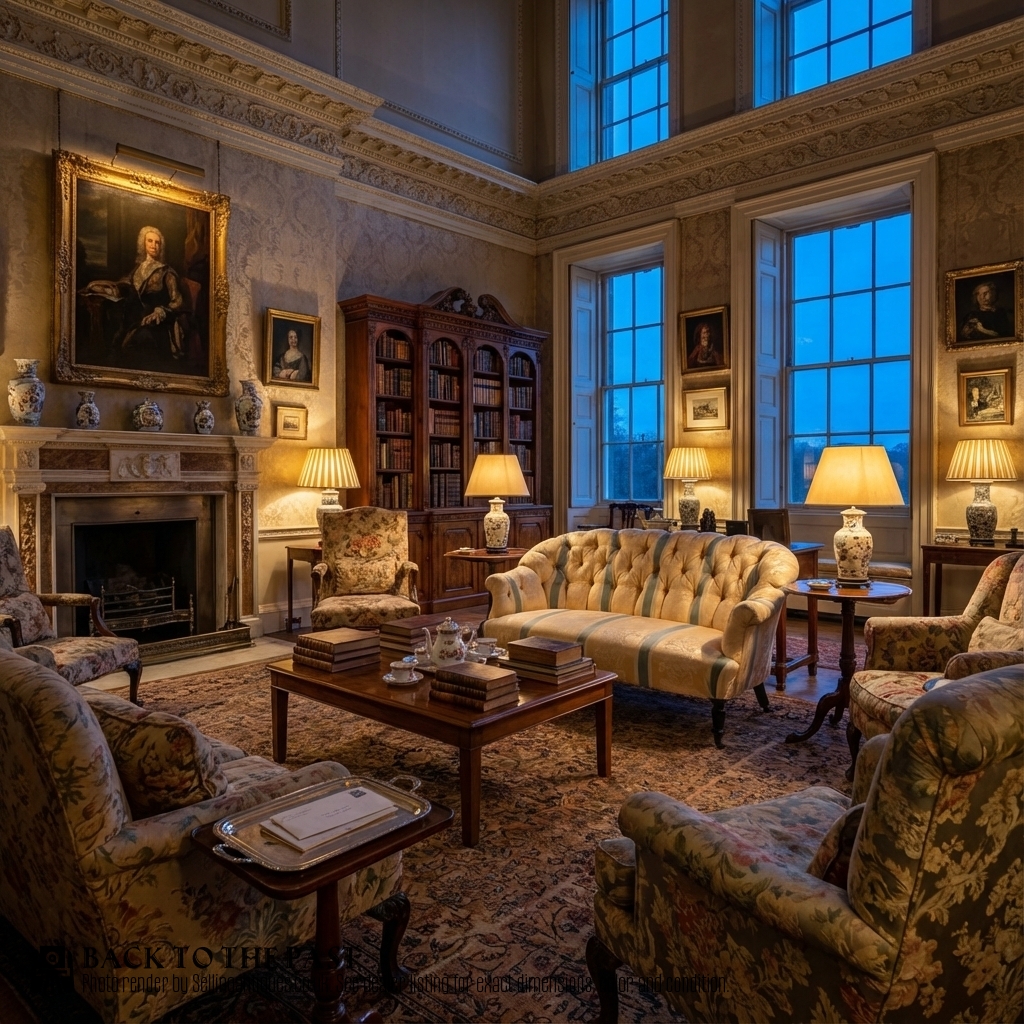
How they were made
Makers built these frames using timber, beech, walnut, mahogany, and giltwood, applying carved decoration by hand. Giltwood surfaces show layers of gold leaf applied over preparation gesso on wood.
Upholstery techniques involve traditional stuffing secured to webbing, finished with textiles such as silk damask, needlepoint, and linen. Some frames feature painted and parcel-gilt finishes or exposed polished wood.
Retail Price Guide 2026
Typical UK retail prices for french salon sofa, calculated from the Sellingantiques database of over a million retail prices indexed since 2003. This retail price guide relies exclusively on Sellingantiques data; no external sources or auction records are used, so the figures do not describe the wider market.
Several sofas arrive paired with matching chairs, proving that eighteenth-century social etiquette required a proper place for everyone to sit.
What varies in quality
The depth and crispness of hand-carved ornamentation separate standard frames from finer examples, with superior pieces showing intricate floral motifs and fluid lines. The choice of primary timber, such as solid walnut or substantial giltwood, dictates the structural integrity of the frame.
Original surface treatments, including untouched gilding or period paintwork, elevate a piece above later refinishing attempts. The quality and appropriateness of the upholstery textiles also define the overall finish of the settee.
The French Salon Sofa Glossary
- Canapé
- A traditional French term for a settee or sofa, usually featuring an upholstered back and seat with an exposed wooden frame.
- Giltwood
- Timber coated with gold leaf or powder, widely utilised on decorative nineteenth-century frames to create a metallic sheen.
- Louis XV Style
- A design movement characterised by asymmetrical curves, cabriole legs, and naturalistic floral carvings popular in French furniture.
- Louis XVI Style
- A neoclassical aesthetic defined by straight lines, symmetrical proportions, fluted columns, and geometric restraint.
- Napoleon III
- A nineteenth-century French revival style incorporating eclectic ornamentation, comfortable proportions, and diverse upholstery fabrics.
- Needlepoint
- A form of canvas work embroidery often utilised for durable, decorative upholstery on nineteenth-century seating.
Frequently Asked Questions
How do I identify a Louis XV style sofa?
A Louis XV style sofa displays characteristic serpentine curves, cabriole legs, and flowing asymmetrical carved motifs on the wooden frame.
These pieces avoid straight lines in favour of organic shapes that echo mid-eighteenth-century French design principles.
What is a canape?
A canapé is an upholstered settee or sofa with an exposed wooden or giltwood frame.
This term specifically denotes French formal seating designed for salons and reception rooms.
Where were these sofas used?
These sofas served as formal seating in nineteenth-century French parlours, drawing rooms, and boudoirs.
They functioned both as decorative furniture and as comfortable seating for social gatherings.
How do I care for giltwood frames?
Giltwood frames require gentle dusting with a dry, soft cloth to protect the delicate gold leaf application.
Moisture and harsh cleaning agents must be avoided to prevent damage to the historic surface finish.
What is the difference between Louis XV and Louis XVI frames?
Louis XV frames feature curved lines, cabriole legs, and asymmetrical floral carvings.
Louis XVI frames introduce classical symmetry, straight fluted legs, and geometric rectangular or oval backrests.