


French Rococo Canape
A french rococo canape brings curving walnut, giltwood and upholstered seats into a room, offering grand seating shaped by 18th-century style.
French Rococo Canape
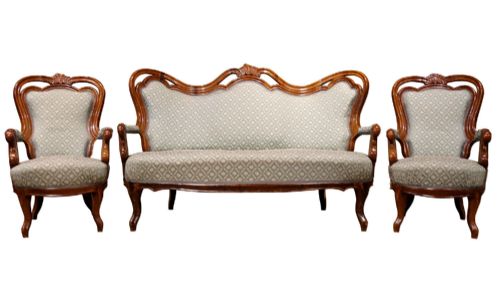
A french rococo canape is an upholstered settee or sofa rooted in the Louis XV manner, taking the form of salon suites, love seats and large couches. These seats appear predominantly across the nineteenth century, with revivals and interpretations continuing into later decades.
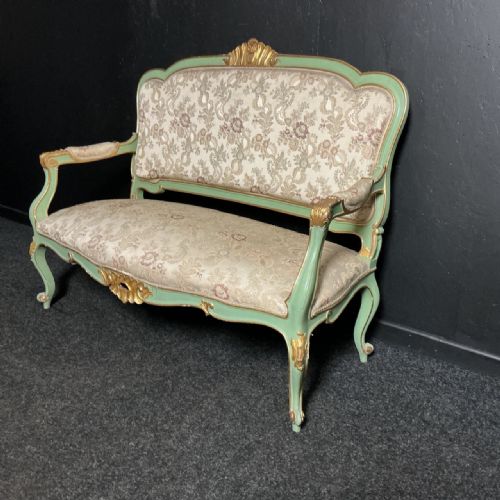
Makers shaped these pieces from walnut, mahogany, rosewood and beech, applying giltwood or paint to the carved wooden frames. Upholstery materials include silk, velvet, fabric and cane, supporting comfortable seating arrangements.
The style draws directly from French Rococo Revival and Louis XV traditions, often appearing alongside matching armchairs in salon suites. Buyers encounter both compact boudoir seating and large decorative settees designed for formal rooms.
Distinguishing quality in these settees
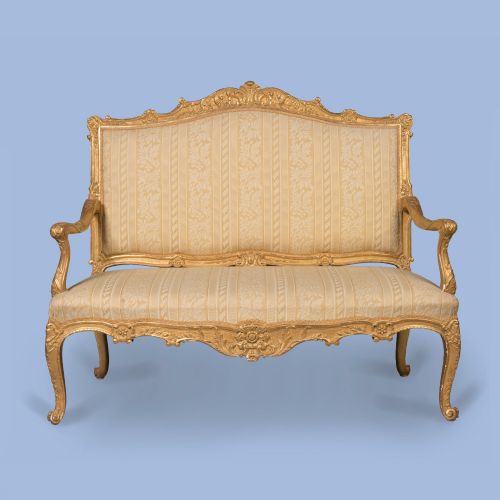
The depth and crispness of the wood carving distinguish finer pieces from simpler productions, with hand-chiseled details showing superior craftsmanship. Smooth, flowing lines across the crest rail and cabriole legs indicate careful shaping by the maker.
The choice of primary timber and the execution of the giltwood or painted finish set the standard for the frame. High-quality examples use dense walnut or rich mahogany beneath expertly applied gold leaf rather than heavy opaque paint.
The integration of the upholstery with the wooden frame affects the overall harmony of the seat. Superior pieces maintain correct proportions between the carved surround and the upholstered back and seat.
One nimble settee is sized specifically as a carved end-of-bed two-seater sofa for waking up in supreme luxury.
The French Rococo Canape Glossary
- Canape
- An upholstered French sofa or settee, typically featuring an exposed wooden frame and an undulating back rail.
- Giltwood
- Timber treated with a thin layer of gold leaf on its surface, creating a bright metallic finish common on formal French seating.
- Louis XV Revival
- A style popular in the nineteenth century that reinterprets the curving asymmetrical forms of the mid-eighteenth-century French court.
- Salon Suite
- A matched set of seating furniture comprising a settee and several armchairs designed for a formal drawing room.
- Cabriole Leg
- A furniture leg that curves out in a convex arc and then bends inward in a concave arc, ending in a pad or scroll foot.
French Rococo Canape: Frequently Asked Questions
Where should I place a canape?
These settees work well as focal points in drawing rooms, large living spaces or grand bedrooms where their curved frames can be viewed from multiple angles. Their decorative backs make them suitable for placement against walls or within open room layouts.
Consider pairing a smaller salon settee with complementary armchairs to create a dedicated conversation area. Ensure the surrounding floor space allows the carved wooden legs and frame to remain visible.
How do I identify a revival piece?
Revival pieces from the nineteenth century display the characteristic Louis XV vocabulary of asymmetrical cartouche backs, scrolling foliage and cabriole legs. Construction methods, tool marks and timber ageing help distinguish these later interpretations from eighteenth-century originals.
Examine the underside of the frame and the joinery for clues regarding the manufacturing date. Nineteenth-century makers often utilised machine-assisted preparation alongside traditional hand carving.
Can I use a canape every day?
Many nineteenth-century settees are structurally sturdy enough for daily use, provided the internal webbing and upholstery have been properly maintained. Lighter frames or pieces with delicate cane panels benefit from more mindful placement.
If the textile is historic silk or fragile velvet, you might restrict seating to gentle use or consider protective throws. Modern reinforcement of the frame can support regular seating without altering the exterior appearance.
What is the difference between a settee and a sofa?
In historical listings, the terms settee, sofa and canape are often used interchangeably to describe upholstered seating for two or more people. A canape specifically denotes the French stylistic lineage with an exposed carved wooden frame.
Settees tend to be slightly smaller or lighter in scale, whereas larger sofas accommodate more occupants. Both share the fundamental purpose of providing padded seating with a supportive back.