

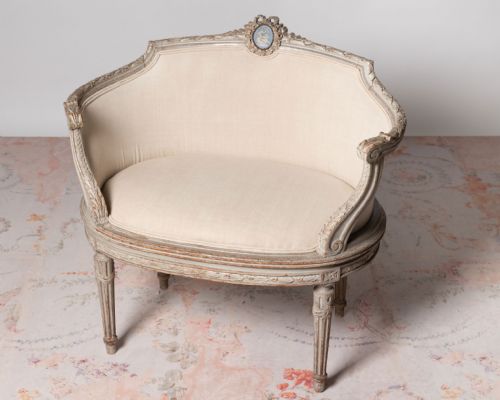


French Upholstered Settee
A french upholstered settee brings classical continental seating into a room, offering carved timber frames and traditional upholstery for everyday drawing room use.
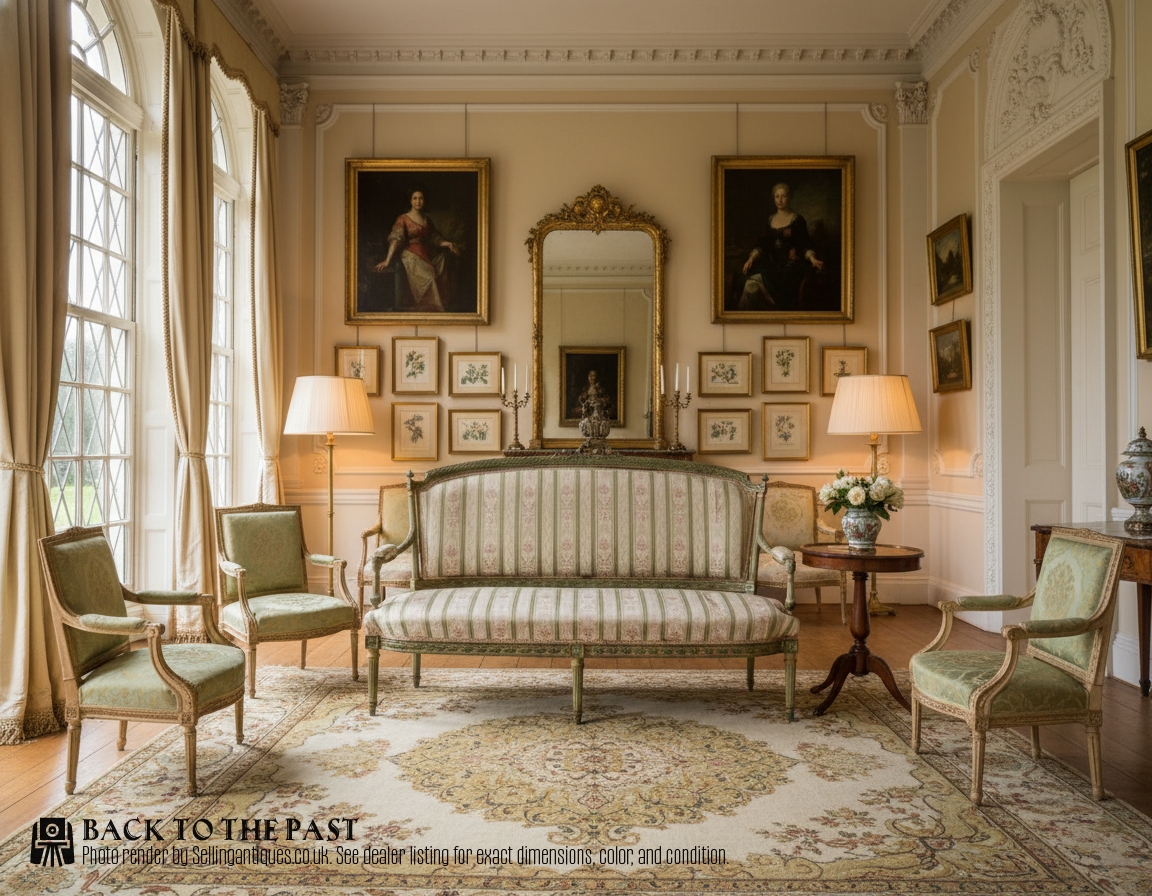
What a french upholstered settee is
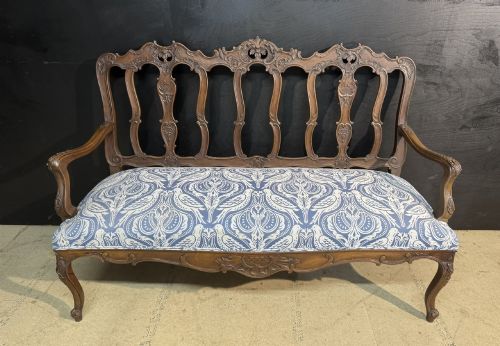
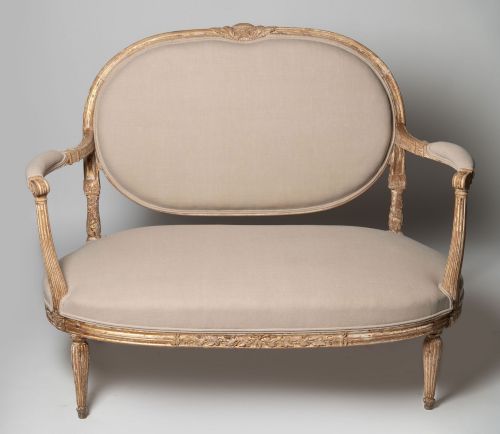
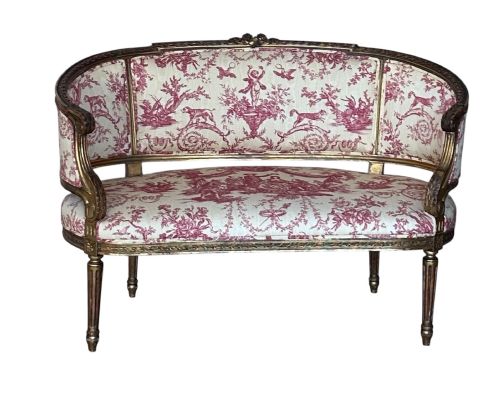
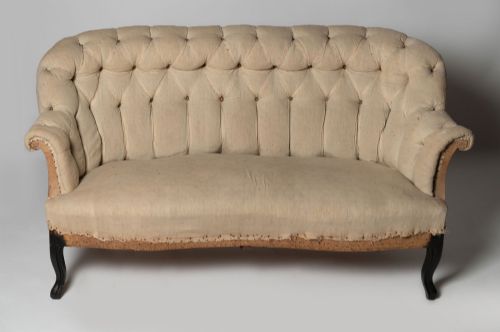
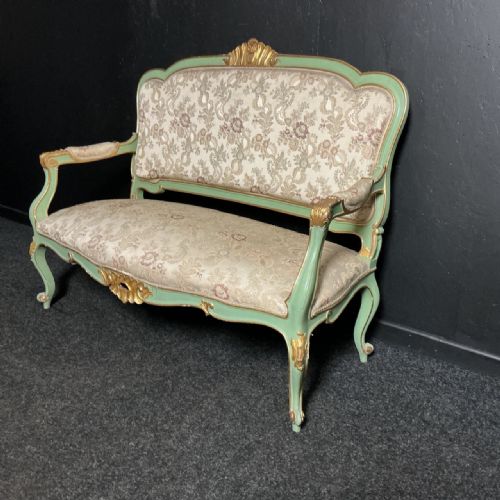
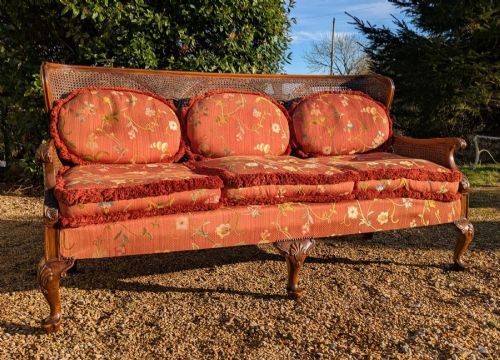
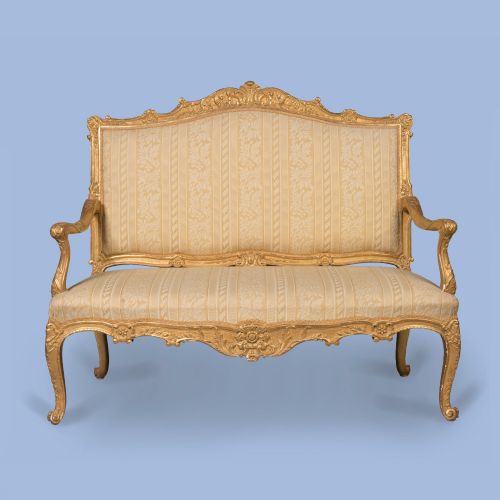
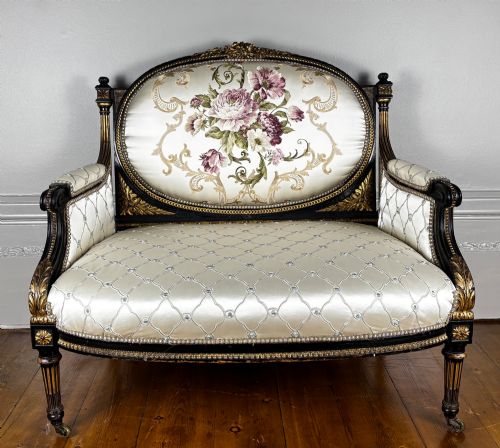
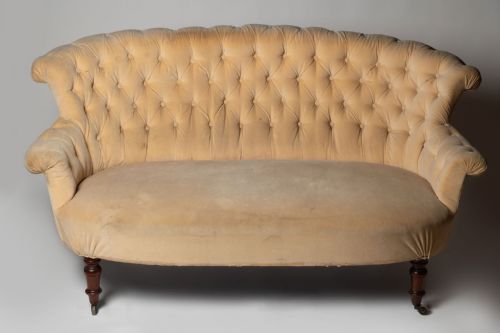
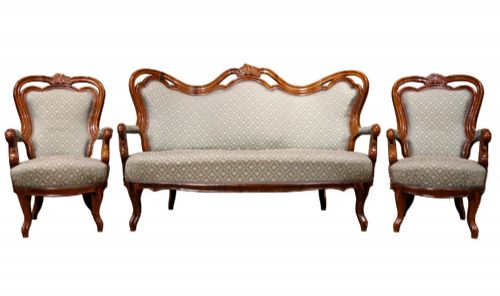
A french upholstered settee is a piece of seating furniture spanning the nineteenth century up to the early twentieth century, taking forms such as the banquette, canapé, and chaise longue. These pieces emerge in styles including Louis XV, Louis XVI, Napoleon III, and French Empire, reflecting historical continental design traditions.
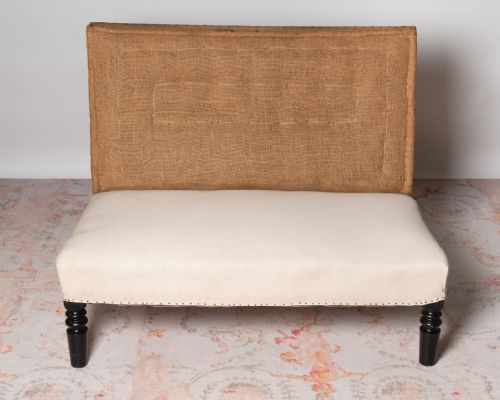
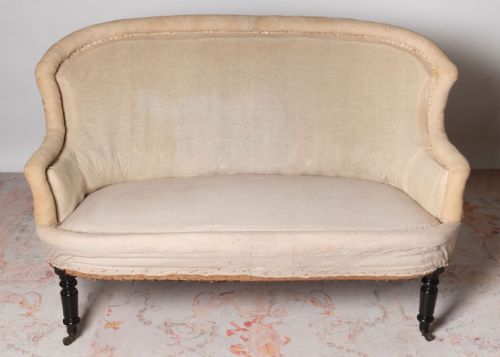
The versions most commonly met on this page are nineteenth century pieces and later revivals from around nineteen hundred to nineteen twenty. They appear in giltwood, ebonised wood, and walnut, often retaining traditional covers like linen, hessian, or silk damask.
How they were made
Makers constructed the structural frames of a french upholstered settee from solid timbers such as beech and walnut, employing traditional joinery techniques. Some frames received carved decoration, parcel gilding, or ebonised finishes to enhance the timber.
Upholstery involved layering traditional textiles like linen, hessian, and silk damask over the internal padding of the seat and back. Giltwood frames provided an alternative to exposed timber, carrying rich surface gilding typical of Louis XV and Empire aesthetics.
Retail Price Guide 2026
Typical UK retail prices for french upholstered settee, calculated from the Sellingantiques database of over a million retail prices indexed since 2003. This retail price guide relies exclusively on Sellingantiques data; no external sources or auction records are used, so the figures do not describe the wider market.
A piecrust edge on a chaise longue adds a subtle ripple of carved timber that keeps even a quiet corner playful.
What varies in quality
The refinement of the hand-carved timber frame sets superior examples apart, showing crisp detailing in scrollwork, floral motifs, and mouldings. Timber selection also matters, with finely grained walnut and heavy giltwood indicating greater initial cost than simpler beech or painted alternatives.
The integrity of the frame construction and the preservation of the original or period textile upholstery determine the overall standard. Pieces retaining period silk damask or well-executed parcel gilding demonstrate a higher level of historical preservation.
The French Upholstered Settee Glossary
- Canapé
- A traditional French settee or sofa featuring an upholstered back and seat within an exposed wooden frame. This form often follows the curving lines associated with Louis XV and Louis XVI styles.
- Giltwood
- Timber that has been coated with a thin layer of gold leaf or gold paint. It appears frequently on formal nineteenth century salon seating.
- Ebonised Wood
- Timber treated to resemble dark ebony wood, creating a strong contrast with parcel gilt details. This finish is characteristic of Napoleon III pieces.
- Banquette
- An upholstered bench or long seat without arms or with low ends. It serves as a compact alternative to a full salon sofa.
- Silk Damask
- A reversible figured fabric woven with patterns that catch the light. It is used on formal revival settees for a rich texture.
Frequently Asked Questions
How do I style a french settee?
Place the settee against a drawing room or bedroom wall where its carved wooden frame and upholstered back can be viewed without obstruction. It works well paired with low occasional tables or beside a fireplace.
Keep surrounding furnishings balanced by choosing neutral walls that let giltwood or walnut frames stand out clearly. Complement the textile upholstery with simple cushions that respect the period style.
What is a canapé?
A canapé is a traditional French term for a settee or small sofa featuring an upholstered back and seat supported by an exposed wooden frame. These pieces typically display carved decorative motifs along the top rail and armrests.
They were designed for formal reception rooms and salons during the eighteenth and nineteenth centuries. The form provides comfortable seating for two people while maintaining a decorative silhouette.
Are these settees comfortable?
These settees offer firm, traditional seating supported by historic frame construction and interior padding. They are designed for upright posture in a parlour or drawing room setting rather than deep lounging.
Comfort depends on the condition of the internal webbing and upholstery layers beneath the top textile. Many owners use them for reading or conversational seating in living spaces.
How do I date a french settee?
Examine the timber, the style of the carved details, and the framing construction to determine the likely period. Nineteenth century pieces often combine revival styling with solid walnut or beech frames.
Compare the decorative vocabulary, such as Louis XV curves or Empire classical motifs, against known design eras. Turn the piece over to inspect the timber ageing and joinery methods underneath.