

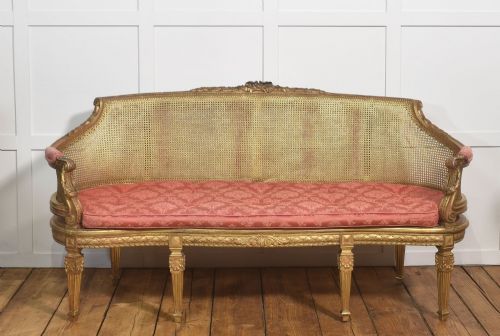

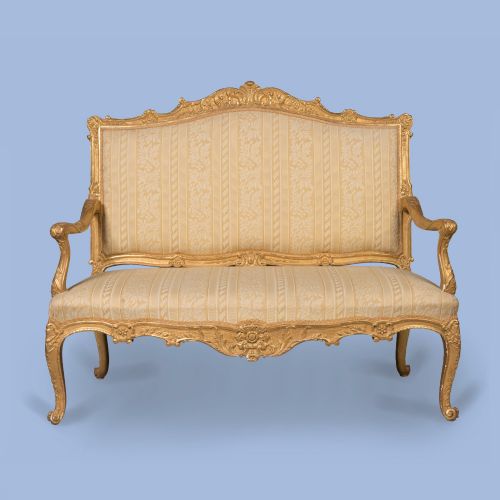


Antique Giltwood Settee
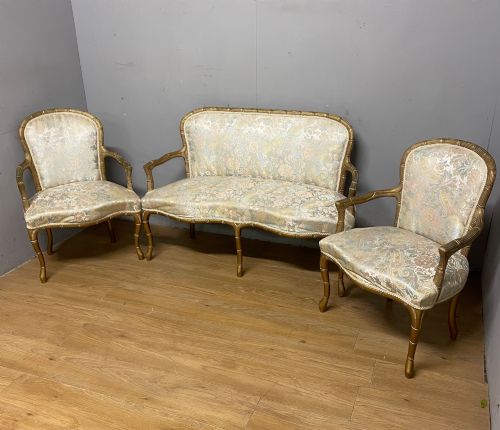
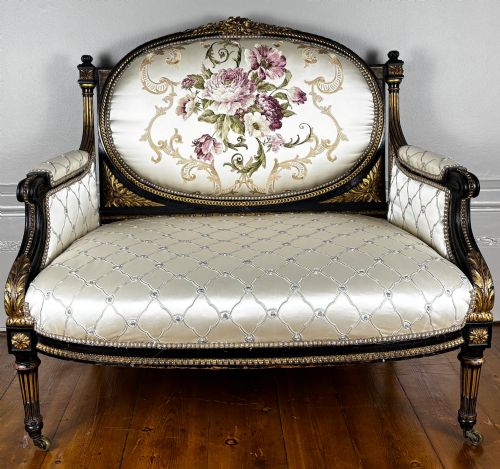
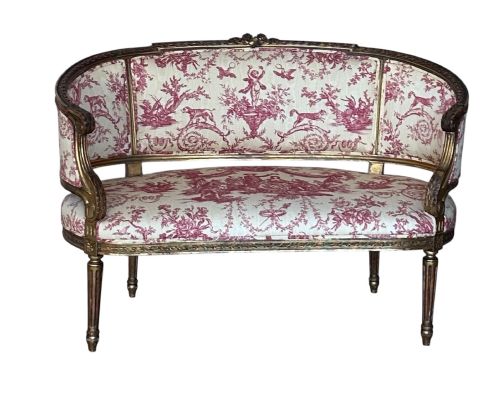
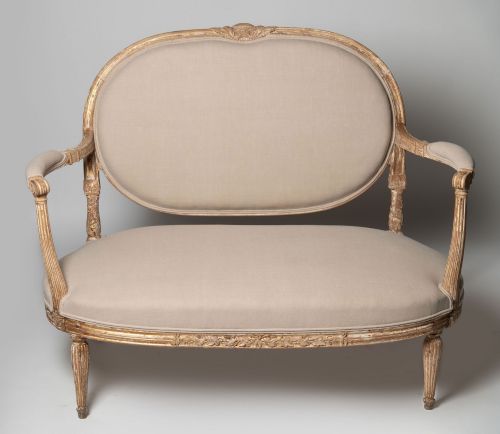
An antique giltwood settee brings gilded French and English seating into a room, offering carved frames and upholstered seats from the eighteenth and nineteenth centuries.
Antique Giltwood Settee
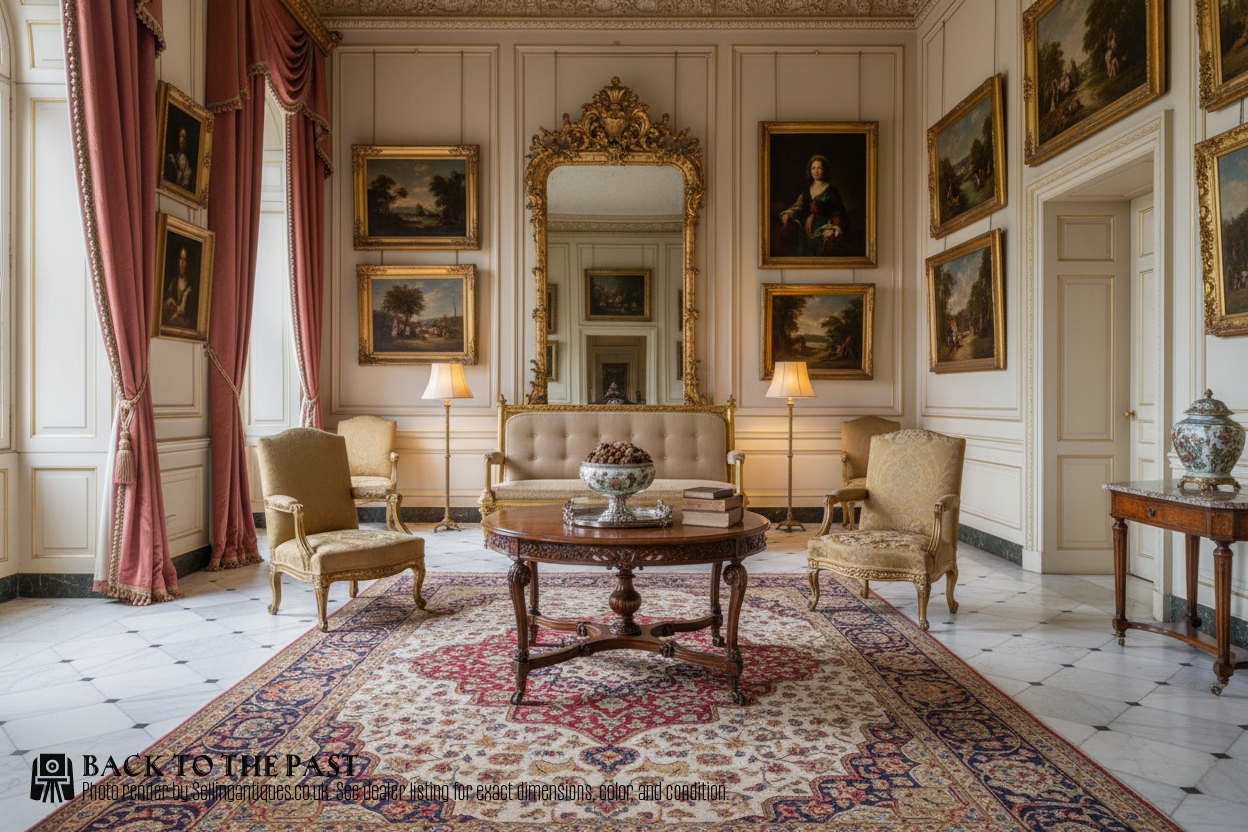
An antique giltwood settee is an upholstered seating form designed for salons, drawing rooms, and boudoirs across Europe. The selection here centres heavily on French designs from the nineteenth century alongside English, Italian, German, and Swedish pieces.
Makers and workshops produced these forms under various regional influences, ranging from Louis XV and Louis XVI styles to Rococo Revival, Neoclassical, Regency, and George II aesthetics. Forms span standard two-seat sofas, window seats, larger country house settees, and complete salon suites.
Buyers will encounter items described as settees, sofas, canapés, and love seats. Many originate from French workshops, while others reflect English country house taste or Italian painted and polychrome traditions.
How they were made
Carved timber frames form the structural foundation, utilising solid woods such as beech alongside general timber. Artisans applied thin layers of gold leaf or gilt paint over gesso preparations to create the distinctive metallic finish characteristic of giltwood.
Upholstery techniques involve traditional stuffing and springs covered in textiles such as silk, linen, fabric, or woven cane panels. Frames frequently feature hand-carved details, floral motifs, and structural elements like lion mask hairy paw feet.
Antique Giltwood Settee Retail Price Guide 2026
Typical asking prices for giltwood settee among the pieces listed under this phrase on Sellingantiques today, from the lower quarter to the upper quarter. They describe what is for sale here now, not the wider market.
Listings feature beech and general timber frames finished in giltwood, paint, or polychrome decoration, upholstered in silk, linen, and cane.
What varies in quality
Quality rests in the crispness and depth of the wood carving across the frame. Deeper, more intricate hand-carved ornamentation distinguishes finer pieces from simpler moulded or cast decoration.
The integrity of the original gilding surface and the proportion of the frame dictate value. Surviving untouched giltwood surfaces and balanced architectural proportions separate standard production items from exceptional workshop commissions.
Giles Grendey
The Antique Giltwood Settee Glossary
- Giltwood
- Wood that has been coated with gold leaf or a gold-coloured finish. This surface treatment defines the bright, reflective appearance of the frames.
- Canapé
- A traditional French term for a long upholstered settee or sofa. These pieces typically feature open arms and exposed carved wooden frames.
- Louis XV Style
- A decorative aesthetic characterised by asymmetric curves, naturalistic plant motifs, and rocaille elements. Furniture from this design language emphasises flowing, organic lines.
- Louis XVI Style
- A neoclassical design vocabulary marked by straight lines, symmetry, and classical architectural motifs such as fluted columns and ribbon twists.
- Regency
- An English design period spanning the early nineteenth century. Pieces from this era often incorporate classical Greek and Roman revival elements.
Antique Giltwood Settee: Frequently Asked Questions
What is the difference between a settee and a canapé?
A settee is a broad English term for a multi-seat upholstered bench with a back and arms. A canapé is specifically the French equivalent, usually featuring an exposed carved wooden frame and open arms.
Both terms describe similar formal seating furniture intended for reception rooms and parlours. The terminology often reflects whether the piece follows an English or French stylistic tradition.
How do I identify Louis XV and Louis XVI styles?
Louis XV pieces display curved lines, cabriole legs, and asymmetric organic scrollwork. The overall silhouette is soft and undulating.
Louis XVI furniture shifts to geometric symmetry, straight fluted legs, and rectangular backs influenced by classical antiquity. The corners are typically right angles rather than curves.
Where were giltwood settees originally used?
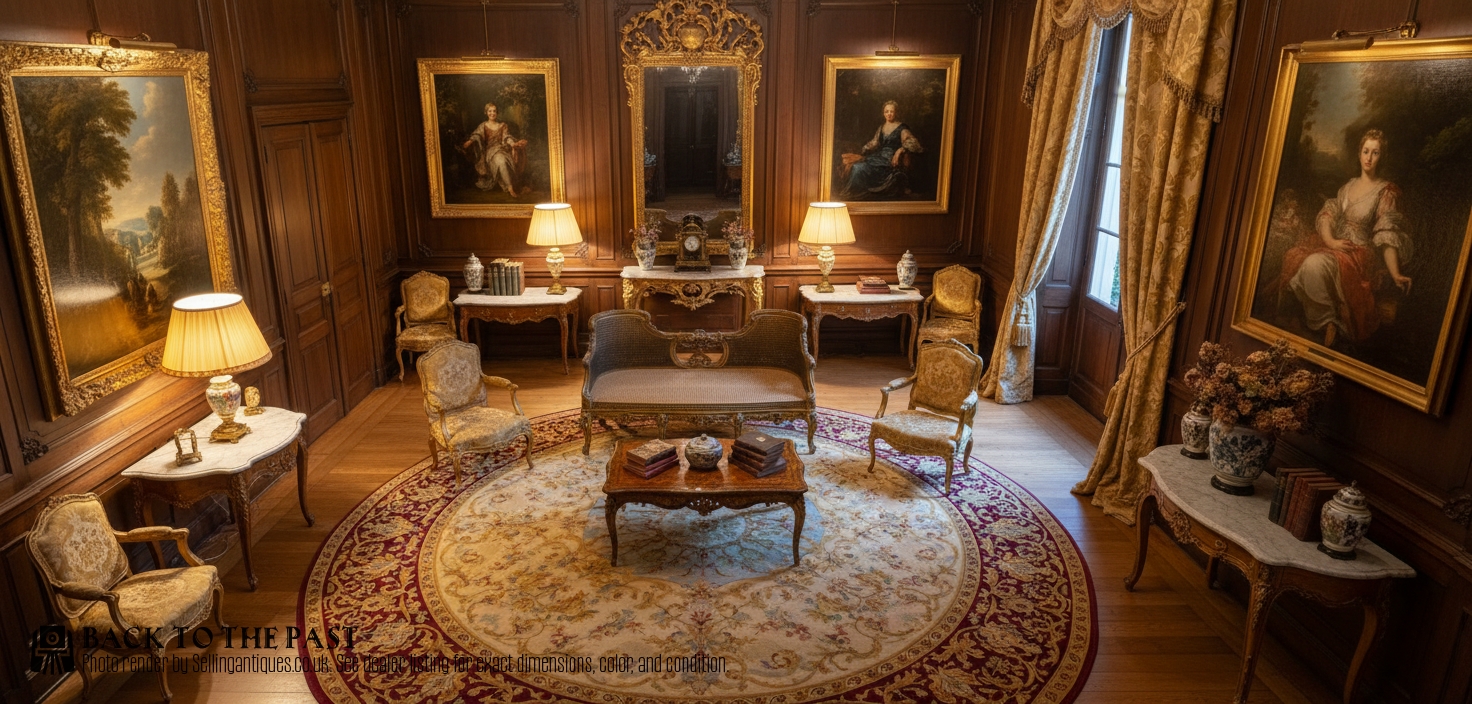
These decorative seats belonged in the principal public rooms of grand houses, including salons, drawing rooms, and withdrawing chambers. They provided formal seating for guests during receptions.
Smaller variations also appeared in private boudoirs and window alcoves as specialised seating. Their gilded surfaces were designed to catch candle and window light.
How should I care for antique giltwood?
Keep giltwood furniture away from direct sunlight and moisture to prevent the gold leaf from flaking or tarnishing. Dust the carved wooden frames gently with a dry, soft cloth.
Avoid using liquid cleaners, polishes, or chemical sprays on the gilded surfaces. Professional conservation is recommended if the gesso or leaf begins to detach.