


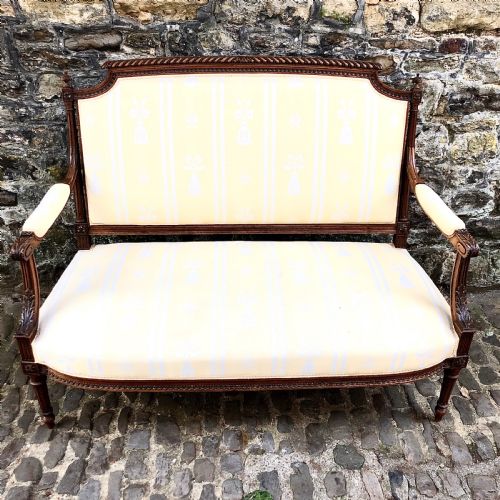
Napoleon III Settee
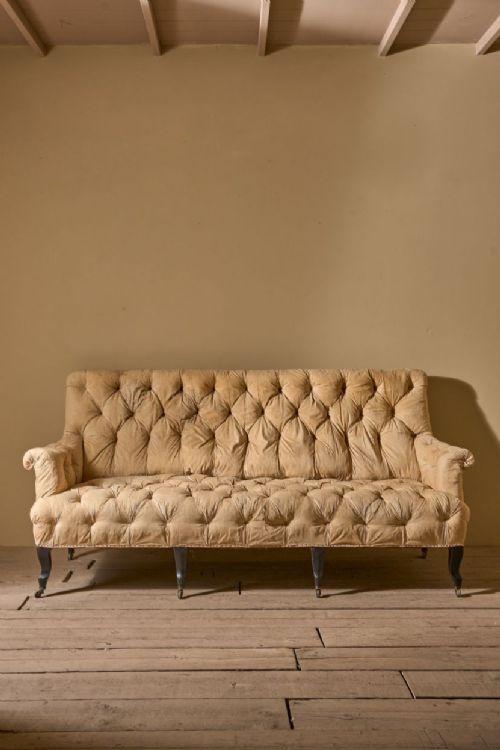
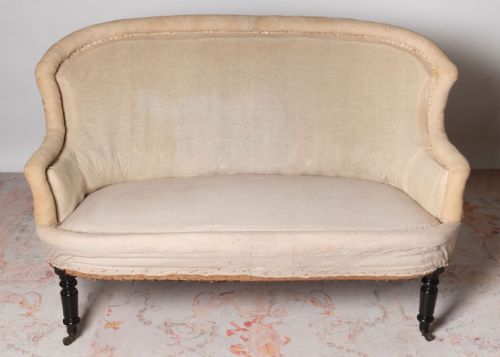
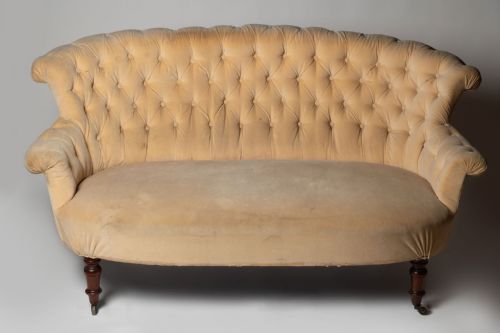
These pieces are napoleon iii settee examples, offering deep buttoning and rich upholstery that bring distinct French salon character to a room.
Napoleon III Settee
A napoleon iii settee sits comfortably within the nineteenth century tradition of French seating, merging formal elegance with deep comfort. The examples encountered here span the nineteenth century, including the eighteen seventies, eighteen nineties, and nineteen hundred.
Forms vary from buttoned high back small sofas and buttoned back and seat sofas to piecrust chaises and canape settees. These seating options often appear alongside salon suites and matching armchairs.
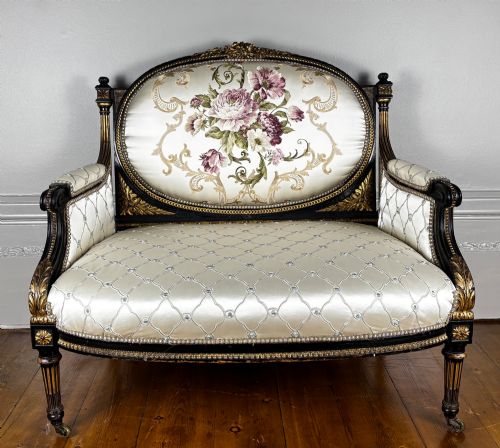
The aesthetic draws heavily on French chateau influences, Louis the sixteenth style, and French Empire traditions. Buyers seeking this seating often find ebonised wood or walnut frames paired with elaborate upholstery.
Materials and construction
Frames are built from timber, walnut, and ebonised wood, sometimes enriched with gilded wood, parcel gilt details, or brass accents and marquetry inlay. These materials give the structures their characteristic weight and dark, polished finish.
Upholstery relies on textiles such as velvet, linen, and raspberry pink velvet, often finished with buttoning across the back and seat. The integration of textile and carved wood defines the physical presence of each piece.
Napoleon III Settee Retail Price Guide 2026
Typical asking prices for napoleon iii settee among the pieces listed under this phrase on Sellingantiques today, from the lower quarter to the upper quarter. They describe what is for sale here now, not the wider market.
Raspberry pink velvet makes a bold appearance on at least one nineteenth century sofa.
Differences in quality
Quality rests in the crispness of the timber carving and the sophistication of the ebonising or gilding on the frame. Finer execution shows in the precision of marquetry inlay and the careful proportion of the back and arms.
The standard of upholstery and the depth of the buttoning also dictate the character of the piece. Original or sympathetic textile choices enhance the visual harmony between the fabric and the underlying wood.
The Napoleon III Settee Glossary
- Napoleon III
- A nineteenth century French design style spanning the Second Empire, known for eclectic revivals and luxurious comfort. It draws on earlier monarchical aesthetics while embracing new manufacturing techniques.
- Ebonised wood
- Timber treated to resemble ebony, providing a deep black finish popular on nineteenth century luxury furniture. This dark surface often contrasts with gilt highlights or bright upholstery.
- Canape
- A French term for an upholstered sofa or settee designed for multiple people. These pieces typically feature decorative wooden frames and padded armrests.
- Marquetry
- The art of applying pieces of veneer to a structure to form decorative patterns. Craftsmen utilised various woods to create intricate geometric or floral designs on the furniture surfaces.
- Chaise longue
- An upholstered chair long enough to support the legs, combining the function of a chair and a day bed. It served as a place of relaxation in nineteenth century salons.
Napoleon III Settee: Frequently Asked Questions
What is a napoleon iii settee?
A napoleon iii settee is a nineteenth century French seating piece characterised by deep buttoning, dark wood frames, and plush upholstery. These items reflect the lavish tastes of the Second Empire period.
They function as both decorative focal points and comfortable seats in a drawing room or salon. Their varied forms include high backs, canapes, and chaise longue variants.
How do I date these settees?
Dating relies on stylistic markers from the nineteenth century, particularly the transition between Louis the sixteenth revival details and Second Empire extravagance. Evidence points to manufacture spanning from the eighteen seventies through to nineteen hundred.
Construction methods, wood types like walnut or ebonised timber, and upholstery styles help narrow down the period. Comparing the piece to recorded archive examples provides additional context.
Where were these settees used?
These settees were designed for the formal reception rooms and salons of French chateaux and townhouses. They provided seating for conversation and social gatherings.
Today, they suit similar entertaining spaces or living rooms where period character is desired. Their upholstered forms bring warmth and texture to an interior.
What woods were used for the frames?
Makers utilised timber, walnut, and ebonised wood to construct the sturdy foundational frames. Gilded wood and parcel gilt details were frequently applied to enhance the visual richness.
Brass elements and marquetry inlay also appear on specific examples to add decorative contrast. The choice of wood generally aligns with the overarching style of the piece.