
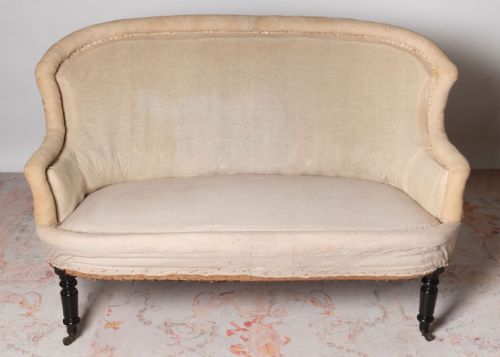
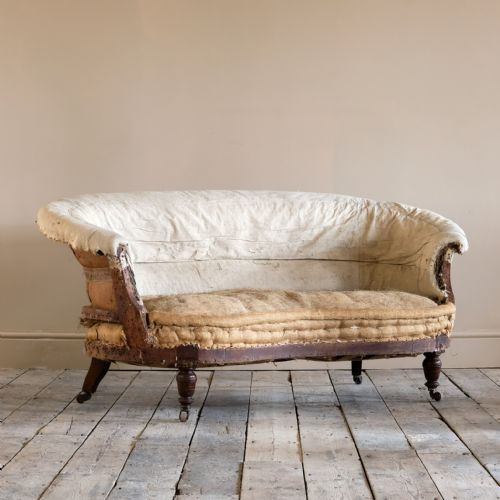


Curved Back Settee
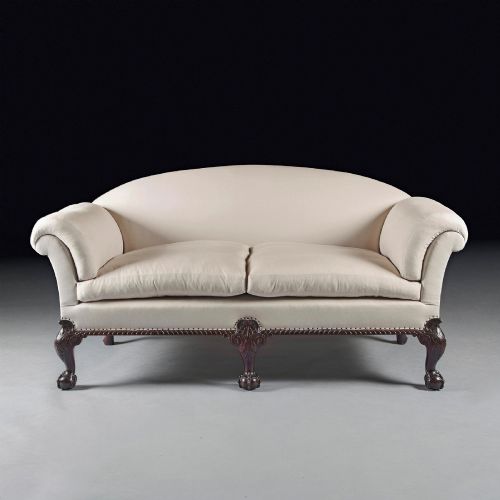
A curved back settee provides an elegant, sweeping silhouette that anchors a room and draws the eye.
Curved Back Settee
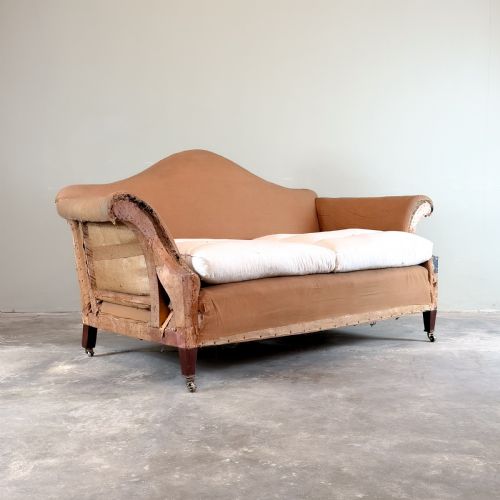
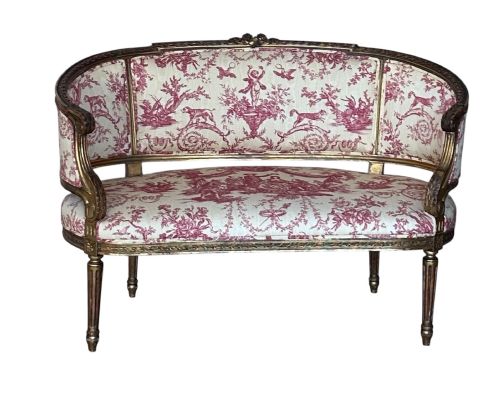
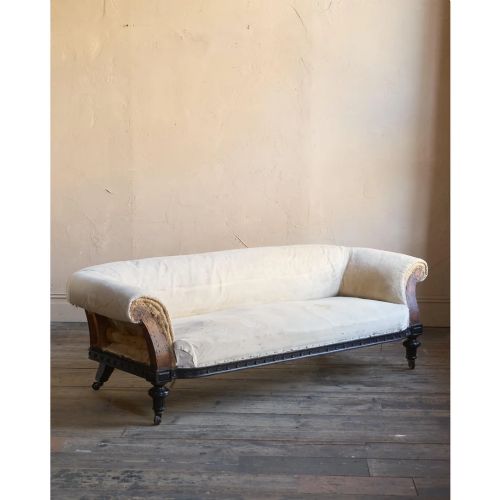
A curved back settee brings together fluid lines and comfortable seating, appearing across nineteenth century and early twentieth century periods. You will encounter pieces spanning Victorian, Edwardian, and Regency eras, alongside French Louis XV and Louis XVI styles.
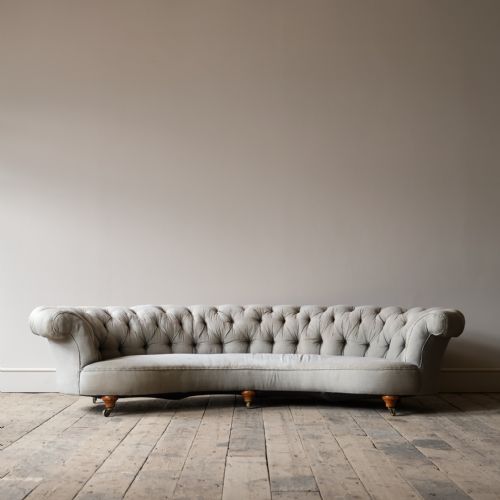
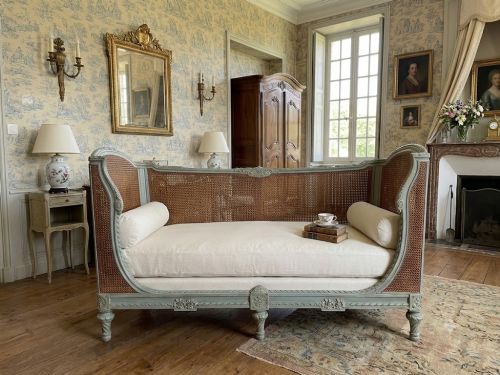
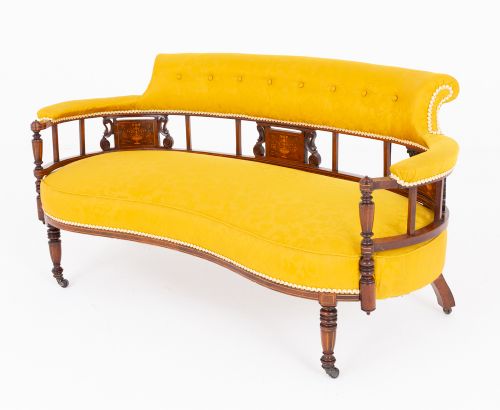
The form ranges from compact parlour settees and deep buttoned salon pieces to grand Chesterfield sofas and caned daybeds. Mahogany, walnut, and rosewood frames dominate, often upholstered in velvet, leather, or patterned fabric.
Materials and construction
Frames rely on sturdy timbers such as mahogany, beech, and walnut, frequently shaped to create the characteristic sweep of the backrest. Brass details, wrought iron, and inlaid woodwork appear on specific Regency and Edwardian examples.
Listings feature mahogany, walnut, rosewood, beech, brass, leather, and velvet across Victorian, Edwardian, and Regency periods.
Judging quality in a curved back settee
Quality rests in the integrity of the timber frame and the precision of the joinery beneath the upholstery. A superior piece maintains its structural rigidity without wobble, showing crisp carving or smooth veneer work on the show wood.
The refinement of the silhouette distinguishes finer examples, from the exact sweep of a camel back to the balance of fluted legs or brass mounts. Original upholstery materials and maker stamps elevate the standing of a piece considerably.
Howard and Sons·C Hindley and Sons·Hampton and Sons·Thonet·Harry and Lou Epstein
The Curved Back Settee Glossary
- Canapé
- A traditional French term for a sofa or settee, often upholstered and built in the style of Louis XV or Louis XVI periods. These pieces frequently feature exposed wooden frames with carved details.
- Chesterfield
- A large upholstered sofa traditionally characterised by deep button tufting and rolled arms of equal height to the back. Versions appear in leather and velvet across Victorian and later eras.
- Camel back
- A sofa style featuring a graceful, undulating crest rail that rises in a gentle curve resembling a camel's hump. This design gained prominence in the eighteenth century and inspired later revival pieces.
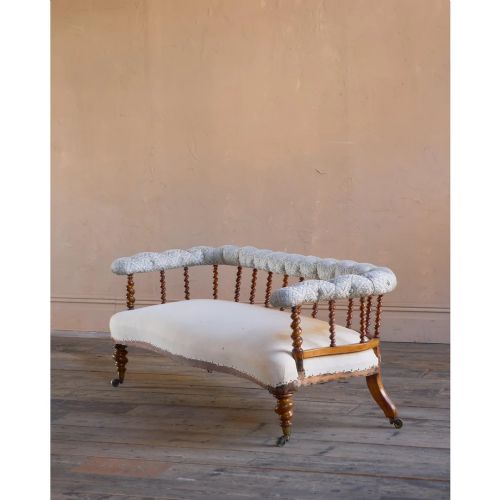
- Spindle back
- A chair or settee back constructed with a series of thin, turned wooden rods or spindles. This method lightens the visual weight of the timber frame.
- Show wood
- The exposed polished or carved wooden sections of a largely upholstered settee. It demonstrates the quality of the timber and cabinetmaker's skill.
Curved Back Settee: Frequently Asked Questions
What is a curved back settee?
A curved back settee is an upholstered seating furniture piece featuring a rounded or sweeping backrest designed for multiple people. These items appear across Victorian, Edwardian, and French revival periods.
They function as both decorative focal points and comfortable seats in parlours, drawing rooms, and studies. The design softens linear room layouts by introducing organic, sweeping contours.
How do I identify a Victorian curved back settee?
Victorian examples often display rich mahogany or rosewood frames, deep button tufting, and generous proportions. They embrace styles ranging from elaborate buttoned salon pieces to sturdy Chesterfield designs.
Look for traditional show wood framing and heavier upholstery fabrics like velvet and leather. These characteristics distinguish mid to late nineteenth century craftsmanship from lighter Edwardian styles.
Where were these settees placed originally?
Historically, these settees occupied formal drawing rooms, parlours, and receiving spaces where guests gathered. They were positioned to encourage conversation while displaying the owner's taste and status.
Smaller salon versions and daybeds suited private boudoirs or reading rooms. Their graceful silhouettes allowed them to sit away from walls as freestanding room dividers.
How do I care for antique upholstery?
Preserving antique velvet, leather, or fabric requires keeping pieces away from direct sunlight to prevent fading. Regular gentle dusting protects the textile fibres from settling dirt.
Leather benefits from periodic conditioning to maintain flexibility, while delicate fabrics need professional cleaning. Avoiding excessive weight preserves the internal spring systems and frame joints.
What is the difference between a sofa and a settee?
Historically, a settee denoted a light, upholstered wooden bench with a back and arms, often seating two or three people. A sofa historically implied a more fully upholstered, deeply cushioned lounging seat.
Over time, the terms became largely interchangeable in marketplace descriptions. Both categories encompass the sweeping lines and supportive backrests found in period seating.