

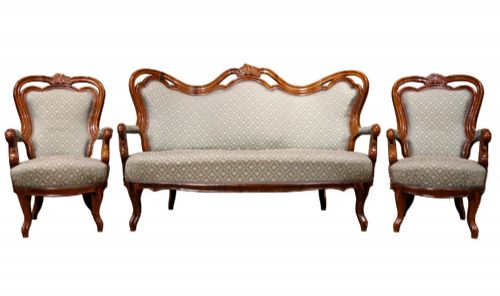


Louis XV Style Settee
A louis xv style settee brings sweeping curves and carved wood into a room, offering both elegance and deep seating.
Understanding the louis xv style settee
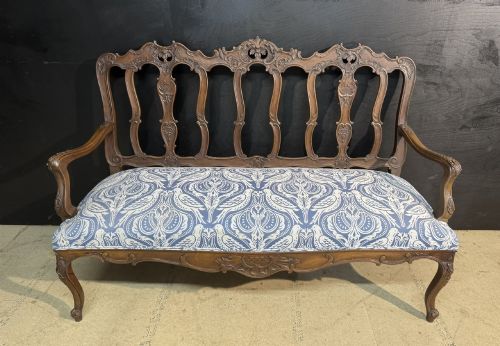
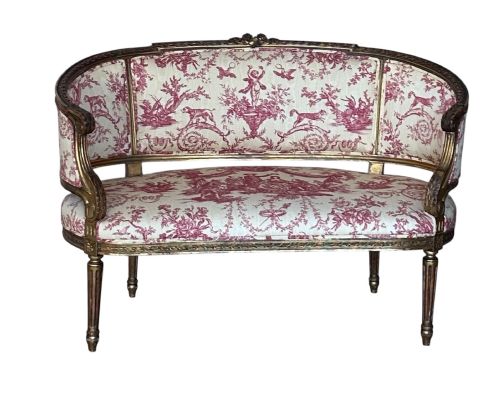
A louis xv style settee combines French design influences with various periods, most frequently appearing from the nineteenth century alongside pieces from the early twentieth century. These seating options emerge in forms such as the traditional canapé, the love seat, and the salon sofa.
The aesthetic leans heavily on Rococo Revival and French Provincial styles, creating an ornamental focal point for reception rooms and boudoirs. Pieces range from two-seater couches to larger three-seater variations upholstered in silk, damask, or tapestry fabrics.
Materials and construction methods
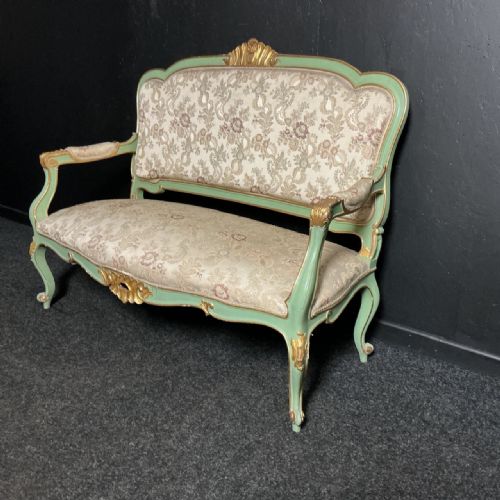
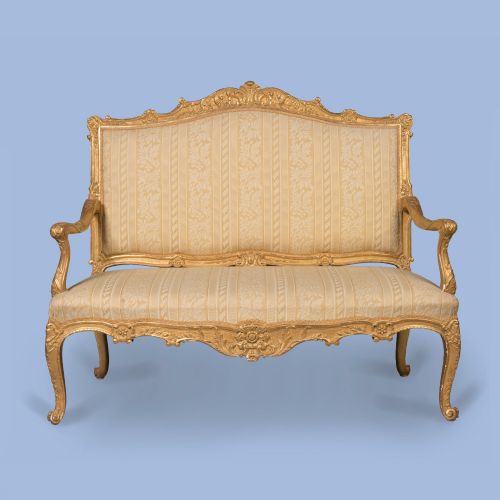
Frames rely on solid timbers including walnut, mahogany, beech, and carved wood, frequently enhanced with gold leaf, giltwood, or painted finishes. Skilled artisans shaped these structures with flowing organic contours characteristic of the design.
Upholstery techniques incorporate traditional textiles like damask, silk, and fabric, while certain designs utilise cane panelling for backrests and seat bases. Gold and green colourways appear alongside exposed carved wooden frameworks.
Retail Price Guide 2026
Typical UK retail prices for louis xv style settee, calculated from the Sellingantiques database of over a million retail prices indexed since 2003. This retail price guide relies exclusively on Sellingantiques data; no external sources or auction records are used, so the figures do not describe the wider market.
Listings feature walnut, mahogany, and beech frames combined with cane, silk, and damask upholstery across nineteenth and twentieth-century items.
Distinctions in quality
The caliber of a louis xv style settee rests upon the crispness of the hand-carved woodwork and the depth of the gilding or paint application. Superior examples display fluid, continuous lines in the wooden frame without clumsy joints.
Textile selection and upholstery execution further divide standard pieces from finer ones, where silk, damask, or intricate tapestry work complements the structural woodwork rather than masking it.
The Louis XV Style Settee Glossary
- Canapé
- An upholstered French sofa featuring an exposed wooden frame. These pieces often serve as the main seating option in formal reception rooms.
- Giltwood
- Wood coated with a thin layer of gold leaf or gold paint. This finish catches candlelight and natural illumination in period interiors.
- Cane
- Woven rattan material used for seats and backrests. It provides a lighter appearance compared to solid upholstered panels.
- Damask
- A reversible figured fabric traditionally woven on a jacquard loom. It adds subtle texture and pattern to the upholstery.
- Rococo Revival
- A nineteenth-century design movement inspired by eighteenth-century French aesthetics. It emphasises asymmetrical scrolls and botanical motifs.
Frequently Asked Questions
How do I clean the giltwood frame?
Dust the carved wooden surfaces gently using a soft, dry cloth to prevent accumulation.
Avoid liquid cleaners or polishes that might damage the underlying gold leaf or painted finish.
Are these settees comfortable for daily sitting?
Most pieces were designed for formal salons rather than lounging, offering upright support.
Upholstery firmness varies depending on whether the internal webbing and padding have undergone restoration.
What rooms suit a french boudoir settee?
These compact seats fit well in bedrooms, dressing areas, or reading corners where space is limited.
They also function as striking accent pieces in larger entryways or hallways.
How can I tell a nineteenth-century piece from a later one?
Examine the timber construction methods, tool marks, and wear patterns on the underside of the frame.
Nineteenth-century examples often display older joinery techniques and denser woods compared to twentieth-century alternatives.