


George III Settee
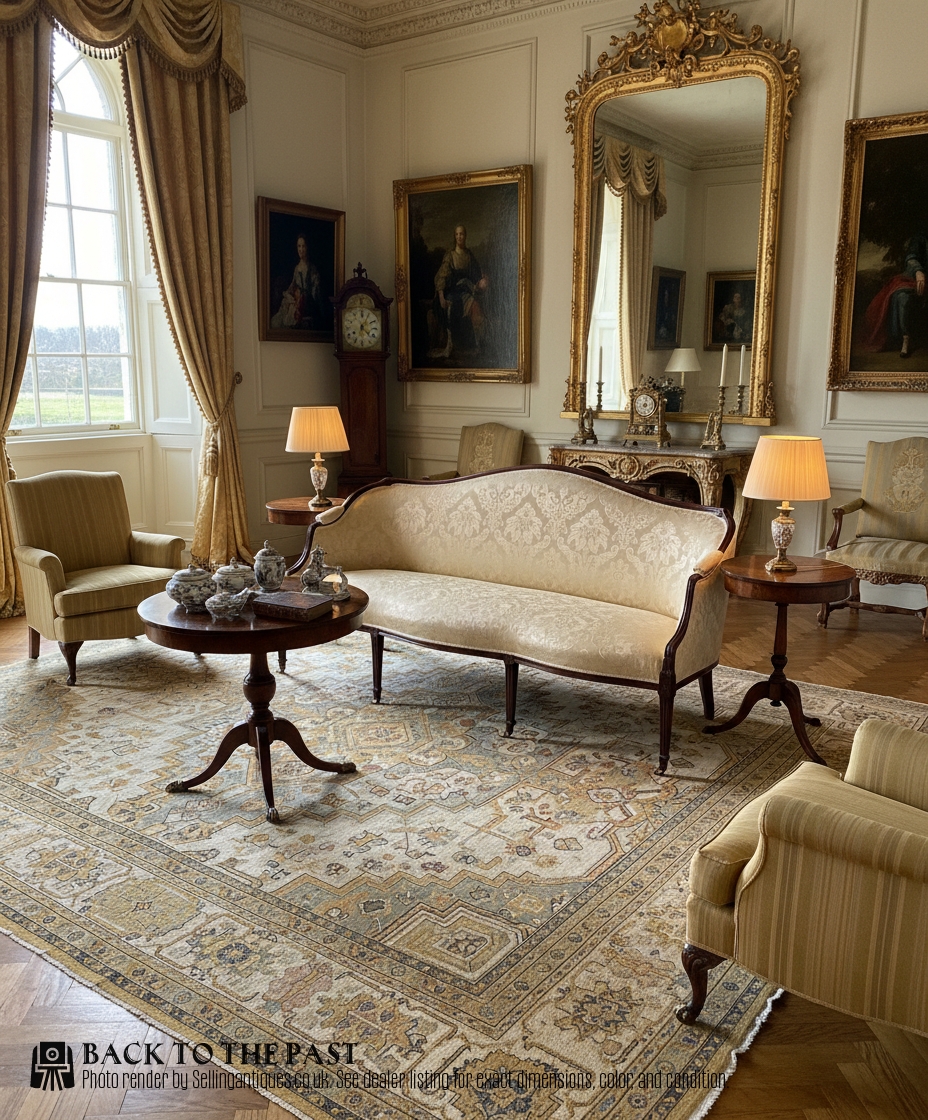
A george iii settee is a substantial Georgian seating piece built for polite drawing rooms and refined parlours.
George III Settee
A george iii settee encompasses large multi-seater timber frames made during the eighteenth century alongside later revival interpretations from the Edwardian era and the twentieth century. The selection ranges from robust mahogany camel-back shapes and serpentine fronts to lighter satinwood and painted frameworks.
How they were made
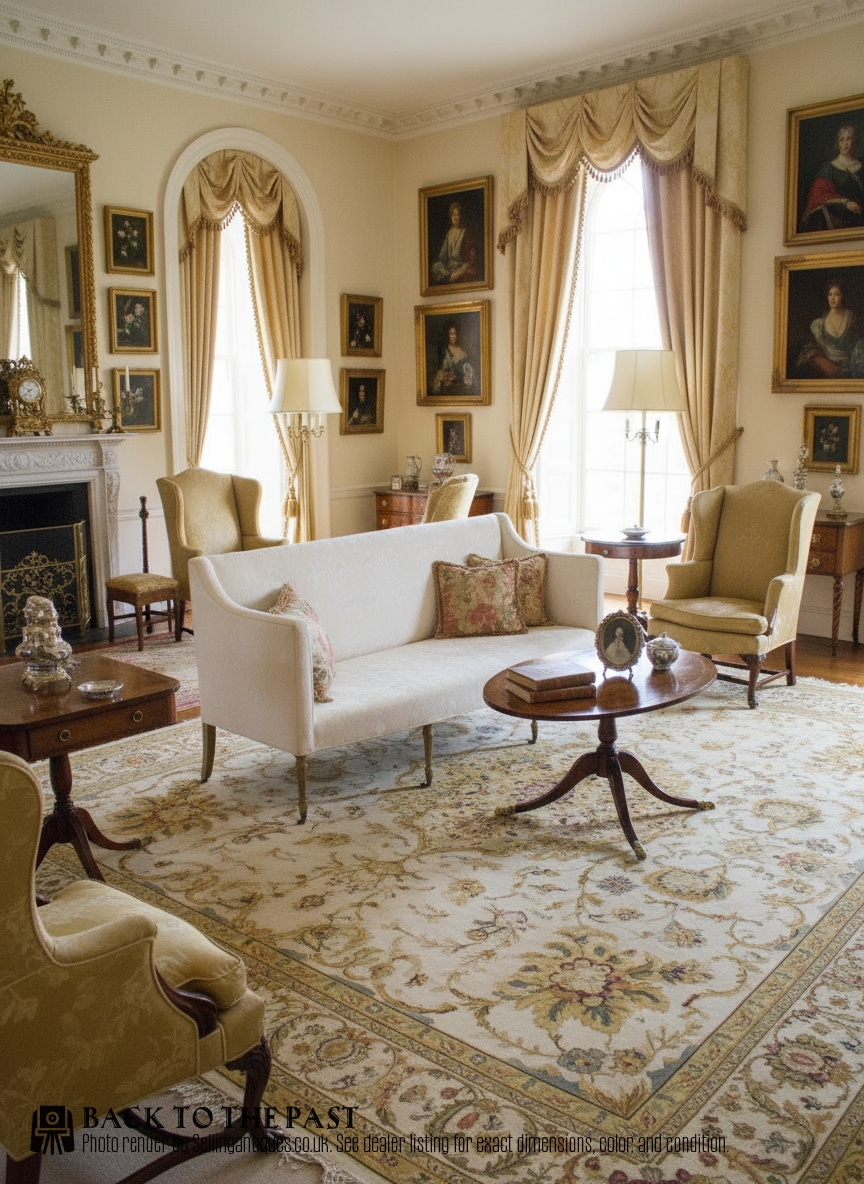
Makers utilised solid timbers including mahogany, oak, and walnut for the structural frames, often finishing decorative surfaces with painted satinwood and gilding. Upholstery relied on traditional textiles such as damask and fabric stretched over internal padding.
Joinery techniques united structural elements like curved camel backs and serpentine front rails. Brass details occasionally appeared on castors or mounts, while caning formed lightweight seat panels on specific decorative variants.
George III Settee Retail Price Guide 2026
Typical asking prices for george iii settee among the pieces listed under this phrase on Sellingantiques today, from the lower quarter to the upper quarter. They describe what is for sale here now, not the wider market.
Some wooden frames feature centuries-old hidden chalk marks left by joiners.
What varies in quality
The sophistication of the carved detail on the timber frame dictates the standing of the piece. Crisp lines on a mahogany camel back or refined painted decoration on satinwood separate ordinary output from finer examples.
The integrity of the structural timber and the retention of period upholstery styles define the character of each settee. Original eighteenth-century construction methods carry distinct weight compared to later revival pieces from the nineteenth and twentieth centuries.
The George III Settee Glossary
- Camel back
- A gently undulating upholstered backrest shaped with a central hump resembling a camel's profile. This contour appeared frequently on eighteenth-century seating.
- Serpentine front
- A furniture front curving inward centrally and outward at the ends in a continuous wave. This outline added visual movement to mahogany frames.
- Hepplewhite revival
- A late nineteenth or twentieth century style mimicking the light, elegant furniture forms associated with the designer George Hepplewhite. Makers utilised this aesthetic for chair-back settees.
- Satinwood
- A lustrous yellowish timber native to India and Ceylon, utilised for decorative painted furniture during the Georgian and later periods. It provided a smooth surface for artistic embellishment.
- Chair-back settee
- A seating form featuring a backrest constructed as a series of joined chair backs. These frames often utilised mahogany or oak.
George III Settee: Frequently Asked Questions
How do I identify a Georgian period settee?
Identifying a Georgian settee involves examining the timber species, construction joints, and stylistic markers such as Hepplewhite or Chippendale influences. Genuine period pieces show structural maturity in the mahogany or oak framing.
Revival pieces from later centuries often mimic these characteristics but utilise secondary woods or machinery marks from the Edwardian era or the nineteen-forties.
Where were settees placed in a home?
Settees served as principal seating arrangements in formal drawing rooms, parlours, and large reception halls. They provided comfortable seating for multiple guests during social gatherings.
Their decorative timber frames and fine upholstery ensured they functioned as visual centrepieces against panelled or wallpapered walls.
What is the difference between a settee and a settle?
A settee typically incorporates an upholstered or cane backrest supported by a timber frame designed for formal interiors. Examples often feature mahogany or satinwood.
A settle is a traditional wooden bench featuring a high solid panel back designed to block draughts in rustic or vernacular settings. These pieces were usually constructed from oak.