
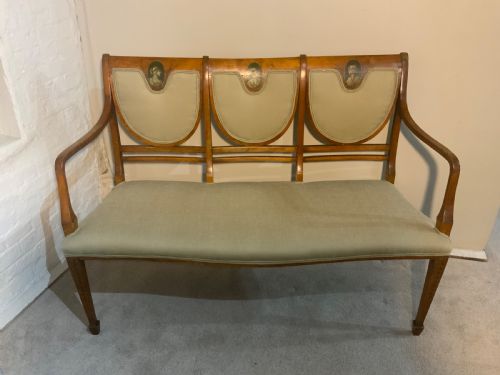
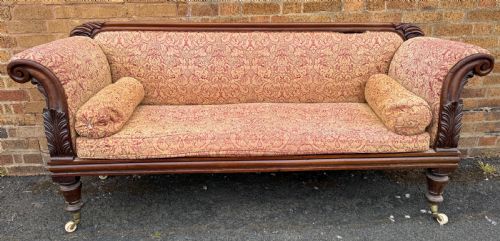


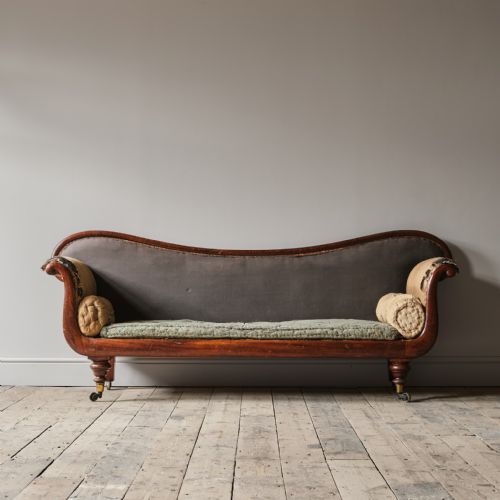


Early 19th Century Settee
An early 19th century settee brings grand proportion and sweeping scroll arms into a room, offering substantial seating wrapped in period character.
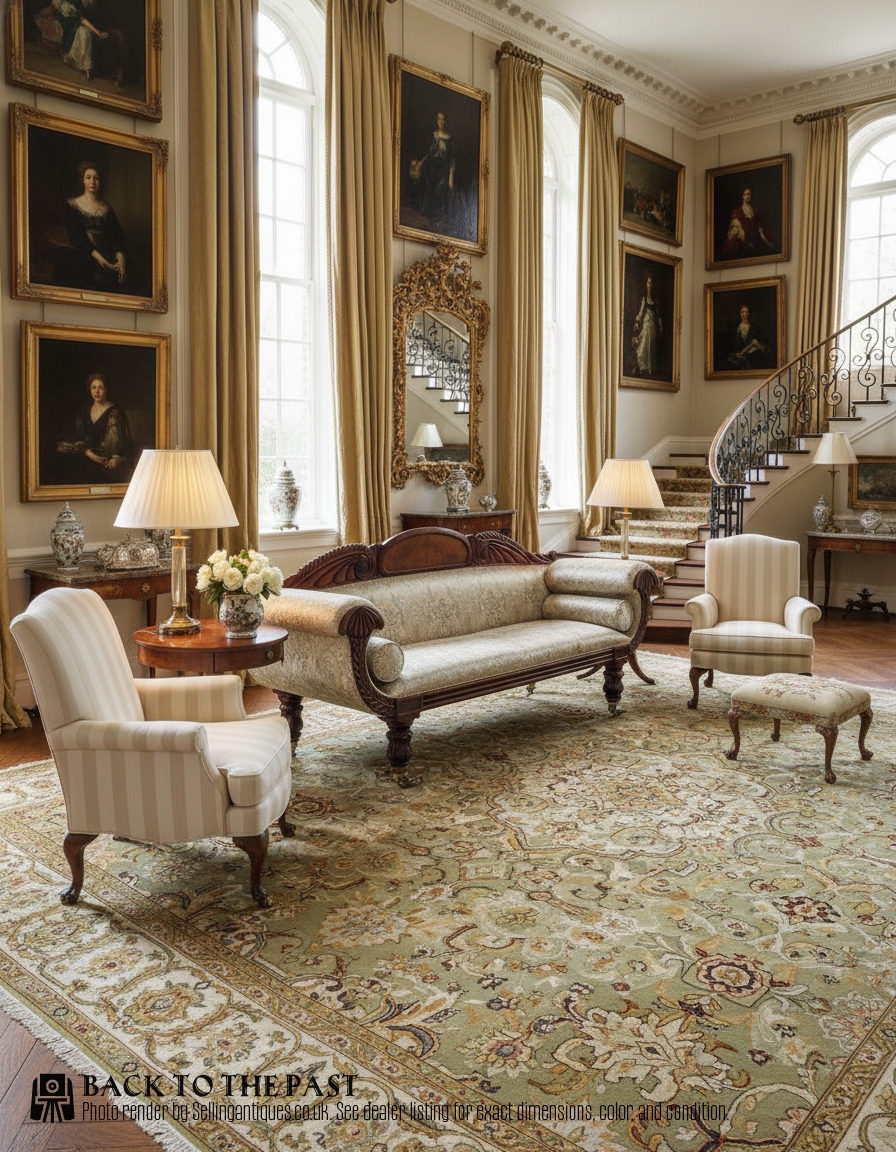
Early 19th Century Settee
An early 19th century settee encompasses a range of stately seating forms, from scroll-end sofas to chair back settees and benches spanning the Regency, William IV, and Early Victorian periods. The pieces appearing here originate from English, Irish, Italian, French, German, and South African workshops, demonstrating diverse regional interpretations of seating design.
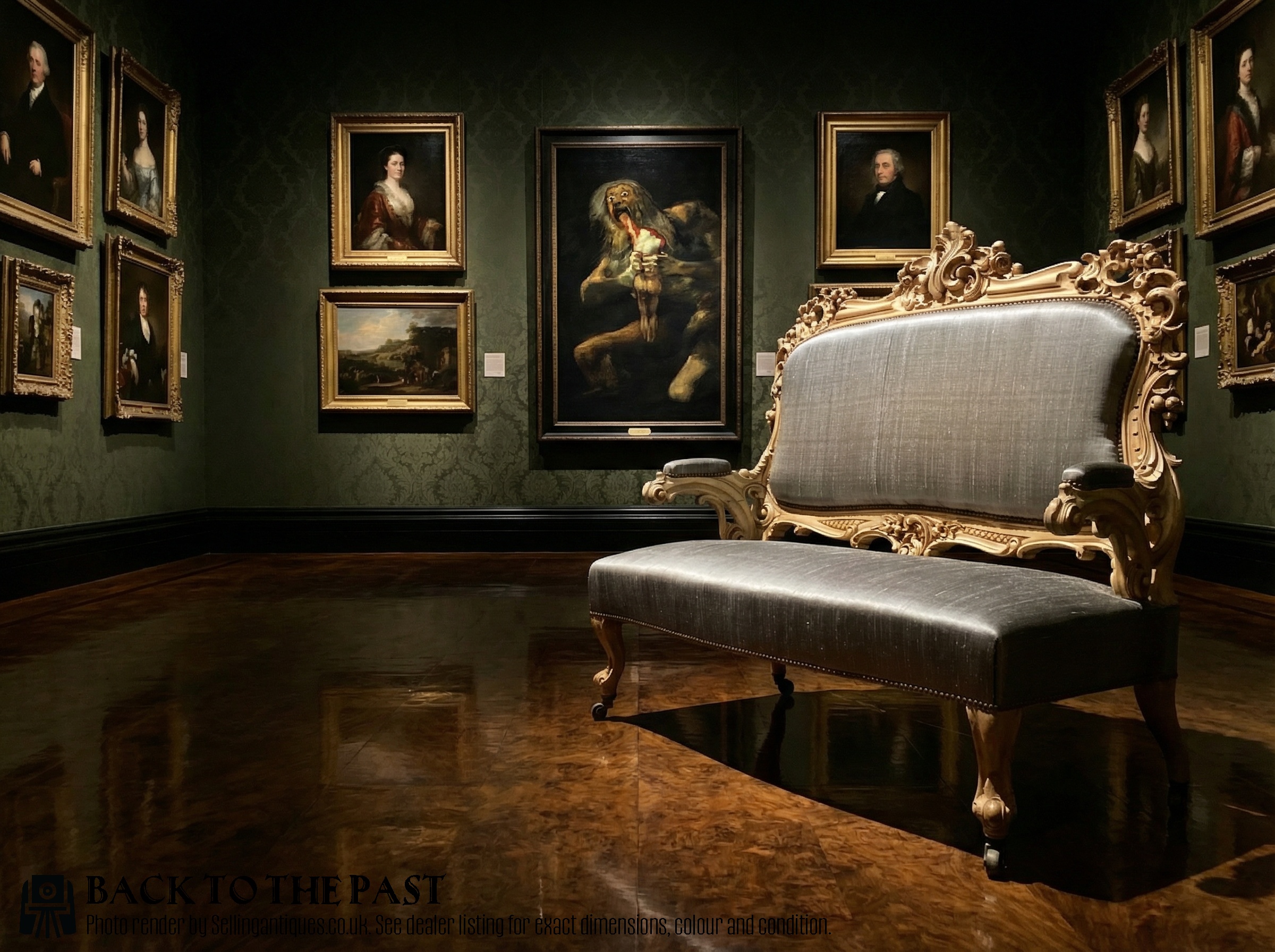
Buyers most frequently encounter mahogany framed examples featuring scroll ends or double scroll ends, alongside country house sofas and upholstered pieces in styles such as Regency, Rococo Revival, and Venetian Rococo. Forms vary from three-seat double spoon back settees to expansive giltwood and polychrome couches.
The materials utilised across these forms include solid wood frames dressed in fabric, velvet, leather, and hessian, occasionally complemented by brass detailing. Whether listed as a sofa, settee, or bench, each piece reflects the specific stylistic preferences of the nineteenth century, uniting decorative carving with functional domestic seating.
Distinctions in quality
Quality in an early 19th century settee rests in the depth and precision of the carved woodwork, particularly upon scroll ends, frames, and stretcher supports. Pieces displaying crisp, deeply articulated carving demonstrate superior craftsmanship compared to simpler or softer mouldings.
The choice of primary timber and secondary framing materials also separates standard domestic items from finer examples, such as those utilising figured satinwood or heavy Irish mahogany. Furthermore, the cohesion between the original frame design and the choice of upholstery fabric influences the overall integrity of the piece.
Early 19th Century Settee Retail Price Guide 2026
Typical asking prices for early 19th century settee among the pieces listed under this phrase on Sellingantiques today, from the lower quarter to the upper quarter. They describe what is for sale here now, not the wider market.
Listings for an early 19th century settee feature timber frames in mahogany, satinwood, and stinkwood, alongside upholstered surfaces in leather, velvet, and hessian.
The Early 19th Century Settee Glossary
- Scroll-end
- A furniture arm curving outward and downward in a tight scroll shape. This profile defines many Regency and William IV sofas.
- Giltwood
- Wood that has been coated with gold leaf or a gold-coloured finish. This treatment appears on decorative formal settees.
- Satinwood
- A durable tropical hardwood with a characteristic golden-yellow sheen and fine grain. It is often used for high-status cabinet work and chair back settees.
- Stretcher
- A horizontal timber connecting the legs of a piece of furniture to provide structural stability. Stretchers are common on French and country house models.
- Polychrome
- Decorated in multiple colours. This finish appears on Italian Venetian seating surfaces.
- Double spoon back
- A double-curved upholstered backrest shaped to resemble the bowl of a spoon. This form is characteristic of Early Victorian multi-seat sofas.
Early 19th Century Settee: Frequently Asked Questions
Where should I place an early 19th century settee?
An early 19th century settee suits large reception rooms, hallways, or drawing rooms where its length and decorative frame can be viewed from multiple angles. Many buyers position them against a principal wall or floating in a spacious living area.
Because these pieces often feature finished backs and detailed carving on both sides or ends, they also function effectively as room dividers in open spaces.
How do I clean the wood and upholstery?
Maintenance requires dusting the timber frame regularly with a dry cloth and applying appropriate wax sparingly to preserve the polished surface. Avoid using harsh chemical cleaners on giltwood or simulated finishes.
Upholstery care depends on the specific textile, whether velvet, leather, or standard fabric, and generally benefits from gentle vacuuming with a soft brush attachment.
How do I distinguish Regency from Victorian settees?
Regency settees typically exhibit classical restraint, clean architectural lines, and bold mahogany or simulated rosewood grains, often incorporating brass mounts and scroll ends. The styling draws heavily on classical Greek and Roman motifs.
Victorian pieces, such as those from the 1840s, tend to feature heavier proportions, curved double spoon backs, and more exuberant decorative carving associated with the Rococo Revival.
Can I use these settees for daily seating?
These settees serve well for regular domestic use provided the underlying frame and upholstery webbing remain stable and secure. Many examples were built for heavy household use in country houses and formal parlours.
Checking the structural soundness of the joints and the firmness of the internal support ensures the piece handles everyday sitting comfortably.