


Antique Parlor Settee
An antique parlor settee brings distinct period character to a reception room, offering comfortable seating shaped by Victorian and Edwardian craftsmanship.
Antique Parlor Settee
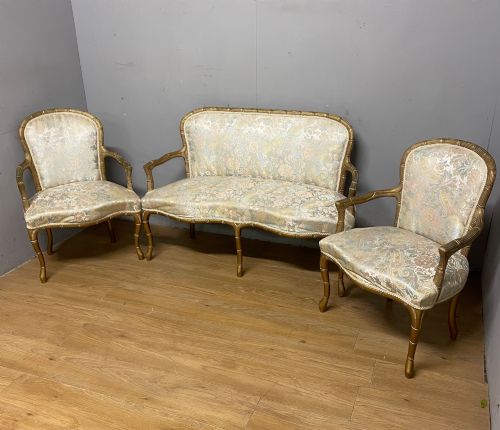
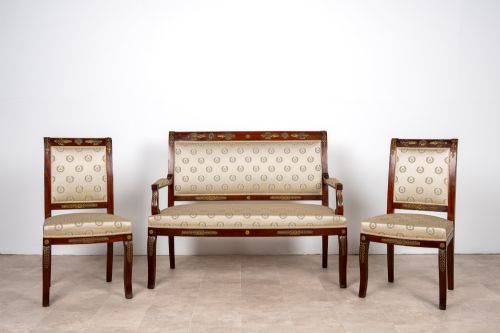
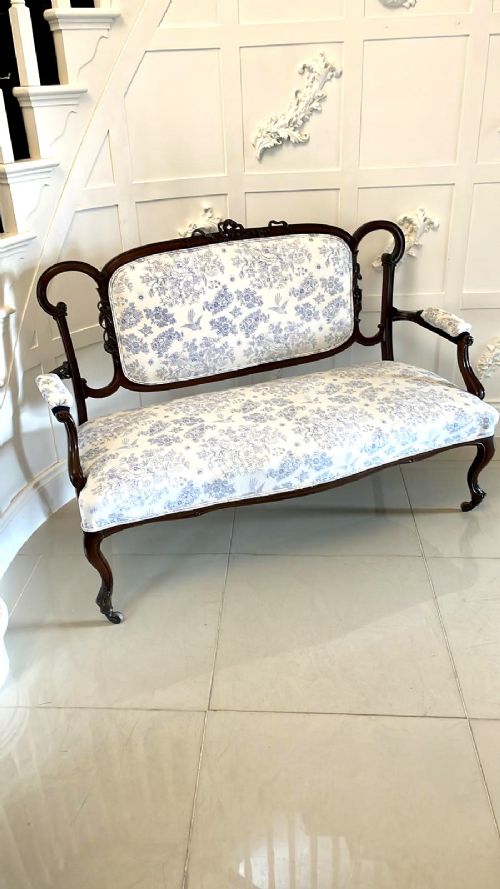
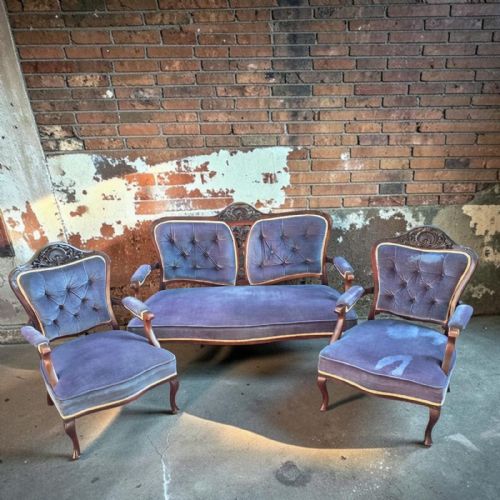
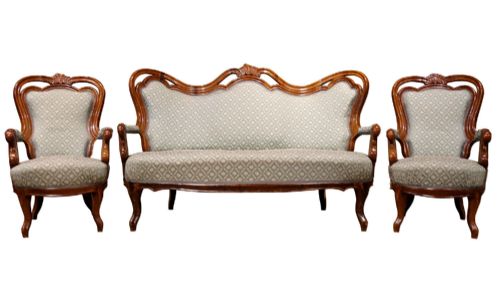
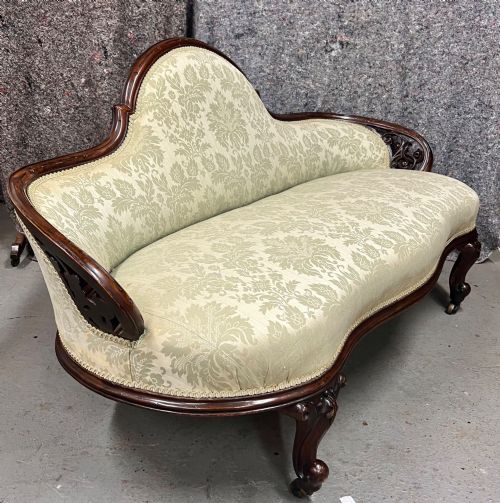
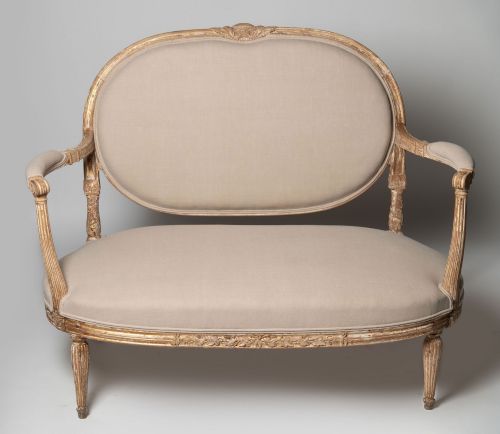
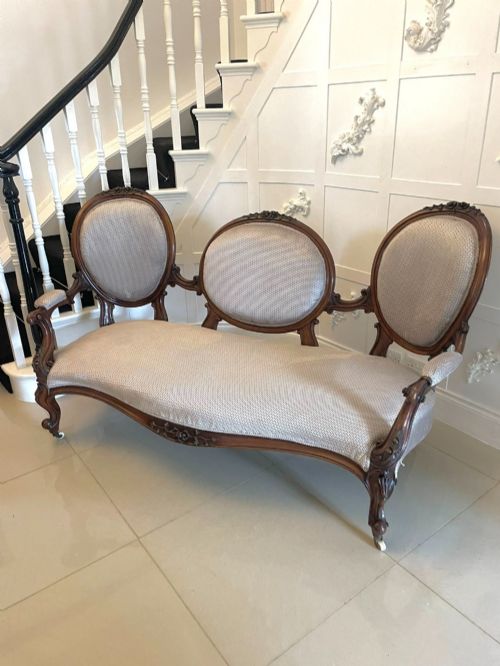
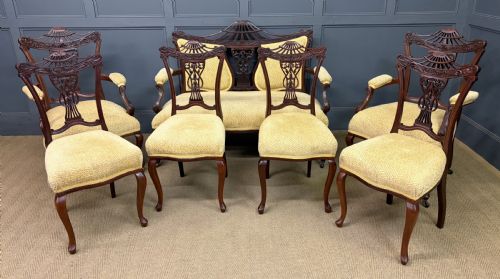
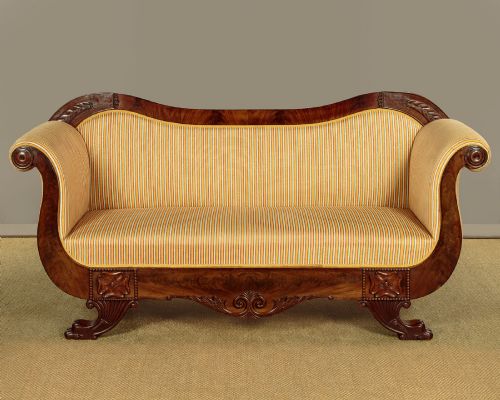
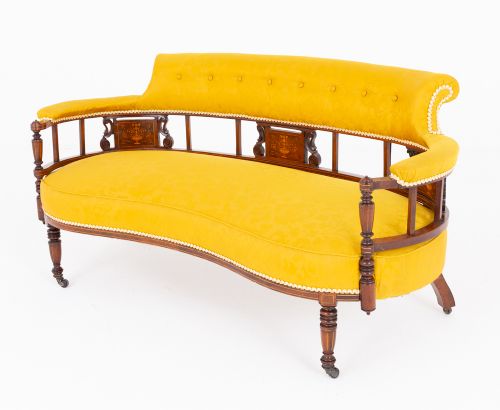
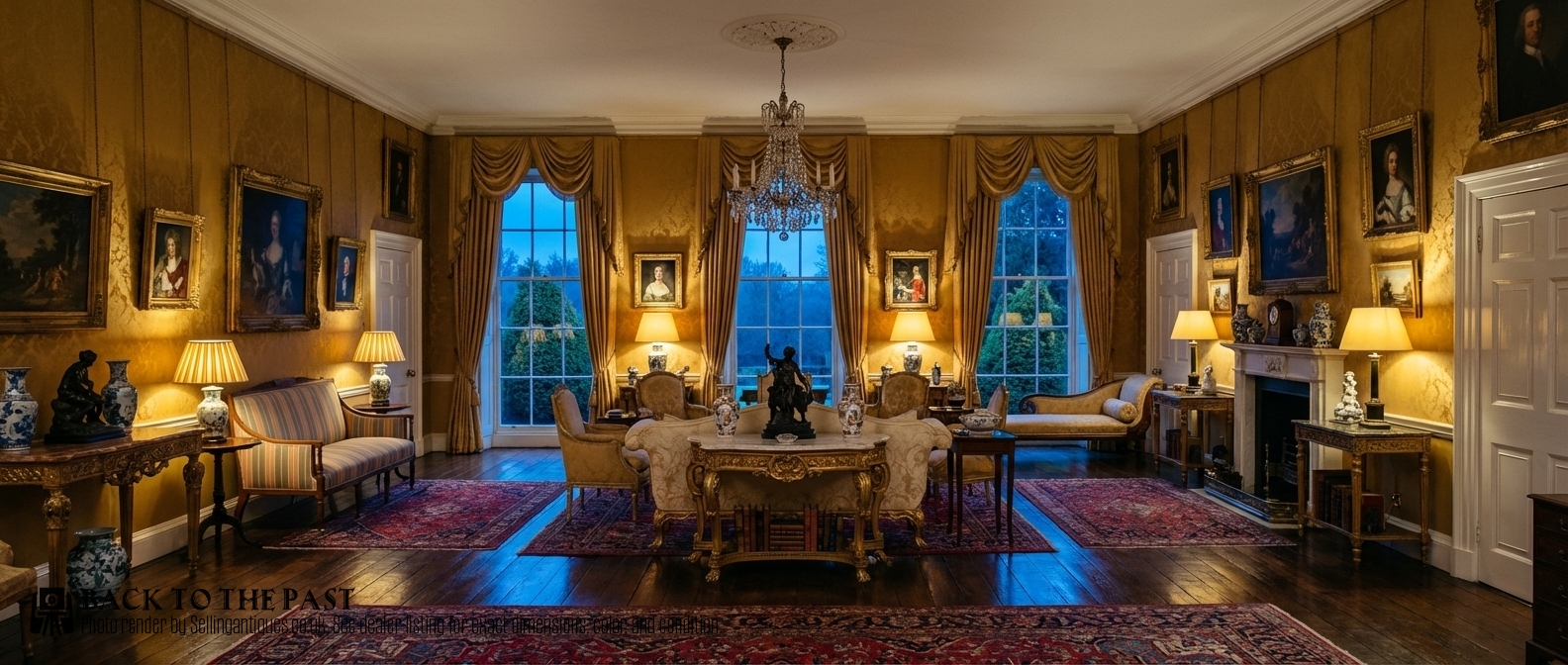
An antique parlor settee is a formal two or three-seater sofa designed for the principal reception rooms of nineteenth and early twentieth-century homes. These pieces appear in styles ranging from Rococo Revival and Louis XVI to Edwardian and Arts and Crafts, reflecting the shifting tastes of the period. Buyers seeking this form will find examples grouped as standalone settees or as part of larger salon suites alongside matching armchairs.
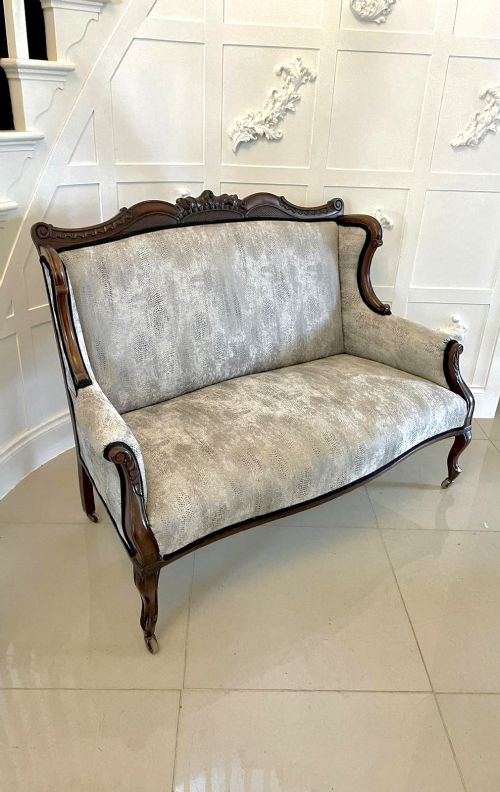
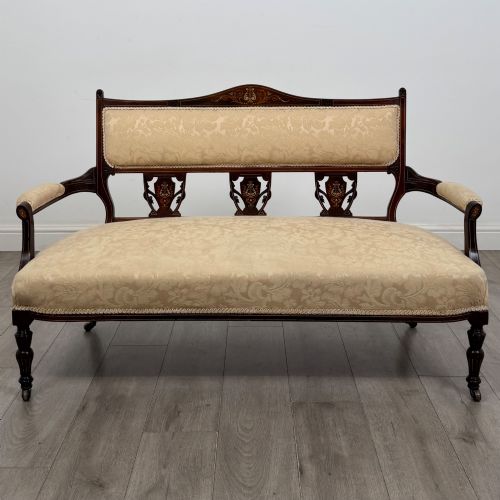
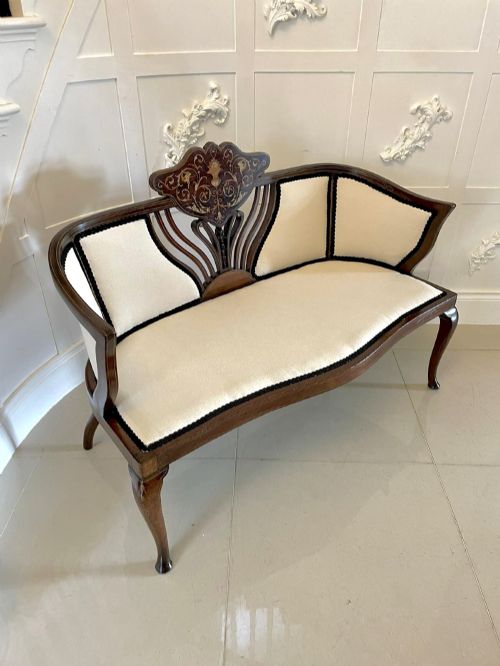
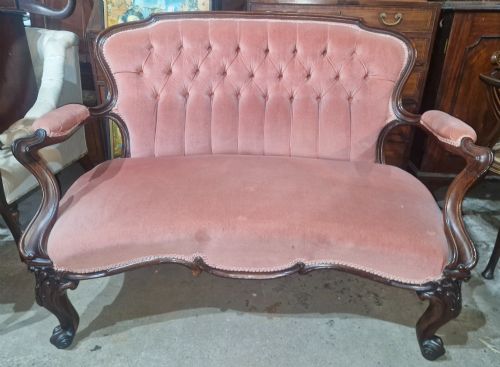
The most common iterations encountered on this page date from the Victorian and Edwardian eras, constructed in mahogany, walnut, or rosewood. Forms vary from cameo-back and double-ended sofas to spindle-back salon pieces and window seats. These items served both practical seating and decorative functions in formal parlours and drawing rooms.
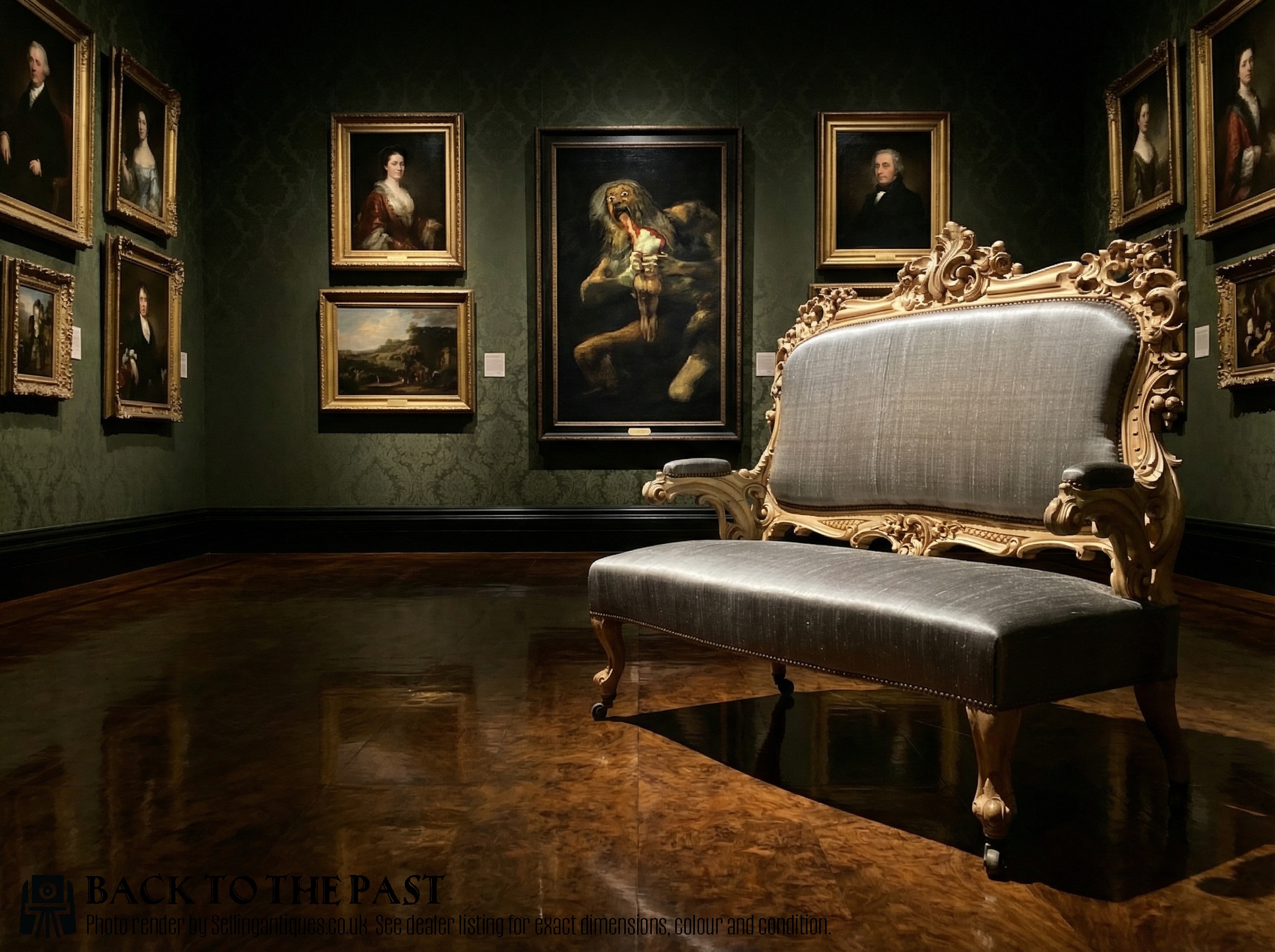
How They Were Made
Makers utilised dense timbers such as mahogany, walnut, and rosewood for the structural frames, often applying satinwood inlay or intricate hand-carved ornamentation. Frames were shaped using traditional joinery techniques, accommodating curved backs, scroll ends, and cabriole legs.
Upholstery involved supportive sprung bases layered with durable padding, finished in materials like velvet, brocade, or standard upholstery fabric, occasionally accented with deep buttoning. Painted and gilded finishes also appear on French-influenced pieces from the nineteenth century.
Antique Parlor Settee Retail Price Guide 2026
Typical asking prices for parlor settee among the pieces listed under this phrase on Sellingantiques today, from the lower quarter to the upper quarter. They describe what is for sale here now, not the wider market.
Frames span multiple formats including salon suites, window seats, Chesterfield designs, and Bergère sofas.
What Varies in Quality
The distinction between tiers rests in the crispness of the timber carving and the complexity of the cabinetwork, particularly where delicate satinwood inlay is integrated into the mahogany or rosewood frames. Pieces demonstrating superior hand-carved detail on the crest rails and arms reflect higher workshops standards.
Integrity of proportion and the retention of original framing materials dictate overall standing. Suites that survive as complete matching sets rather than isolated pieces command greater architectural and historical cohesion within a room.
C. Hindley & Sons
The Antique Parlor Settee Glossary
- Cameo-back
- A sofa design featuring an oval or shield-shaped upholstered back panel framed in carved timber. This style is frequently observed on mid-Victorian walnut and mahogany pieces.
- Double-ended sofa
- A seating form with identical scrolling or raised ends, allowing a user to recline comfortably from either direction without a fixed headrest.
- Salon suite
- A matched grouping of seating furniture comprising a settee alongside armchairs and side chairs designed for formal entertaining. These suites share uniform timber frames and upholstery treatments.
- Inlay
- A decorative technique where contrasting timbers such as satinwood are inserted into recesses within a primary wood surface like mahogany or rosewood. It defines much of the Edwardian cabinetwork.
- Spindle-back
- A chair or sofa back constructed from numerous thin, turned wooden rods arranged vertically. This detail occurs on specific late nineteenth-century salon pieces.
Antique Parlor Settee: Frequently Asked Questions
What is an antique parlor settee?
An antique parlor settee is a formal upholstered seat designed for reception rooms during the nineteenth and early twentieth centuries. These furnishings range from compact two-seaters to components of larger salon suites.
They accommodate sitting in formal spaces and reflect the prevailing aesthetic movements of their respective decades, including Victorian revival styles and Edwardian refinements.
How do I date an antique settee?
Dating relies on identifying the primary wood used, the upholstery style, and the structural design of the frame. Mahogany and rosewood are typical of Victorian production, while lighter satinwood inlay often points towards the Edwardian period.
Form also provides evidence, as heavily carved rosewood frames suggest mid-century Victorian work, whereas simpler inlaid mahogany points to later decades.
How were parlor settees used?
These settees functioned as primary seating in formal parlours and drawing rooms where guests were received. They offered comfortable places for conversation and display.
In larger homes, they formed part of a matched salon suite accompanied by armchairs, side chairs, and footstools designed for the same entertaining spaces.
Can I use an antique settee daily?
Yes, many antique settees retain robust sprung bases and sturdy hardwood frames suitable for regular domestic use. Careful placement away from direct sunlight preserves the timber and upholstery fabrics.
Maintenance involves regular gentle dusting of the wood frame and appropriate cleaning methods for the specific fabric covering.