
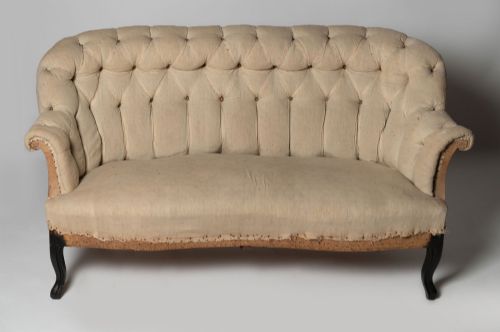
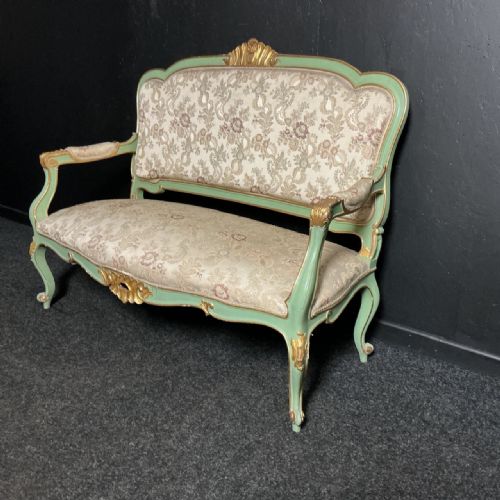
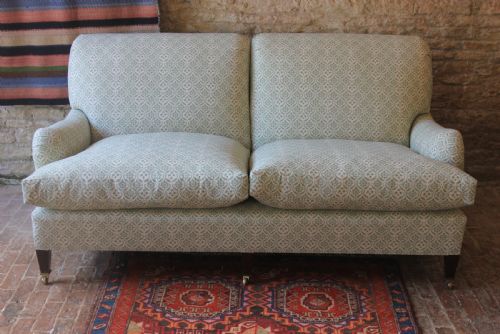
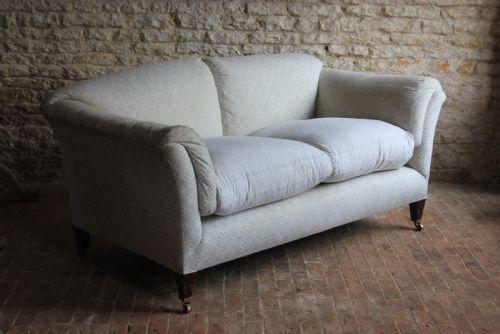
Antique Two Seater Settee
An antique two seater settee brings intimate scale to a room, offering compact seating rooted in Victorian and Edwardian craftsmanship.
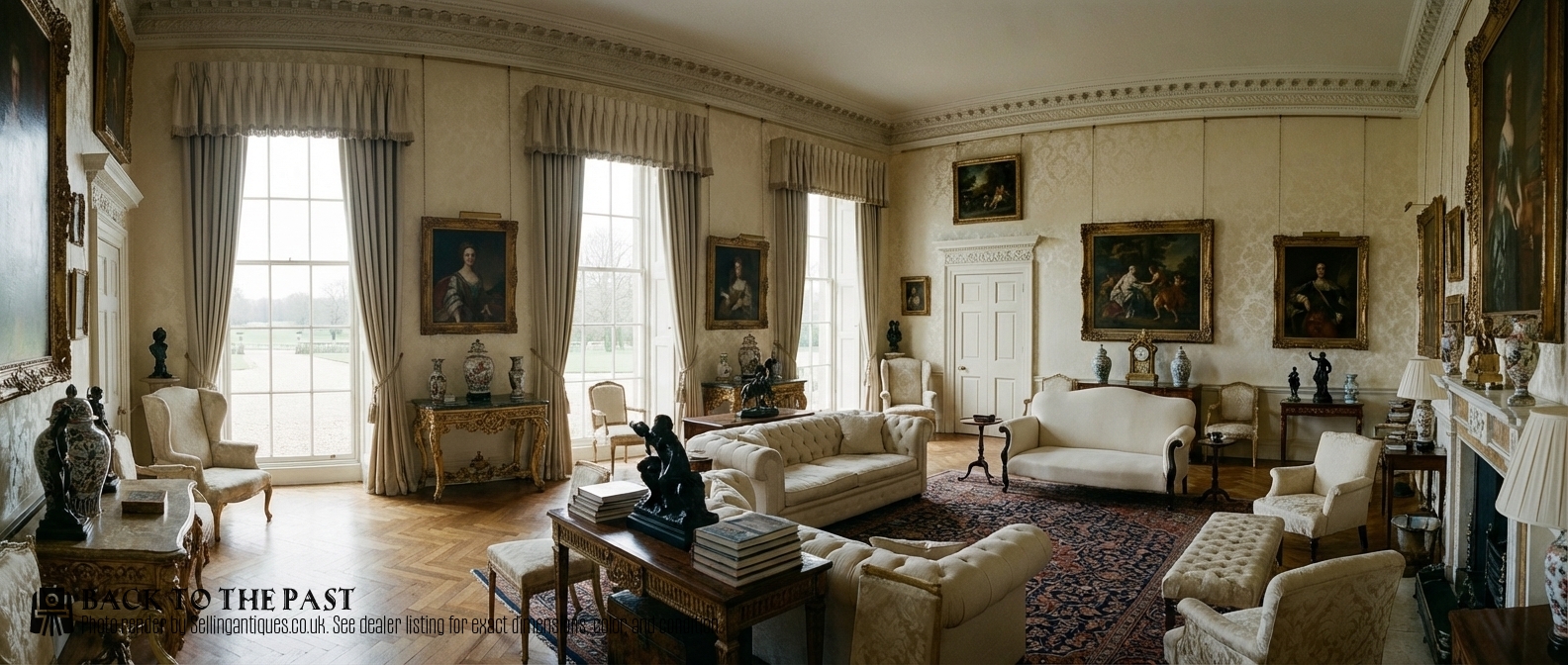
What They Are
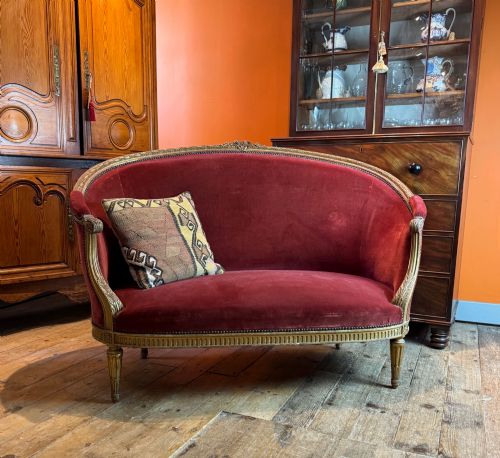
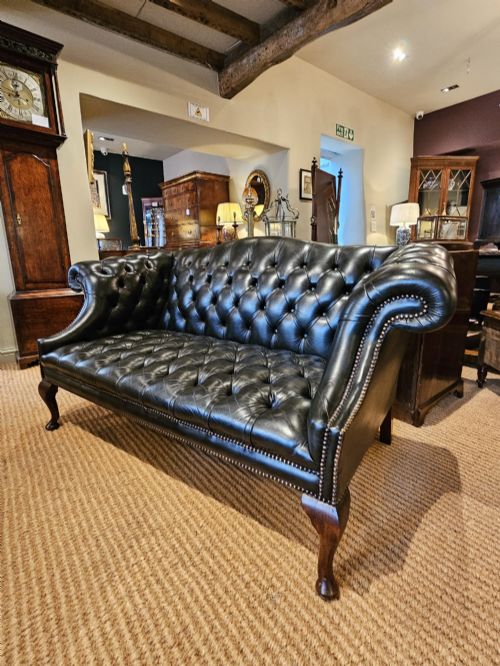
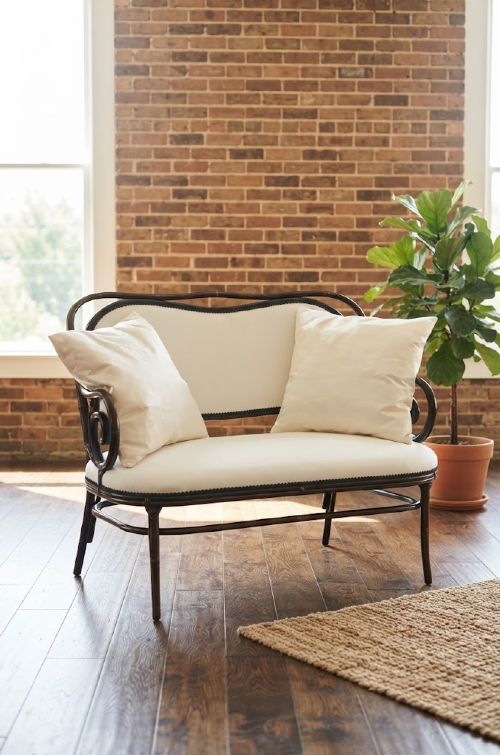
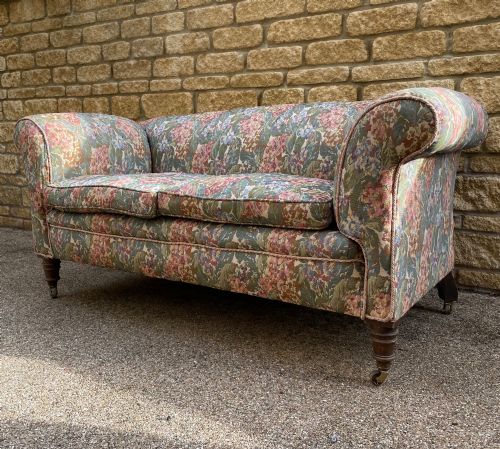
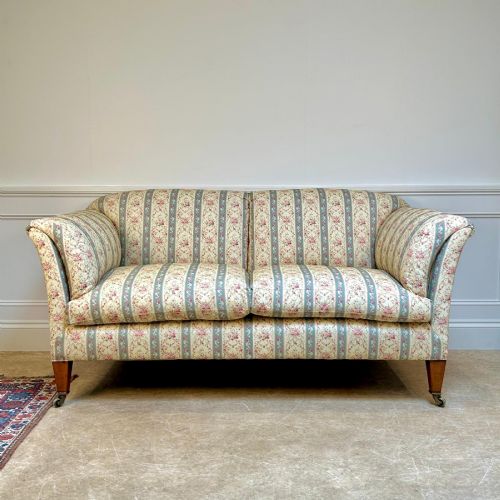
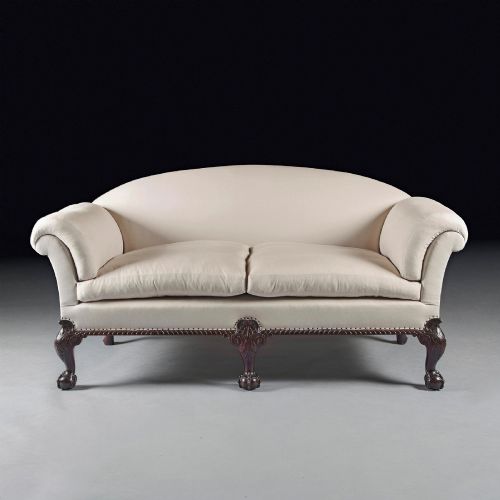
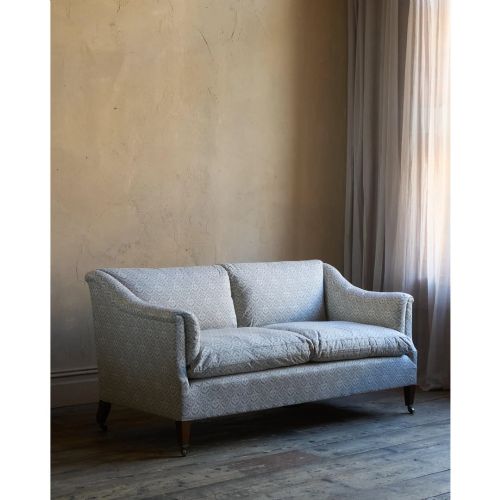
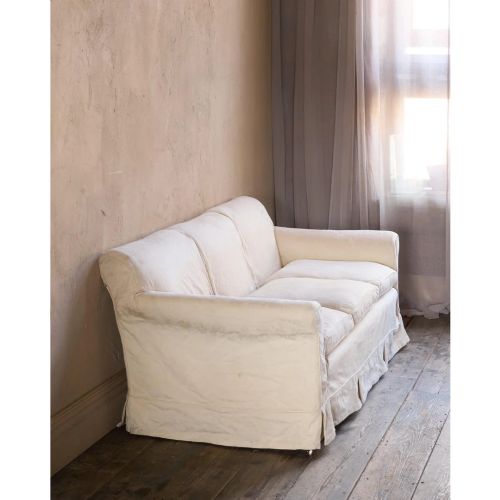
An antique two seater settee provides compact upholstered seating designed for intimate spaces, drawing on a rich heritage of domestic comfort. These pieces emerge in styles ranging from Victorian and Edwardian to Georgian Revival and Irish Chippendale Revival.
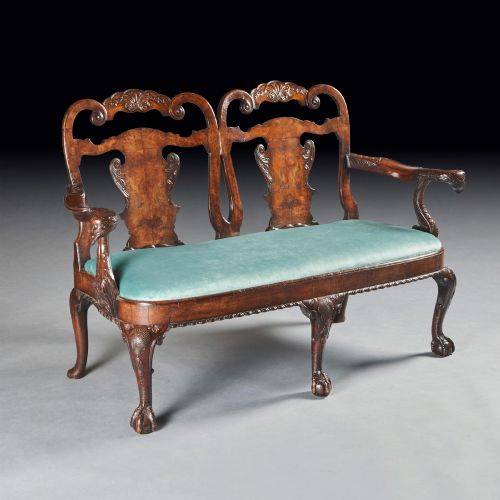
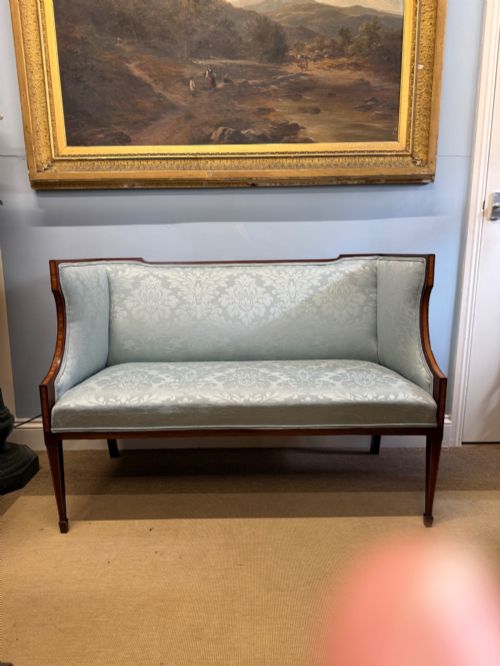
The surviving examples span the late nineteenth century into the early twentieth century, appearing as twin chair back sofas, drop arm sofas, and satinwood inlaid settees. Walnut and mahogany form the structural backbone of these smaller forms, often accompanied by matching salon suites.
Makers such as Jackson and Graham and Howard and Sons created notable iterations, alongside pieces produced in the manner of Butlers of Dublin. Buyers encounter both restrained country house designs and more elaborate inlaid woodwork.
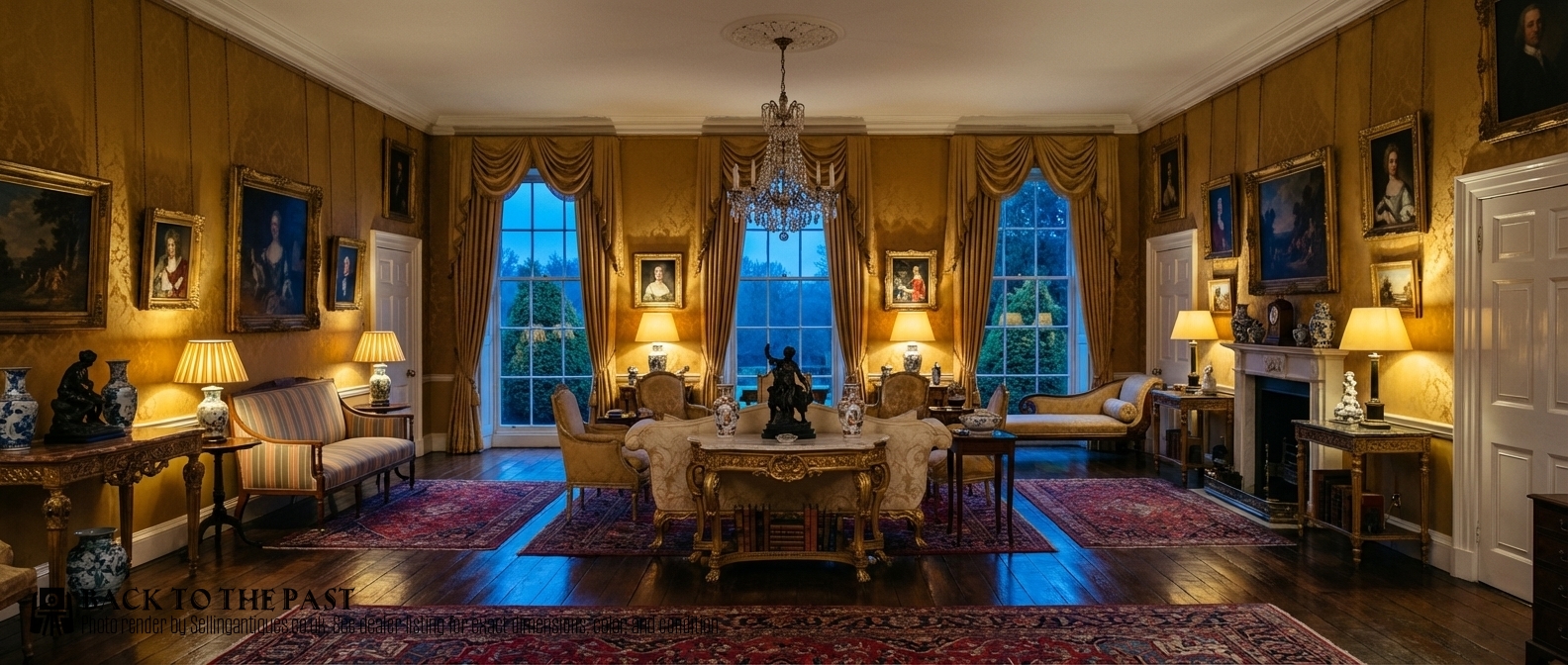
How They Were Made
Cabinetmakers utilised dense timbers such as walnut, mahogany, and satinwood for the exposed frames and legs, frequently incorporating fine inlay work. Structural elements display traditional joinery methods suited to supporting upholstered frames.
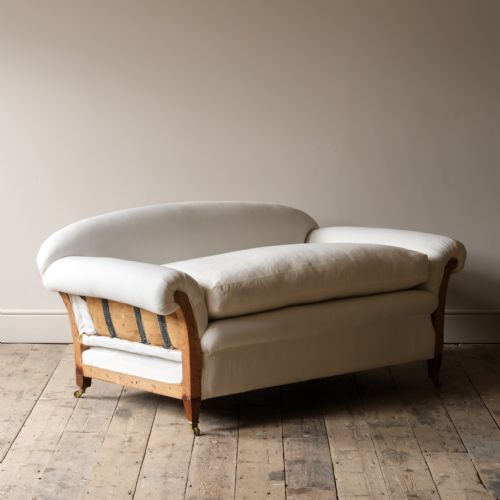
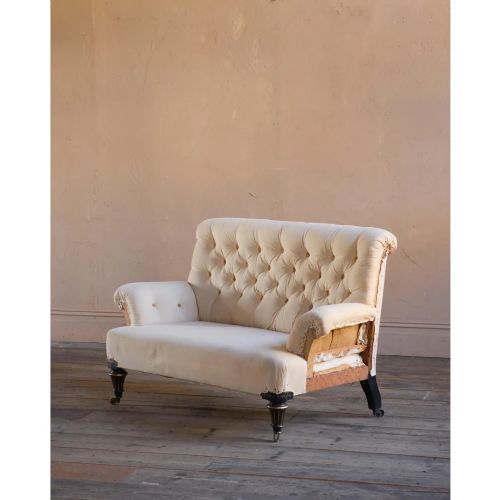
Upholstery techniques involved durable stuffing layered beneath fabrics like velvet, calico, and standard upholstery fabric. Brass castors occasionally appeared on legs to ease movement across heavy carpets.
Retail Price Guide 2026
Typical UK retail prices for two seater settee, calculated from the Sellingantiques database of over a million retail prices indexed since 2003. This retail price guide relies exclusively on Sellingantiques data; no external sources or auction records are used, so the figures do not describe the wider market.
The listings here combine mahogany, walnut, and satinwood structures upholstered in velvet, calico, and traditional fabrics across the Victorian and Edwardian eras.
What Varies in Quality
The refinement of the timber frame and the precision of the carving dictate the baseline quality of an antique two seater settee. Pieces displaying crisp fretwork, balanced proportions, and high-grade satinwood inlay stand apart from simpler vernacular builds.
Original upholstery methods and the integrity of the underlying stuffing influence the authenticity and physical comfort of the piece. Workshops with established reputations, such as Jackson and Graham or Howard and Sons, introduce a distinct level of execution seen in their joinery and finishing.
Jackson and Graham·Butlers of Dublin·Howard and Sons
The Antique Two Seater Settee Glossary
- Twin chair back sofa
- A settee design featuring a backrest visually split into two distinct chair silhouettes joined as one continuous seat. This style often reflects eighteenth-century revival tastes.
- Drop arm sofa
- A settee with one or both armrests hinged to lower flat, transforming the compact seat into a daybed format. This mechanical function adds versatility to the domestic interior.
- Satinwood inlay
- A decorative technique where contrasting light satinwood veneer is set into a darker primary wood such as mahogany or walnut. It defines late Victorian and Edwardian ornamental refinement.
- Salon suite
- A matched grouping typically comprising a two seater settee alongside accompanying armchairs or single chairs. These sets unified the formal reception rooms of the period.
- Irish Chippendale Revival
- A decorative movement reinterpreting mid-eighteenth-century Irish furniture designs with pronounced ball and claw feet and heavy carved mahogany frames.
Frequently Asked Questions
What rooms suit an antique two seater settee?
These compact settees fit naturally into bedrooms, hallways, or smaller drawing rooms where standard three-seater sofas overwhelm the floor plan. Their modest proportions provide practical seating without dominating the visual weight of the space.
They also pair effectively with standalone armchairs to create conversational seating groups in studies or libraries. The narrower frame allows placement against shorter wall spaces or beneath tall windows.
How do I identify a revival style?
Revival pieces borrow decorative vocabulary from earlier centuries, such as the heavy carved mahogany and ball feet associated with Georgian or Chippendale aesthetics. Makers in the nineteenth century frequently reinterpreted these historic forms for contemporary Victorian homes.
Examining the secondary woods and construction methods usually reveals the true nineteenth or early twentieth-century date of manufacture. Stylistic revivalism allowed Victorian households to display historic tastes while utilising modern manufacturing techniques.
Were these settees used in formal parlours?
Victorian and Edwardian drawing rooms frequently featured smaller settees as part of matched salon suites designed for receiving guests. They served as social seating for two people during afternoon tea or musical evenings.
More robust country house examples were often placed in entrance halls or private sitting rooms for everyday family use. Their dual function as decorative showpieces and practical seating shaped their placement in the home.
What is a drop arm mechanism?
A drop arm mechanism allows one end of the settee to lower via an internal brass hinge, creating a surface suitable for resting. This feature combined the upright posture of a sofa with the reclining utility of a daybed.
It required precise metalwork concealed within the upholstered arm to function smoothly without damaging the surrounding fabric. Surviving examples demonstrate the nineteenth-century interest in multi-functional domestic furniture.