



Victorian Scroll Arm Sofa
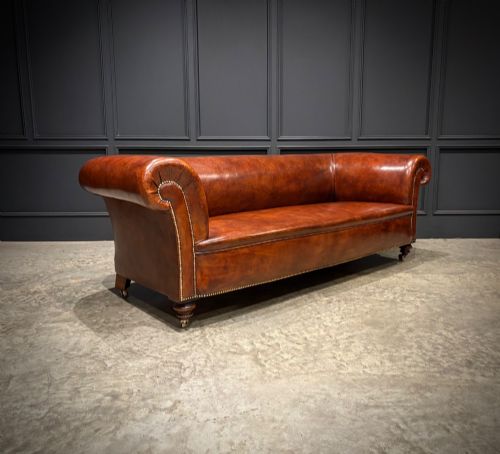
A victorian scroll arm sofa brings generous nineteenth-century comfort and architectural presence into a room.
Victorian Scroll Arm Sofa
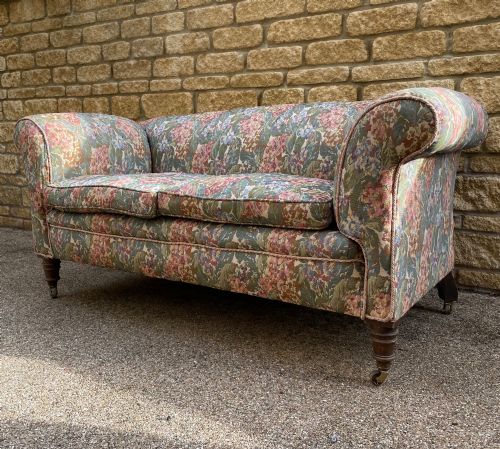
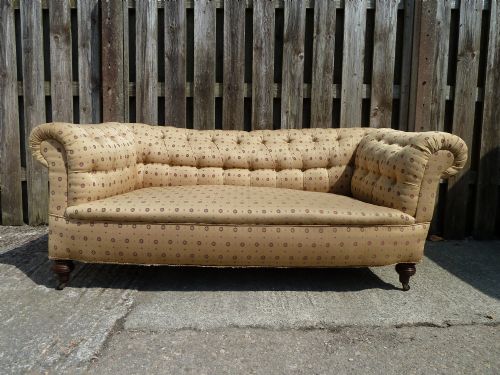
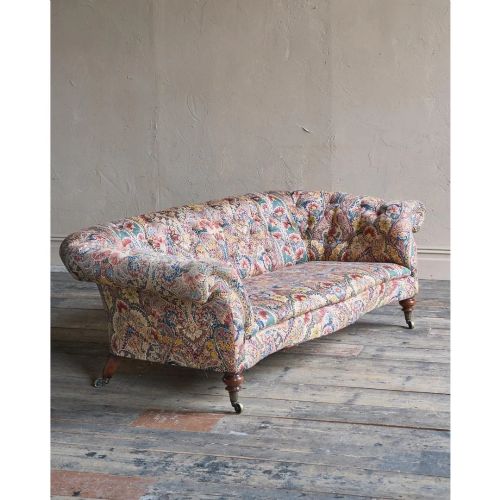
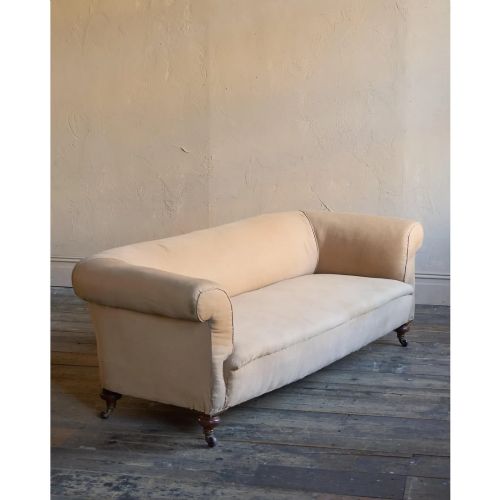
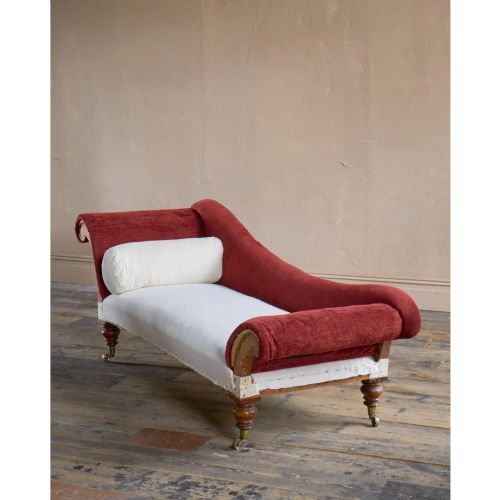
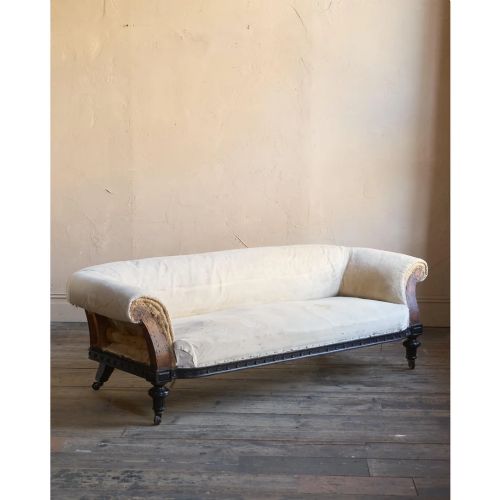
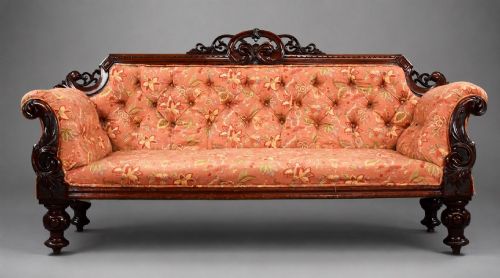
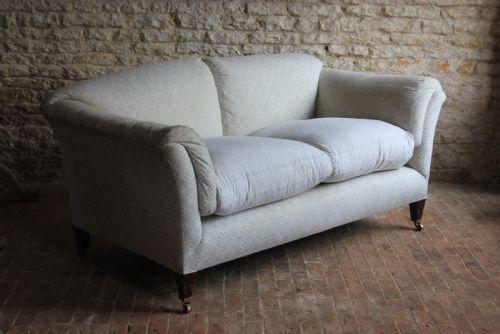
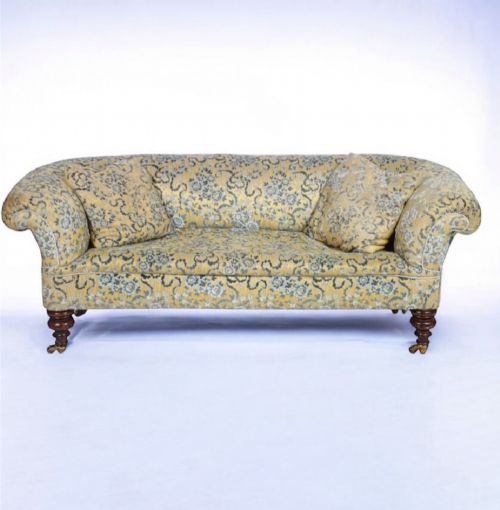
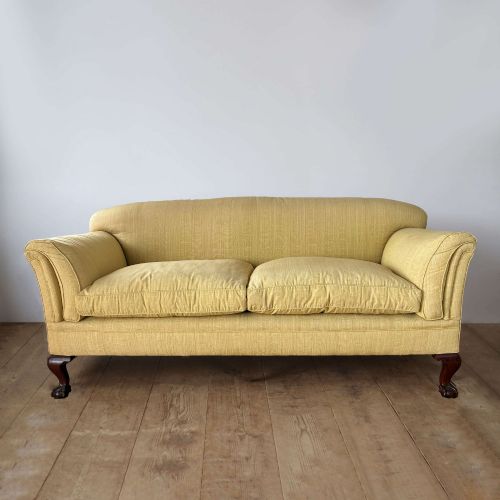
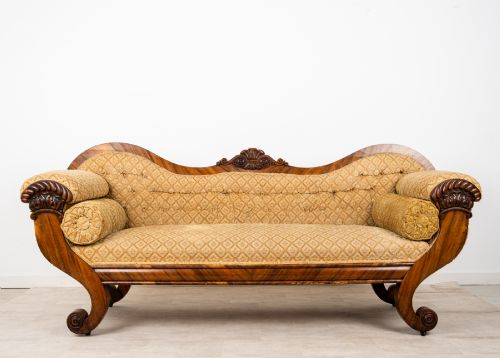
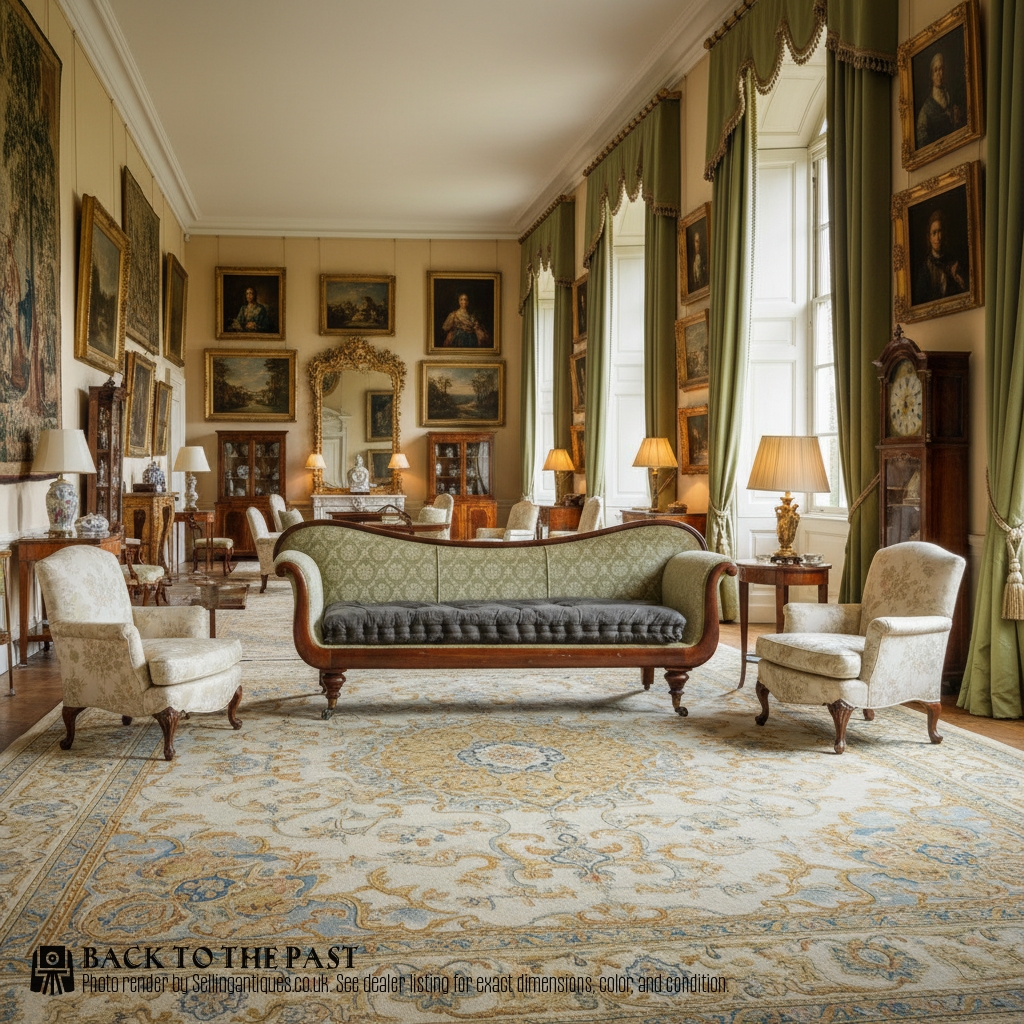
A victorian scroll arm sofa typically takes the form of a deeply sprung chesterfield or a show-wood settee rooted in nineteenth-century design. You will frequently encounter nineteenth-century country house models alongside buttoned examples bearing sweeping, carved scroll ends.
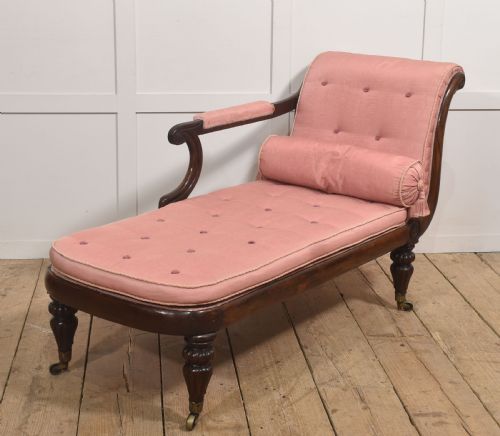
Makers and workshops of the period produced variations ranging from walnut and mahogany frames to ebonised scroll-end daybeds and chaise longues. The selection spans early Victorian and mid-century pieces through to late Victorian two-seaters resting on turned legs.
Materials and Construction
Frames rely upon dense timbers such as mahogany, rosewood, walnut, and ebony, often shaped into serpentine rails or supporting carved show-wood arms. Turned wooden legs frequently provide the base support for these heavy frames.
Upholstery involves traditional stuffing secured beneath fabrics ranging from calico and velvet to damask, leather, and modern upholstery cloth, occasionally accented by brass details.
Victorian Scroll Arm Sofa Retail Price Guide 2026
Typical asking prices for victorian scroll arm sofa among the pieces listed under this phrase on Sellingantiques today, from the lower quarter to the upper quarter. They describe what is for sale here now, not the wider market.
Miniature ebonised chaise longues appear alongside full-sized pieces, proving that Victorian comfort was occasionally scaled down for smaller occupants.
Judging Quality
The distinction between tiers rests upon the crispness of the timber carving and the architectural proportion of the show-wood frame. Finer pieces demonstrate superior joinery in the scroll arms and more confident curves in the show-wood rails.
Upholstery execution and frame integrity dictate the upper echelon of surviving examples, where deeply sprung foundations remain firm and supportive through decades of use.
Howard and Sons·Holland and Sons
The Victorian Scroll Arm Sofa Glossary
- Chesterfield
- A deeply upholstered sofa traditionally featuring arms of the same height as the back. These pieces often display deep buttoning.
- Chaise Longue
- An upholstered long chair or daybed designed for reclining, combining a sofa back with an extended seat. It originates in French fashion before becoming a Victorian drawing-room staple.
- Show-Wood
- Exposed polished timber frame components left visible around the upholstered portions of a seat. Mahogany and rosewood are frequent choices for this decorative framing.
- Scroll Arm
- An architectural armrest curved outward in a tight or sweeping spiral shape. This defining feature lends the seat its characteristic nineteenth-century profile.
- Serpentine
- A curved line undulating gently outward and inward in a wave-like shape. This profile appears frequently along the front rails of finer settees.
Victorian Scroll Arm Sofa: Frequently Asked Questions
How do I identify a Victorian sofa?
Look for dense timber frames in mahogany, rosewood, or walnut paired with traditional upholstery techniques like deep buttoning.
Proportions and carved scroll arms generally point toward nineteenth-century workshop origins rather than later reproductions.
Were these sofas used in formal rooms?
Drawing rooms and grand country house libraries were the primary settings for these substantial upholstered seats.
They served both as formal reception furniture and as comfortable daybeds for reading and reclining.
What is a show-wood frame?
Show-wood refers to polished timber left exposed around the upholstered body of the sofa or settee.
Makers utilised this technique to display fine mahogany or rosewood grain alongside the fabric.
How do I care for antique upholstery?
Protect delicate fabrics like velvet, damask, or leather from direct sunlight to prevent fading and fibre degradation.
Gentle surface cleaning and maintaining stable room humidity help preserve both the textile and the internal stuffing.