

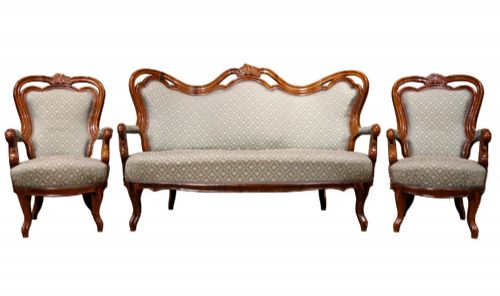
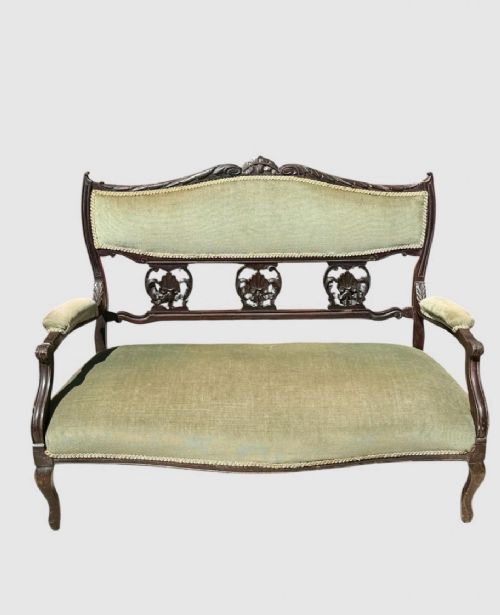


Green Upholstered Sofa
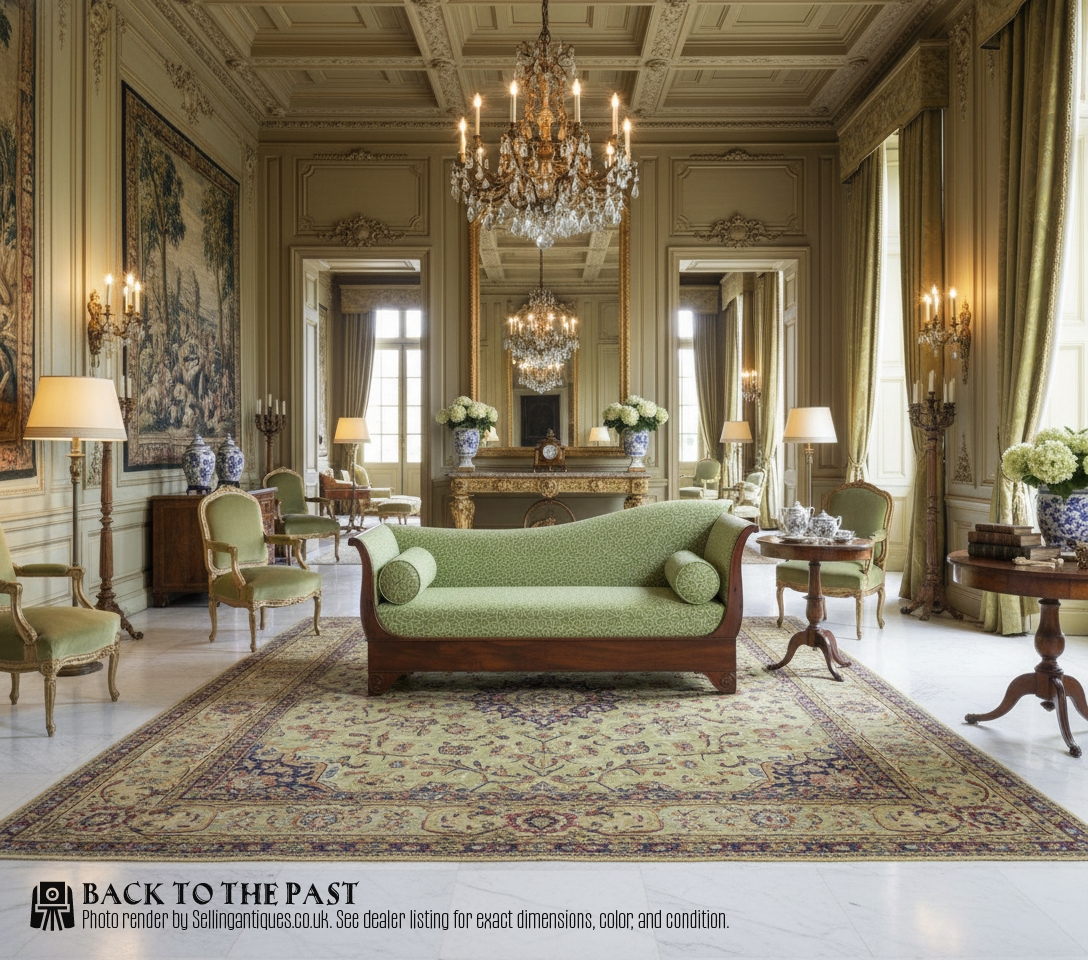
A green upholstered sofa brings rich colour and deep comfort to a room, drawing on nineteenth-century forms and Edwardian frames.
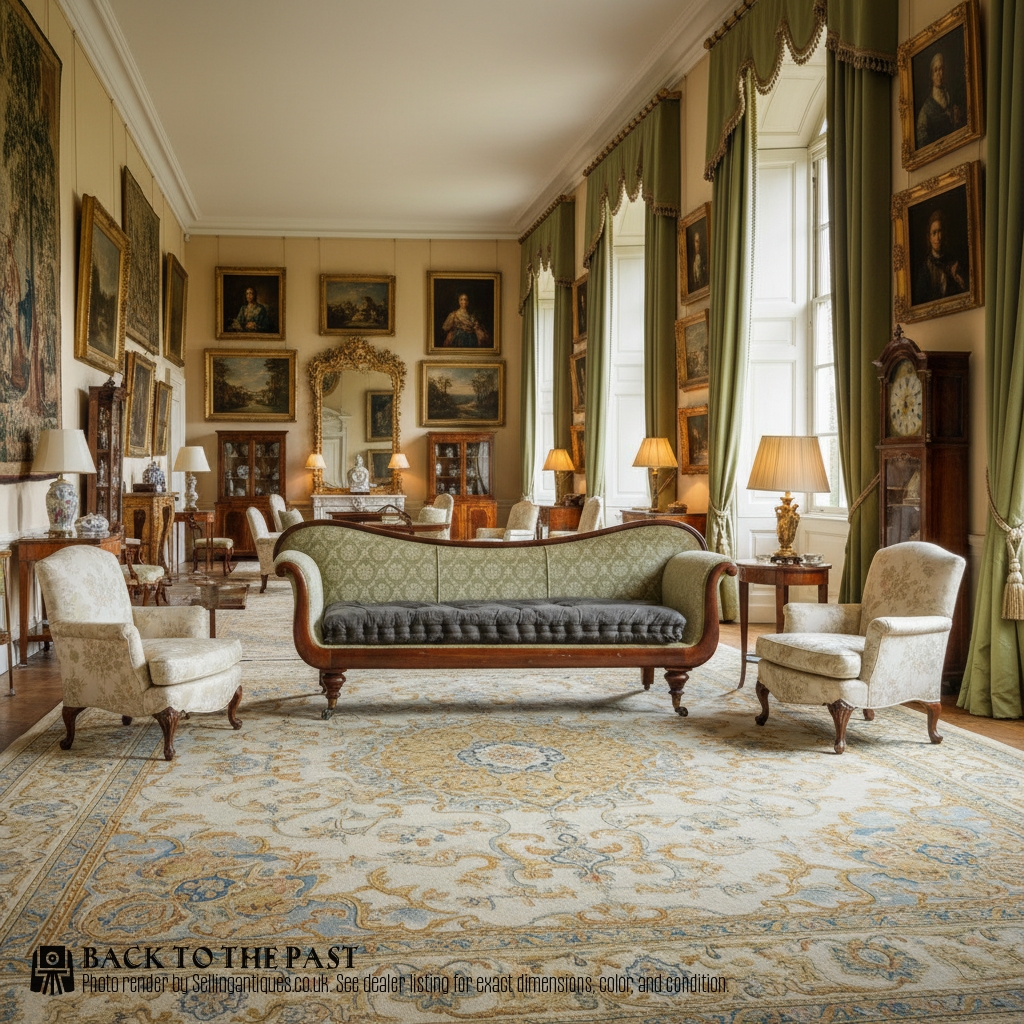
Green Upholstered Sofa
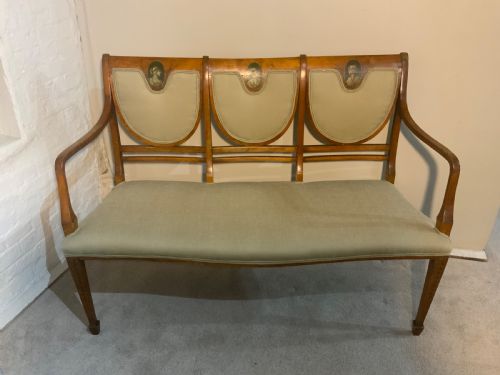
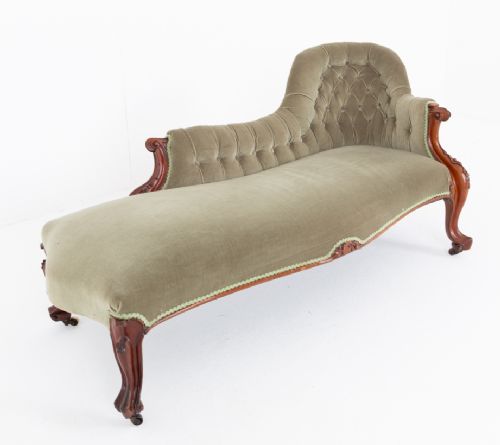
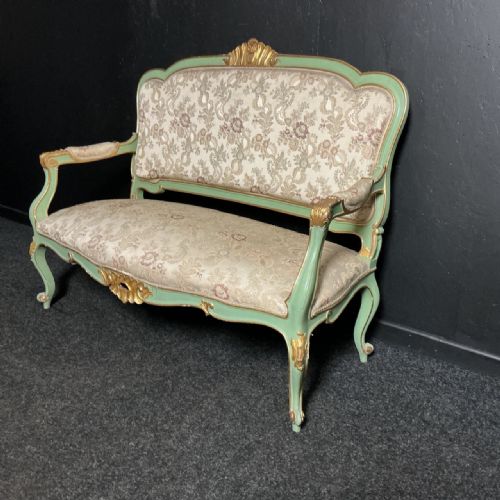
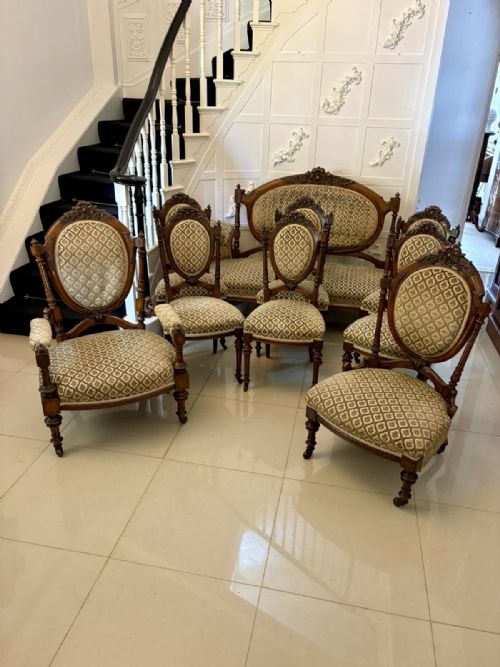
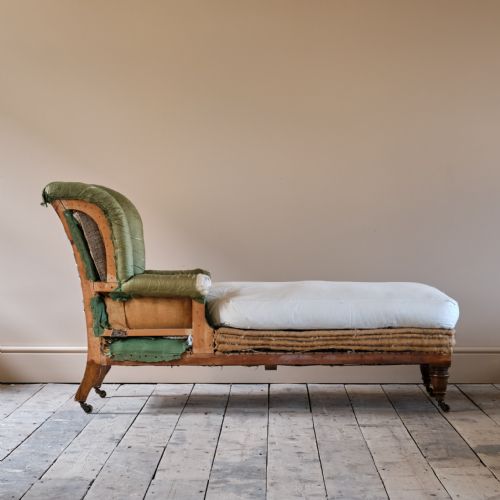
A green upholstered sofa is a seating form found across nineteenth-century and early twentieth-century periods, spanning Victorian, Edwardian, and Regency eras. These pieces include settee and sofa variants, along with chaise longues, daybeds, and full salon suites.
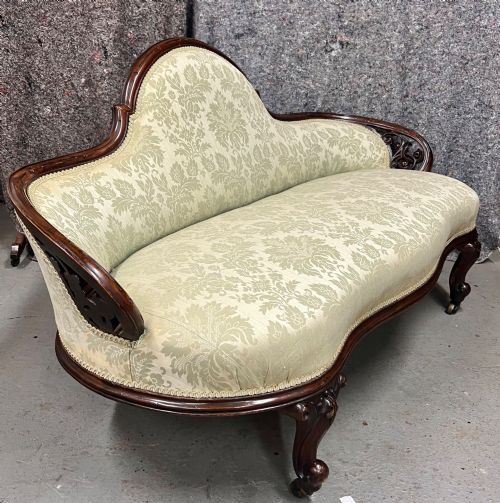
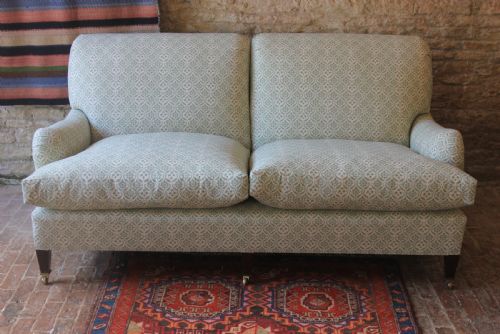
The version most commonly met on this page is the Victorian or Edwardian two-seater or larger country house sofa, often framed in walnut, mahogany, or rosewood. Makers and workshops shaped these frames with carved details, scroll ends, or chair backs.
Buyers also encounter revival styles such as Rococo, Louis XV, and Queen Anne, alongside Howard and Sons pieces upholstered in textile or velvet. Origins range from English workshops to continental European makers.
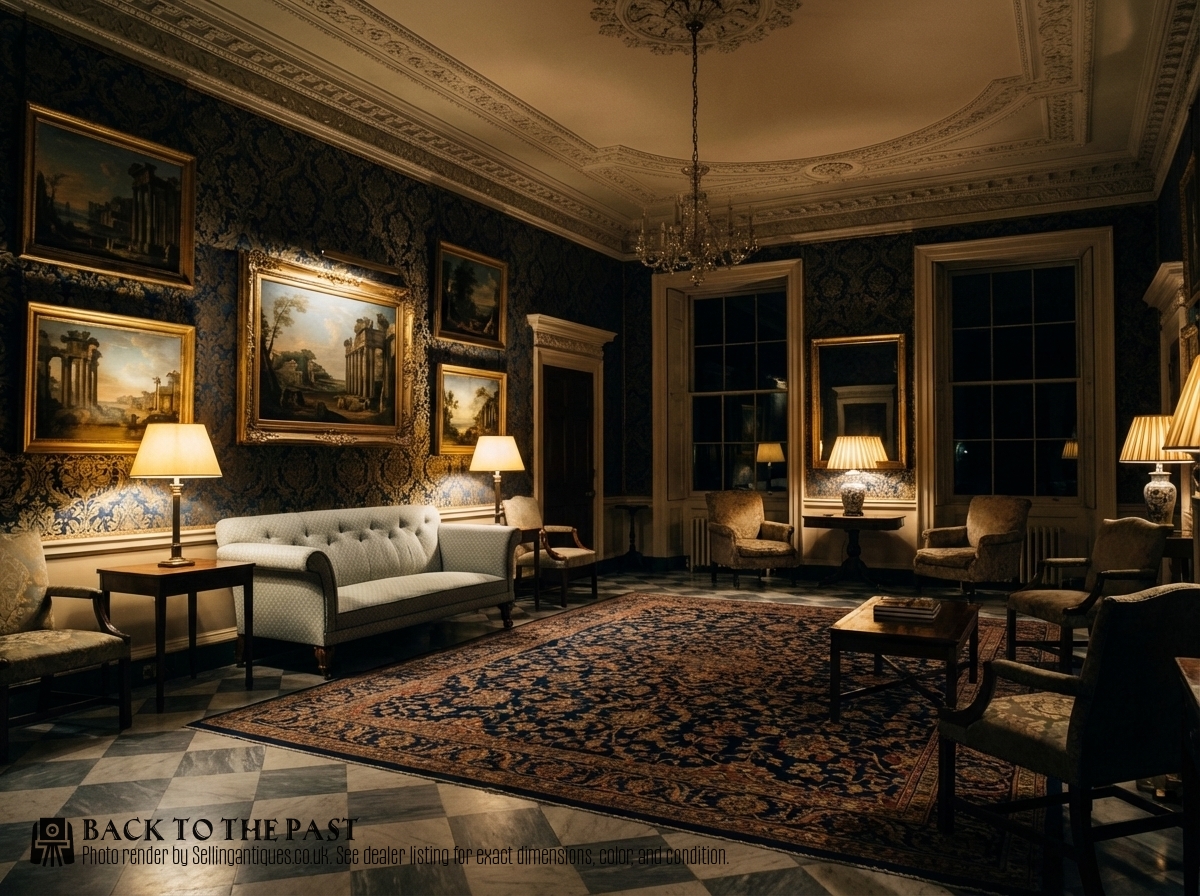
How they were made
Frames rely on timber construction using mahogany, walnut, satinwood, oak, and other hardwoods, sometimes accented with painted finishes or gilt. Brass elements and castors appear on legs, while structural support comes from sturdy timber joints.
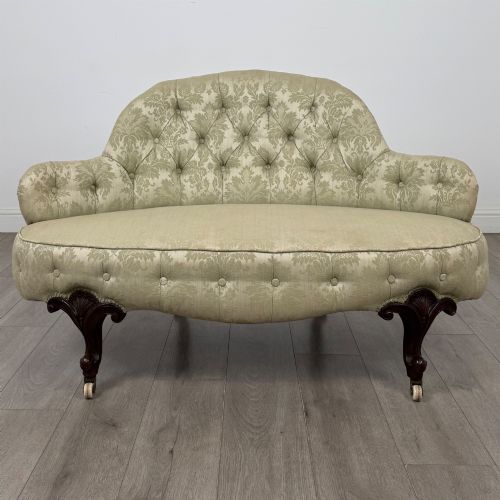
Upholstery employs textiles, silk, and velvet fabrics stretched over traditional stuffing and webbing, occasionally featuring button-back detailing. These materials are fixed to the wood frames using tacks and piping to finish the edges cleanly.
Green Upholstered Sofa Retail Price Guide 2026
Typical asking prices for green upholstered sofa among the pieces listed under this phrase on Sellingantiques today, from the lower quarter to the upper quarter. They describe what is for sale here now, not the wider market.
Several pieces include conversation seats designed so two people could sit close while facing opposite directions.
What varies in quality
Quality rests in the sculptural execution of the timber frame, distinguishing fluidly carved walnut and mahogany from simpler turned structures. The crispness of carved foliage, scrollwork, and revival details marks the distinction between standard production and exhibition pieces.
The choice and execution of the covering fabric also set pieces apart, moving from basic woven textiles to rich silks and deep velvets. Maker attribution, particularly to established firms like Howard and Sons or C Hindley and Sons, elevates a piece through documented craftsmanship and superior internal framing.
Howard and Sons·C Hindley and Sons
The Green Upholstered Sofa Glossary
- Chaise Longue
- An upholstered long chair designed for reclining, featuring a backrest at one end and sometimes a partial arm. These pieces combine the function of a chair and a daybed.
- Settee
- A long wooden or upholstered seat with a back and arms, designed for two or more people. It sits between a chair and a full sofa in scale.
- Scroll End
- A furniture arm or terminal shaped into a sweeping spiral curve. This detail appears frequently on Regency and nineteenth-century seating.
- Salon Suite
- A matched set of upholstered seating furniture, including sofas and matching armchairs designed for a reception room. These suites often share carved wood frames and uniform fabric coverings.
- Button Back
- An upholstery technique where buttons are pulled deep into the padding in a diamond grid pattern. This creates a tufted surface that secures the stuffing and adds texture.
Green Upholstered Sofa: Frequently Asked Questions
How do I clean the green fabric?
Maintenance depends entirely on whether the textile is silk, velvet, or standard woven fabric, as each material reacts differently to moisture and cleaning agents.
Consult a professional textile conservator or specialist cleaner before applying any liquid to antique upholstery to prevent water marks or pile distortion.
Are these sofas comfortable for daily use?
Many nineteenth and early twentieth-century sofas offer deep seating and solid sprung or stuffed interiors designed for relaxation in country houses and parlours.
However, older padding may feel firmer or softer than modern foam, depending on whether the piece retains its original stuffing or has been recently restored.
How do I tell a Victorian settee from a Regency one?
Regency frames generally date from the early nineteenth century, showcasing clean architectural lines, lyre shapes, and scroll ends influenced by classical antiquity.
Victorian pieces, emerging after eighteen thirty-seven, often feature heavier carved walnut or rosewood frames, button-backed upholstery, and more ornate revival detailing.
Can I fit a large salon suite in a modern home?
Scale varies significantly across these listings, ranging from petite Edwardian two-seaters to wide seven-foot country house sofas and multi-piece salon suites.
Measure doorways, stairwells, and floor space carefully before purchase, as nineteenth-century seating often has fixed frames that cannot be easily disassembled.