
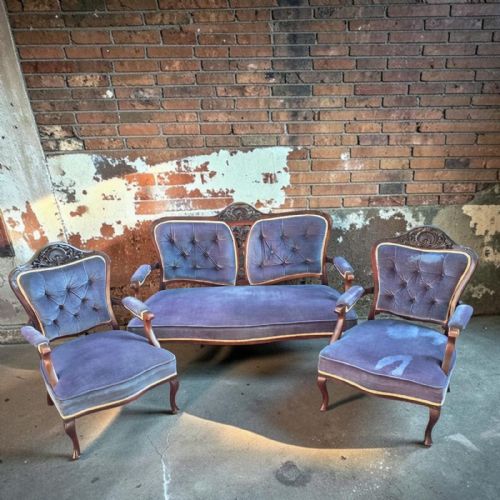
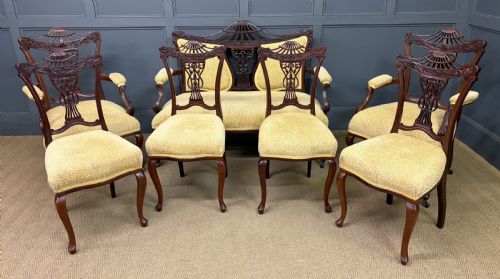
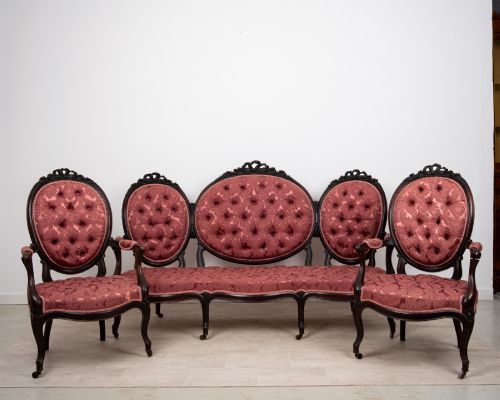


Mahogany Parlour Suite
A mahogany parlour suite brings refined Victorian and Edwardian reception rooms to life with matched timber framing and classic upholstery.
What these pieces are
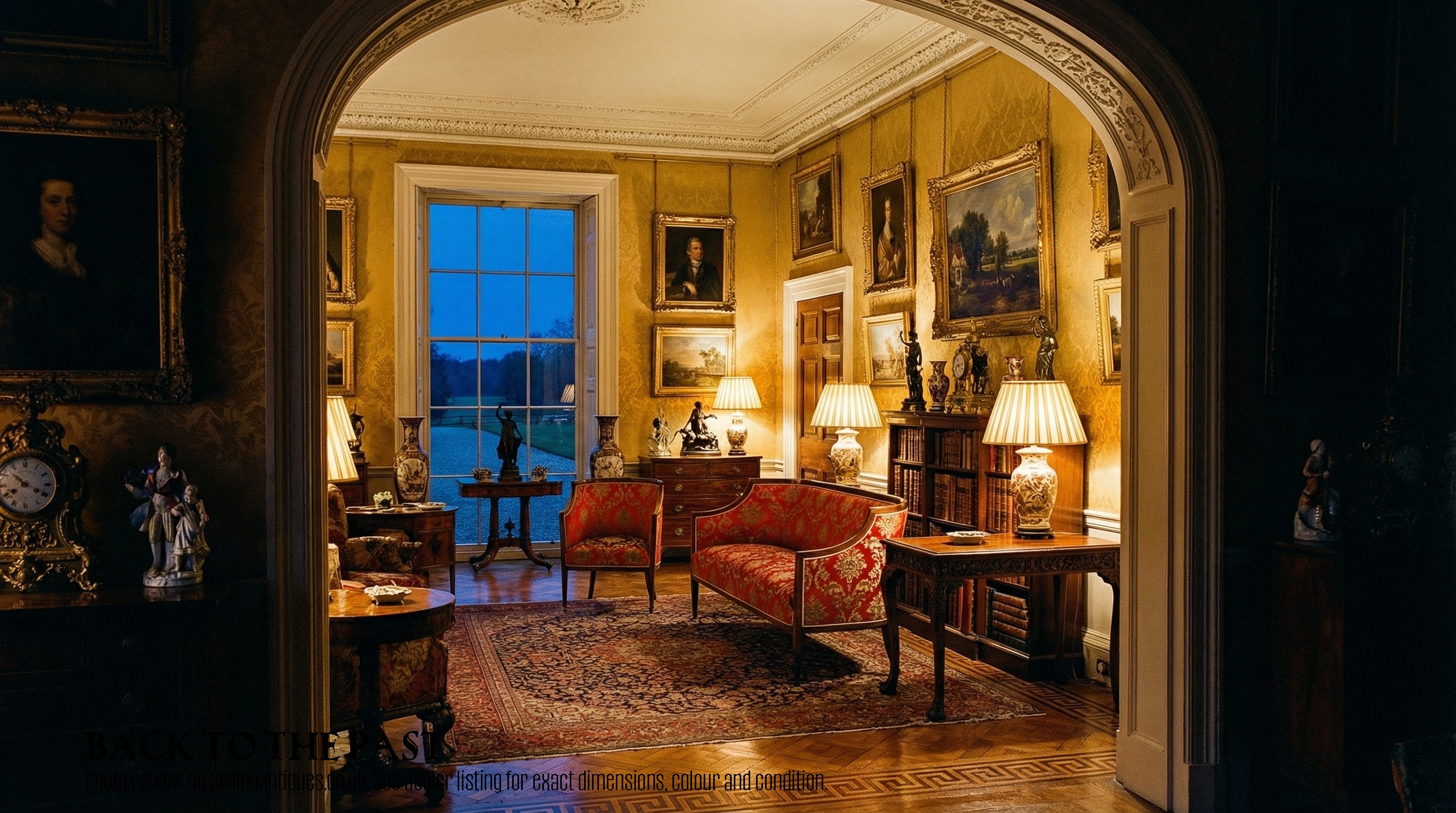
A mahogany parlour suite comprises coordinated sets of seating for formal reception spaces, bringing together matched settees and armchairs. These groupings often form the core of a period interior scheme, offering both comfortable seating and decorative presence.
The selections visible here span Victorian, Late Victorian, and Edwardian eras, with dates generally clustering around nineteen hundred. Pieces range from intimate three-piece groupings to larger multi-piece suites featuring settees and accompanying chairs.
Forms include salon suites, seating suites, parlour suites, and specific settee and armchair combinations. Such suites provide a unified aesthetic for formal entertaining areas, maintaining consistent timber and upholstery themes across every seat.
How they were made
Construction relies upon solid mahogany timber frames, frequently enhanced with delicate boxwood inlay work for decorative contrast. Structural stability is achieved through traditional joinery methods suited to heavily used reception seating.
Upholstery treatments utilise various traditional textiles including velvet, damask, and standard fabric upholstery, sometimes secured with brass detailing. Frames exhibit carved wooden elements reflecting prevailing Victorian and Edwardian craftsmanship.
Retail Price Guide 2026
Typical UK retail prices for mahogany parlour suite, calculated from the Sellingantiques database of over a million retail prices indexed since 2003. This retail price guide relies exclusively on Sellingantiques data; no external sources or auction records are used, so the figures do not describe the wider market.
Listings span the Victorian, Late Victorian, and Edwardian periods, utilising mahogany timber alongside boxwood inlay, velvet, damask, and brass.
What varies in quality
Differentiation across the range rests upon the complexity of the timber inlay and the intricacy of the carved wooden details. Suites featuring refined boxwood stringing and sculptural carving represent the higher tier of production.
The scale of the suite and the integrity of the surviving upholstery materials also define standing within the market. Complete larger suites with original textile schemes hold a distinct character compared to smaller or stripped frames requiring restoration.
The Mahogany Parlour Suite Glossary
- Parlour suite
- A coordinated group of seating furniture designed for a formal reception room. These sets typically include a matching settee and multiple armchairs.
- Boxwood inlay
- Contrasting light wood inserted into the darker mahogany surface to create geometric or floral patterns. This decorative technique characterises Edwardian cabinet work.
- Damask
- A reversible figured fabric traditionally used for formal upholstery. Its woven patterns catch the light and add texture to the seating.
- Settee
- A long, upholstered wooden seat with a back and arms, designed for more than one person. It forms the centrepiece of most parlour seating groups.
Frequently Asked Questions
What pieces make up a standard suite?
A standard suite typically includes a two-seater sofa or settee paired with matching armchairs or salon chairs. Larger groupings may expand to include additional chairs or specific boudoir configurations.
These coordinated sets were designed to furnish formal entertaining spaces with a unified decorative style. The exact count varies depending on the original commission and surviving pieces.
How do I distinguish Victorian from Edwardian pieces?
Victorian suites often display heavier carved wooden elements and darker, more robust silhouettes. Edwardian examples tend to feature lighter frames with delicate boxwood inlay and refined proportions.
Overlapping production periods mean some pieces bridge both styles, combining Victorian forms with Edwardian decorative lightness.
What fabrics were originally used for upholstery?
Original upholstery frequently employed heavy textiles such as velvet, damask, and woven fabrics suited to formal drawing rooms. These materials provided both durability and a tactile contrast to the polished mahogany.
Many surviving pieces retain later replacement covers or are offered specifically for re-upholstery to suit modern interiors.
How should I care for mahogany frames?
Mahogany frames benefit from occasional dusting with a soft cloth and minimal exposure to direct sunlight or fluctuating humidity. Preserving the polished finish requires avoiding harsh chemical cleaners.
Checking structural joints periodically ensures the traditional joinery remains stable under normal domestic use.