
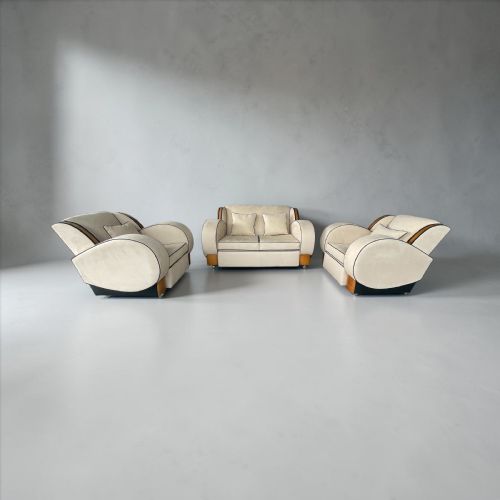
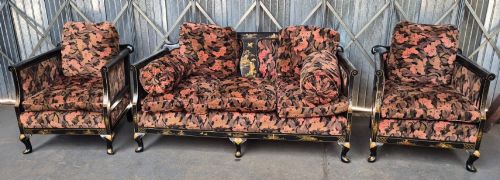
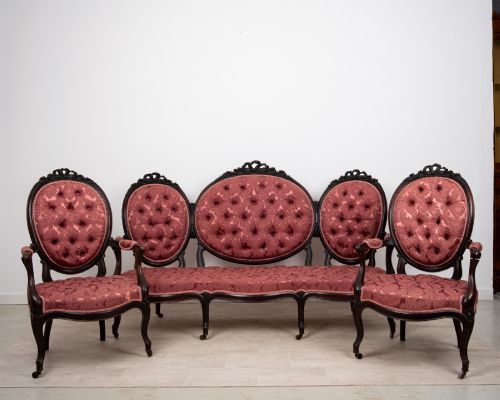
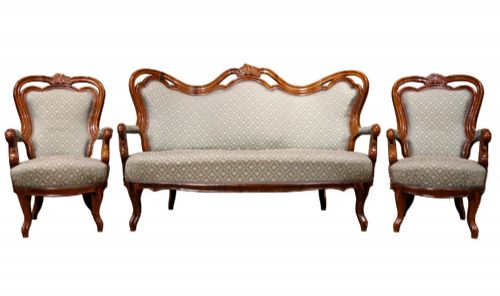


Antique Three Piece Suite
An antique three piece suite brings a matched set of one sofa and two chairs directly into a principal room to anchor the entire arrangement.
Identifying the Suite
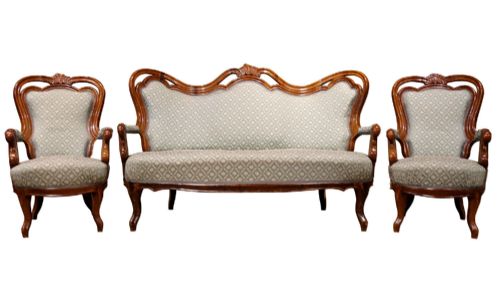
An antique three piece suite typically comprises a matching set consisting of a two seater sofa and a pair of armchairs, designed for the salon or parlor. These arrangements span the Victorian, Edwardian, and George V periods, extending from the nineteenth century into the early twentieth century.
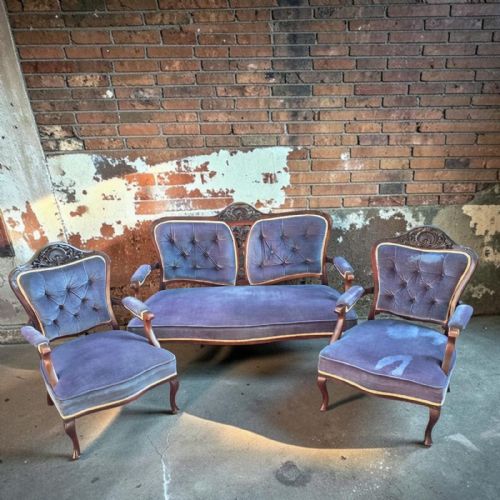
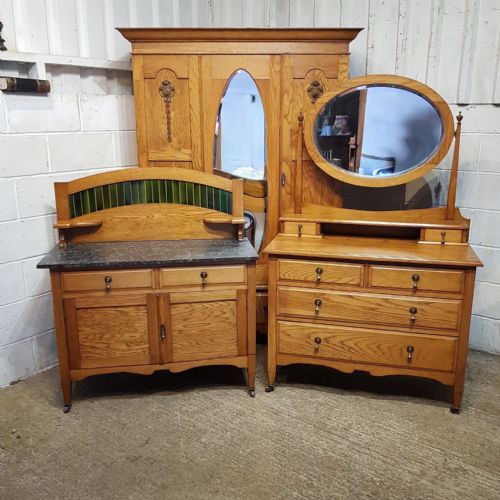
The evidence shows numerous salon suites fashioned from mahogany and walnut, frequently incorporating inlaid woods like satinwood or detailed marquetry. Alongside formal reception furniture, certain listings include bedroom suites and lounge suites featuring deep buttoned upholstery or woven cane panels.
Stylistic influences vary widely across the inventory, ranging from Carolean and Rococo Revival to Chippendale, Sheraton, and Chinoiserie decoration. Buyers encounter everything from ebonized Aesthetic Movement seating to French Louis XVI style walnut frameworks.
Materials and Construction
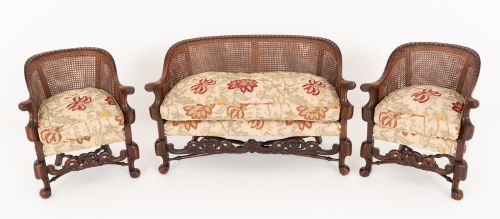
Frames are constructed from solid timbers such as mahogany, walnut, oak, and rosewood, sometimes enhanced with satinwood inlay or brass details. Many chairs and settees incorporate woven cane panels into their backs and sides for a lighter structural appearance.
Upholstery techniques rely on traditional fillings covered in velvet, damask fabric, silk textiles, brocade, or deep buttoned leather. Woodwork frequently displays carved motifs, marquetry inlay, or painted Chinoiserie decoration applied to the structural frames.
Retail Price Guide 2026
Typical UK retail prices for three piece suite, calculated from the Sellingantiques database of over a million retail prices indexed since 2003. This retail price guide relies exclusively on Sellingantiques data; no external sources or auction records are used, so the figures do not describe the wider market.
Listings for this phrase encompass periods from the nineteenth century up to the George V era, utilising mahogany, walnut, and woven cane.
Distinctions in Quality
The caliber of an antique three piece suite rests upon the crispness of its wood carving and the precision of any marquetry inlay or satinwood banding. Superior examples display balanced proportions across all three matching pieces, maintaining structural harmony between the sofa and the paired chairs.
The choice of primary timber and secondary wood influences the standing of a suite, with figured walnut, burr walnut, and rich mahogany commanding attention. Furthermore, the complexity of decorative treatments, from hand-woven cane work to intricate Chinoiserie motifs, separates standard production from finer craftsmanship.
J. S. Kinsey
The Antique Three Piece Suite Glossary
- Bergere
- An enclosed upholstered armchair with wooden frames and woven cane sides and back. This French style gained popularity in Edwardian seating suites.
- Marquetry
- Decorative woodwork where pieces of veneer are fitted into a ground to form geometric or pictorial patterns. This technique appears frequently on nineteenth century salon furniture.
- Salon suite
- A matching set of seating furniture intended for formal reception rooms. These groupings typically include a settee and two matching armchairs.
- Buttonback
- An upholstery style where depressions are formed in the padding by stitching buttons through to the frame at regular intervals. This method creates a distinctive diamond patterned texture on the backrest.
Frequently Asked Questions
What is an antique three piece suite?
An antique three piece suite is a coordinated grouping of furniture consisting of a sofa, settee, or couch alongside two matching armchairs or lounge chairs. These sets were designed to provide unified seating for parlors, drawing rooms, and formal reception spaces.
Surviving examples date primarily from the Victorian and Edwardian eras, utilising robust timbers like mahogany and walnut dressed in patterned textiles, damask, or woven cane.
How were these suites used historically?
Historically, these matching sets served as the primary seating arrangement for entertaining guests in the formal rooms of a home. The sofa accommodated multiple visitors while the two armchairs completed a balanced conversation circle.
In domestic interiors, they signaled social standing and taste, with parlor and salon suites reserved for public entertaining rather than daily private lounging.
How do I live with an antique suite?
Living with these pieces involves placing them in rooms where their timber frames and textile upholstery receive moderate, indirect light to protect the materials from fading. Regular dusting of the carved wood and careful vacuuming of the fabric helps preserve their condition.
Their substantial presence makes them natural focal points in a sitting room, where they can be paired with complementary period tables and rugs.
How do I tell Victorian from Edwardian suites?
Victorian suites often feature heavier carved woodwork, darker timbers, and deep buttoned upholstery in rich velvet or damask. Their styling frequently draws upon historical revivals like Rococo or Carolean forms.
Edwardian suites tend to present lighter proportions, utilising inlaid mahogany, satinwood, and woven cane panels. Aesthetic influences from the Sheraton and Chippendale styles become much more pronounced during this later period.