
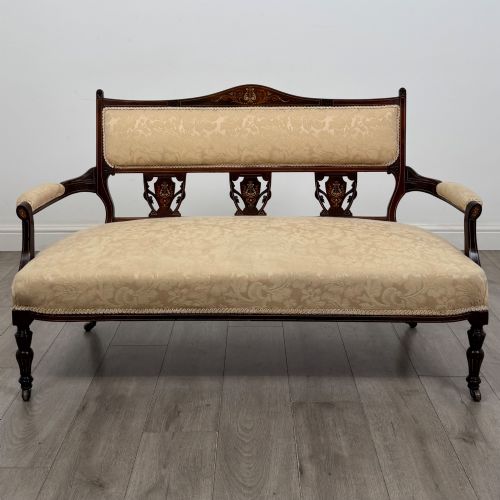
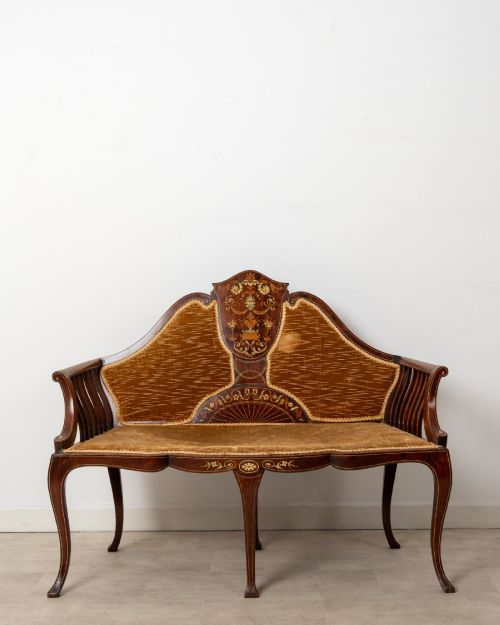
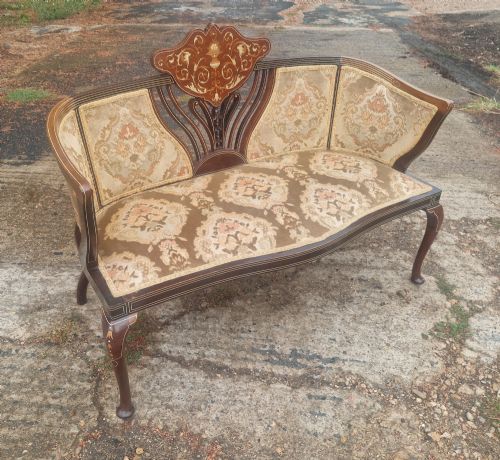
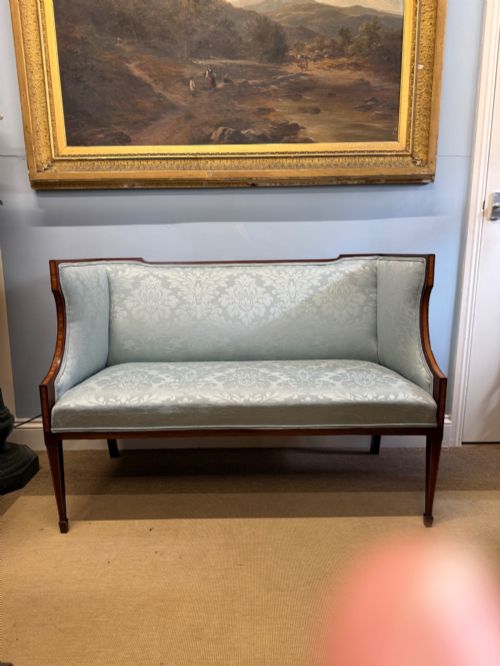

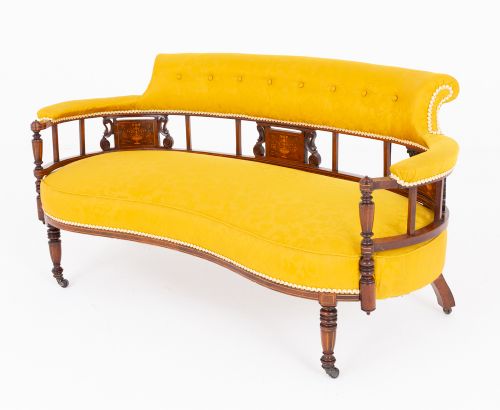


Edwardian Inlaid Settee
These edwardian inlaid settee examples combine mahogany and satinwood to bring refined drawing room elegance to modern sitting rooms.
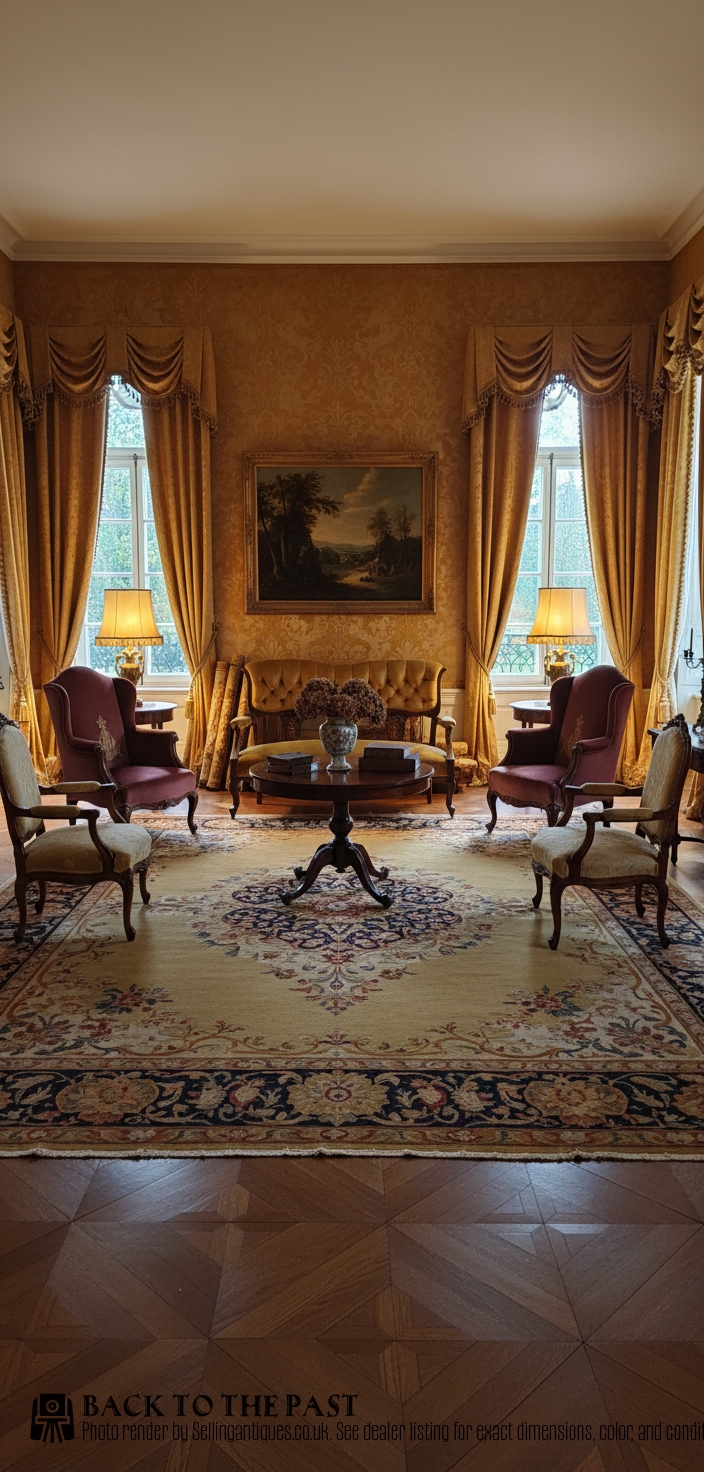
What an edwardian inlaid settee is
An edwardian inlaid settee is a drawing room or parlour seat originating predominantly around nineteen hundred, though the archive contains Victorian examples dating back to eighteen eighty. These seating forms span compact two seater sofas, bedroom twin seats, and parts of larger salon suites complete with matching armchairs.
The version most frequently encountered is a mahogany framed two seater featuring contrasting wood inlays and upholstered seating. These pieces were designed for lighter reception spaces rather than heavy domestic lounging, reflecting the decorative priorities of their period.

Materials and construction
Makers built these settees primarily using solid and veneered mahogany, alongside occasional examples in rosewood or walnut. The timber frameworks provide a stable base for detailed decorative surface work.
Decoration relies on intricate marquetry and satinwood, boxwood, and bone inlays. Upholstery finishes the pieces, utilising fabric and occasionally leather to cover the sprung or padded seats.
Retail Price Guide 2026
Typical UK retail prices for edwardian inlaid settee, calculated from the Sellingantiques database of over a million retail prices indexed since 2003. This retail price guide relies exclusively on Sellingantiques data; no external sources or auction records are used, so the figures do not describe the wider market.
Object forms range from small bedroom seats and two seater sofas to complete multi piece parlour suites with matching chairs.
What separates the fine from the ordinary
Quality rests in the precision and ambition of the timber inlay work rather than sheer size. Finer pieces display crisp satinwood and boxwood motifs embedded cleanly into the mahogany grain, whereas simpler examples rely on sparse banding.
The architectural framing determines the distinction between a standard parlour seat and a masterwork. Pieces incorporating carved rosewood or delicate painted details sit at the upper end of the scale.
The Edwardian Inlaid Settee Glossary
- Satinwood inlay
- A pale exotic wood used to create contrasting decorative panels and stringing lines on darker timber surfaces. It catches light differently depending on the viewing angle.
- Marquetry
- The art of forming decorative patterns using fitted pieces of various wood veneers. This technique creates pictorial or geometric designs across the backrest and frame.
- Salon suite
- A matching set of seating comprising a settee alongside several armchairs and side chairs. These suites furnished formal reception rooms during the Edwardian period.
- Sheraton Revival
- A late nineteenth and early twentieth century design movement drawing inspiration from eighteenth century neoclassical furniture. Pieces in this style utilise symmetrical lines and refined stringing.
Frequently Asked Questions
Where did these settees sit?
These pieces originally occupied formal drawing rooms, parlours, and large bedrooms in Edwardian homes. They served as decorative seating for receiving guests rather than heavy daily relaxation.
Today, they function well in sitting rooms, hallways, or at the foot of a bed, where their slender proportions make them versatile accent furniture.
How do I spot a Victorian precursor?
Pieces dating to the eighteen eighties generally exhibit heavier proportions and darker timber frames compared to lighter Edwardian equivalents. Victorian versions often lean towards denser upholstery and more robust structural elements.
Edwardian makers tended to pare down the bulk, favouring slender legs and brighter satinwood or boxwood contrasts.
Are these seats comfortable?
Edwardian settees prioritise upright posture and refined aesthetics over deep lounging comfort. Their sprung or padded seats provide firm support suited for conversational seating rather than reclining.
Adding scatter cushions can adjust the seating depth to suit modern relaxation habits while preserving the historic frame.
How should I care for the upholstery?
Protect the fabric by keeping the settee away from direct sunlight, which can fade both the textile coverings and the delicate satinwood inlays. Regular gentle vacuuming with a soft brush attachment keeps the fabric clean.
Feed the mahogany timber occasionally with appropriate furniture wax to maintain the rich lustre of the wood.